
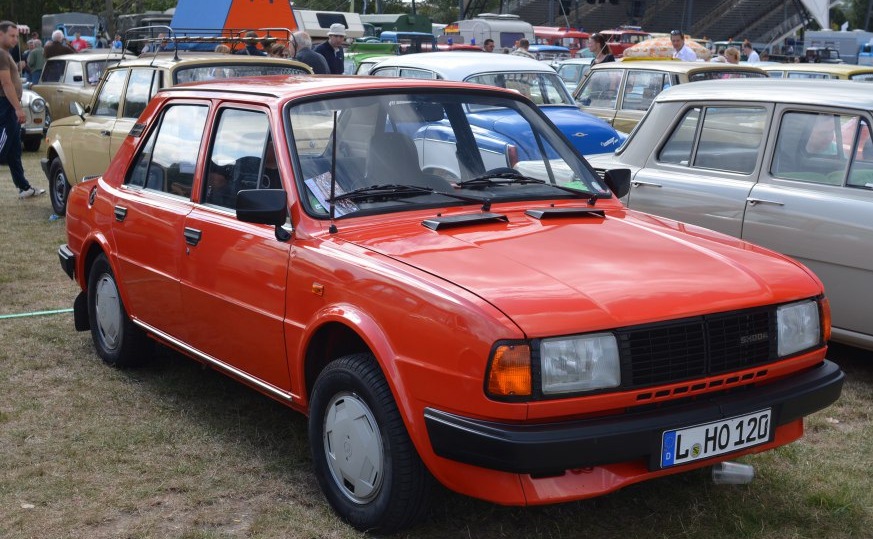
The Škoda 130 GL (and its base variant, the 130 G) represents a significant evolution in the Czech automaker’s history, produced between 1988 and 1990. It was the final iteration of the S136 series, building upon the foundation laid by the earlier Škoda 120 and 130 models. Positioned as a relatively upscale offering within the Eastern European automotive landscape, the 130 GL aimed to provide a more refined and comfortable driving experience compared to its predecessors, while still maintaining the affordability and practicality that Škoda was known for. It served as a bridge between the older, rear-engine designs and the more modern, front-wheel-drive vehicles that would define Škoda’s future under Volkswagen ownership. The 130 GL was primarily sold within Czechoslovakia and export markets in the Eastern Bloc, with limited penetration into Western Europe.
Technical Specifications
| Brand | Škoda |
| Model | 130 |
| Generation | 130 |
| Type (Engine) | G, GL (S136) (63 Hp) |
| Start of Production | 1988 |
| End of Production | 1990 |
| Powertrain Architecture | Internal Combustion Engine |
| Body Type | Sedan |
| Seats | 5 |
| Doors | 4 |
| Fuel Type | Petrol (Gasoline) |
| Power | 63 Hp |
| Engine Aspiration | Naturally Aspirated |
| Engine Oil Capacity | 4.6 l (4.86 US qt | 4.05 UK qt) |
| Coolant Capacity | 11.5 l (12.15 US qt | 10.12 UK qt) |
| Fuel Tank Capacity | 36 l (9.51 US gal | 7.92 UK gal) |
Powertrain & Engine Architecture
The Škoda 130 GL was powered by a 1,289 cc (78.6 cu in) overhead valve (OHV) inline-four cylinder engine, designated as the 742.136. This engine was a direct descendant of the units used in earlier Škoda models, but with refinements aimed at improving reliability and emissions. The engine featured a single overhead camshaft operating two valves per cylinder. Fuel delivery was managed by a Solex C35 PA-1 carburetor, a relatively simple but effective system for the time. The engine produced 63 horsepower (47 kW) at 5,500 rpm and 83 lb-ft (113 Nm) of torque at 3,300 rpm. The engine was mated to a four-speed manual transmission as standard, though a five-speed manual was available as an option. The GL variant, and sometimes the G, could be equipped with a three-speed automatic transmission, a relatively rare option. This automatic transmission was a conventional hydraulic unit, offering smooth but not particularly quick shifts. The engine block was cast iron, contributing to its durability, while the cylinder head was aluminum alloy. The engine’s design prioritized robustness and ease of maintenance over outright performance.
Driving Characteristics
The Škoda 130 GL, particularly in its automatic transmission guise, was not known for its blistering acceleration. With 63 horsepower propelling a car weighing around 2,300 lbs (1,043 kg), performance was adequate for everyday driving but lacked any real sporting pretensions. Acceleration from 0 to 60 mph (97 km/h) took approximately 14-16 seconds, depending on the transmission and load. The automatic transmission, while providing convenience, further diminished acceleration due to its relatively tall gear ratios and inherent efficiency losses. The suspension, consisting of independent coil springs at the front and a trailing arm setup with a transverse leaf spring at the rear, provided a reasonably comfortable ride, absorbing bumps and imperfections in the road surface effectively. However, the handling was somewhat imprecise, with noticeable body roll in corners. The steering was a recirculating ball system, which lacked the directness and feedback of more modern steering technologies. The 130 GL was best suited for relaxed cruising and urban driving, where its comfortable ride and ease of use were appreciated.
Equipment & Trim Levels
The Škoda 130 GL represented the higher trim level within the 130 range. Standard equipment included cloth upholstery, a basic instrument cluster with speedometer, fuel gauge, and coolant temperature indicator, and a two-spoke steering wheel. The GL trim also featured more extensive brightwork, including chrome trim around the windows and bumpers. Optional extras included a radio, heated rear window, and upgraded interior trim. The interior design was functional and utilitarian, reflecting the car’s Eastern European origins. Dashboard materials were primarily hard plastics, but were generally durable. The seats provided adequate support for shorter journeys, but could become uncomfortable on longer trips. The 130 G, the base model, featured more basic trim and fewer standard features, making it a more affordable option for budget-conscious buyers.
Chassis & Braking
The Škoda 130 GL utilized a body-on-frame construction, a relatively archaic design by the late 1980s. The chassis was robust and durable, but also contributed to the car’s relatively high weight. The front suspension featured independent coil springs and wishbones, while the rear suspension employed a trailing arm setup with a transverse leaf spring. Braking was provided by disc brakes at the front and drum brakes at the rear. The braking system was adequate for normal driving conditions, but lacked the stopping power and modulation of more modern systems. Steering was a recirculating ball type, offering relatively light steering effort but limited feedback. The tires were typically 165/80 R13, providing a reasonable balance of grip and ride comfort.
Market Reception & Comparison
The Škoda 130 GL was generally well-regarded within its target market, particularly in Czechoslovakia and other Eastern Bloc countries. Critics praised its reliability, practicality, and affordability. However, it was often criticized for its outdated design, modest performance, and lack of refinement compared to Western European competitors. Compared to the standard 130 G, the GL offered a more comfortable and better-equipped driving experience, justifying its higher price. Compared to other cars in its class, such as the Fiat 128 or the Renault 12, the Škoda 130 GL offered a more robust and durable construction, but lacked the sophistication and performance of its rivals. Fuel economy was reasonable for the time, averaging around 35-40 mpg (6.7-7.1 L/100km).
Legacy
The Škoda 130 GL represents a significant chapter in Škoda’s history, marking the end of an era for the Czech automaker. While the powertrain itself wasn’t particularly innovative, its durability and simplicity have contributed to a surprisingly large number of these cars remaining on the road today. The 130 GL is now considered a classic car, particularly among enthusiasts of Eastern European automobiles. The automatic transmission variants are relatively rare and are often sought after by collectors. The 130 GL paved the way for Škoda’s integration into the Volkswagen Group, and its legacy can be seen in the modern Škoda models that are now sold worldwide. Parts availability can be challenging, but a dedicated community of Škoda enthusiasts continues to support the preservation of these classic vehicles.
