
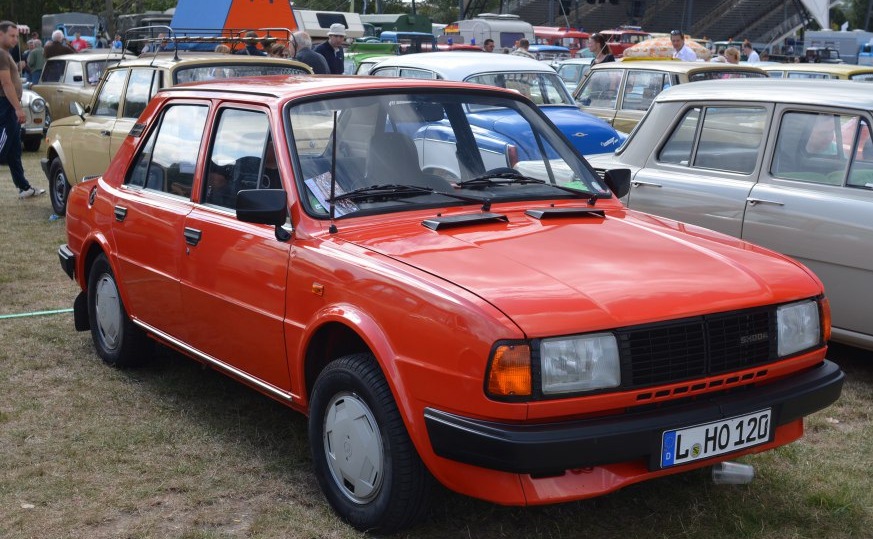
The Škoda 130 GL, produced between 1987 and 1990, represents a refined iteration of the long-running Škoda 130 series. This variant, distinguished by its 53 horsepower engine, occupied a significant position within the Škoda lineup as a comfortable and relatively well-equipped offering for the Eastern European market, and later, as a budget-friendly option in Western Europe following increased availability. The 130 series itself was a descendant of the Škoda 120, tracing its roots back to the 1960s, and the 130 GL represented a late-stage evolution of this enduring design. It was built upon the rear-wheel-drive platform that characterized Škoda’s engineering for decades, offering a distinct driving experience compared to the increasingly front-wheel-drive dominated automotive landscape of the late 1980s.
Technical Specifications
| Brand | Škoda |
| Model | 130 |
| Generation | 130 |
| Type (Engine) | GL (53 Hp) |
| Start of production | 1987 |
| End of production | 1990 |
| Powertrain Architecture | Internal Combustion engine |
| Body type | Sedan |
| Seats | 5 |
| Doors | 4 |
| Fuel Type | Petrol (Gasoline) |
| Power | 53 Hp |
| Engine aspiration | Naturally aspirated engine |
| Engine oil capacity | 4.6 l (4.86 US qt | 4.05 UK qt) |
| Coolant capacity | 11.5 l (12.15 US qt | 10.12 UK qt) |
| Fuel tank capacity | 36 l (9.51 US gal | 7.92 UK gal) |
Powertrain & Engine Architecture
The Škoda 130 GL was powered by a 1.3-liter, inline-four cylinder engine, designated as the 136 engine. This engine, while relatively simple in design, was known for its durability and ease of maintenance. It featured a single overhead camshaft (SOHC) operating two valves per cylinder. The engine’s 53 horsepower output was achieved through a modest compression ratio and a carburetor-based fuel delivery system – typically a Jikov 32 IDF. This carburetor, while effective, was less efficient and produced higher emissions compared to fuel injection systems becoming increasingly common in Western European vehicles. The engine block was cast iron, contributing to its robustness, while the cylinder head was aluminum. The engine was mated to a four-speed manual transmission as standard, although a three-speed automatic transmission was offered as an optional extra, albeit rarely selected due to its performance impact. The automatic transmission was a relatively archaic design, further diminishing acceleration and increasing fuel consumption.
Driving Characteristics
The Škoda 130 GL with the 53 hp engine and manual transmission offered modest performance. Acceleration was leisurely, with a 0-60 mph time estimated to be around 18-20 seconds. The rear-wheel-drive layout provided a balanced feel, but the relatively narrow tires and soft suspension resulted in noticeable body roll during cornering. The automatic transmission version significantly hampered performance, making the car feel sluggish and unresponsive. Gear ratios were spaced to prioritize fuel economy over outright acceleration. The steering was unassisted, requiring some effort at low speeds, but providing a direct connection to the road. Braking performance was adequate, utilizing drum brakes on all four wheels, though stopping distances were longer than contemporary vehicles equipped with disc brakes.
Equipment & Trim Levels
The “GL” designation indicated a higher trim level compared to the base Škoda 130. Standard equipment included cloth upholstery, a basic instrument cluster with speedometer, fuel gauge, and coolant temperature indicator, and a two-spoke steering wheel. The interior was functional but spartan, reflecting the car’s price point. Optional extras included a radio, heated rear window, and upgraded interior trim. The exterior featured chrome bumpers and trim, distinguishing it from the more basic models. The 130 GL also benefited from improved sound insulation compared to earlier Škoda models, offering a slightly more refined driving experience. The dashboard layout was simple and straightforward, with all controls within easy reach of the driver.
Chassis & Braking
The Škoda 130 GL utilized a traditional body-on-frame construction, contributing to its durability but also adding to its weight. The suspension consisted of independent front suspension with trailing arms and coil springs, and a rigid rear axle with leaf springs. This setup provided a comfortable ride on smooth roads, but struggled to cope with uneven surfaces. The braking system employed drum brakes on all four wheels, with hydraulic actuation. The brakes were adequate for normal driving conditions, but lacked the stopping power and fade resistance of disc brakes. Steering was a recirculating ball system, providing a relatively direct feel but requiring some effort, particularly at low speeds. Stabilizer bars were not standard equipment, contributing to the car’s noticeable body roll.
Market Reception & Comparison
The Škoda 130 GL was generally well-received in its primary markets of Czechoslovakia and other Eastern European countries. It offered a reliable and affordable mode of transportation, and its relatively spacious interior and comfortable ride made it a popular choice for families. In Western Europe, where it became available in increasing numbers in the late 1980s, it was positioned as a budget-friendly alternative to more expensive Western European cars. Critics noted its dated design and lack of modern features, but praised its durability and low running costs. Compared to other trims in the Škoda 130 lineup, the GL offered a better level of equipment and refinement, but the higher-powered Škoda 130 Rapid offered significantly improved performance. Fuel economy was reasonable for the time, averaging around 35-40 mpg, but was lower with the optional automatic transmission.
Legacy
The Škoda 130 GL represents a significant chapter in Škoda’s history, marking the end of an era for the rear-wheel-drive Škoda models. While the powertrain isn’t known for exceptional performance, its simplicity and robust construction have contributed to a surprisingly high number of surviving examples. In the used car market today, the 130 GL is appreciated by enthusiasts for its classic styling, affordability, and ease of maintenance. Parts availability can be a challenge, but a dedicated community of Škoda enthusiasts continues to support the preservation of these vehicles. The 130 GL serves as a reminder of a bygone era of automotive engineering, and its enduring appeal lies in its simplicity, reliability, and unique character. It’s a vehicle that offers a distinctly different driving experience compared to modern cars, appealing to those who appreciate the charm of classic automobiles.
