
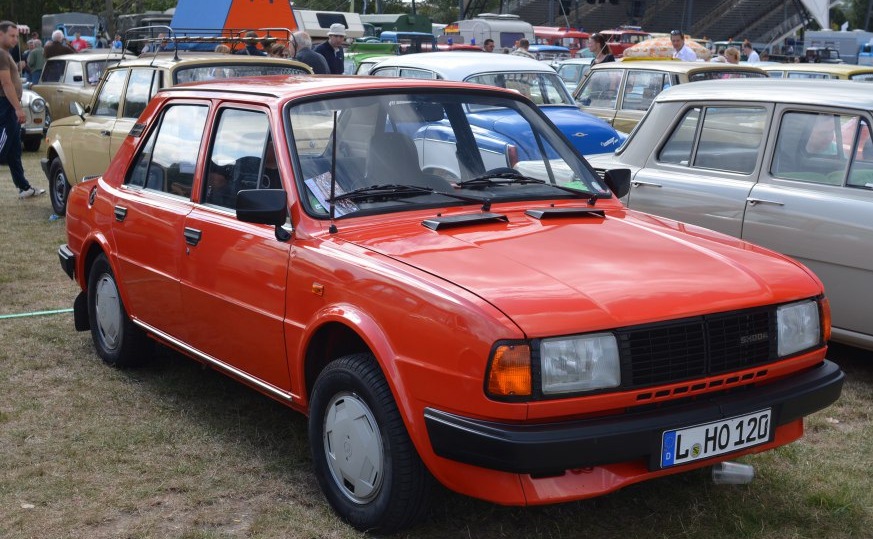
The Škoda 130 GL (S135), produced between 1988 and 1990, represents a late-stage evolution of the long-running Škoda 105/120/130 series. This variant, designated S135 internally, was positioned as a slightly more refined offering within the 130 lineup, primarily aimed at providing a comfortable and economical transportation option for families and individuals in Czechoslovakia and export markets. It was built upon the rear-wheel-drive platform that had served Škoda faithfully for decades, representing a bridge between the older, simpler designs and the more modern front-wheel-drive vehicles that would follow with the introduction of the Favorit in 1987. The 130 GL, while not a performance model, offered a modest upgrade in trim and features compared to the base 130L.
Technical Specifications
| Brand | Škoda |
| Model | 130 |
| Generation | 130 |
| Type (Engine) | GL (S135) (58 Hp) |
| Start of production | 1988 |
| End of production | 1990 |
| Powertrain Architecture | Internal Combustion engine |
| Body type | Sedan |
| Seats | 5 |
| Doors | 4 |
| Fuel Type | Petrol (Gasoline) |
| Power | 58 Hp |
| Engine aspiration | Naturally aspirated engine |
| Engine oil capacity | 4.6 l (4.86 US qt | 4.05 UK qt) |
| Coolant capacity | 11.5 l (12.15 US qt | 10.12 UK qt) |
| Fuel tank capacity | 36 l (9.51 US gal | 7.92 UK gal) |
Powertrain & Engine Architecture
The Škoda 130 GL (S135) was powered by a 1,289 cc (78.6 cu in) inline-four cylinder, naturally aspirated engine. This engine, internally designated as the 742.135, was a development of the Škoda OHV engine family that dated back to the 1960s. It featured a single overhead camshaft (SOHC) operating two valves per cylinder. The engine utilized a Solex JIKOV carburetor for fuel delivery, a relatively simple system compared to fuel injection, but reliable and well-suited to the available fuel quality in many of Škoda’s target markets. The engine produced 58 horsepower (43 kW) at 5,500 rpm and 83 Nm (61 lb-ft) of torque at 3,500 rpm. The engine was mated to a four-speed manual transmission as standard, although a four-speed automatic transmission was available as an option, albeit relatively rare. The automatic transmission was a conventional hydraulic torque converter type, offering smoother operation but at the expense of some performance and fuel economy. The engine block was cast iron, contributing to its durability, while the cylinder head was aluminum alloy.
Driving Characteristics
The Škoda 130 GL (S135) with the manual transmission offered adequate, if not exhilarating, performance. Acceleration from 0 to 60 mph (97 km/h) took approximately 16-18 seconds, and the top speed was around 86 mph (138 km/h). The automatic transmission version noticeably reduced performance, adding several seconds to the 0-60 mph time and lowering the top speed. The rear-wheel-drive layout provided predictable handling, although the car was prone to oversteer if pushed hard. The suspension, consisting of independent front suspension with trailing arms and a rear axle with trailing arms and a transverse leaf spring, provided a reasonably comfortable ride, especially on smoother roads. The steering was a recirculating ball type, offering a somewhat vague feel but requiring relatively little effort. The four-speed gearbox, in both manual and automatic forms, had relatively widely spaced gear ratios, prioritizing fuel economy over outright acceleration. The engine was relatively quiet for its era, but the transmission could be noisy, particularly the automatic version.
Equipment & Trim Levels
The “GL” designation indicated a higher trim level than the base 130L. Standard equipment on the 130 GL included cloth upholstery, a more comprehensive instrument panel with a speedometer, fuel gauge, and coolant temperature gauge, and improved interior trim. Exterior features included chrome bumpers, body-colored wheel arch extensions, and a more refined grille. Optional extras included a radio, heated rear window, and upgraded interior trim materials. The interior design was functional and straightforward, reflecting the car’s utilitarian origins. The dashboard layout was simple, with all controls within easy reach of the driver. The seats were relatively comfortable, providing adequate support for long journeys. The 130 GL aimed to provide a step up in comfort and refinement without significantly increasing the price.
Chassis & Braking
The Škoda 130 GL (S135) utilized a body-on-frame construction, a traditional design that contributed to its robustness. The chassis featured independent front suspension with trailing arms and coil springs, and a rear axle with a transverse leaf spring. The braking system consisted of disc brakes on the front wheels and drum brakes on the rear wheels. The brakes were hydraulically operated, providing adequate stopping power for the car’s weight and performance. The steering was a recirculating ball system, offering relatively low effort but lacking in precision. The tires were typically 165/80 R13, providing a reasonable balance between grip and ride comfort. A stabilizer bar was fitted to the front suspension to reduce body roll during cornering.
Market Reception & Comparison
The Škoda 130 GL (S135) was generally well-received in its target markets, particularly in Czechoslovakia and other Eastern European countries. Critics praised its reliability, durability, and relatively low running costs. However, it was often criticized for its outdated design, modest performance, and lack of modern features compared to Western European and Japanese competitors. Compared to the base 130L, the GL offered a noticeable improvement in comfort and refinement, justifying its slightly higher price. Compared to other models in the Škoda lineup, such as the 120L, the 130 GL offered more power and a slightly more modern appearance. The automatic transmission version was less popular due to its reduced performance and higher fuel consumption. Fuel economy was a strong point, averaging around 35-40 mpg (6.7-7.1 L/100km) in mixed driving conditions.
Legacy
The Škoda 130 GL (S135) represents the culmination of a long line of rear-wheel-drive Škoda sedans. While it was superseded by the front-wheel-drive Favorit in 1987, the 130 series remained in production for several years, catering to customers who preferred the traditional layout and simplicity of the older design. Today, the 130 GL is a popular classic car among enthusiasts, particularly in Eastern Europe. Its robust construction and relatively simple mechanics make it relatively easy to maintain and repair. The 742.135 engine, while not a high-performance unit, is known for its durability and reliability. The availability of spare parts is generally good, although some components can be difficult to find. The Škoda 130 GL (S135) serves as a reminder of a bygone era of automotive engineering, representing a blend of traditional design and modest refinement.
