
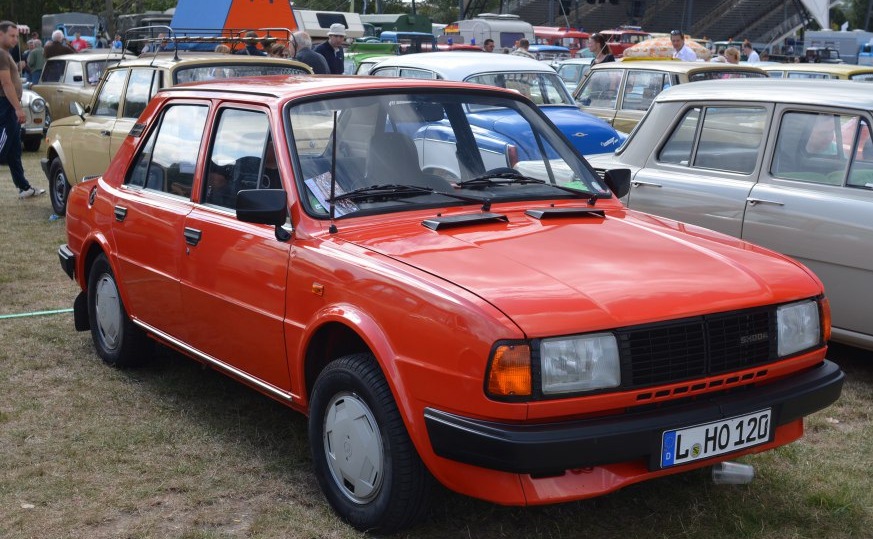
The Škoda 130 L and GL represent a significant evolution in the Czech automaker’s history, produced from 1984 to 1988. These models were the final iterations of the S130 series, building upon the foundation laid by the earlier 105 and 120 models. Positioned as the mainstream variants within the 130 range, the L and GL offered a balance of affordability, practicality, and improved performance compared to their predecessors, primarily for the Eastern European and limited Western European markets. They represented a modernizing effort within the constraints of the planned economy under which Škoda operated at the time, and served as a bridge to the eventual integration with the Volkswagen Group.
Technical Specifications
| Brand | Škoda |
| Model | 130 |
| Generation | 130 |
| Type (Engine) | L, GL (61 Hp) |
| Start of Production | 1984 |
| End of Production | 1988 |
| Powertrain Architecture | Internal Combustion Engine |
| Body Type | Sedan |
| Seats | 5 |
| Doors | 4 |
| Fuel Type | Petrol (Gasoline) |
| Power | 61 Hp |
| Engine Aspiration | Naturally Aspirated |
| Engine Oil Capacity | 4.6 l (4.86 US qt | 4.05 UK qt) |
| Coolant Capacity | 11.5 l (12.15 US qt | 10.12 UK qt) |
| Fuel Tank Capacity | 36 l (9.51 US gal | 7.92 UK gal) |
Powertrain & Engine Architecture
The Škoda 130 L and GL were powered by a 1,289 cc (78.6 cu in) overhead valve (OHV) inline-four cylinder engine, designated as the 742.136. This engine was a direct descendant of the units used in earlier Škoda models, but with refinements aimed at improving reliability and emissions. The engine featured a single overhead camshaft operating two valves per cylinder. Fuel delivery was managed by a Solex C35 PA carburetor, a relatively simple but effective system for the time. The engine produced 61 horsepower (45 kW) at 5,200 rpm and 83 Nm (61 lb-ft) of torque at 3,400 rpm. The engine block was cast iron, while the cylinder head was aluminum alloy. The 130 L and GL exclusively used a four-speed manual transmission, as an automatic transmission was not offered on this model. The transmission was rear-wheel drive, a configuration consistent with Škoda’s engineering heritage.
Driving Characteristics
The Škoda 130 L and GL offered modest performance, reflecting its focus on practicality and fuel economy. Acceleration from 0 to 60 mph (97 km/h) took approximately 16-18 seconds, and the top speed was around 86 mph (138 km/h). The four-speed manual transmission provided adequate gear spacing for everyday driving, but lacked the refinement of more modern gearboxes. The gear ratios were relatively tall, prioritizing fuel efficiency over rapid acceleration. The car’s handling was generally considered safe and predictable, but not particularly sporty. The rear-wheel drive layout provided a degree of balance, but the relatively soft suspension and limited grip of the tires meant that it wasn’t a vehicle designed for aggressive cornering. Compared to the more powerful Škoda 130 RS (Rally Sport) variant, the L and GL were significantly slower and less engaging to drive. However, the RS was a specialized performance model aimed at a different market segment.
Equipment & Trim Levels
The Škoda 130 L and GL were relatively sparsely equipped by Western European standards, but offered a reasonable level of comfort and convenience for their target market. The “L” trim was the base model, featuring vinyl upholstery, basic instrumentation, and minimal exterior trim. The “GL” trim, representing a slight upgrade, included cloth upholstery, a more comprehensive instrument cluster, and chrome trim on the bumpers and window surrounds. Both models featured manually operated windows and door locks. Optional extras included a radio, heated rear window, and upgraded interior trim. The dashboard layout was functional and straightforward, with clearly labeled controls. Interior space was adequate for five passengers, although rear legroom was somewhat limited. The trunk offered a usable amount of cargo space, although the high load lip could make loading and unloading bulky items difficult.
Chassis & Braking
The Škoda 130 L and GL utilized a traditional body-on-frame construction, with a separate chassis and body. The suspension consisted of independent front suspension with coil springs and a live axle with trailing arms and coil springs at the rear. The steering was a recirculating ball system, providing relatively heavy but precise steering feel. The braking system featured drum brakes on all four wheels, which were adequate for normal driving conditions but lacked the stopping power of disc brakes. The GL trim sometimes included upgraded brake linings for slightly improved performance. The tires were typically 165/80 R13, offering a compromise between ride comfort and grip. Stabilizer bars were not standard equipment, contributing to the car’s somewhat pronounced body roll in corners.
Market Reception & Comparison
The Škoda 130 L and GL were well-received in their primary markets of Eastern Europe, where they offered a relatively affordable and reliable means of transportation. Critics praised the car’s practicality, durability, and ease of maintenance. However, they also noted its lack of refinement and relatively low performance compared to Western European rivals. Compared to other trims in the 130 lineup, such as the 130 LS, the L and GL represented the entry-level options. The LS offered more luxurious features and a slightly more powerful engine. Fuel economy was a strong point for the 130 L and GL, averaging around 35-40 mpg (6.7-7.1 L/100km). Reliability was generally good, although the carburetor required periodic adjustment and the drum brakes were prone to fading under heavy use.
Legacy
The Škoda 130 L and GL represent a significant chapter in the history of the Czech automaker. While not a technologically advanced vehicle by Western standards, it was a well-built and practical car that served the needs of a generation of drivers in Eastern Europe. Today, the 130 L and GL are becoming increasingly collectible, particularly among enthusiasts of classic cars and Eastern European automotive history. The simple mechanical design and readily available parts make them relatively easy to maintain and restore. The 742.136 engine, while not particularly powerful, is known for its durability and reliability. The Škoda 130 L and GL stand as a testament to the ingenuity and resourcefulness of Czech engineers, and a reminder of a bygone era in automotive history. Finding well-preserved examples is becoming increasingly difficult, but those that remain offer a unique glimpse into the automotive landscape of the 1980s.
