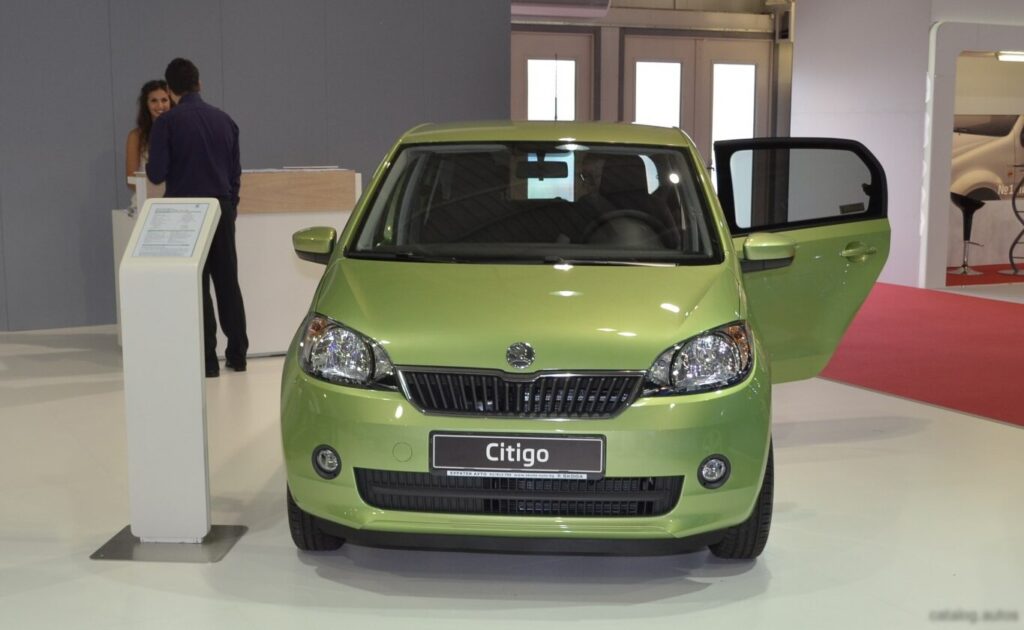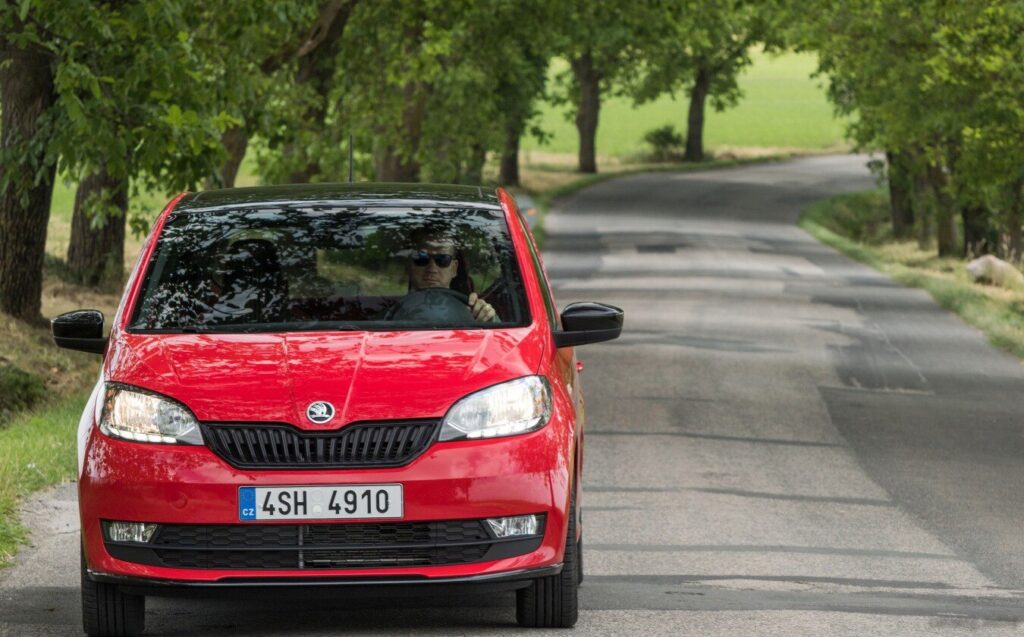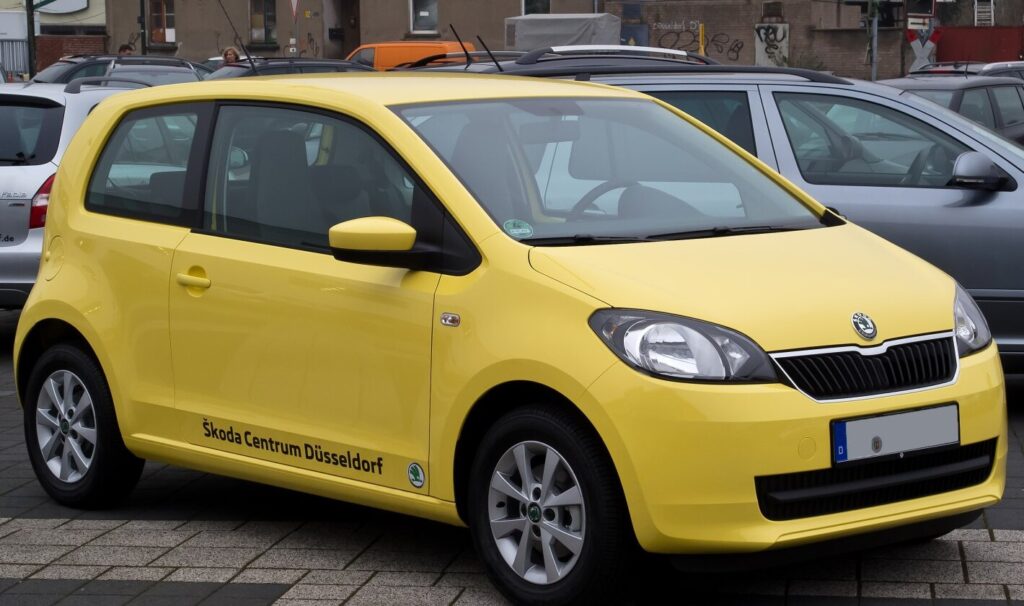
The Skoda Citigo 1.0, producing 75 horsepower, was a key component of Skoda’s entry into the city car segment. Introduced in October 2011 and continuing through 2017, the 3-door Citigo was part of the Volkswagen Group’s New Small Family (NSF) project, sharing its platform – the 1HX0/A3 – with the Volkswagen up! and SEAT Mii. Positioned as the most affordable trim level in the Citigo range, it aimed to provide economical and practical transportation for urban drivers. This variant focused on fuel efficiency and low running costs, making it a popular choice for first-time car buyers and those seeking a cost-effective second vehicle.
Technical Specifications
| Brand | Skoda |
| Model | Citigo |
| Generation | Citigo (3-door) |
| Type (Engine) | 1.0 (75 Hp) |
| Start of production | October, 2011 |
| End of production | 2017 |
| Powertrain Architecture | Internal Combustion engine |
| Body type | Hatchback |
| Seats | 4 |
| Doors | 3 |
| Fuel consumption (urban) | 5.9 l/100 km (39.9 US mpg, 47.9 UK mpg, 16.9 km/l) |
| Fuel consumption (extra urban) | 4 l/100 km (58.8 US mpg, 70.6 UK mpg, 25 km/l) |
| Fuel consumption (combined) | 4.7 l/100 km (50 US mpg, 60.1 UK mpg, 21.3 km/l) |
| CO2 emissions | 108 g/km |
| Fuel Type | Petrol (Gasoline) |
| Acceleration 0 – 100 km/h | 13.2 sec |
| Acceleration 0 – 62 mph | 13.2 sec |
| Acceleration 0 – 60 mph | 12.5 sec |
| Maximum speed | 171 km/h (106.25 mph) |
| Emission standard | Euro 5 |
| Weight-to-power ratio | 12.4 kg/Hp, 80.7 Hp/tonne |
| Weight-to-torque ratio | 9.8 kg/Nm, 102.3 Nm/tonne |
| Power | 75 Hp @ 6200 rpm |
| Power per litre | 75.1 Hp/l |
| Torque | 95 Nm @ 3000-4300 rpm (70.07 lb.-ft. @ 3000-4300 rpm) |
| Engine layout | Front, Transverse |
| Engine Model/Code | CHYB |
| Engine displacement | 999 cm3 (60.96 cu. in.) |
| Number of cylinders | 3 |
| Engine configuration | Inline |
| Fuel injection system | Multi-port manifold injection |
| Engine aspiration | Naturally aspirated engine |
| Engine oil capacity | 3.4 l (3.59 US qt | 2.99 UK qt) |
| Coolant capacity | 4.2 l (4.44 US qt | 3.7 UK qt) |
| Kerb Weight | 929 kg (2048.09 lbs.) |
| Max. weight | 1290 kg (2843.96 lbs.) |
| Max load | 361 kg (795.87 lbs.) |
| Trunk (boot) space – minimum | 251 l (8.86 cu. ft.) |
| Trunk (boot) space – maximum | 951 l (33.58 cu. ft.) |
| Fuel tank capacity | 35 l (9.25 US gal | 7.7 UK gal) |
| Length | 3563 mm (140.28 in.) |
| Width | 1641 mm (64.61 in.) |
| Height | 1478 mm (58.19 in.) |
| Wheelbase | 2420 mm (95.28 in.) |
| Front track | 1428 mm (56.22 in.) |
| Rear track | 1424 mm (56.06 in.) |
| Minimum turning circle | 9.8 m (32.15 ft.) |
| Drivetrain Architecture | Front wheel drive |
| Number of gears | 5 gears, manual transmission |
| Front suspension | Independent, type McPherson with coil spring and anti-roll bar |
| Rear suspension | Semi-dependent beam with stabilizer lateral stability |
| Front brakes | Ventilated discs |
| Rear brakes | Drum |
| Assisting systems | ABS (Anti-lock braking system) |
| Steering type | Steering rack and pinion |
| Power steering | Electric Steering |
| Tires size | 165/70 R14 |
| Wheel rims size | 5.0J x 14 |
Powertrain & Engine Architecture
The heart of the Citigo 1.0 was the CHYB engine code, a naturally aspirated, three-cylinder 1.0-liter petrol engine. This engine was part of Volkswagen Group’s EA111 family, known for its compact size and efficiency. The CHYB featured multi-point fuel injection, delivering fuel directly into the intake ports. The engine utilized a single overhead camshaft (SOHC) valvetrain with two valves per cylinder. Paired with this engine was a standard five-speed manual transmission, optimized for fuel economy rather than outright performance. The engine’s relatively low compression ratio and simple design contributed to its reliability and ease of maintenance. While a five-speed automatic transmission was offered on some Citigo models, it was not available with the base 75 hp engine.
Driving Characteristics
The 75 hp Citigo 1.0, with its manual transmission, offered modest but adequate performance for city driving. Acceleration from 0-60 mph took around 12.5 seconds, and top speed was approximately 106 mph. The engine’s torque peak of 95 Nm (70 lb-ft) arrived between 3000 and 4300 rpm, meaning drivers needed to rev the engine to access its power. Compared to the more powerful 1.2-liter four-cylinder engine offered in other Citigo trims, the 1.0-liter felt noticeably slower, especially when fully loaded or tackling inclines. However, the lighter weight of the three-cylinder engine contributed to nimble handling and a responsive steering feel. The five-speed gearbox was well-matched to the engine’s characteristics, providing reasonable gear spacing for both urban and highway driving.
Equipment & Trim Levels
The base-level Citigo 1.0 typically came with a fairly basic specification, focusing on essential features. Standard equipment included power steering, ABS brakes, front airbags, and a basic audio system. Interior upholstery was typically cloth, and the dashboard featured a simple, functional design. Optional extras included air conditioning, electric front windows, central locking, and alloy wheels. Higher trim levels, such as the ‘Elegance’ and ‘Sport’, added more features as standard, but the 1.0-liter engine remained the entry point to the Citigo range.
Chassis & Braking
The Citigo’s chassis was designed for affordability and efficiency. The front suspension utilized a McPherson strut setup with a coil spring and anti-roll bar, providing a comfortable ride and predictable handling. The rear suspension employed a semi-independent torsion beam, which helped to minimize costs and weight. Brakes were ventilated discs on the front wheels and drum brakes on the rear. ABS (Anti-lock Braking System) was standard, enhancing safety during emergency braking. The relatively light weight of the Citigo 1.0 contributed to its braking performance, and the steering was light and easy to use, making it ideal for maneuvering in tight urban spaces.
Market Reception & Comparison
The Skoda Citigo 1.0 was generally well-received by automotive critics as a practical and affordable city car. Its fuel economy – averaging around 50 US mpg in combined driving – was a major selling point. Compared to other city cars in its class, such as the Fiat 500 and Toyota Aygo, the Citigo offered a more spacious interior and a more competitive price. However, some critics noted that the 1.0-liter engine lacked the refinement and performance of some of its rivals. In terms of reliability, the Citigo proved to be a dependable vehicle, with relatively few reported issues. The 1.2-liter engine offered in higher trims provided more power but came at a higher price and with slightly lower fuel economy.
Legacy
The Skoda Citigo 1.0 has established a reputation as a reliable and economical used car. Its simple engine design and robust construction contribute to its longevity. While not known for its blistering performance, the 1.0-liter engine is relatively easy and inexpensive to maintain. Today, the Citigo 1.0 remains a popular choice for budget-conscious buyers seeking a practical and efficient city car. Its affordability, combined with Skoda’s reputation for build quality, ensures that it continues to hold its value in the used car market.