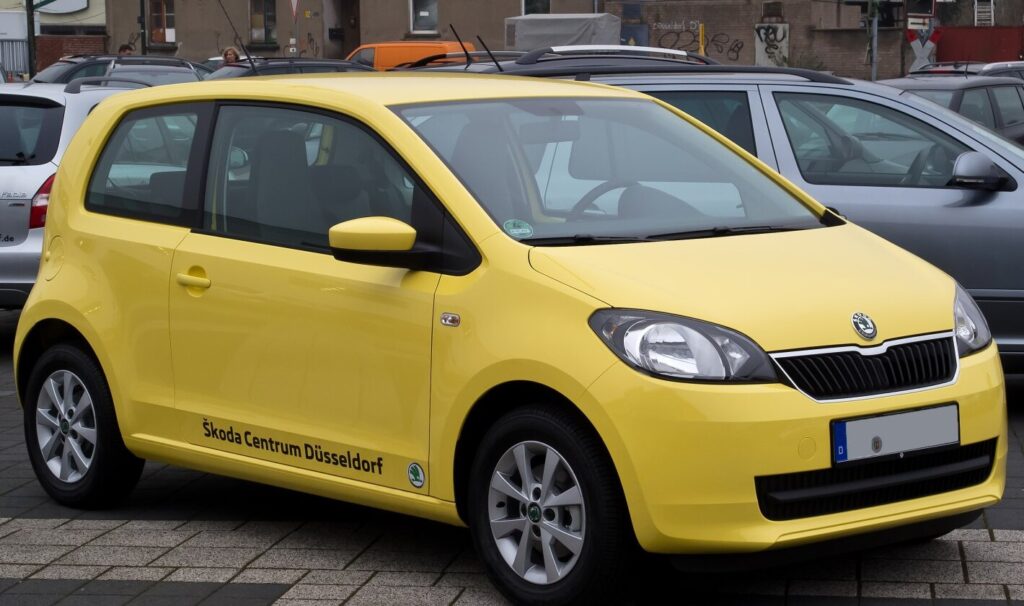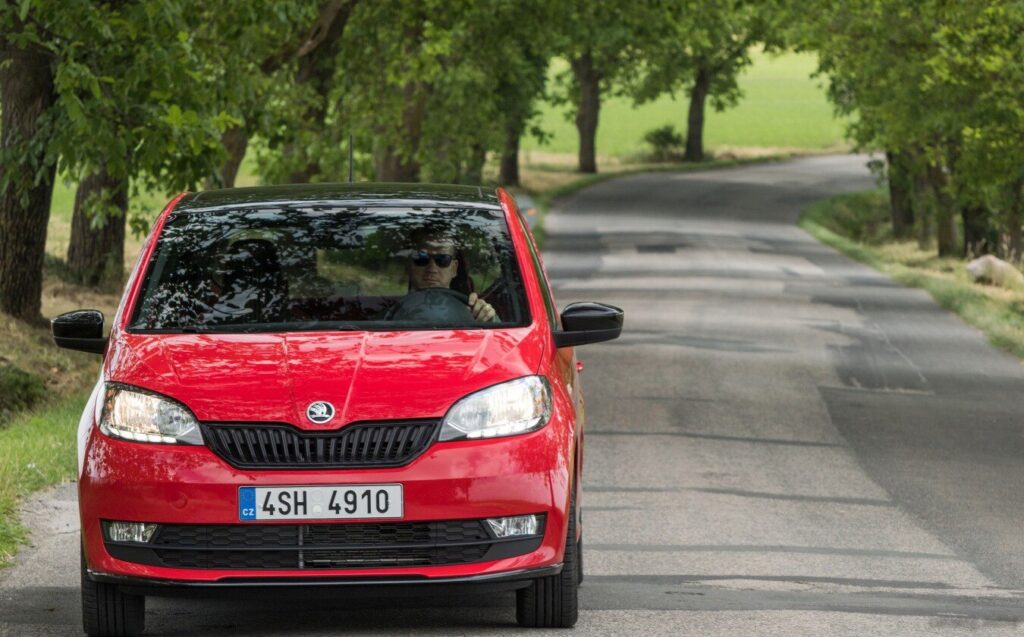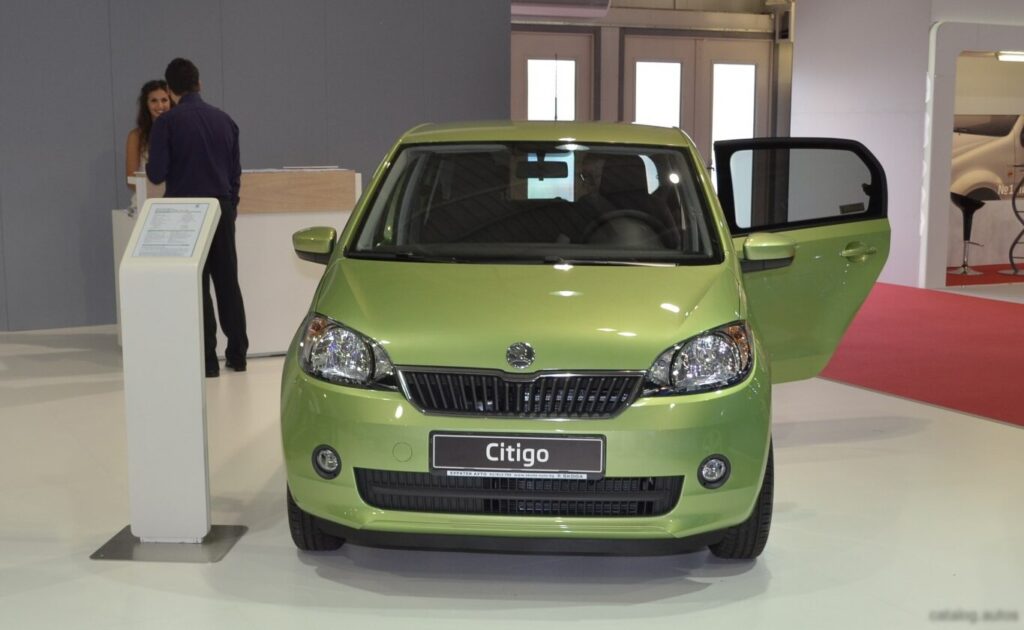
The Skoda Citigo, specifically the five-door 1.0-liter (75 horsepower) automatic variant, was a city car produced by the Czech manufacturer Skoda Auto between October 2011 and 2017. Part of the Volkswagen Group’s New Small Family (NSF) project, alongside the Volkswagen up! and SEAT Mii, the Citigo represented Skoda’s entry into the ultra-compact car segment. This particular engine and transmission combination was positioned as a convenient, if not particularly sporty, option within the Citigo lineup, aimed at drivers prioritizing ease of use and fuel efficiency over outright performance. It was a key model for Skoda in European markets, offering an affordable and practical solution for urban transportation.
Technical Specifications
| Brand | Skoda |
| Model | Citigo |
| Generation | Citigo (5-door) |
| Type (Engine) | 1.0 (75 Hp) Automatic |
| Start of production | October, 2011 |
| End of production | 2017 |
| Powertrain Architecture | Internal Combustion engine |
| Body type | Hatchback |
| Seats | 4 |
| Doors | 5 |
| Fuel consumption (urban) | 5.5 l/100 km (42.8 US mpg, 51.4 UK mpg, 18.2 km/l) |
| Fuel consumption (extra urban) | 4 l/100 km (58.8 US mpg, 70.6 UK mpg, 25 km/l) |
| Fuel consumption (combined) | 4.5 l/100 km (52.3 US mpg, 62.8 UK mpg, 22.2 km/l) |
| CO2 emissions | 105 g/km |
| Fuel Type | Petrol (Gasoline) |
| Acceleration 0 – 100 km/h | 13.9 sec |
| Acceleration 0 – 62 mph | 13.9 sec |
| Acceleration 0 – 60 mph | 13.2 sec |
| Maximum speed | 171 km/h (106.25 mph) |
| Emission standard | Euro 5 |
| Weight-to-power ratio | 12.4 kg/Hp, 80.5 Hp/tonne |
| Weight-to-torque ratio | 9.8 kg/Nm, 101.9 Nm/tonne |
| Power | 75 Hp @ 6200 rpm |
| Power per litre | 75.1 Hp/l |
| Torque | 95 Nm @ 3000-4300 rpm (70.07 lb.-ft. @ 3000-4300 rpm) |
| Engine layout | Front, Transverse |
| Engine Model/Code | CHYB |
| Engine displacement | 999 cm3 (60.96 cu. in.) |
| Number of cylinders | 3 |
| Engine configuration | Inline |
| Fuel injection system | Multi-port manifold injection |
| Engine aspiration | Naturally aspirated engine |
| Engine oil capacity | 3.4 l (3.59 US qt | 2.99 UK qt) |
| Coolant capacity | 4.2 l (4.44 US qt | 3.7 UK qt) |
| Kerb Weight | 932 kg (2054.71 lbs.) |
| Max. weight | 1290 kg (2843.96 lbs.) |
| Max load | 358 kg (789.25 lbs.) |
| Trunk (boot) space – minimum | 251 l (8.86 cu. ft.) |
| Trunk (boot) space – maximum | 959 l (33.87 cu. ft.) |
| Fuel tank capacity | 35 l (9.25 US gal | 7.7 UK gal) |
| Length | 3563 mm (140.28 in.) |
| Width | 1645 mm (64.76 in.) |
| Height | 1478 mm (58.19 in.) |
| Wheelbase | 2420 mm (95.28 in.) |
| Front track | 1428 mm (56.22 in.) |
| Rear track | 1424 mm (56.06 in.) |
| Minimum turning circle | 9.8 m (32.15 ft.) |
| Drivetrain Architecture | Front wheel drive |
| Number of gears | 5 |
| Gearbox type | Automatic transmission |
| Front suspension | Independent, McPherson with coil spring and anti-roll bar |
| Rear suspension | Semi-dependent beam with stabilizer |
| Front brakes | Ventilated discs |
| Rear brakes | Drum |
| Assisting systems | ABS (Anti-lock braking system) |
| Steering type | Steering rack and pinion |
| Power steering | Electric |
| Tires size | 165/70 R14 |
| Wheel rims size | 5.0J x 14 |
INTRODUCTION
The Skoda Citigo 1.0 (75 Hp) Automatic, produced from 2011 to 2017, was a five-door hatchback designed as an affordable and practical city car. Built on the Volkswagen Group’s A05 (1HX0/A3) platform – shared with the VW up! and SEAT Mii – the Citigo aimed to provide a cost-effective and efficient transportation solution. The 1.0-liter engine with 75 horsepower, coupled with an automatic transmission, represented a mid-range offering within the Citigo lineup, positioned between the base 60 hp engine and potentially higher-spec trims with manual transmissions. It was primarily sold in European markets, where demand for small, fuel-efficient vehicles is high.
Powertrain & Engine Architecture
The heart of the Citigo 1.0 Automatic is the CHYB engine code, a naturally aspirated, three-cylinder 999cc petrol engine. This engine utilizes a multi-point fuel injection system, delivering fuel directly into the intake ports. The engine features a single overhead camshaft (SOHC) valvetrain, operating with four valves per cylinder. The automatic transmission is a conventional five-speed unit, chosen for its ease of use in congested urban environments. While not known for its rapid acceleration, the transmission provides smooth shifts and contributes to the car’s overall fuel efficiency. The engine’s relatively simple design contributes to its reliability and ease of maintenance.
Driving Characteristics
The 75 horsepower output and automatic transmission of this Citigo variant result in a driving experience focused on practicality rather than performance. Acceleration from 0-60 mph takes around 13.2 seconds, and top speed is approximately 106 mph. The automatic transmission, while convenient, does slightly diminish the responsiveness compared to the manual gearbox options. Gear ratios are optimized for fuel economy, meaning the engine can feel strained when accelerating quickly or climbing hills. However, in typical city driving conditions, the engine provides adequate power for merging into traffic and maintaining a comfortable cruising speed. The steering is light and precise, making maneuvering in tight spaces easy.
Equipment & Trim Levels
The Citigo 1.0 Automatic typically came equipped with a reasonable level of standard features. These included central locking, power steering, electric front windows, and an ABS anti-lock braking system. Interior upholstery was typically cloth, with a functional, if somewhat basic, dashboard layout. Optional extras available for this trim level included air conditioning, alloy wheels, and a stereo system with CD player. Higher trim levels, if selected, might have added features like parking sensors and a trip computer. The focus was on providing essential features at an affordable price point.
Chassis & Braking
The Citigo’s chassis is designed for nimble handling and a comfortable ride. The front suspension utilizes an independent McPherson strut setup, while the rear suspension employs a semi-dependent torsion beam. This configuration provides a good balance between ride quality and handling. The braking system features ventilated discs on the front wheels and drum brakes on the rear. While adequate for the car’s weight and performance, the rear drum brakes are a cost-saving measure and don’t offer the same stopping power as disc brakes. The car’s relatively light weight (around 932 kg or 2055 lbs) contributes to its agility and fuel efficiency.
Market Reception & Comparison
The Skoda Citigo 1.0 Automatic was generally well-received by automotive critics as a practical and affordable city car. Its fuel economy (around 52.3 US mpg combined) was a major selling point, and its compact size made it easy to park and maneuver in urban environments. Compared to the 60 hp version, the 75 hp engine offered a noticeable improvement in performance, although the automatic transmission did slightly offset this gain. Compared to higher-spec trims with manual transmissions, the 1.0 Automatic was seen as a compromise, offering convenience at the expense of some driving engagement. However, it remained a popular choice for drivers prioritizing ease of use and low running costs.
Legacy
The Skoda Citigo, and specifically the 1.0 (75 Hp) Automatic variant, has proven to be a reliable and durable vehicle. The simple engine design and robust automatic transmission contribute to its long-term dependability. On the used car market, Citigos are generally affordable and represent good value for money. While not a performance car, the 1.0 Automatic remains a practical and economical choice for urban commuters and first-time car buyers. Its fuel efficiency and low maintenance costs continue to make it an attractive option, even years after production ceased. The Citigo helped establish Skoda as a maker of well-built, affordable cars in the European market.