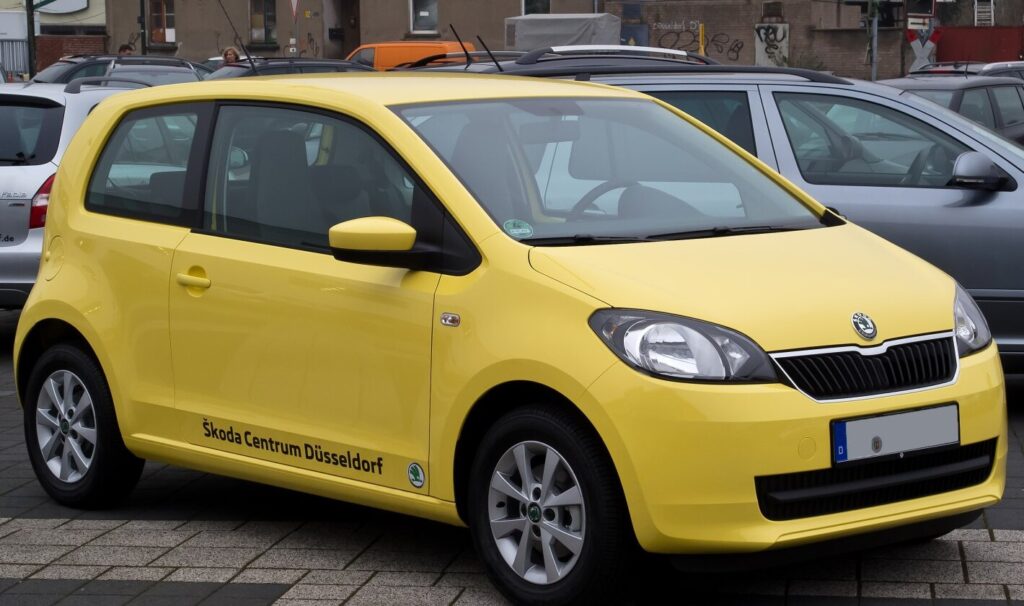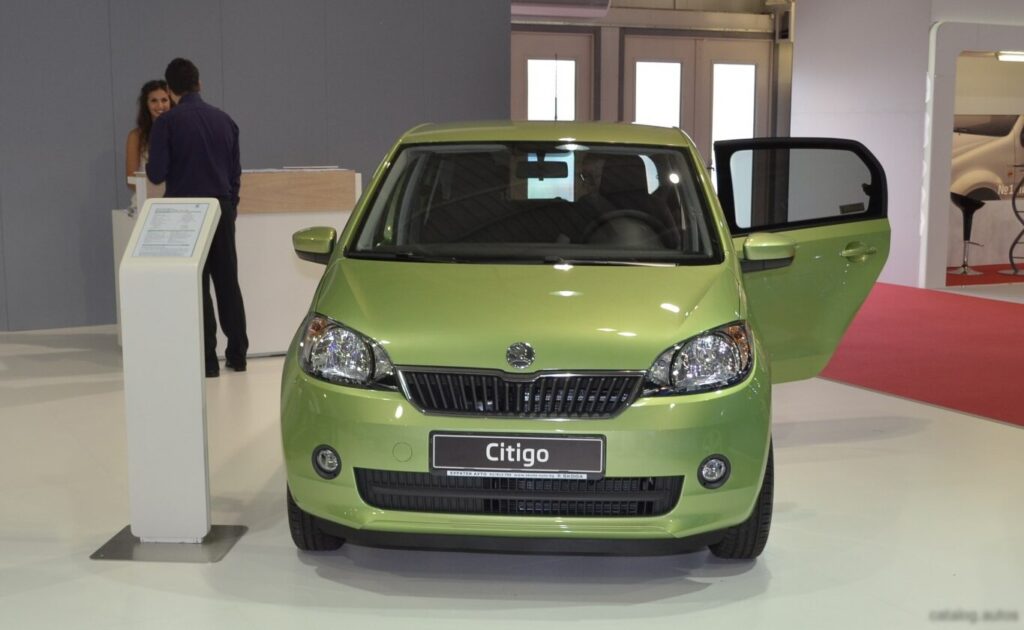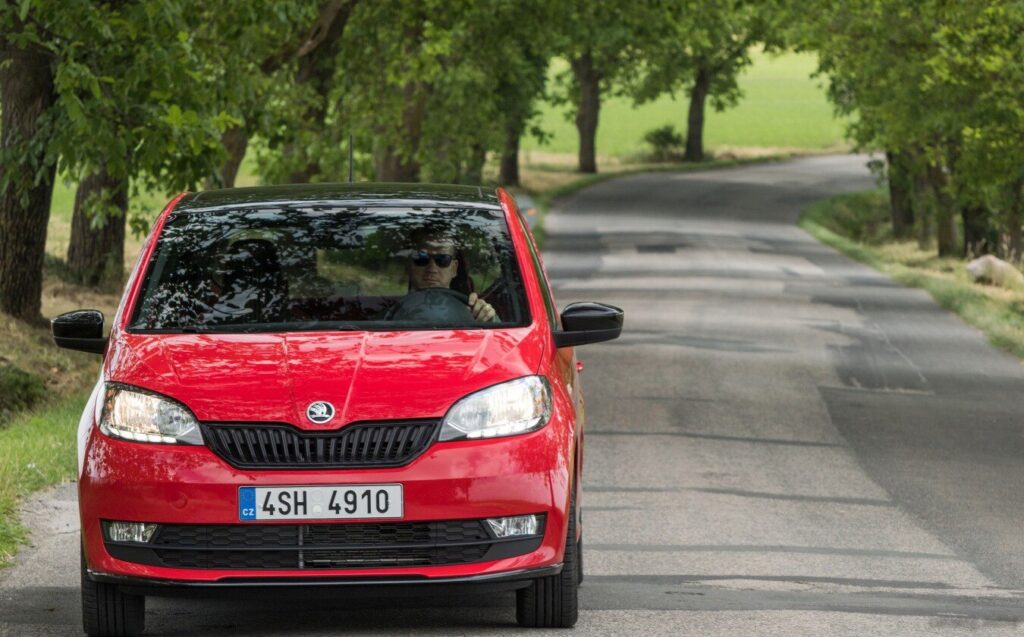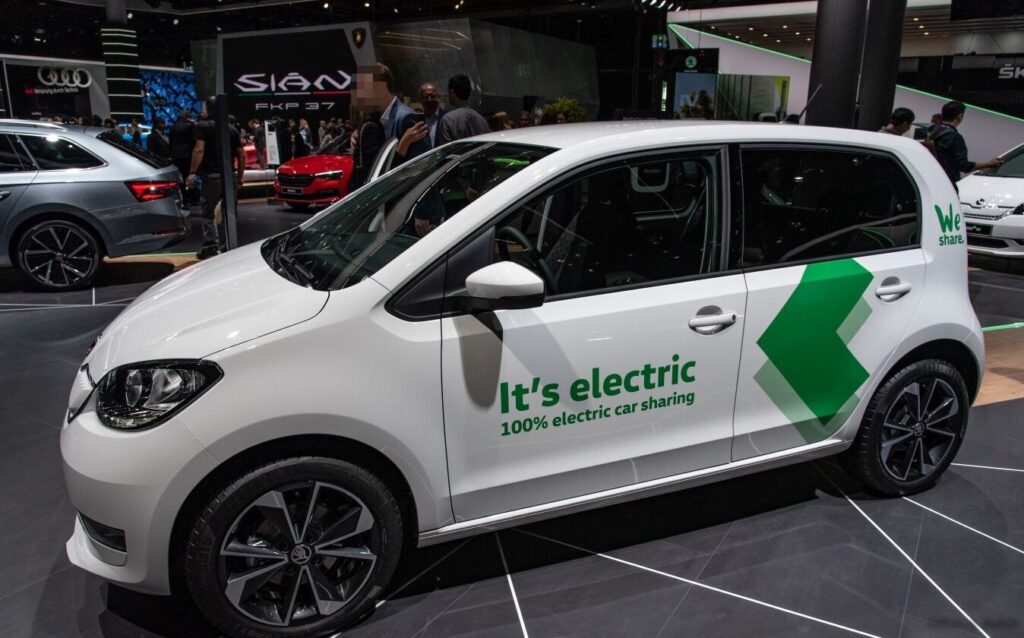
The Skoda Citigo iV, specifically the 36.8 kWh variant producing 83 horsepower, represents Skoda’s entry into the all-electric city car segment. Introduced in 2019 and produced through 2020, this five-door hatchback was a key component of the Volkswagen Group’s broader electrification strategy, sharing its platform and core technology with the Volkswagen e-up! and SEAT eMii. The Citigo iV aimed to provide an affordable and practical electric vehicle option for urban commuters, capitalizing on growing environmental awareness and increasingly stringent emissions regulations in Europe.
Technical Specifications
| Brand | Skoda |
| Model | Citigo |
| Generation | Citigo (facelift 2017, 5-door) |
| Type (Engine) | iV 36.8 kWh (83 Hp) |
| Start of production | 2019 |
| End of production | 2020 |
| Powertrain Architecture | BEV (Electric Vehicle) |
| Body type | Hatchback |
| Seats | 4 |
| Doors | 5 |
| Fuel Type | Electricity |
| Acceleration 0 – 100 km/h | 12.3 sec |
| Acceleration 0 – 62 mph | 12.3 sec |
| Acceleration 0 – 60 mph | 11.7 sec |
| Maximum speed | 130 km/h (80.78 mph) |
| Weight-to-power ratio | 14 kg/Hp, 71.6 Hp/tonne |
| Weight-to-torque ratio | 5.5 kg/Nm, 182.8 Nm/tonne |
| Gross battery capacity | 36.8 kWh |
| Net (usable) battery capacity | 32.3 kWh |
| Battery voltage | 357 V |
| Battery technology | Lithium-ion (Li-Ion) |
| Battery location | Below the floor |
| All-electric range (WLTP) | 258 km (160.31 mi) |
| Average Energy consumption (WLTP) | 14.8 kWh/100 km (23.82 kWh/100 mi, 141 MPGe, 6.8 km/kWh, 4.2 mi/kWh) |
| Average Energy consumption (NEDC) | 12.8-12.9 kWh/100 km (20.6 – 20.76 kWh/100 mi, 164 – 162 MPGe, 7.8 – 7.8 km/kWh, 4.9 – 4.8 mi/kWh) |
| Electric motor power | 83 Hp @ 2750-5500 rpm |
| Electric motor Torque | 212 Nm @ 0-2750 rpm (156.36 lb.-ft. @ 0-2750 rpm) |
| Electric motor location | Front axle, Transverse |
| System power | 83 Hp @ 2750-5500 rpm |
| System torque | 212 Nm @ 0-2750 rpm (156.36 lb.-ft. @ 0-2750 rpm) |
| Kerb Weight | 1160-1190 kg (2557.36 – 2623.5 lbs.) |
| Max. weight | 1530 kg (3373.07 lbs.) |
| Max load | 340-370 kg (749.57 – 815.71 lbs.) |
| Trunk (boot) space – minimum | 250 l (8.83 cu. ft.) |
| Trunk (boot) space – maximum | 923 l (32.6 cu. ft.) |
| Max. roof load | 50 kg (110.23 lbs.) |
| Length | 3597 mm (141.61 in.) |
| Width | 1645 mm (64.76 in.) |
| Width including mirrors | 1910 mm (75.2 in.) |
| Height | 1481 mm (58.31 in.) |
| Wheelbase | 2422 mm (95.35 in.) |
| Front track | 1428 mm (56.22 in.) |
| Rear (Back) track | 1424 mm (56.06 in.) |
| Front overhang | 633 mm (24.92 in.) |
| Rear overhang | 542 mm (21.34 in.) |
| Ride height (ground clearance) | 141 mm (5.55 in.) |
| Drag coefficient (Cd) | 0.325 |
| Minimum turning circle | 9.8 m (32.15 ft.) |
| Approach angle | 15.8° |
| Departure angle | 27.2° |
| Drivetrain Architecture | One electric motor drives the front wheels. |
| Drive wheel | Front wheel drive |
| Number of gears and type of gearbox | 1 gears, automatic transmission |
| Front suspension | Independent, type McPherson with coil spring and anti-roll bar |
| Rear suspension | Elastic beam |
| Front brakes | Ventilated discs |
| Rear brakes | Drum |
| Assisting systems | ABS (Anti-lock braking system) |
| Steering type | Steering rack and pinion |
| Power steering | Electric Steering |
| Tires size | 175/70 R14; 185/50 R16 |
| Wheel rims size | 5J x 14; 6J x 16 |
Powertrain & Engine Architecture
The Citigo iV utilizes a permanently magnetized synchronous electric motor producing 83 horsepower (61 kW) and 212 Nm (156 lb-ft) of torque. This motor is mounted transversely at the front of the vehicle, driving the front wheels. Power is delivered through a single-speed automatic transmission, typical of most electric vehicles. The heart of the system is the 36.8 kWh lithium-ion battery pack, positioned under the floor of the vehicle to optimize space and lower the center of gravity. The battery utilizes a sophisticated thermal management system to maintain optimal operating temperatures, crucial for longevity and performance. The onboard charger supports both AC and DC fast charging, allowing for relatively quick replenishment of the battery. The motor controller manages the flow of energy between the battery and the motor, optimizing efficiency and responsiveness.
Driving Characteristics
The 83 hp electric motor provides brisk acceleration for city driving, with a 0-60 mph time of around 11.7 seconds. While not a performance car, the instant torque characteristic of electric motors delivers a responsive and enjoyable driving experience. The single-speed transmission simplifies operation, and the regenerative braking system allows for one-pedal driving in many situations, further enhancing efficiency. Compared to higher-output electric vehicles, the Citigo iV prioritizes efficiency and affordability over outright speed. The relatively low weight of the vehicle (1160-1190 kg) contributes to its nimble handling. The steering is light and precise, making it easy to maneuver in tight urban environments.
Equipment & Trim Levels
The Citigo iV was generally well-equipped for its price point. Standard features typically included air conditioning, a touchscreen infotainment system with Bluetooth connectivity, and a suite of safety features such as ABS, electronic stability control, and multiple airbags. Higher trim levels offered additional features like alloy wheels, parking sensors, and a more advanced infotainment system. Interior upholstery was typically cloth, with a focus on durability and practicality. Optional extras included a fast-charging cable and various cosmetic enhancements.
Chassis & Braking
The Citigo iV utilizes a McPherson strut front suspension and an elastic beam rear suspension. This setup provides a comfortable ride quality while maintaining good handling characteristics. The front brakes are ventilated discs, while the rear brakes are drums. This configuration is a cost-effective solution for a vehicle in this segment. Electric power steering provides light and precise steering feel. The vehicle’s relatively low weight contributes to its braking performance, and the regenerative braking system helps to reduce wear on the conventional brakes.
Market Reception & Comparison
The Skoda Citigo iV was generally well-received by critics as an affordable and practical electric city car. Its compact size, decent range, and relatively low price made it an attractive option for urban commuters. Compared to the petrol-powered Citigo, the iV offered significantly lower running costs and zero tailpipe emissions. However, its limited range and relatively slow charging speed were noted as drawbacks. Compared to other electric vehicles in the market, the Citigo iV was positioned as a budget-friendly option, competing with the Volkswagen e-up! and SEAT eMii, which shared the same underlying technology.
Legacy
The Skoda Citigo iV, despite its short production run, played a significant role in Skoda’s transition to electric mobility. It demonstrated the brand’s commitment to sustainable transportation and provided valuable experience in the development of future electric vehicles. On the used car market, the Citigo iV remains a relatively affordable entry point into electric vehicle ownership. The longevity of the battery pack is a key consideration for potential buyers, and regular maintenance of the cooling system is crucial for ensuring optimal battery performance. The simplicity of the electric powertrain generally translates to lower maintenance costs compared to internal combustion engine vehicles.