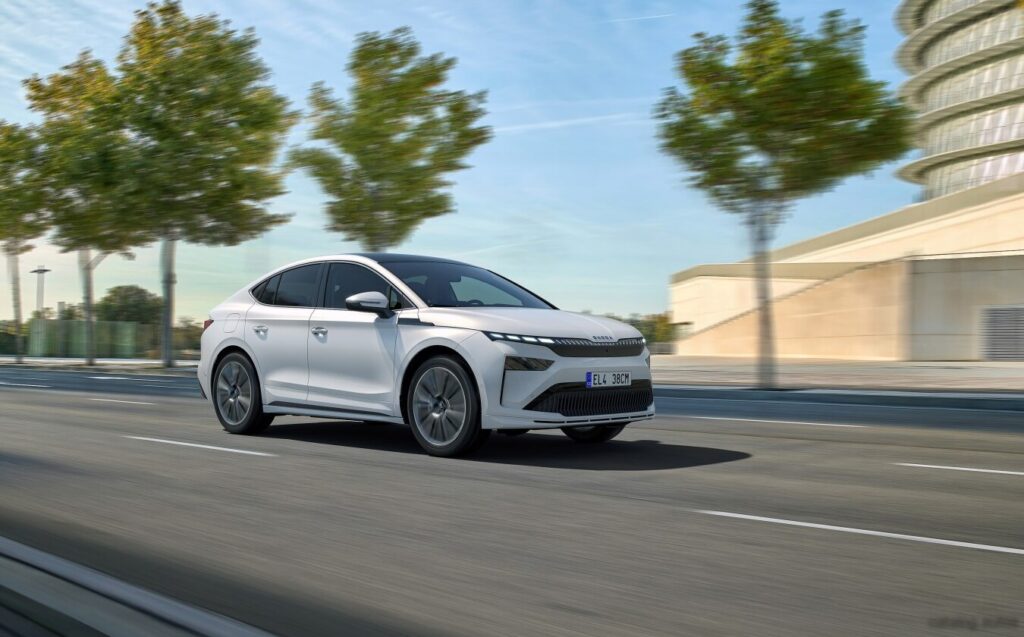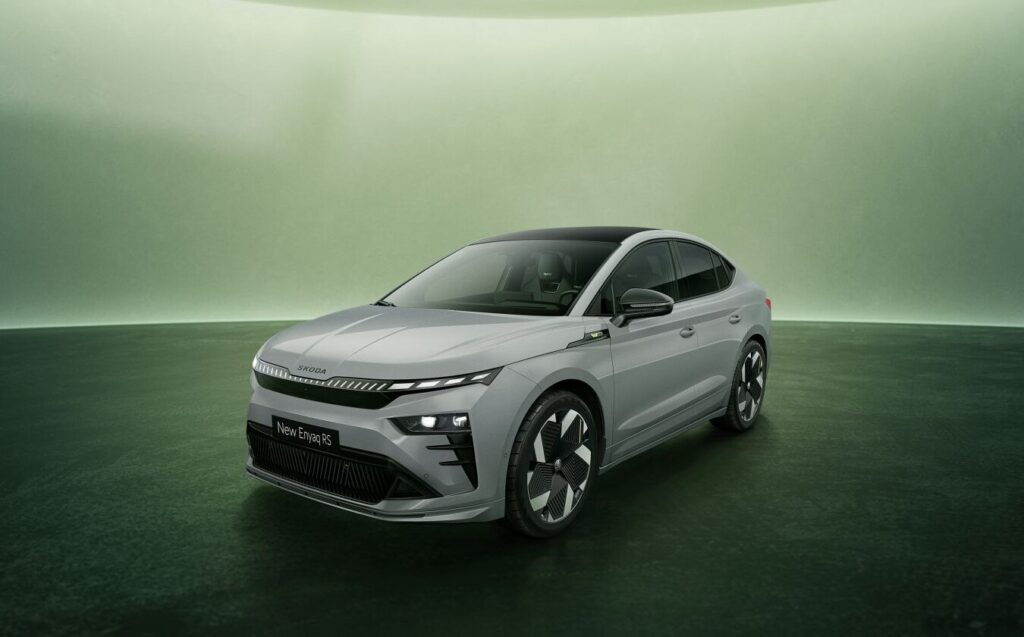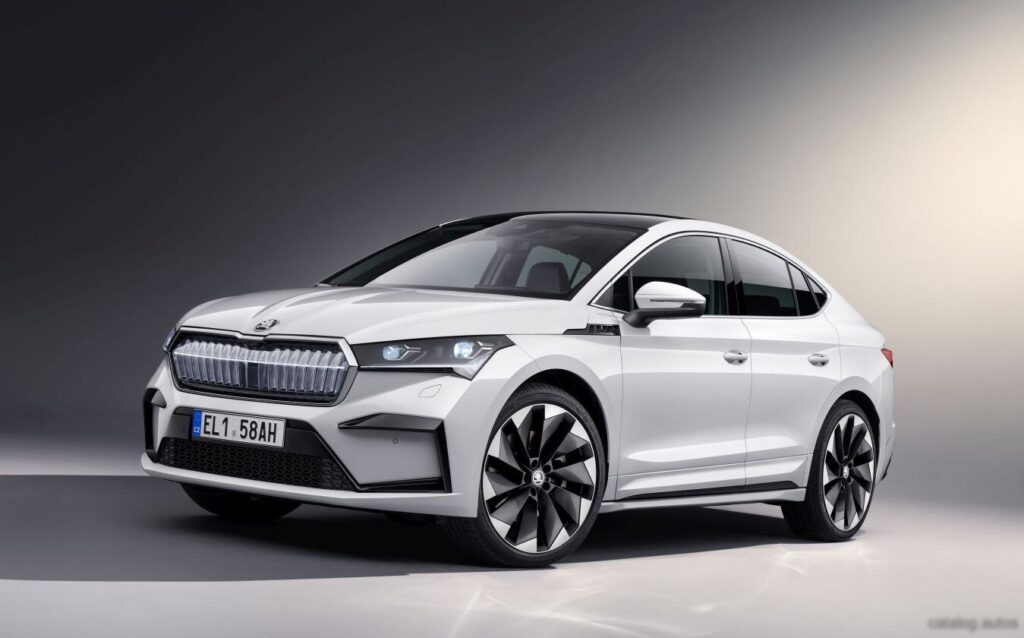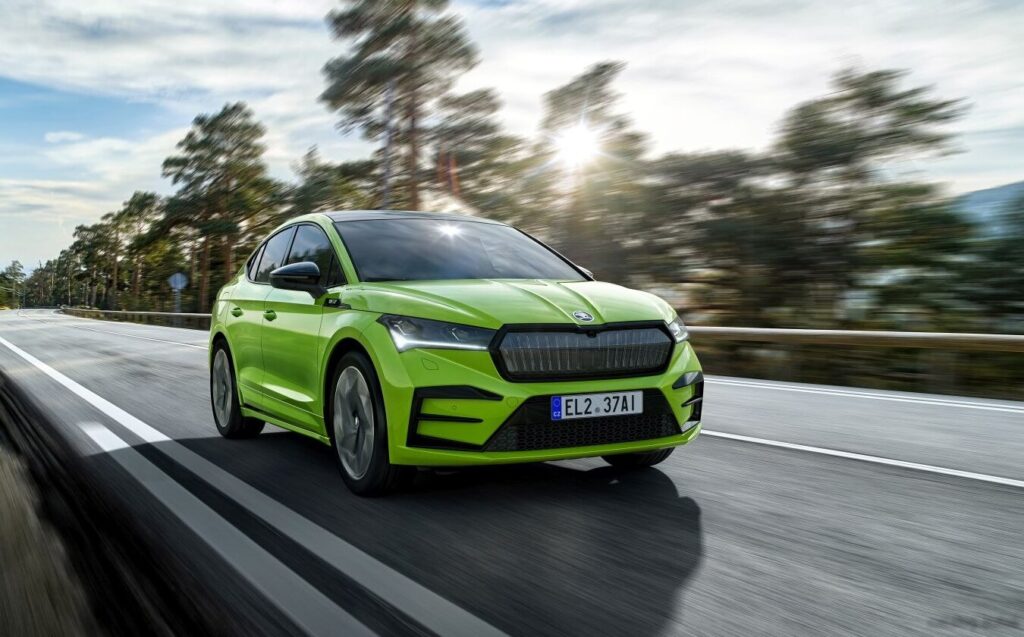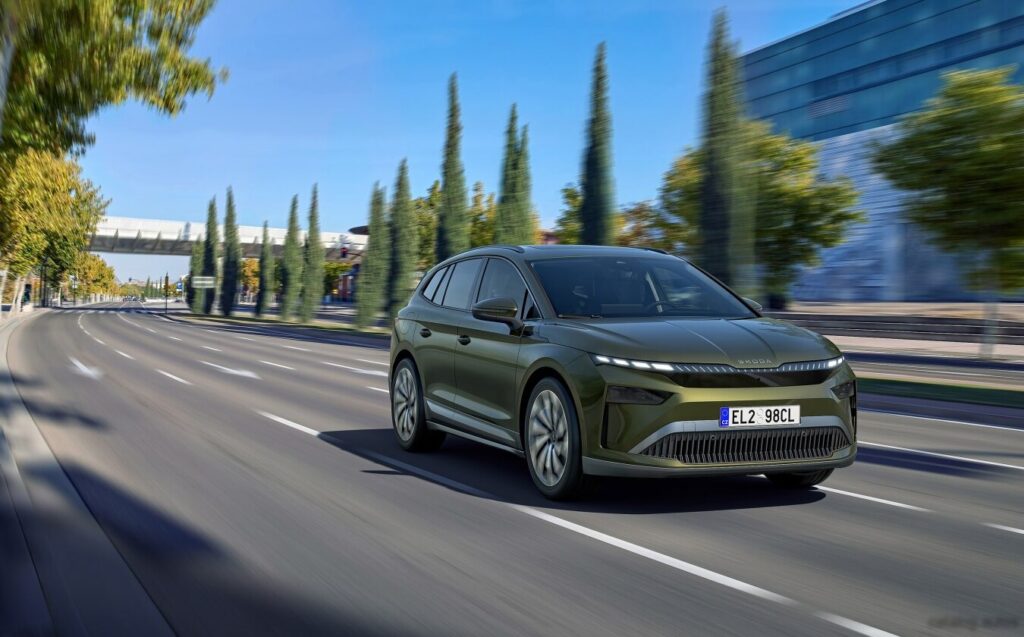
The Skoda Enyaq 60, introduced with the 2025 facelift, represents an important entry point into Skoda’s all-electric vehicle lineup. Utilizing a 63 kWh battery pack and a single electric motor producing 204 horsepower, this variant is positioned as a balance between affordability and range within the broader Enyaq family. Production commenced in 2025, building upon the foundation of the original Enyaq iV, which debuted as Skoda’s first purpose-built electric vehicle, based on the Volkswagen Group’s MEB platform. The facelifted model brings updated styling, improved technology, and refinements to the powertrain, aiming to enhance the overall ownership experience.
Technical Specifications
| Brand | Skoda |
| Model | Enyaq |
| Generation | Enyaq (facelift 2025) |
| Type (Engine) | 60 63 kWh (204 Hp) |
| Start of production | 2025 |
| Powertrain Architecture | BEV (Electric Vehicle) |
| Body type | SUV |
| Seats | 5 |
| Doors | 5 |
| Fuel Type | Electricity |
| Acceleration 0 – 100 km/h | 8.1 sec |
| Acceleration 0 – 62 mph | 8.1 sec |
| Acceleration 0 – 60 mph | 7.7 sec |
| Maximum speed | 160 km/h (99.42 mph) |
| Weight-to-power ratio | 9.4 kg/Hp, 105.9 Hp/tonne |
| Gross battery capacity | 63 kWh |
| Net (usable) battery capacity | 59 kWh |
| Battery technology | Lithium-ion (Li-Ion) |
| Battery location | Below the floor |
| All-electric range (WLTP) | 437 km (271.54 mi) |
| Average Energy consumption (WLTP) | 15.4 kWh/100 km (24.78 kWh/100 mi, 136 MPGe, 6.5 km/kWh, 4 mi/kWh) |
| Electric motor power | 204 Hp |
| Electric motor location | Rear axle, Transverse |
| Electric motor type | Synchronous |
| System power | 204 Hp |
| Kerb Weight | 1927-2085 kg (4248.31 – 4596.64 lbs.) |
| Max. weight | 2504 kg (5520.38 lbs.) |
| Max load | 419-577 kg (923.74 – 1272.07 lbs.) |
| Trunk (boot) space – minimum | 585 l (20.66 cu. ft.) |
| Trunk (boot) space – maximum | 1710 l (60.39 cu. ft.) |
| Max. roof load | 75 kg (165.35 lbs.) |
| Permitted trailer load with brakes (8%) | 1200 kg (2645.55 lbs.) |
| Permitted trailer load with brakes (12%) | 1000 kg (2204.62 lbs.) |
| Permitted trailer load without brakes | 750 kg (1653.47 lbs.) |
| Permitted towbar download | 75 kg (165.35 lbs.) |
| Length | 4658 mm (183.39 in.) |
| Width | 1879 mm (73.98 in.) |
| Width including mirrors | 2148 mm (84.57 in.) |
| Height | 1622 mm (63.86 in.) |
| Wheelbase | 2766 mm (108.9 in.) |
| Front track | 1587 mm (62.48 in.) |
| Rear (Back) track | 1561 mm (61.46 in.) |
| Front overhang | 869 mm (34.21 in.) |
| Rear overhang | 1023 mm (40.28 in.) |
| Ride height (ground clearance) | 183 mm (7.2 in.) |
| Drag coefficient (Cd) | 0.245-0.269 |
| Minimum turning circle (turning diameter) | 9.3 m (30.51 ft.) |
| Approach angle | 15.5° |
| Departure angle | 18.1° |
| Drivetrain Architecture | One electric motor drives the rear wheels. |
| Drive wheel | Rear wheel drive |
| Number of gears and type of gearbox | 1 gears, automatic transmission |
| Front suspension | Independent, type McPherson with coil spring and anti-roll bar |
| Rear suspension | Independent multi-link spring suspension with stabilizer |
| Front brakes | Ventilated discs |
| Rear brakes | Drum |
| Steering type | Steering rack and pinion |
| Power steering | Electric Steering |
| Wheel rims size | 19; 20; 21 |
Powertrain & Engine Architecture
The Enyaq 60 utilizes a permanently magnetized synchronous motor located on the rear axle. This motor delivers 204 horsepower and is powered by a 63 kWh (59 kWh net) lithium-ion battery pack positioned under the vehicle floor. The battery pack is comprised of 12 modules, each containing prismatic cells. The vehicle employs a single-speed automatic transmission, typical of electric vehicles, to deliver power to the rear wheels. The charging system supports both AC and DC fast charging, allowing for convenient replenishment of the battery at home or on the go. The motor’s efficiency is optimized through sophisticated thermal management and power electronics.
Driving Characteristics
The Enyaq 60 offers a comfortable and refined driving experience. With 204 horsepower, acceleration from 0 to 60 mph takes approximately 7.7 seconds. While not as brisk as higher-powered Enyaq variants, the 60 provides ample power for everyday driving situations. The single-speed transmission ensures smooth and seamless acceleration. The rear-wheel-drive configuration contributes to balanced handling, although it may exhibit some understeer during aggressive cornering. The low center of gravity, thanks to the battery pack’s placement, enhances stability. Regenerative braking is adjustable, allowing drivers to customize the level of deceleration when lifting off the accelerator.
Equipment & Trim Levels
The Enyaq 60 typically comes standard with a generous array of features, including a digital instrument cluster, a touchscreen infotainment system with Apple CarPlay and Android Auto compatibility, automatic climate control, and a suite of safety features such as automatic emergency braking and lane-keeping assist. Interior upholstery is typically cloth or a combination of cloth and synthetic leather. Higher trim levels offer upgrades such as leather upholstery, heated and ventilated front seats, a panoramic sunroof, and a premium sound system. Optional extras include adaptive cruise control, a 360-degree camera system, and parking assist.
Chassis & Braking
The Enyaq 60 features an independent suspension system with McPherson struts at the front and a multi-link setup at the rear. This configuration provides a comfortable ride and good handling characteristics. The front brakes are ventilated discs, while the rear brakes are drums, a cost-saving measure for this entry-level variant. The steering system is an electric power-assisted rack and pinion setup, offering precise and responsive steering feel. Stabilizer bars are fitted to both the front and rear axles to reduce body roll during cornering.
Market Reception & Comparison
The Enyaq 60 has been well-received as an accessible entry point into the electric SUV market. Critics have praised its spacious interior, comfortable ride, and decent range. Compared to higher-powered Enyaq variants, the 60 offers a more affordable price point but sacrifices some performance. Its range is also slightly less than that of models with larger battery packs. However, its efficiency is commendable, with an energy consumption of around 15.4 kWh per 100 kilometers. Compared to competitors like the Volkswagen ID.4 and Hyundai Kona Electric, the Enyaq 60 offers a compelling combination of value, space, and practicality.
Legacy
The Skoda Enyaq 60, as a key variant in Skoda’s electric transition, is expected to hold its value reasonably well in the used car market. The MEB platform’s proven reliability and the robust construction of the electric powertrain suggest good long-term durability. However, as with all electric vehicles, battery health will be a crucial factor in determining the vehicle’s resale value. Regular software updates and preventative maintenance will be essential to ensure the longevity of the battery and other key components. The Enyaq 60 represents a significant step forward for Skoda, demonstrating the brand’s commitment to electric mobility and providing a practical and affordable EV option for a wide range of customers.