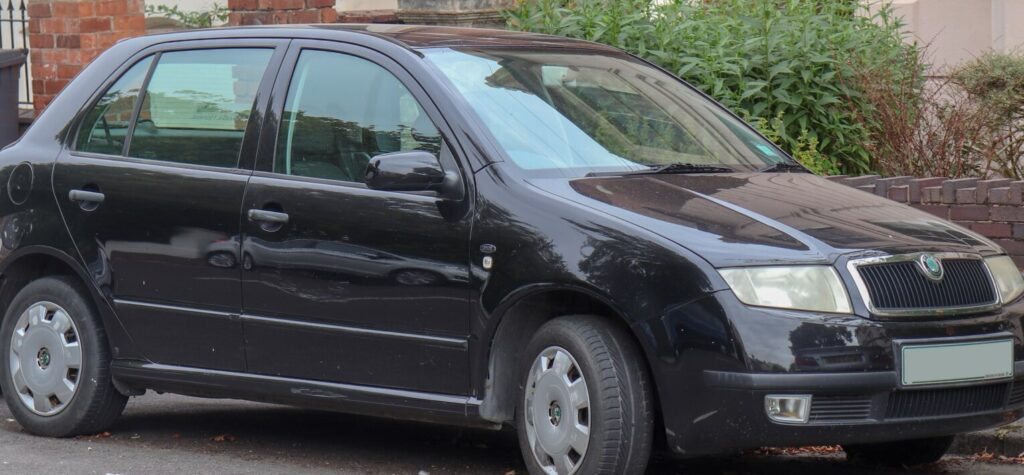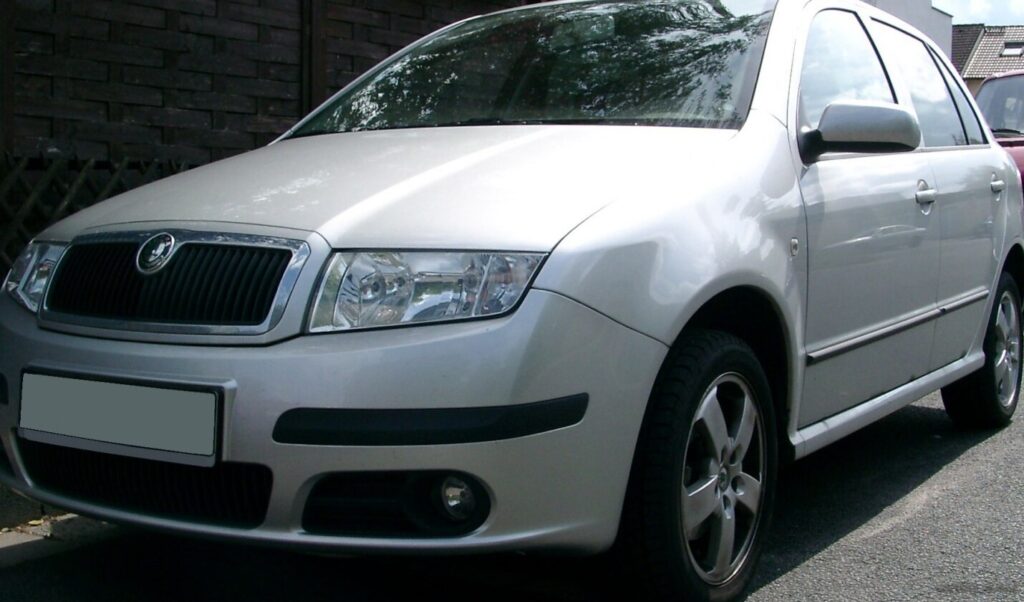
The Skoda Fabia I (6Y) facelift, produced from 2004 to 2006, represented a significant update to Skoda’s entry-level hatchback. Among the engine options available, the 1.2 HTP (64 horsepower) variant occupied the base trim level, aimed at budget-conscious buyers. This version, powered by the AZQ engine code, played a crucial role in making the Fabia accessible to a wider market, particularly in Europe where smaller displacement engines were favored due to tax regulations and fuel economy concerns. It was positioned as the most affordable route into Fabia ownership, prioritizing practicality and low running costs over outright performance.
Technical Specifications
| Brand | Skoda |
| Model | Fabia |
| Generation | Fabia I (6Y, facelift 2004) |
| Type (Engine) | 1.2 HTP (64 Hp) |
| Start of production | July, 2004 |
| End of production | December, 2006 |
| Powertrain Architecture | Internal Combustion engine |
| Body type | Hatchback |
| Seats | 5 |
| Doors | 5 |
| Fuel consumption (urban) | 7.7 l/100 km (30.5 US mpg, 36.7 UK mpg, 13 km/l) |
| Fuel consumption (extra urban) | 4.9 l/100 km (48 US mpg, 57.6 UK mpg, 20.4 km/l) |
| Fuel consumption (combined) | 5.9 l/100 km (39.9 US mpg, 47.9 UK mpg, 16.9 km/l) |
| CO2 emissions | 142 g/km |
| Fuel Type | Petrol (Gasoline) |
| Acceleration 0 – 100 km/h | 15.9 sec |
| Acceleration 0 – 62 mph | 15.9 sec |
| Acceleration 0 – 60 mph | 15.1 sec |
| Maximum speed | 160 km/h (99.42 mph) |
| Emission standard | Euro 4 |
| Weight-to-power ratio | 16.5 kg/Hp, 60.7 Hp/tonne |
| Weight-to-torque ratio | 9.4 kg/Nm, 106.2 Nm/tonne |
| Power | 64 Hp @ 5400 rpm |
| Power per litre | 53.4 Hp/l |
| Torque | 112 Nm @ 3000 rpm (82.61 lb.-ft. @ 3000 rpm) |
| Engine layout | Front, Transverse |
| Engine Model/Code | AZQ |
| Engine displacement | 1198 cm3 (73.11 cu. in.) |
| Number of cylinders | 3 |
| Engine configuration | Inline |
| Cylinder Bore | 76.5 mm (3.01 in.) |
| Piston Stroke | 86.9 mm (3.42 in.) |
| Compression ratio | 10.5:1 |
| Number of valves per cylinder | 4 |
| Fuel injection system | Multi-port manifold injection |
| Engine aspiration | Naturally aspirated engine |
| Valvetrain | DOHC |
| Engine oil capacity | 2.8 l (2.96 US qt | 2.46 UK qt) |
| Coolant | 5.1 l (5.39 US qt | 4.49 UK qt) |
| Kerb Weight | 1055 kg (2325.88 lbs.) |
| Max. weight | 1570 kg (3461.26 lbs.) |
| Max load | 515 kg (1135.38 lbs.) |
| Trunk (boot) space – minimum | 260 l (9.18 cu. ft.) |
| Trunk (boot) space – maximum | 1016 l (35.88 cu. ft.) |
| Fuel tank capacity | 45 l (11.89 US gal | 9.9 UK gal) |
| Max. roof load | 75 kg (165.35 lbs.) |
| Permitted trailer load with brakes (12%) | 800 kg (1763.7 lbs.) |
| Permitted trailer load without brakes | 450 kg (992.08 lbs.) |
| Permitted towbar download | 50 kg (110.23 lbs.) |
| Length | 3970 mm (156.3 in.) |
| Width | 1646 mm (64.8 in.) |
| Height | 1451 mm (57.13 in.) |
| Wheelbase | 2462 mm (96.93 in.) |
| Front track | 1435 mm (56.5 in.) |
| Rear (Back) track | 1424 mm (56.06 in.) |
| Ride height (ground clearance) | 120 mm (4.72 in.) |
| Drag coefficient (Cd) | 0.33 |
| Minimum turning circle (turning diameter) | 10.4 m (34.12 ft.) |
| Drivetrain Architecture | The Internal combustion engine (ICE) drives the front wheels of the vehicle. |
| Drive wheel | Front wheel drive |
| Number of gears and type of gearbox | 5 gears, manual transmission |
| Front suspension | Independent, type McPherson with coil spring and anti-roll bar |
| Rear suspension | Trailing arm |
| Front brakes | Ventilated discs |
| Rear brakes | Drum |
| Assisting systems | ABS (Anti-lock braking system) |
| Steering type | Steering rack and pinion |
| Power steering | Electric Steering |
| Tires size | 155/80 R13; 165/70 R14; 185/60 R14 |
| Wheel rims size | 5J x 13; 5J x 16; 6J x 14 |
Powertrain & Engine Architecture
The heart of the Fabia 1.2 HTP was the AZQ engine, a three-cylinder, 1.2-liter naturally aspirated petrol engine. This engine was part of the EA111 family, developed by the Volkswagen Group to offer a lightweight and fuel-efficient option. The ‘HTP’ designation stands for ‘High Torque Pump,’ referring to the engine’s multi-point fuel injection system and optimized combustion chamber design aimed at maximizing low-end torque. The AZQ featured a double overhead camshaft (DOHC) valvetrain with four valves per cylinder, contributing to improved breathing and efficiency. The engine’s relatively small displacement and three-cylinder configuration meant inherent limitations in terms of peak power, but it was designed to deliver usable torque at lower engine speeds. The 1.2 HTP was typically paired with a five-speed manual transmission, although a four-speed automatic transmission was also offered, albeit less commonly. The automatic gearbox was a traditional hydraulic unit, prioritizing smoothness over outright performance.
Driving Characteristics
The 1.2 HTP-equipped Fabia offered a decidedly unhurried driving experience. With 64 horsepower and 82.6 lb-ft of torque, acceleration was slow, taking nearly 16 seconds to reach 60 mph. The automatic transmission further dulled performance, with noticeable delays in downshifting and a tendency to ‘hunt’ for gears on inclines. However, the engine proved reasonably tractable around town, with sufficient low-end torque for everyday driving. The gear ratios in the automatic transmission were geared towards fuel economy, resulting in a relaxed cruising experience at highway speeds, although overtaking required careful planning. Compared to the more powerful 1.4-liter or diesel variants, the 1.2 HTP felt significantly underpowered, but it offered a smoother and quieter ride.
Equipment & Trim Levels
The 1.2 HTP typically represented the entry point to the Fabia range. Standard equipment generally included central locking, power steering, front airbags, and an adjustable steering column. Interior trim was basic, with cloth upholstery and a functional, if somewhat spartan, dashboard layout. Optional extras included air conditioning, alloy wheels, and a radio/CD player. Higher trim levels, such as the Classic or Elegance, added features like electric windows, remote central locking, and upgraded interior trim.
Chassis & Braking
The Fabia’s chassis featured a MacPherson strut front suspension and a trailing arm rear suspension. This setup provided a comfortable ride, although handling was not particularly sporty. The 1.2 HTP models typically used smaller wheels and tires (155/80 R13 or 165/70 R14) which contributed to the comfortable ride. Braking was handled by ventilated discs at the front and drum brakes at the rear. ABS (Anti-lock Braking System) was standard, providing enhanced stopping power and stability in emergency situations.
Market Reception & Comparison
The Fabia 1.2 HTP was generally well-received as an affordable and economical city car. Critics praised its fuel efficiency and low running costs, but noted its lack of performance. Compared to the 1.4-liter petrol or 1.9 TDI diesel variants, the 1.2 HTP offered significantly lower performance but also lower purchase price and running costs. The diesel models provided superior fuel economy and torque, while the 1.4-liter offered a better balance of performance and economy. The automatic transmission was often criticized for its sluggishness and lack of responsiveness.
Legacy
The 1.2 HTP engine, while initially praised for its fuel efficiency, gained a reputation for reliability issues over time, particularly concerning timing chain wear and oil consumption. However, many examples continue to be on the road today, often having undergone preventative maintenance to address these common problems. In the used car market, the Fabia 1.2 HTP remains an affordable option for those seeking a basic, economical hatchback. Its simplicity and low running costs continue to appeal to budget-conscious buyers, although potential owners should be aware of the engine’s potential reliability concerns and factor in the cost of preventative maintenance.