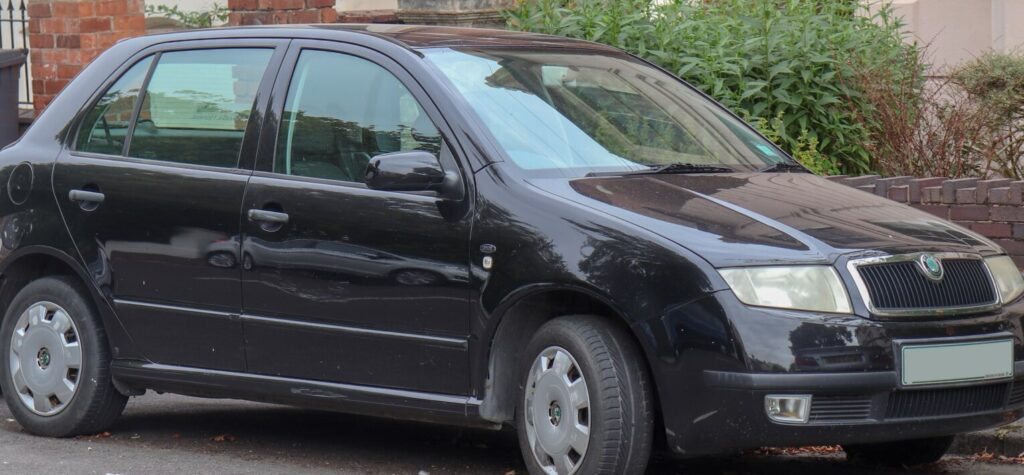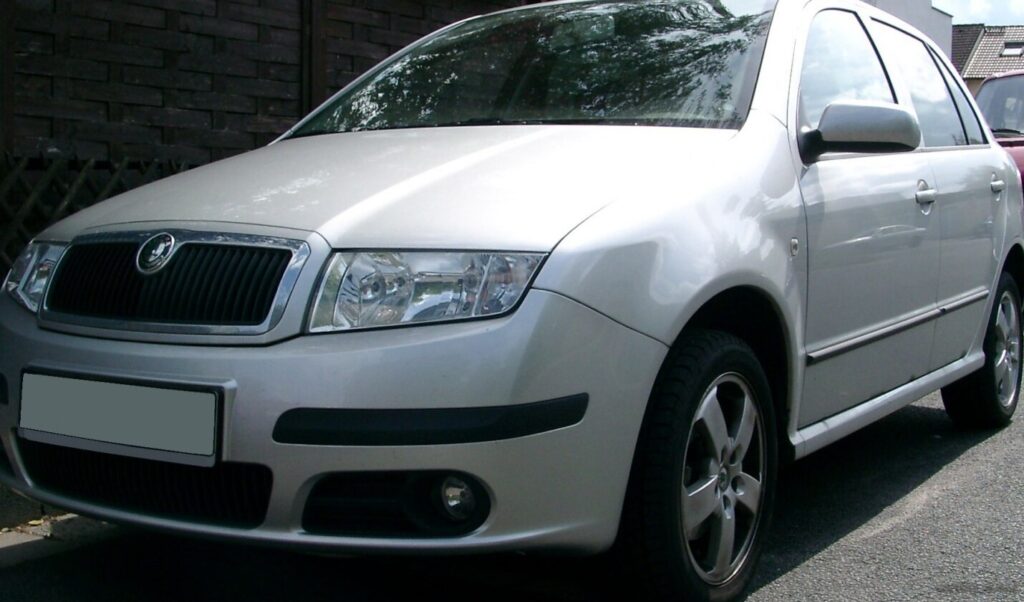
The Skoda Fabia I (6Y) facelift, produced from 2004 to 2006, represented a significant refresh of Skoda’s entry-level hatchback. Within the Fabia I range, the 1.4-liter 101 horsepower variant occupied a middle ground, offering a balance between affordability, fuel economy, and acceptable performance. This model was primarily aimed at European markets, where smaller, fuel-efficient hatchbacks were highly sought after. It sat above the base 1.2-liter engine and below the more powerful 1.4 16V and 2.0 MPI options. The facelift brought revised styling, improved interior materials, and updated engine options, solidifying the Fabia’s position as a competitive offering in the supermini segment.
Technical Specifications
| Brand | Skoda |
| Model | Fabia |
| Generation | Fabia I (6Y, facelift 2004) |
| Type (Engine) | 1.4 (101 Hp) |
| Start of production | July, 2004 |
| End of production | December, 2006 |
| Powertrain Architecture | Internal Combustion engine |
| Body type | Hatchback |
| Seats | 5 |
| Doors | 5 |
| Fuel consumption (urban) | 8.9 l/100 km (26.4 US mpg, 31.7 UK mpg, 11.2 km/l) |
| Fuel consumption (extra urban) | 5.3 l/100 km (44.4 US mpg, 53.3 UK mpg, 18.9 km/l) |
| Fuel consumption (combined) | 6.6 l/100 km (35.6 US mpg, 42.8 UK mpg, 15.2 km/l) |
| CO2 emissions | 158 g/km |
| Fuel Type | Petrol (Gasoline) |
| Acceleration 0 – 100 km/h | 11.5 sec |
| Acceleration 0 – 62 mph | 11.5 sec |
| Acceleration 0 – 60 mph | 10.9 sec |
| Maximum speed | 185 km/h (114.95 mph) |
| Emission standard | Euro 4 |
| Weight-to-power ratio | 10.5 kg/Hp, 94.8 Hp/tonne |
| Weight-to-torque ratio | 8.5 kg/Nm, 118.3 Nm/tonne |
| Power | 101 Hp @ 6000 rpm |
| Power per litre | 72.7 Hp/l |
| Torque | 126 Nm @ 4400 rpm (92.93 lb.-ft. @ 4400 rpm) |
| Engine layout | Front, Transverse |
| Engine Model/Code | AUB |
| Engine displacement | 1390 cm3 (84.82 cu. in.) |
| Number of cylinders | 4 |
| Engine configuration | Inline |
| Cylinder Bore | 76.5 mm (3.01 in.) |
| Piston Stroke | 75.6 mm (2.98 in.) |
| Compression ratio | 10.5:1 |
| Number of valves per cylinder | 4 |
| Fuel injection system | Multi-port manifold injection |
| Engine aspiration | Naturally aspirated engine |
| Valvetrain | DOHC |
| Engine oil capacity | 3.2 l (3.38 US qt | 2.82 UK qt) |
| Coolant | 5.5 l (5.81 US qt | 4.84 UK qt) |
| Kerb Weight | 1065 kg (2347.92 lbs.) |
| Max. weight | 1580 kg (3483.3 lbs.) |
| Max load | 515 kg (1135.38 lbs.) |
| Trunk (boot) space – minimum | 260 l (9.18 cu. ft.) |
| Trunk (boot) space – maximum | 1016 l (35.88 cu. ft.) |
| Fuel tank capacity | 45 l (11.89 US gal | 9.9 UK gal) |
| Max. roof load | 75 kg (165.35 lbs.) |
| Permitted trailer load with brakes (12%) | 800 kg (1763.7 lbs.) |
| Permitted trailer load without brakes | 450 kg (992.08 lbs.) |
| Permitted towbar download | 50 kg (110.23 lbs.) |
| Length | 3970 mm (156.3 in.) |
| Width | 1646 mm (64.8 in.) |
| Height | 1451 mm (57.13 in.) |
| Wheelbase | 2462 mm (96.93 in.) |
| Front track | 1435 mm (56.5 in.) |
| Rear (Back) track | 1424 mm (56.06 in.) |
| Ride height (ground clearance) | 120 mm (4.72 in.) |
| Drag coefficient (Cd) | 0.34 |
| Minimum turning circle (turning diameter) | 10.4 m (34.12 ft.) |
| Drivetrain Architecture | The Internal combustion engine (ICE) drives the front wheels of the vehicle. |
| Drive wheel | Front wheel drive |
| Number of gears and type of gearbox | 5 gears, manual transmission |
| Front suspension | Independent, type McPherson with coil spring and anti-roll bar |
| Rear suspension | Trailing arm |
| Front brakes | Ventilated discs |
| Rear brakes | Disc |
| Assisting systems | ABS (Anti-lock braking system) |
| Steering type | Steering rack and pinion |
| Power steering | Electric Steering |
| Tires size | 155/80 R13; 165/70 R14; 185/60 R14 |
| Wheel rims size | 5J x 13; 5J x 16; 6J x 14 |
INTRODUCTION
The 1.4 101hp Skoda Fabia I (6Y) facelift, produced between 2004 and 2006, was a key model in Skoda’s expanding lineup. Building upon the success of the original Fabia, the facelift brought a more refined aesthetic and improved mechanical components. This particular engine and trim level aimed to provide a practical and economical option for buyers seeking a versatile hatchback. Positioned as a mid-range offering, it bridged the gap between the base models and the more performance-oriented variants. The Fabia I, based on the Volkswagen Group’s PQ24 platform (also known as the A3 platform), was instrumental in establishing Skoda as a credible alternative to established European brands.
Powertrain & Engine Architecture
The heart of this Fabia variant is the AUB engine code, a 1.4-liter inline-four cylinder petrol engine. This engine utilizes a multi-port fuel injection system, delivering fuel directly into the intake manifold. The engine features a double overhead camshaft (DOHC) valvetrain, operating four valves per cylinder, which contributes to improved breathing and efficiency. The 101 horsepower output is achieved at 6000 rpm, while peak torque of 126 Nm (92.93 lb-ft) arrives at 4400 rpm. The engine’s relatively simple design prioritized reliability and ease of maintenance. The Fabia 1.4 was typically paired with a five-speed manual transmission, although a four-speed automatic transmission was also available, albeit less common. The automatic transmission, while offering convenience, did impact acceleration and fuel economy compared to the manual version.
Driving Characteristics
The 1.4-liter engine in the Fabia I provided adequate, but not exhilarating, performance. Acceleration from 0-60 mph took around 10.9 seconds, and the top speed was approximately 115 mph. The engine felt most comfortable in the mid-range, offering sufficient power for everyday driving situations. The automatic transmission, while smooth, had noticeable gear changes and a tendency to hunt for gears under heavy load. Compared to the more powerful 1.4 16V or 2.0 MPI models, the 1.4 101hp felt noticeably slower, particularly when overtaking. However, it offered a more relaxed driving experience and better fuel economy. The gear ratios in the automatic transmission were geared towards fuel efficiency rather than outright performance.
Equipment & Trim Levels
The 1.4 101hp Fabia typically came equipped with features such as power steering, central locking, electric front windows, and an adjustable steering column. Higher trim levels added features like air conditioning, alloy wheels, a radio/CD player, and front fog lights. Interior upholstery was typically cloth, with a relatively simple dashboard layout. Optional extras included a sunroof, rear electric windows, and upgraded audio systems. The overall interior ambiance was functional and durable, reflecting the Fabia’s value-oriented positioning.
Chassis & Braking
The Fabia I utilized a McPherson strut front suspension and a trailing arm rear suspension. This setup provided a comfortable ride, although it wasn’t particularly sporty. The front brakes were ventilated discs, while the rear brakes were typically solid discs on higher trims, and drums on base models. ABS (Anti-lock Braking System) was standard equipment, enhancing safety. The suspension was tuned for comfort and stability, prioritizing ride quality over handling precision. Stabilizer bars were fitted to both the front and rear axles to reduce body roll during cornering.
Market Reception & Comparison
The Skoda Fabia 1.4 101hp was generally well-received by automotive critics as a practical and affordable hatchback. It was praised for its fuel efficiency, comfortable ride, and spacious interior. However, some critics noted its lack of outright performance and somewhat basic interior trim. Compared to rivals like the Ford Fiesta and Volkswagen Polo, the Fabia offered a compelling value proposition, often undercutting them in price while providing similar levels of practicality. The 1.4 automatic version was often seen as a good choice for drivers prioritizing convenience over performance, but the manual transmission was generally preferred by those seeking a more engaging driving experience. Fuel economy was a strong point, consistently achieving around 35-40 mpg in real-world driving.
Legacy
The 1.4-liter AUB engine proved to be a reliable unit, and well-maintained examples of the Fabia I 1.4 101hp continue to be found on the used car market today. While not a particularly sought-after model by enthusiasts, it remains a practical and affordable option for those seeking a dependable city car. Common issues are generally limited to age-related wear and tear, such as suspension components and exhaust systems. The Fabia I played a crucial role in establishing Skoda’s reputation for building well-engineered and reliable vehicles, paving the way for the brand’s continued success in the European automotive market.