Technical Specifications
| Brand | Skoda |
| Model | Fabia |
| Generation | Fabia I (6Y, facelift 2004) |
| Type (Engine) | 1.4 (75 Hp) |
| Start of production | July, 2004 |
| End of production | December, 2006 |
| Powertrain Architecture | Internal Combustion engine |
| Body type | Hatchback |
| Seats | 5 |
| Doors | 5 |
| Fuel consumption (urban) | 8.6 l/100 km (27.4 US mpg, 32.8 UK mpg, 11.6 km/l) |
| Fuel consumption (extra urban) | 5.3 l/100 km (44.4 US mpg, 53.3 UK mpg, 18.9 km/l) |
| Fuel consumption (combined) | 6.5 l/100 km (36.2 US mpg, 43.5 UK mpg, 15.4 km/l) |
| CO2 emissions | 154 g/km |
| Fuel Type | Petrol (Gasoline) |
| Acceleration 0 – 100 km/h | 13.8 sec |
| Acceleration 0 – 62 mph | 13.8 sec |
| Acceleration 0 – 60 mph | 13.1 sec |
| Maximum speed | 167 km/h (103.77 mph) |
| Emission standard | Euro 4 |
| Weight-to-power ratio | 14.1 kg/Hp, 70.8 Hp/tonne |
| Weight-to-torque ratio | 8.4 kg/Nm, 118.9 Nm/tonne |
| Power | 75 Hp @ 5000 rpm |
| Power per litre | 54 Hp/l |
| Torque | 126 Nm @ 3800 rpm (92.93 lb.-ft. @ 3800 rpm) |
| Engine layout | Front, Transverse |
| Engine Model/Code | BBY |
| Engine displacement | 1390 cm3 (84.82 cu. in.) |
| Number of cylinders | 4 |
| Engine configuration | Inline |
| Cylinder Bore | 76.5 mm (3.01 in.) |
| Piston Stroke | 75.6 mm (2.98 in.) |
| Compression ratio | 10.5:1 |
| Number of valves per cylinder | 4 |
| Fuel injection system | Multi-port manifold injection |
| Engine aspiration | Naturally aspirated engine |
| Valvetrain | DOHC |
| Engine oil capacity | 3.2 l (3.38 US qt | 2.82 UK qt) |
| Coolant | 5.5 l (5.81 US qt | 4.84 UK qt) |
| Kerb Weight | 1060 kg (2336.9 lbs.) |
| Max. weight | 1575 kg (3472.28 lbs.) |
| Max load | 515 kg (1135.38 lbs.) |
| Trunk (boot) space – minimum | 260 l (9.18 cu. ft.) |
| Trunk (boot) space – maximum | 1016 l (35.88 cu. ft.) |
| Fuel tank capacity | 45 l (11.89 US gal | 9.9 UK gal) |
| Max. roof load | 75 kg (165.35 lbs.) |
| Permitted trailer load with brakes (12%) | 800 kg (1763.7 lbs.) |
| Permitted trailer load without brakes | 450 kg (992.08 lbs.) |
| Permitted towbar download | 50 kg (110.23 lbs.) |
| Length | 3970 mm (156.3 in.) |
| Width | 1646 mm (64.8 in.) |
| Height | 1451 mm (57.13 in.) |
| Wheelbase | 2462 mm (96.93 in.) |
| Front track | 1435 mm (56.5 in.) |
| Rear (Back) track | 1424 mm (56.06 in.) |
| Ride height (ground clearance) | 120 mm (4.72 in.) |
| Drag coefficient (Cd) | 0.33 |
| Minimum turning circle (turning diameter) | 10.4 m (34.12 ft.) |
| Drivetrain Architecture | The Internal combustion engine (ICE) drives the front wheels of the vehicle. |
| Drive wheel | Front wheel drive |
| Number of gears and type of gearbox | 5 gears, manual transmission |
| Front suspension | Independent, type McPherson with coil spring and anti-roll bar |
| Rear suspension | Trailing arm |
| Front brakes | Ventilated discs |
| Rear brakes | Drum |
| Assisting systems | ABS (Anti-lock braking system) |
| Steering type | Steering rack and pinion |
| Power steering | Electric Steering |
| Tires size | 155/80 R13; 165/70 R14; 185/60 R14 |
| Wheel rims size | 5J x 13; 5J x 16; 6J x 14 |
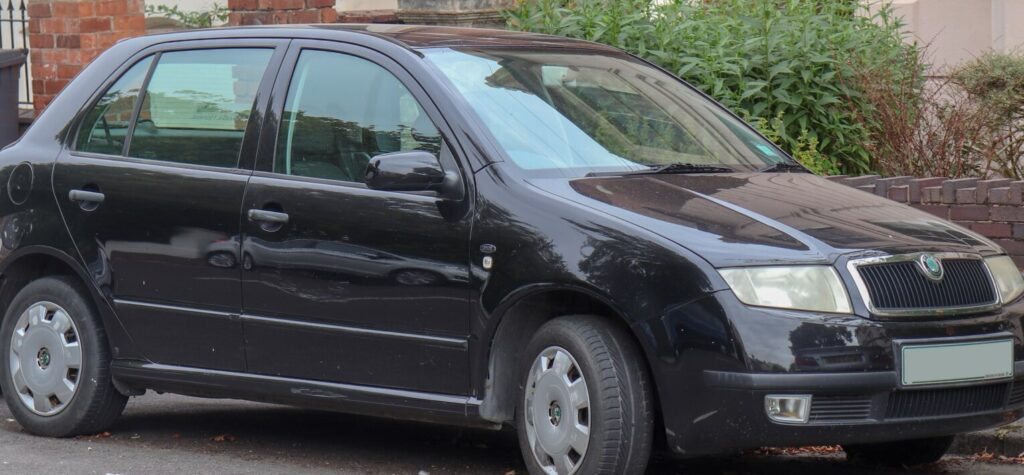
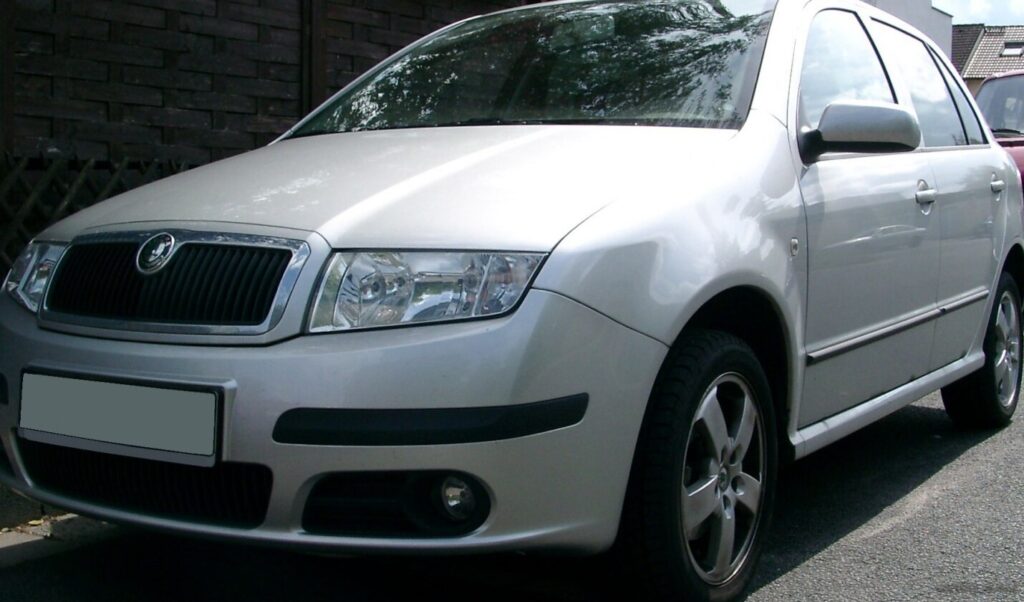
The Skoda Fabia I (6Y) facelift, specifically the 1.4-liter 75 horsepower model paired with an automatic transmission, was introduced in July 2004 and remained in production until December 2006. Positioned as an accessible entry point into the Fabia range, this variant catered to drivers seeking a practical and affordable hatchback with the convenience of an automatic gearbox. Built on the Volkswagen Group’s PQ24 platform (also known as the A3 platform), the Fabia shared components with the Volkswagen Polo and SEAT Ibiza, benefiting from the economies of scale within the group. The facelift brought subtle but noticeable improvements to the exterior styling, including revised headlights and bumpers, and enhancements to the interior trim and equipment levels.
Powertrain & Engine Architecture
At the heart of this Fabia variant lies the 1.4-liter inline-four cylinder petrol engine, designated the BBY engine code. This engine is a naturally aspirated unit featuring a multi-port fuel injection system. The engine utilizes a double overhead camshaft (DOHC) valvetrain with four valves per cylinder, contributing to reasonable efficiency and power output for its displacement. The 75 horsepower peak is achieved at 5000 rpm, while the 126 Nm (93 lb-ft) of torque is delivered at 3800 rpm. Paired with this engine is a four-speed automatic transmission. This transmission, while providing ease of use, wasn’t known for its particularly quick shifts or fuel efficiency compared to the available five-speed manual gearbox. The automatic transmission was a conventional hydraulic control unit, lacking the more advanced electronic controls found in later automatic transmissions.
Driving Characteristics
The 1.4-liter 75 hp automatic Fabia offered a comfortable, if not particularly exhilarating, driving experience. Acceleration from 0-60 mph took around 13.1 seconds, and the top speed was approximately 104 mph. The automatic transmission’s gear ratios were geared towards fuel economy and smooth cruising rather than sporty performance. This resulted in a noticeable delay when requesting sudden acceleration, and the engine could feel strained when climbing hills or overtaking. Compared to the manual transmission version of the same engine, the automatic suffered a slight performance penalty. Higher-spec Fabias equipped with the 1.6 or 2.0-liter engines, or the diesel variants, offered significantly more responsive performance. The suspension setup, tuned for comfort, provided a reasonably compliant ride, absorbing most road imperfections effectively.
Equipment & Trim Levels
The 1.4 75 hp automatic Fabia typically came with a base level of equipment, reflecting its position as an entry-level model. Standard features generally included power steering, central locking, front airbags, and an adjustable steering column. Interior upholstery was typically cloth, and the dashboard featured a simple, functional design. Optional extras included air conditioning, alloy wheels, electric windows, and a radio/CD player. Higher trim levels, such as the Classic or Elegance, added more features as standard, but the 1.4 automatic was often specified in its most basic form to keep the price competitive.
Chassis & Braking
The Fabia’s chassis featured an independent McPherson strut suspension at the front and a trailing arm setup at the rear. This configuration provided a good balance between ride comfort and handling. The front brakes were ventilated discs, offering adequate stopping power, while the rear brakes were drums, a cost-saving measure common in this segment. Anti-lock Braking System (ABS) was standard, enhancing safety. The steering was rack and pinion with electric power assistance, providing light and easy steering feel.
Market Reception & Comparison
The 1.4-liter automatic Fabia was generally well-received as a practical and affordable city car. Critics acknowledged its comfortable ride and ease of use, but often pointed out its lack of performance and the somewhat dated feel of the automatic transmission. Compared to other trims in the Fabia lineup, the 1.4 automatic offered the lowest price point but also the least engaging driving experience. Fuel economy was respectable, averaging around 36.2 US mpg in combined driving, but the manual transmission versions consistently achieved better figures. Competitors in this segment included the Ford Fiesta, Volkswagen Polo, and Renault Clio, all of which offered similar engine and transmission options.
Legacy
The 1.4-liter BBY engine, when properly maintained, proved to be a relatively reliable unit. The automatic transmission, however, is often cited as the potential weak point, with some owners reporting issues with solenoid failures or slipping gears as the vehicle ages. Today, these Fabias are relatively affordable on the used car market, making them attractive options for first-time drivers or those seeking a cheap and cheerful runabout. However, potential buyers should carefully inspect the automatic transmission and ensure it has been regularly serviced. Despite its modest performance, the 1.4 automatic Fabia remains a testament to Skoda’s ability to produce practical and well-built cars at an accessible price point.