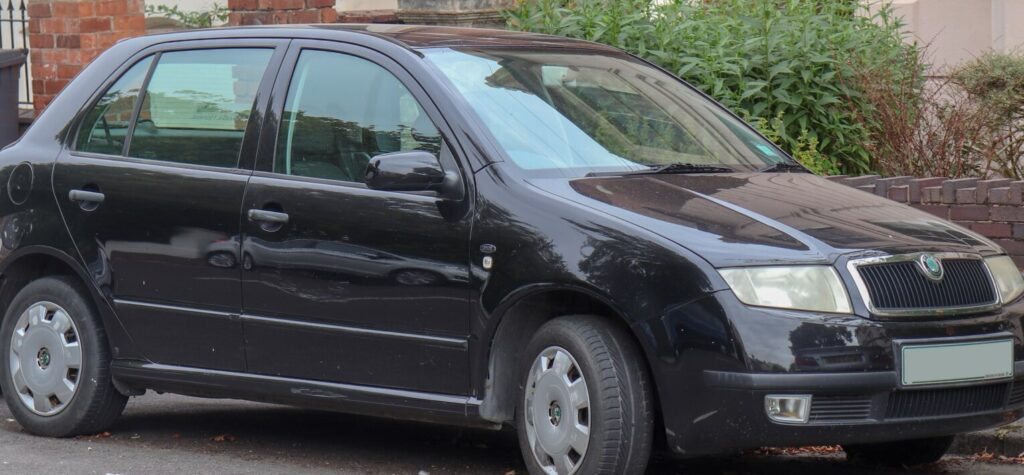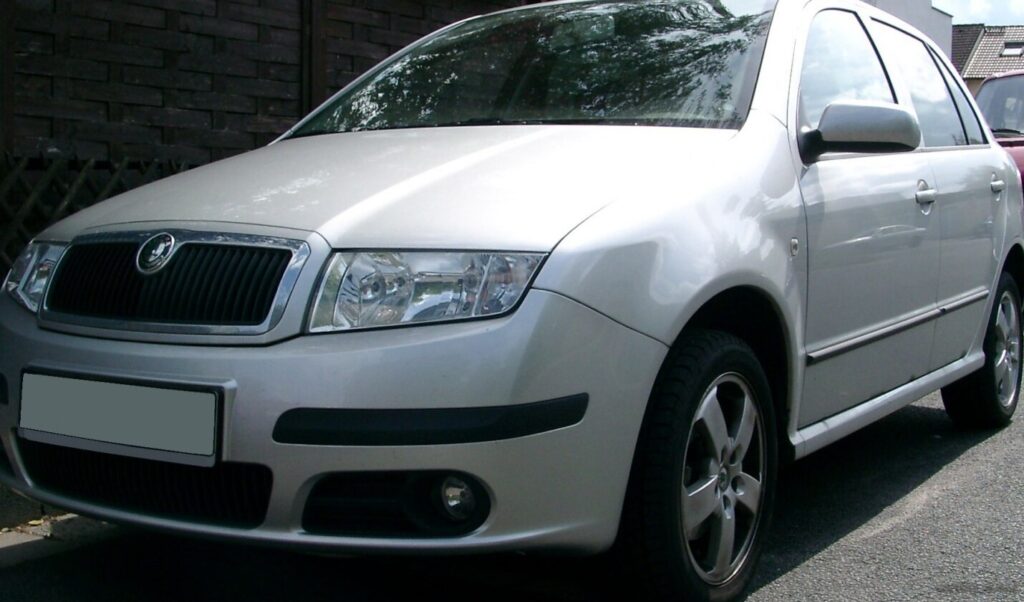
The Skoda Fabia I (6Y), particularly the facelifted version introduced in 2004, represented a significant step forward for the Czech automaker under Volkswagen Group ownership. The 1.4 TDI variant, producing 80 horsepower, was a popular choice in European markets from its introduction in September 2005 until production ended in December 2006. Positioned as an entry-level diesel option, it aimed to provide fuel efficiency and reasonable running costs to budget-conscious buyers. This model sat within the broader 6Y Fabia range, which included petrol engines of varying displacements and more powerful TDI options, and was built on the Volkswagen Group’s A05 (Polo) platform.
Technical Specifications
| Brand | Skoda |
| Model | Fabia |
| Generation | Fabia I (6Y, facelift 2004) |
| Type (Engine) | 1.4 TDI (80 Hp) |
| Start of production | September, 2005 |
| End of production | December, 2006 |
| Powertrain Architecture | Internal Combustion engine |
| Body type | Hatchback |
| Seats | 5 |
| Doors | 5 |
| Fuel Type | Diesel |
| Acceleration 0 – 100 km/h | 13.8 sec |
| Acceleration 0 – 62 mph | 13.8 sec |
| Acceleration 0 – 60 mph | 13.1 sec |
| Maximum speed | 170 km/h (105.63 mph) |
| Emission standard | Euro 4 |
| Weight-to-power ratio | 14.1 kg/Hp, 70.8 Hp/tonne |
| Weight-to-torque ratio | 5.8 kg/Nm, 172.6 Nm/tonne |
| Power | 80 Hp @ 4000 rpm |
| Power per litre | 56.3 Hp/l |
| Torque | 195 Nm @ 2200 rpm (143.82 lb.-ft. @ 2200 rpm) |
| Engine layout | Front, Transverse |
| Engine Model/Code | BNV |
| Engine displacement | 1422 cm3 (86.78 cu. in.) |
| Number of cylinders | 3 |
| Engine configuration | Inline |
| Number of valves per cylinder | 2 |
| Fuel injection system | Pump-nozzle (Unit Injector) |
| Engine aspiration | Turbocharger, Intercooler |
| Engine oil capacity | 3.8 l (4.02 US qt | 3.34 UK qt) |
| Coolant | 6.2 l (6.55 US qt | 5.46 UK qt) |
| Kerb Weight | 1130 kg (2491.22 lbs) |
| Max. weight | 1645 kg (3626.6 lbs) |
| Max load | 515 kg (1135.38 lbs) |
| Fuel tank capacity | 45 l (11.89 US gal | 9.9 UK gal) |
| Permitted trailer load with brakes (8%) | 1200 kg (2645.55 lbs) |
| Permitted trailer load with brakes (12%) | 1000 kg (2204.62 lbs) |
| Permitted trailer load without brakes | 450 kg (992.08 lbs) |
| Length | 3970 mm (156.3 in) |
| Width | 1646 mm (64.8 in) |
| Width including mirrors | 1893 mm (74.53 in) |
| Height | 1451 mm (57.13 in) |
| Wheelbase | 2462 mm (96.93 in) |
| Front track | 1435 mm (56.5 in) |
| Rear (Back) track | 1424 mm (56.06 in) |
| Drivetrain Architecture | The Internal combustion engine (ICE) drives the front wheels of the vehicle. |
| Drive wheel | Front wheel drive |
| Number of gears and type of gearbox | 5 gears, manual transmission |
| Front suspension | Coil spring |
| Rear suspension | Coil spring |
| Steering type | Steering rack and pinion |
| Power steering | Hydraulic Steering |
| Tires size | 185/60 R14 82 T |
| Wheel rims size | 14 |
Introduction
The 1.4 TDI 80 hp engine in the facelifted Skoda Fabia I (6Y) was designed to appeal to drivers prioritizing fuel economy and low running costs. Introduced as part of the 2004 refresh, this variant offered a diesel alternative to the existing petrol engines. It was a key component of Skoda’s strategy to establish itself as a value-for-money brand within the Volkswagen Group, offering a practical and affordable hatchback. The Fabia, in general, was Skoda’s first modern attempt at a small family car, aiming to compete with established rivals like the Ford Fiesta and Opel/Vauxhall Corsa.
Powertrain & Engine Architecture
The heart of this Fabia variant is the BNV engine code, a 1.4-liter three-cylinder turbocharged diesel. This engine utilizes a pump-nozzle (unit injector) fuel injection system, a technology known for its precision and efficiency. The turbocharger, coupled with an intercooler, helps to boost power output and improve torque delivery. The engine produces 80 horsepower at 4000 rpm and 195 Nm (143.82 lb-ft) of torque at 2200 rpm. The engine’s three-cylinder configuration contributes to its relatively compact size and lower weight. The 5-speed manual transmission was the standard offering, designed to maximize fuel efficiency and provide adequate acceleration. While an automatic transmission was available on some Fabia models, it was not typically paired with the 1.4 TDI 80 hp engine due to the limited torque output.
Driving Characteristics
The 1.4 TDI 80 hp Fabia offered a practical, if not particularly exciting, driving experience. Acceleration was modest, with a 0-60 mph time of around 13.1 seconds. The engine’s strength lay in its torque delivery, providing reasonable pulling power for everyday driving situations. The gear ratios were optimized for fuel efficiency, meaning the engine often needed to be revved to access its full potential. Compared to the more powerful 1.9 TDI variants, the 1.4 TDI felt noticeably slower, especially when fully loaded or tackling inclines. However, it offered a smoother and quieter driving experience than the higher-output diesels. The manual transmission was light and easy to use, contributing to a comfortable driving experience.
Equipment & Trim Levels
The 1.4 TDI 80 hp Fabia typically came equipped with a basic level of standard features. This included central locking, power steering, and an adjustable steering column. Interior upholstery was typically cloth, and the dashboard featured a functional, if somewhat utilitarian, design. Optional extras included air conditioning, alloy wheels, and an upgraded audio system. Trim levels varied depending on the market, but generally, the 1.4 TDI sat towards the lower end of the range, offering a cost-effective entry point into the Fabia lineup. Safety features were relatively basic, with driver and passenger airbags being standard, but ABS was often an optional extra.
Chassis & Braking
The Fabia I utilized a relatively simple chassis design. Front suspension consisted of coil springs and independent suspension, while the rear featured a torsion beam setup. This configuration provided a comfortable ride, but handling was not particularly sporty. Braking systems varied depending on the trim level. Lower-spec models typically featured drum brakes on the rear wheels, while higher-spec models received disc brakes all around. The steering was hydraulic, providing a light and responsive feel. Stabilizer bars were fitted to both the front and rear axles to reduce body roll during cornering.
Market Reception & Comparison
The 1.4 TDI 80 hp Fabia was generally well-received by critics as a practical and economical choice. It was praised for its fuel efficiency and low running costs, making it an attractive option for budget-conscious buyers. However, it was often criticized for its lack of performance and relatively basic interior. Compared to the 1.9 TDI variants, the 1.4 TDI offered significantly lower performance but better fuel economy. The petrol engines provided a more refined driving experience but were less fuel-efficient. The 1.4 TDI’s main competitors included the Ford Fiesta TDCi and Opel/Vauxhall Corsa 1.3 CDTi, both of which offered similar levels of performance and economy.
Legacy
The BNV 1.4 TDI engine, while not known for being particularly powerful, proved to be relatively reliable. Common issues included turbocharger wear and potential problems with the fuel injection pump. However, with regular maintenance, these engines could provide many years of service. In the used car market today, the 1.4 TDI Fabia I represents a very affordable option. Its fuel efficiency and low running costs continue to appeal to buyers looking for a practical and economical hatchback. However, potential buyers should be aware of the engine’s age and the potential for wear and tear on key components. The 1.4 TDI Fabia remains a testament to Skoda’s ability to produce a well-engineered and affordable vehicle.