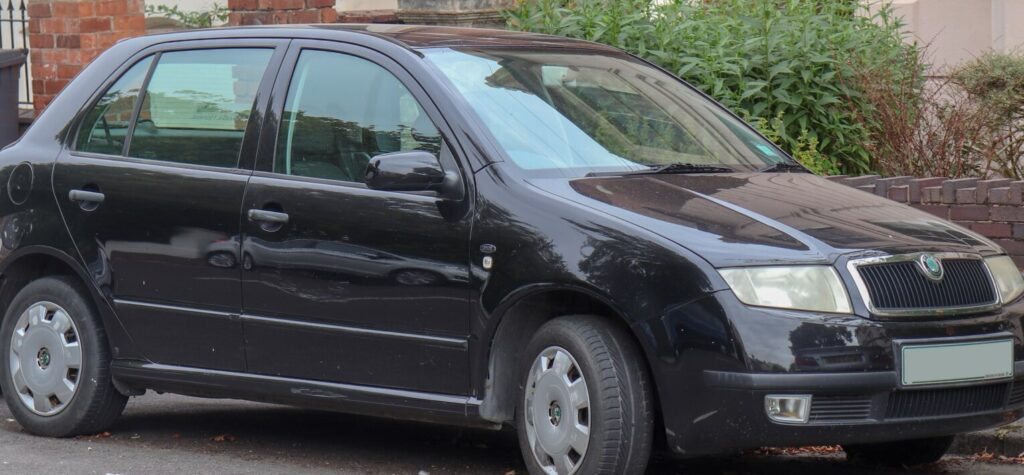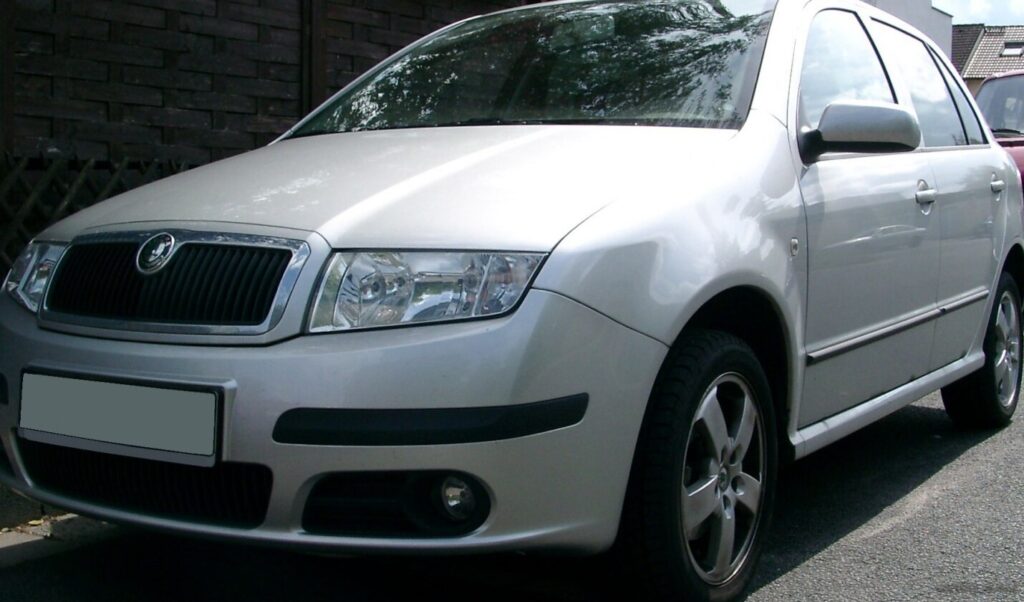
The Skoda Fabia I (6Y) facelift, specifically the 2.0-liter 115 horsepower variant, was produced from July 2004 to December 2006. This model represented a significant step up in performance and refinement for the Fabia range, positioning itself as a more mature and capable offering within the subcompact hatchback segment. The 6Y facelift brought with it revised styling, improved interior materials, and crucially, more powerful engine options, including this 2.0L petrol engine. It was designed to appeal to buyers seeking a blend of practicality, comfort, and a more engaging driving experience than the base models offered.
Technical Specifications
| Brand | Skoda |
| Model | Fabia |
| Generation | Fabia I (6Y, facelift 2004) |
| Type (Engine) | 2.0 (115 Hp) |
| Start of production | July, 2004 |
| End of production | December, 2006 |
| Powertrain Architecture | Internal Combustion engine |
| Body type | Hatchback |
| Seats | 5 |
| Doors | 5 |
| Fuel consumption (urban) | 10.9 l/100 km (21.6 US mpg, 25.9 UK mpg, 9.2 km/l) |
| Fuel consumption (extra urban) | 5.9 l/100 km (39.9 US mpg, 47.9 UK mpg, 16.9 km/l) |
| Fuel consumption (combined) | 7.7 l/100 km (30.5 US mpg, 36.7 UK mpg, 13 km/l) |
| CO2 emissions | 185 g/km |
| Fuel Type | Petrol (Gasoline) |
| Acceleration 0 – 100 km/h | 9.9 sec |
| Acceleration 0 – 62 mph | 9.9 sec |
| Acceleration 0 – 60 mph | 9.4 sec |
| Maximum speed | 195 km/h (121.17 mph) |
| Emission standard | Euro 4 |
| Weight-to-power ratio | 9.7 kg/Hp, 103.6 Hp/tonne |
| Weight-to-torque ratio | 6.5 kg/Nm, 153.2 Nm/tonne |
| Power | 115 Hp @ 5400 rpm |
| Power per litre | 58 Hp/l |
| Torque | 170 Nm @ 2400 rpm (125.39 lb.-ft. @ 2400 rpm) |
| Engine layout | Front, Transverse |
| Engine Model/Code | AZL |
| Engine displacement | 1984 cm3 (121.07 cu. in.) |
| Number of cylinders | 4 |
| Engine configuration | Inline |
| Cylinder Bore | 82.5 mm (3.25 in.) |
| Piston Stroke | 92.8 mm (3.65 in.) |
| Compression ratio | 10.5:1 |
| Number of valves per cylinder | 2 |
| Fuel injection system | Multi-port manifold injection |
| Engine aspiration | Naturally aspirated engine |
| Valvetrain | SOHC |
| Engine oil capacity | 4 l (4.23 US qt | 3.52 UK qt) |
| Coolant | 6.9 l (7.29 US qt | 6.07 UK qt) |
| Kerb Weight | 1110 kg (2447.13 lbs.) |
| Max. weight | 1625 kg (3582.51 lbs.) |
| Max load | 515 kg (1135.38 lbs.) |
| Trunk (boot) space – minimum | 260 l (9.18 cu. ft.) |
| Trunk (boot) space – maximum | 1016 l (35.88 cu. ft.) |
| Fuel tank capacity | 45 l (11.89 US gal | 9.9 UK gal) |
| Max. roof load | 75 kg (165.35 lbs.) |
| Permitted trailer load with brakes (12%) | 1000 kg (2204.62 lbs.) |
| Permitted trailer load without brakes | 500 kg (1102.31 lbs.) |
| Permitted towbar download | 50 kg (110.23 lbs.) |
| Length | 3970 mm (156.3 in.) |
| Width | 1646 mm (64.8 in.) |
| Height | 1451 mm (57.13 in.) |
| Wheelbase | 2462 mm (96.93 in.) |
| Front track | 1435 mm (56.5 in.) |
| Rear (Back) track | 1424 mm (56.06 in.) |
| Ride height (ground clearance) | 120 mm (4.72 in.) |
| Drag coefficient (Cd) | 0.34 |
| Minimum turning circle (turning diameter) | 10.4 m (34.12 ft.) |
| Drivetrain Architecture | The Internal combustion engine (ICE) drives the front wheels of the vehicle. |
| Drive wheel | Front wheel drive |
| Number of gears and type of gearbox | 5 gears, manual transmission |
| Front suspension | Independent, type McPherson with coil spring and anti-roll bar |
| Rear suspension | Trailing arm |
| Front brakes | Ventilated discs |
| Rear brakes | Disc |
| Assisting systems | ABS (Anti-lock braking system) |
| Steering type | Steering rack and pinion |
| Power steering | Electric Steering |
| Tires size | 195/50 R15 |
| Wheel rims size | 6J x 15 |
Powertrain & Engine Architecture
The heart of this Fabia variant is the AZL engine, a 1.984-liter inline-four cylinder petrol engine. This engine belongs to the EA827 family, known for its relatively simple and robust design. It features a single overhead camshaft (SOHC) operating two valves per cylinder. Fuel delivery is managed by a multi-port fuel injection system, providing adequate atomization for efficient combustion. The engine’s 170 Nm (125 lb-ft) of torque is produced at 2400 rpm, offering a reasonable amount of pulling power for everyday driving. The 5-speed manual transmission was the standard offering, providing a balance between fuel efficiency and performance. The engine’s design prioritized reliability and ease of maintenance over outright performance.
Driving Characteristics
The 2.0-liter Fabia offered a noticeable improvement in driving experience compared to the smaller 1.4-liter engines available. While not a sports car, the 115 horsepower engine provided brisk acceleration, taking approximately 9.9 seconds to reach 62 mph. The gear ratios in the 5-speed manual transmission were well-matched to the engine’s powerband, allowing for comfortable cruising at highway speeds. Compared to the more economical, but slower, 1.4 models, the 2.0 offered a more relaxed driving experience, particularly when fully loaded or tackling inclines. It wasn’t as sporty as some competitors, but it provided a solid and dependable driving experience.
Equipment & Trim Levels
The 2.0-liter Fabia typically came with a reasonable level of standard equipment. This included central locking, electric front windows, a basic audio system, and ABS brakes. Higher trim levels, such as the ‘Elegance’ offered additional features like alloy wheels, air conditioning, and upgraded interior trim. Optional extras included a sunroof, rear electric windows, and a more sophisticated audio system. Interior upholstery was typically cloth, with a focus on durability rather than luxury. The dashboard layout was functional and straightforward, prioritizing ease of use.
Chassis & Braking
The Fabia I utilized a McPherson strut front suspension and a trailing arm rear suspension. This setup provided a comfortable ride quality, absorbing bumps and imperfections in the road surface effectively. The front brakes were ventilated discs, offering good stopping power, while the rear brakes were solid discs. ABS (Anti-lock Braking System) was standard, enhancing safety during emergency braking situations. The steering was rack and pinion with electric power assistance, providing a light and responsive feel. The suspension was tuned for comfort, rather than outright handling prowess.
Market Reception & Comparison
The 2.0-liter Fabia was generally well-received by automotive critics. It was praised for its improved performance, comfortable ride, and practical interior. However, some reviewers noted that the interior materials were not as refined as those found in some competitors. Compared to other subcompact hatchbacks of the time, such as the Ford Fiesta or Renault Clio, the Fabia offered a more spacious interior and a more mature driving experience. Fuel economy was respectable, but not class-leading. Reliability was generally good, although regular maintenance was essential to ensure long-term durability.
Legacy
The Skoda Fabia I 2.0-liter remains a relatively common sight on European roads today. The AZL engine is known for its durability and relatively low maintenance costs, provided it is regularly serviced. Used examples are generally affordable, making them an attractive option for budget-conscious buyers. While not a particularly exciting car, the 2.0-liter Fabia represents a solid and dependable choice in the used car market, offering a good balance of practicality, comfort, and affordability. Its simple mechanical design makes it relatively easy to repair and maintain, contributing to its enduring popularity.