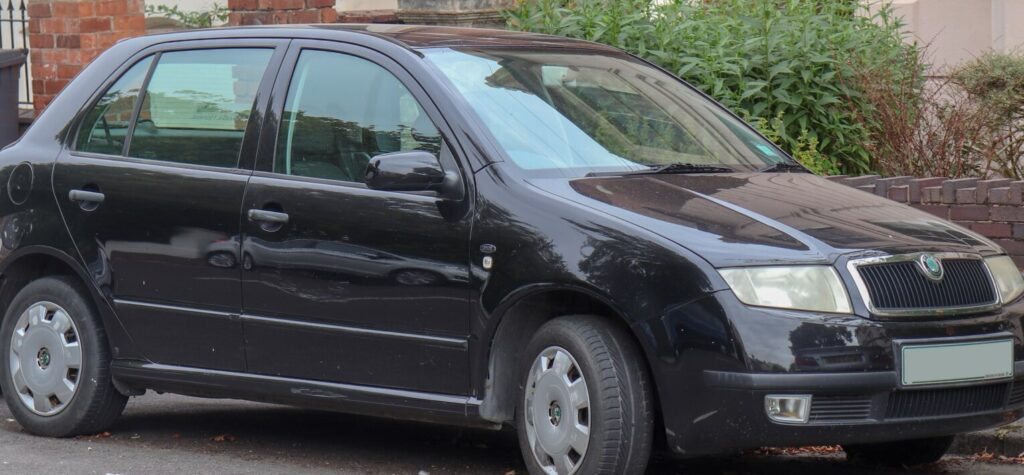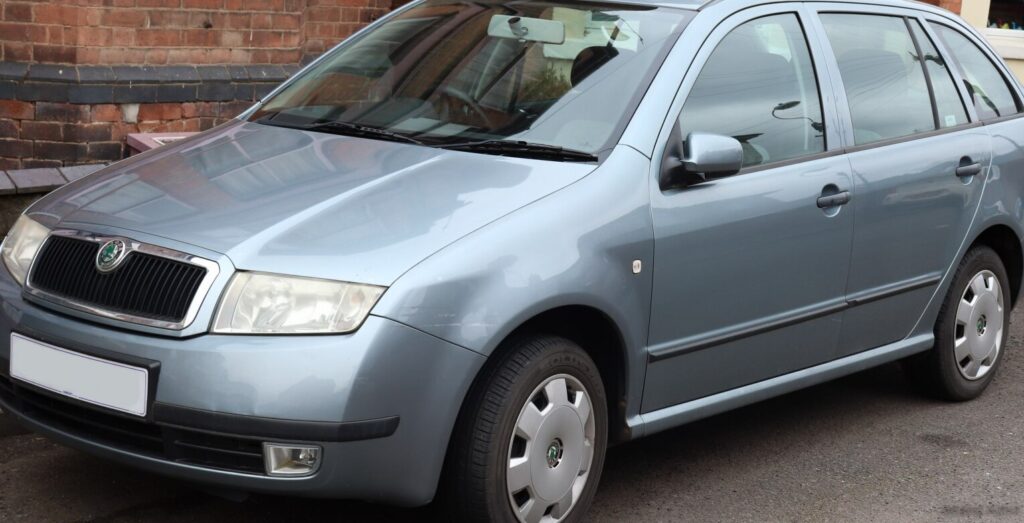
The Skoda Fabia I Combi (6Y) 1.4 16V, produced from October 1999 to July 2004, served as an entry-level offering within the first generation Fabia Combi (estate) range. Positioned as a practical and affordable family vehicle, it appealed to buyers who prioritized fuel efficiency and interior space over outright performance. This variant utilized the BBY engine code and was a key component of Skoda’s strategy to establish itself as a value-oriented brand in the European market. The Fabia I series, built on the Volkswagen Group’s PQ24 platform (also known as the A3/1HX0 platform), aimed to provide a modern and spacious alternative to competitors like the Ford Focus and Opel/Vauxhall Astra.
Technical Specifications
| Brand | Skoda |
| Model | Fabia |
| Generation | Fabia I Combi (6Y) |
| Type (Engine) | 1.4 16V (75 Hp) |
| Start of production | October, 1999 |
| End of production | July, 2004 |
| Powertrain Architecture | Internal Combustion engine |
| Body type | Station wagon (estate) |
| Seats | 5 |
| Doors | 5 |
| Fuel consumption (urban) | 9 l/100 km (26.1 US mpg, 31.4 UK mpg, 11.1 km/l) |
| Fuel consumption (extra urban) | 5.3 l/100 km (44.4 US mpg, 53.3 UK mpg, 18.9 km/l) |
| Fuel Type | Petrol (Gasoline) |
| Acceleration 0 – 100 km/h | 14.1 sec |
| Acceleration 0 – 62 mph | 14.1 sec |
| Acceleration 0 – 60 mph | 13.4 sec |
| Maximum speed | 170 km/h (105.63 mph) |
| Weight-to-power ratio | 14.6 kg/Hp, 68.5 Hp/tonne |
| Weight-to-torque ratio | 8.7 kg/Nm, 115.1 Nm/tonne |
| Power | 75 Hp @ 5000 rpm |
| Power per litre | 54 Hp/l |
| Torque | 126 Nm @ 3800 rpm (92.93 lb.-ft. @ 3800 rpm) |
| Engine layout | Front, Transverse |
| Engine Model/Code | BBY |
| Engine displacement | 1390 cm3 (84.82 cu. in.) |
| Number of cylinders | 4 |
| Engine configuration | Inline |
| Cylinder Bore | 76.5 mm (3.01 in.) |
| Piston Stroke | 75.6 mm (2.98 in.) |
| Compression ratio | 10.5:1 |
| Number of valves per cylinder | 4 |
| Fuel injection system | Multi-port manifold injection |
| Engine aspiration | Naturally aspirated engine |
| Valvetrain | DOHC |
| Engine oil capacity | 3.2 l (3.38 US qt | 2.82 UK qt) |
| Coolant capacity | 5.5 l (5.81 US qt | 4.84 UK qt) |
| Kerb Weight | 1095 kg (2414.06 lbs.) |
| Max. weight | 1610 kg (3549.44 lbs.) |
| Max load | 515 kg (1135.38 lbs.) |
| Trunk (boot) space – minimum | 426 l (15.04 cu. ft.) |
| Trunk (boot) space – maximum | 1225 l (43.26 cu. ft.) |
| Fuel tank capacity | 45 l (11.89 US gal | 9.9 UK gal) |
| Length | 4222 mm (166.22 in.) |
| Width | 1646 mm (64.8 in.) |
| Height | 1452 mm (57.17 in.) |
| Wheelbase | 2462 mm (96.93 in.) |
| Front track | 1419 mm (55.87 in.) |
| Rear track | 1408 mm (55.43 in.) |
| Drivetrain Architecture | Front wheel drive |
| Number of gears | 5 |
| Gearbox type | Manual transmission |
Powertrain & Engine Architecture
The heart of the Fabia Combi 1.4 16V was the EA111 series engine, specifically the BBY code. This 1.4-liter inline-four cylinder engine featured a double overhead camshaft (DOHC) valvetrain with four valves per cylinder, contributing to its relatively efficient breathing. Fuel delivery was handled by a multi-port fuel injection system, a common setup for engines of this era. The engine produced 75 horsepower at 5000 rpm and 93 lb-ft of torque at 3800 rpm. The engine’s design prioritized fuel economy and smooth operation over high-performance figures. The five-speed manual transmission was the standard offering, providing adequate gear spacing for everyday driving. The transmission was a conventional setup, known for its durability and relatively simple maintenance requirements.
Driving Characteristics
The 1.4 16V engine, paired with the five-speed manual transmission, delivered a driving experience focused on practicality rather than excitement. Acceleration was modest, taking approximately 14.1 seconds to reach 62 mph. The engine felt somewhat strained when pushed hard, particularly when fully loaded with passengers and cargo. However, in typical urban and highway driving conditions, it provided sufficient power for comfortable cruising. The gear ratios were well-chosen to maximize fuel efficiency, and the clutch operation was light and easy to manage. Compared to the more powerful 1.6-liter engine or the diesel variants, the 1.4 16V offered a noticeably less engaging driving experience, but it compensated with lower running costs.
Equipment & Trim Levels
The Fabia Combi 1.4 16V typically came with a basic level of equipment, reflecting its position as an entry-level model. Standard features generally included power steering, central locking, front airbags, and an adjustable steering column. Interior upholstery was typically cloth, and the dashboard featured a functional, if somewhat basic, design. Optional extras included air conditioning, alloy wheels, and a radio/CD player. Higher trim levels, such as the ‘Classic’ or ‘Comfort’ variants, added features like electric windows, heated mirrors, and upgraded interior trim.
Chassis & Braking
The Fabia Combi’s chassis was a typical European compact car setup, utilizing coil springs and dampers all around. The front suspension employed MacPherson struts, while the rear featured a torsion beam axle. This configuration provided a reasonable balance between ride comfort and handling. Braking was handled by disc brakes on all four wheels, offering adequate stopping power for the vehicle’s weight and performance. The steering was a hydraulic power-assisted rack and pinion system, providing a light and responsive feel. The 185/60 R14 tires offered a good compromise between grip and rolling resistance.
Market Reception & Comparison
The Skoda Fabia Combi 1.4 16V was generally well-received by automotive critics as a practical and affordable family car. Its spacious interior, large boot capacity, and fuel efficiency were frequently praised. However, its modest performance and somewhat basic interior were often cited as drawbacks. Compared to other engines in the Fabia lineup, the 1.4 16V offered the lowest purchase price and running costs, making it an attractive option for budget-conscious buyers. The 1.6-liter engine provided a noticeable performance boost, while the diesel variants offered superior fuel economy but at a higher initial cost.
Legacy
The Skoda Fabia I Combi 1.4 16V has proven to be a relatively reliable vehicle, with the EA111 engine generally considered durable and long-lasting. Common issues include occasional oil leaks and wear on the timing belt, which requires periodic replacement. In the used car market, these Fabias are often sought after as affordable and practical transportation. Their simple mechanical design and readily available parts make them relatively easy and inexpensive to maintain. While not a performance icon, the Fabia Combi 1.4 16V played a significant role in establishing Skoda as a credible and value-driven automotive brand.