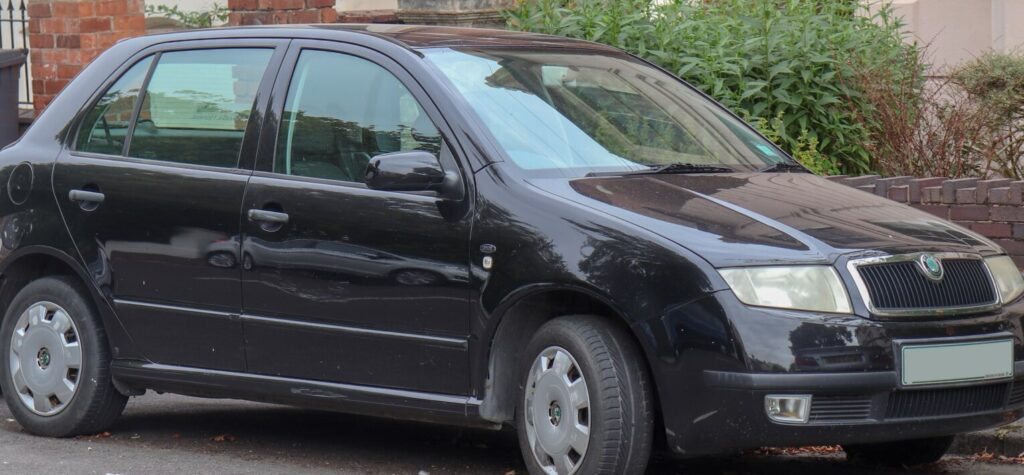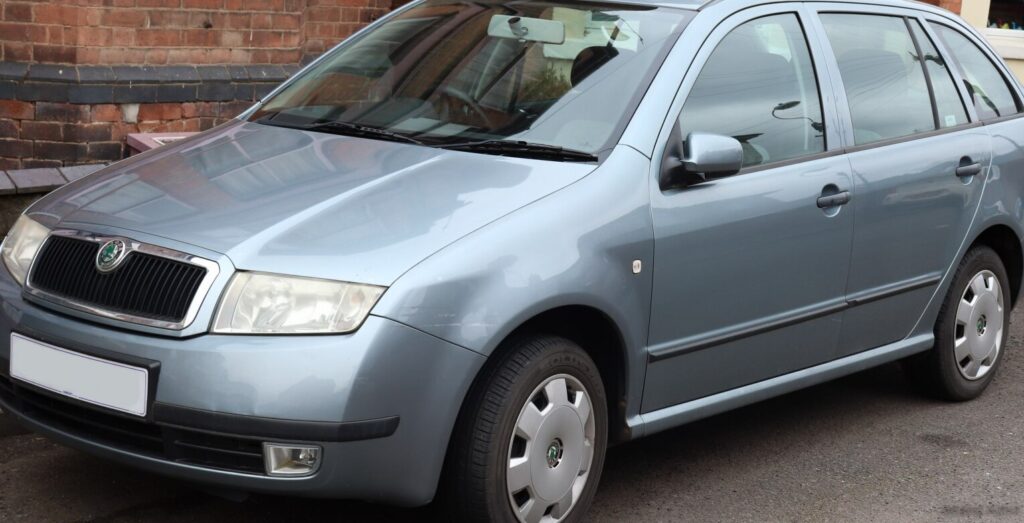
The Skoda Fabia I Combi (6Y) 1.4 16V Automatic, produced between October 1999 and July 2004, represented an entry-level offering within the first generation Fabia Combi (estate) range. Positioned as a practical and affordable family vehicle, this variant aimed to provide comfortable transportation with the convenience of an automatic transmission. It was built on the Volkswagen Group’s PQ24 platform, also known as the A3/1HX0 platform, shared with models like the Volkswagen Polo, SEAT Ibiza, and Audi A2. The Combi body style, a station wagon, significantly expanded the Fabia’s practicality compared to the hatchback, making it a popular choice for families and those requiring additional cargo space.
| Brand | Skoda |
| Model | Fabia |
| Generation | Fabia I Combi (6Y) |
| Type (Engine) | 1.4 16V (75 Hp) Automatic |
| Start of production | October, 1999 |
| End of production | July, 2004 |
| Powertrain Architecture | Internal Combustion engine |
| Body type | Station wagon (estate) |
| Seats | 5 |
| Doors | 5 |
| Fuel consumption (urban) | 9 l/100 km (26.1 US mpg) |
| Fuel consumption (extra urban) | 5.3 l/100 km (44.4 US mpg) |
| Fuel Type | Petrol (Gasoline) |
| Acceleration 0 – 100 km/h | 14.1 sec |
| Acceleration 0 – 62 mph | 14.1 sec |
| Acceleration 0 – 60 mph | 13.4 sec |
| Maximum speed | 170 km/h (105.63 mph) |
| Weight-to-power ratio | 14.6 kg/Hp |
| Weight-to-torque ratio | 8.7 kg/Nm |
| Power | 75 Hp @ 5000 rpm |
| Torque | 126 Nm @ 3800 rpm (92.93 lb.-ft. @ 3800 rpm) |
| Engine layout | Front, Transverse |
| Engine Model/Code | BBY |
| Engine displacement | 1390 cm3 (84.82 cu. in.) |
| Number of cylinders | 4 |
| Engine configuration | Inline |
| Cylinder Bore | 76.5 mm (3.01 in.) |
| Piston Stroke | 75.6 mm (2.98 in.) |
| Compression ratio | 10.5:1 |
| Number of valves per cylinder | 4 |
| Fuel injection system | Multi-port manifold injection |
| Engine aspiration | Naturally aspirated |
| Valvetrain | DOHC |
| Engine oil capacity | 3.2 l (3.38 US qt | 2.82 UK qt) |
| Coolant capacity | 5.5 l (5.81 US qt | 4.84 UK qt) |
| Kerb Weight | 1095 kg (2414.06 lbs.) |
| Max. weight | 1610 kg (3549.44 lbs.) |
| Max load | 515 kg (1135.38 lbs.) |
| Trunk (boot) space – minimum | 426 l (15.04 cu. ft.) |
| Trunk (boot) space – maximum | 1225 l (43.26 cu. ft.) |
| Fuel tank capacity | 45 l (11.89 US gal | 9.9 UK gal) |
| Length | 4222 mm (166.22 in.) |
| Width | 1646 mm (64.8 in.) |
| Height | 1452 mm (57.17 in.) |
| Wheelbase | 2462 mm (96.93 in.) |
| Front track | 1419 mm (55.87 in.) |
| Rear track | 1408 mm (55.43 in.) |
| Drivetrain Architecture | Front wheel drive |
| Number of gears | 4 |
| Gearbox type | Automatic transmission |
| Front suspension | Coil spring |
| Rear suspension | Coil spring |
| Front brakes | Disc |
| Rear brakes | Disc |
| Steering type | Steering rack and pinion |
| Power steering | Hydraulic |
| Tires size | 185/60 R14 |
| Wheel rims size | 6J x 14 |
Powertrain & Engine Architecture
The Fabia Combi 1.4 16V Automatic was powered by the BBY engine code, a 1.4-liter inline-four cylinder gasoline engine. This engine featured a dual overhead camshaft (DOHC) valvetrain with four valves per cylinder, contributing to its relatively efficient operation. Fuel delivery was handled by a multi-port fuel injection system, a common setup for engines of this era. The engine produced 75 horsepower at 5000 rpm and 126 Nm (93 lb-ft) of torque at 3800 rpm. The automatic transmission was a four-speed unit, designed for smooth, if not particularly sporty, gear changes. This transmission was a conventional hydraulic automatic, lacking the more advanced features found in later transmissions.
Driving Characteristics
The 1.4 16V Automatic Fabia Combi offered a comfortable, but unhurried, driving experience. Acceleration was modest, taking approximately 14.1 seconds to reach 62 mph (100 km/h). The four-speed automatic transmission, while providing convenience, wasn’t optimized for performance. Gear ratios were spaced to prioritize fuel economy and smooth cruising rather than rapid acceleration. Compared to the 1.4 16V manual version, the automatic suffered a slight performance penalty due to the transmission’s inherent efficiency losses. Higher-output versions, such as the 1.8 20V or the diesel-powered 1.9 TDI, offered significantly more responsive performance, but at a higher price point. The automatic transmission did provide a more relaxed driving experience in city traffic, a key selling point for its target audience.
Equipment & Trim Levels
The 1.4 16V Automatic trim level typically fell into the entry to mid-range of the Fabia Combi lineup. Standard equipment generally included central locking, power steering, front airbags, and an adjustable steering column. Interior upholstery was typically cloth, with a functional, if somewhat basic, dashboard layout. Optional extras included air conditioning, alloy wheels, and a radio/CD player. Higher trim levels, such as the Elegance, added features like climate control, upgraded upholstery, and more comprehensive audio systems. The focus of this variant was on providing essential features at an affordable price.
Chassis & Braking
The Fabia Combi 1.4 16V Automatic utilized a relatively simple chassis setup. Front suspension consisted of coil springs and independent suspension, while the rear employed a torsion beam axle with coil springs. Brakes were disc brakes on all four wheels, providing adequate stopping power for the vehicle’s weight and performance. The suspension was tuned for comfort, prioritizing ride quality over sporty handling. Stabilizer bars were present, but were relatively thin compared to those found on higher-performance models. This setup provided a stable and predictable driving experience, suitable for everyday use.
Market Reception & Comparison
The Skoda Fabia Combi 1.4 16V Automatic was generally well-received as a practical and affordable family car. Critics praised its spacious interior, generous cargo capacity, and comfortable ride. However, the engine’s modest power output and the automatic transmission’s lack of responsiveness were often cited as drawbacks. Compared to the manual version, fuel economy was slightly lower. The 1.9 TDI diesel offered significantly better fuel economy and more torque, but came at a higher purchase price. The 1.8 20V provided more power, but was also more expensive and less fuel-efficient. The 1.4 Automatic appealed to buyers who prioritized convenience and affordability over outright performance.
Legacy
The BBY engine, while not known for being particularly exciting, proved to be relatively reliable. Common issues included occasional oil leaks and sensor failures, but these were generally not major concerns. The four-speed automatic transmission, while dated, was also generally durable. Today, the Fabia Combi 1.4 16V Automatic can be found on the used car market at very affordable prices. It represents a practical and economical option for those seeking a reliable and spacious estate car. Its simplicity and relatively low maintenance costs make it an appealing choice for budget-conscious buyers. While it may not offer the performance or features of more modern vehicles, it remains a testament to Skoda’s commitment to providing value for money.