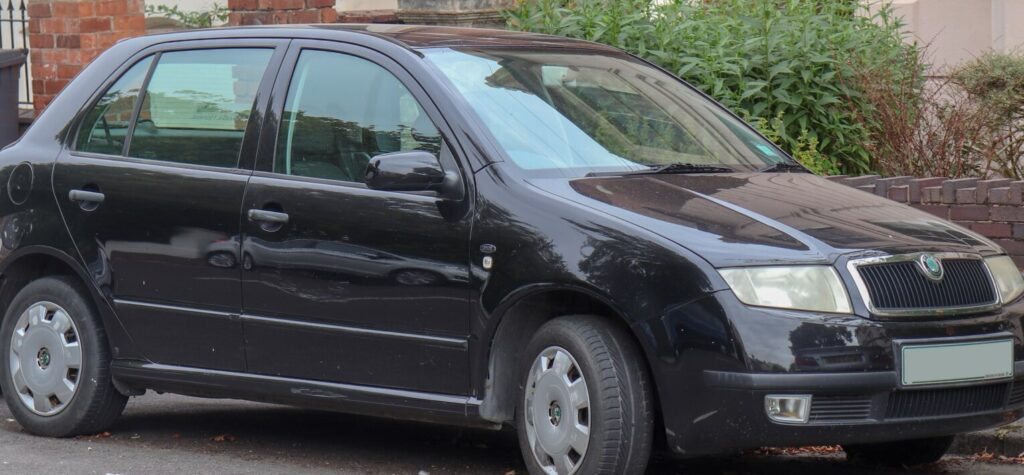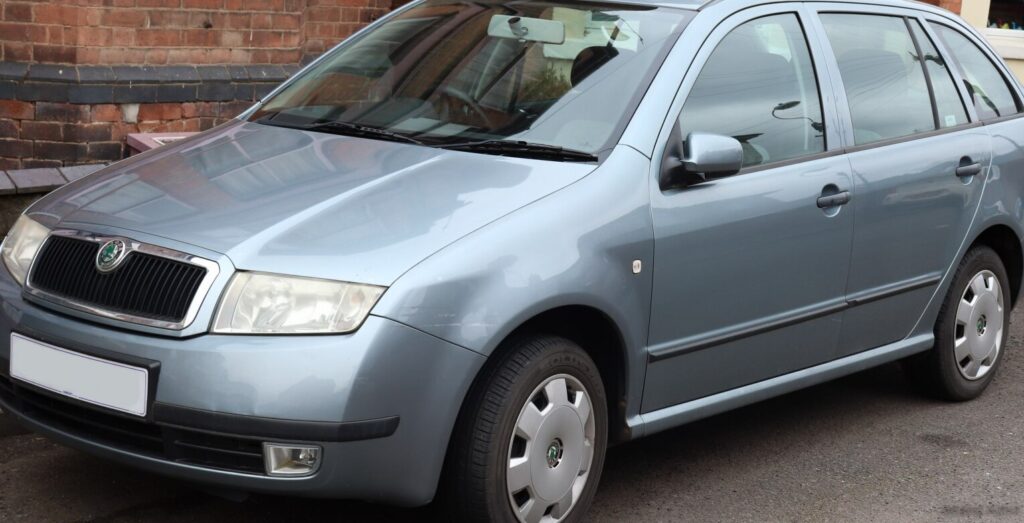
The Skoda Fabia I Combi (6Y) 1.4, producing 60 horsepower, was a mainstay of the first-generation Fabia Combi (estate) lineup, manufactured between April 2000 and March 2004. Positioned as the entry-level engine option for the practical Combi body style, it catered to buyers prioritizing affordability and fuel economy over outright performance. This variant was a key component of Skoda’s strategy to offer a value-oriented alternative within the competitive European small family car segment, leveraging the Volkswagen Group’s A05 (Polo) platform – internally designated 6Y. The Combi body style itself was significant, offering increased cargo capacity compared to the hatchback, appealing to families and those requiring versatile load-lugging capabilities.
Technical Specifications
| Brand | Skoda |
| Model | Fabia |
| Generation | Fabia I Combi (6Y) |
| Type (Engine) | 1.4 (60 Hp) |
| Start of production | April, 2000 |
| End of production | March, 2004 |
| Powertrain Architecture | Internal Combustion engine |
| Body type | Station wagon (estate) |
| Seats | 5 |
| Doors | 5 |
| Fuel consumption (urban) | 9.6 l/100 km (24.5 US mpg) |
| Fuel consumption (extra urban) | 5.5 l/100 km (42.8 US mpg) |
| Fuel consumption (combined) | 7 l/100 km (33.6 US mpg) |
| Fuel Type | Petrol (Gasoline) |
| Acceleration 0 – 100 km/h | 16.5 sec |
| Acceleration 0 – 62 mph | 16.5 sec |
| Acceleration 0 – 60 mph | 15.7 sec |
| Maximum speed | 157 km/h (97.56 mph) |
| Weight-to-power ratio | 17.8 kg/Hp |
| Weight-to-torque ratio | 9 kg/Nm |
| Power | 60 Hp @ 4500 rpm |
| Torque | 118 Nm @ 2600 rpm (87.03 lb.-ft. @ 2600 rpm) |
| Engine layout | Front, Transverse |
| Engine Model/Code | AZE |
| Engine displacement | 1397 cm3 (85.25 cu. in.) |
| Number of cylinders | 4 |
| Engine configuration | Inline |
| Cylinder Bore | 75.5 mm (2.97 in.) |
| Piston Stroke | 78 mm (3.07 in.) |
| Compression ratio | 10:1 |
| Number of valves per cylinder | 2 |
| Fuel injection system | Multi-port manifold injection |
| Engine aspiration | Naturally aspirated engine |
| Engine oil capacity | 4 l (4.23 US qt | 3.52 UK qt) |
| Coolant capacity | 6 l (6.34 US qt | 5.28 UK qt) |
| Kerb Weight | 1065 kg (2347.92 lbs.) |
| Trunk (boot) space – minimum | 426 l (15.04 cu. ft.) |
| Trunk (boot) space – maximum | 1225 l (43.26 cu. ft.) |
| Fuel tank capacity | 45 l (11.89 US gal | 9.9 UK gal) |
| Length | 4222 mm (166.22 in.) |
| Width | 1646 mm (64.8 in.) |
| Height | 1452 mm (57.17 in.) |
| Wheelbase | 2462 mm (96.93 in.) |
| Front track | 1435 mm (56.5 in.) |
| Rear track | 1424 mm (56.06 in.) |
| Drivetrain Architecture | Front wheel drive |
| Number of gears | 5 |
| Gearbox type | Manual transmission |
| Front suspension | Coil spring |
| Rear suspension | Coil spring |
| Front brakes | Disc |
| Rear brakes | Drum |
| Steering type | Steering rack and pinion |
| Power steering | Hydraulic |
| Tires size | 165/70 R14 |
Powertrain & Engine Architecture
The Fabia 1.4 Combi utilized the AZE engine code, a naturally aspirated, inline-four cylinder petrol engine. This engine was a common sight across various Volkswagen Group models of the era, known for its simplicity and relative reliability. The AZE featured a multi-port fuel injection system, delivering fuel to the intake ports rather than directly into the combustion chamber. This system, while less sophisticated than direct injection, contributed to the engine’s affordability and ease of maintenance. The engine employed a single overhead camshaft (SOHC) valvetrain with two valves per cylinder. The 1.4-liter engine produced 60 horsepower at 4500 rpm and 87 lb-ft of torque at 2600 rpm. This power was delivered through a standard five-speed manual transmission, optimized for fuel efficiency rather than spirited acceleration.
Driving Characteristics
The 1.4-liter engine in the Fabia Combi provided adequate, but not exhilarating, performance. Acceleration from 0-60 mph took approximately 15.7 seconds, and top speed was limited to around 97 mph. The engine felt strained when fully loaded or tackling steep inclines. The five-speed manual transmission was well-matched to the engine’s characteristics, offering reasonable gear spacing. Compared to the more powerful 1.6-liter or even the diesel variants, the 1.4 felt noticeably slower. However, its lighter weight and less stressed engine contributed to improved fuel economy and a more forgiving driving experience in urban environments.
Equipment & Trim Levels
The 1.4 Combi typically came with a basic level of equipment. Standard features generally included power steering, central locking, and front airbags. Interior upholstery was typically cloth, and the dashboard featured a functional, if somewhat spartan, design. Optional extras included air conditioning, alloy wheels, and an upgraded audio system. The trim level was generally considered the entry point to the Fabia Combi range, appealing to budget-conscious buyers. Higher trim levels, such as the Classic or Elegance, offered more luxurious appointments and additional features.
Chassis & Braking
The Fabia Combi’s chassis featured a MacPherson strut front suspension and a twist-beam rear suspension. This setup provided a comfortable ride, although it wasn’t particularly sporty. The front brakes were disc brakes, while the rear brakes were drum brakes – a cost-saving measure common in this segment. The steering was hydraulic power-assisted, providing light and easy steering feel. The suspension was tuned for comfort and practicality, prioritizing ride quality over handling precision.
Market Reception & Comparison
The Skoda Fabia 1.4 Combi was generally well-received as a practical and affordable estate car. Critics praised its spacious interior, generous boot capacity, and competitive price point. However, the engine’s lack of power was often cited as a drawback. Compared to rivals like the Ford Focus Estate or the Vauxhall/Opel Astra Estate, the Fabia 1.4 offered a more economical option, but with less performance. Fuel economy was a strong point, consistently achieving around 33-40 mpg in real-world driving. Reliability was generally good, although the engine’s timing belt required periodic replacement to prevent catastrophic failure.
Legacy
The Skoda Fabia I Combi 1.4 remains a relatively common sight on European roads today, often found as an affordable and reliable used car. The AZE engine, while not known for its performance, is generally considered durable and relatively easy to maintain. Parts availability is good, and repair costs are typically low. The 1.4 Combi represents a sensible and practical choice for those seeking an affordable and spacious estate car, and its enduring presence in the used car market is a testament to its overall value and dependability. While not a performance icon, it played a crucial role in establishing Skoda as a credible and value-driven brand in the European automotive landscape.