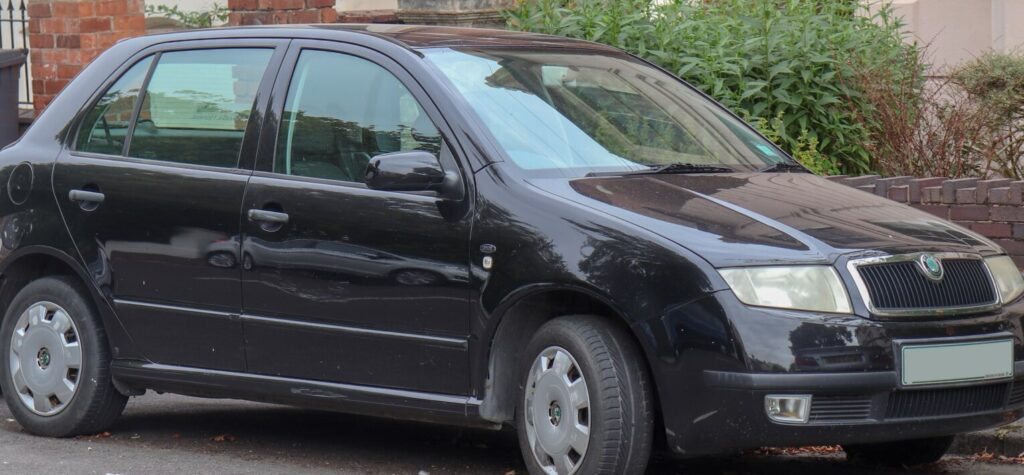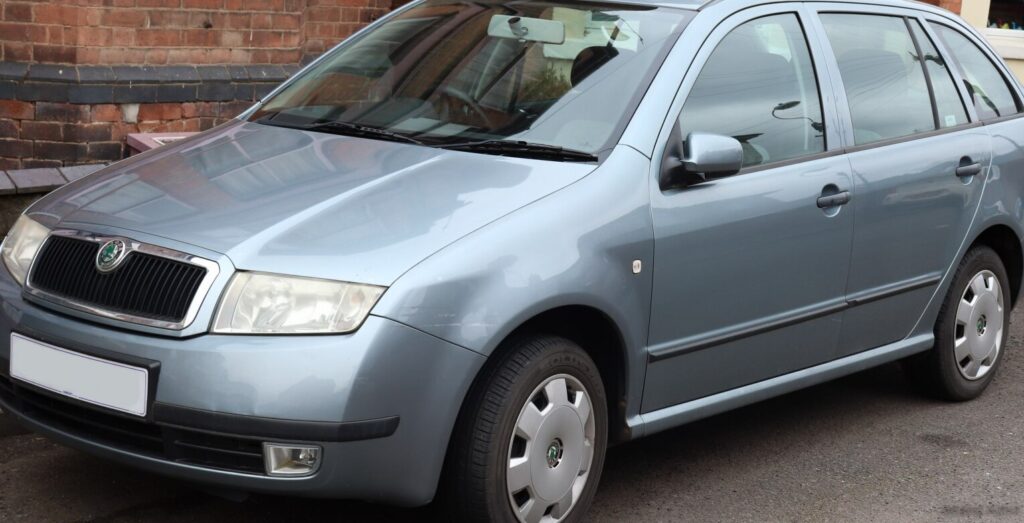
The Skoda Fabia I Combi (6Y) 1.9 SDI, produced from November 1999 to 2004, represents an entry-level offering within the first generation Fabia Combi (estate) range. Positioned as a practical and economical choice, this variant catered to buyers prioritizing fuel efficiency and low running costs over outright performance. The 6Y chassis, shared with the Volkswagen Polo and SEAT Ibiza, provided a solid foundation for this compact wagon. The 1.9 SDI engine, while not known for its speed, offered a durable and reliable powerplant for everyday use, particularly in European markets where diesel fuel was – and remains – significantly more affordable than gasoline.
Technical Specifications
| Brand | Skoda |
| Model | Fabia |
| Generation | Fabia I Combi (6Y) |
| Type (Engine) | 1.9 SDI (64 Hp) |
| Start of production | November, 1999 |
| End of production | 2004 |
| Powertrain Architecture | Internal Combustion engine |
| Body type | Station wagon (estate) |
| Seats | 5 |
| Doors | 5 |
| Fuel consumption (urban) | 6.2 l/100 km (37.9 US mpg, 45.6 UK mpg, 16.1 km/l) |
| Fuel consumption (extra urban) | 4 l/100 km (58.8 US mpg, 70.6 UK mpg, 25 km/l) |
| Fuel Type | Diesel |
| Acceleration 0 – 100 km/h | 19 sec |
| Acceleration 0 – 62 mph | 19 sec |
| Acceleration 0 – 60 mph | 18.1 sec |
| Maximum speed | 158 km/h (98.18 mph) |
| Weight-to-power ratio | 18.1 kg/Hp, 55.2 Hp/tonne |
| Weight-to-torque ratio | 9.3 kg/Nm, 107.8 Nm/tonne |
| Power | 64 Hp @ 4000 rpm |
| Power per litre | 33.8 Hp/l |
| Torque | 125 Nm @ 1600 rpm (92.2 lb.-ft. @ 1600 rpm) |
| Engine layout | Front, Transverse |
| Engine Model/Code | ASY |
| Engine displacement | 1896 cm3 (115.7 cu. in.) |
| Number of cylinders | 4 |
| Engine configuration | Inline |
| Cylinder Bore | 79.5 mm (3.13 in.) |
| Piston Stroke | 95.5 mm (3.76 in.) |
| Compression ratio | 19.5:1 |
| Number of valves per cylinder | 2 |
| Fuel injection system | Direct injection |
| Engine aspiration | Naturally aspirated engine |
| Engine oil capacity | 4.3 l (4.54 US qt | 3.78 UK qt) |
| Coolant | 6.6 l (6.97 US qt | 5.81 UK qt) |
| Kerb Weight | 1160 kg (2557.36 lbs.) |
| Max. weight | 1675 kg (3692.74 lbs.) |
| Max load | 515 kg (1135.38 lbs.) |
| Trunk (boot) space – minimum | 426 l (15.04 cu. ft.) |
| Trunk (boot) space – maximum | 1225 l (43.26 cu. ft.) |
| Fuel tank capacity | 45 l (11.89 US gal | 9.9 UK gal) |
| Length | 4222 mm (166.22 in.) |
| Width | 1646 mm (64.8 in.) |
| Height | 1452 mm (57.17 in.) |
| Wheelbase | 2462 mm (96.93 in.) |
| Front track | 1419 mm (55.87 in.) |
| Rear (Back) track | 1408 mm (55.43 in.) |
| Drivetrain Architecture | The Internal combustion engine (ICE) drives the front wheels of the vehicle. |
| Drive wheel | Front wheel drive |
| Number of gears and type of gearbox | 5 gears, manual transmission |
| Front suspension | Coil spring |
| Rear suspension | Coil spring |
| Front brakes | Disc |
| Rear brakes | Drum |
| Steering type | Steering rack and pinion |
| Power steering | Hydraulic Steering |
| Tires size | 185/60 R14 |
| Wheel rims size | 6J x 14 |
INTRODUCTION
The Skoda Fabia I Combi 1.9 SDI, launched in late 1999, was a key component of Skoda’s expanding lineup following its acquisition by the Volkswagen Group. Built on the A04 platform (internally designated 6Y), the Fabia Combi offered a more practical alternative to the hatchback, providing increased cargo capacity without significantly compromising on fuel economy. The 1.9 SDI variant specifically targeted budget-conscious buyers seeking a reliable and economical vehicle for daily commuting and family use. It was particularly popular in European markets where diesel engines enjoyed a significant tax advantage and offered superior fuel efficiency compared to gasoline counterparts.
Powertrain & Engine Architecture
The heart of the Fabia 1.9 SDI is the ASY engine code, a 1.9-liter, inline-four cylinder diesel engine. This engine utilizes a direct injection system, a hallmark of Volkswagen Group’s diesel technology at the time. Unlike earlier indirect injection diesels, direct injection delivers fuel directly into the combustion chamber, resulting in more complete combustion, improved fuel economy, and reduced emissions. The engine features two valves per cylinder (SOHC) and a naturally aspirated intake. The 125 Nm (92.2 lb-ft) of torque is available from a low 1600 rpm, providing reasonable pulling power for everyday driving. The engine is paired with a five-speed manual transmission, which was the only transmission option available for this specific configuration. The transmission’s gear ratios are geared towards maximizing fuel efficiency rather than providing sporty acceleration.
Driving Characteristics
The driving experience in the Fabia 1.9 SDI Combi is best described as utilitarian. With only 64 horsepower, acceleration is leisurely, taking approximately 19 seconds to reach 62 mph (100 km/h). The focus is on providing adequate power for maintaining highway speeds and navigating urban traffic. The low-end torque, however, makes it surprisingly capable in everyday driving situations. The manual transmission, while not particularly sporty, is precise and easy to use. Compared to higher-output versions of the Fabia, such as the 1.4 16V or the later 1.9 TDI, the SDI model feels significantly slower. However, it offers a smoother and more linear power delivery than the often-turbo-laggy TDI variants. The suspension is tuned for comfort, providing a reasonably compliant ride, although it can feel somewhat wallowy when fully loaded.
Equipment & Trim Levels
The 1.9 SDI Combi typically came with a basic level of equipment. Standard features generally included power steering, central locking, and front electric windows. Interior upholstery was typically a durable cloth material. Optional extras included air conditioning, alloy wheels, and a radio/cassette player. Trim levels were relatively limited, with the SDI model representing the entry point into the Fabia Combi range. The dashboard layout was functional and straightforward, prioritizing ease of use over aesthetic appeal. Safety features were also basic, typically including driver and passenger airbags and ABS brakes.
Chassis & Braking
The Fabia Combi’s chassis utilizes a MacPherson strut front suspension and a twist-beam rear suspension. This setup provides a good balance between ride comfort and handling. The front brakes are disc brakes, while the rear brakes are drum brakes – a cost-saving measure common in entry-level models. The steering is a hydraulic power steering system, providing reasonable assistance at low speeds. The 185/60 R14 tires offer adequate grip in most conditions, but are not designed for high-performance driving. Stabilizer bars were typically fitted to both the front and rear axles, helping to reduce body roll during cornering.
Market Reception & Comparison
The Fabia 1.9 SDI Combi was generally well-received by critics as a practical and economical family car. Its fuel efficiency was a major selling point, particularly in Europe. However, its lack of performance was often criticized. Compared to the 1.4-liter gasoline versions, the SDI offered significantly better fuel economy but considerably slower acceleration. The later 1.9 TDI models provided a more compelling combination of performance and fuel efficiency, but at a higher price point. The SDI’s simplicity and robust construction contributed to its reputation for reliability.
Legacy
The Skoda Fabia 1.9 SDI Combi has proven to be a remarkably durable vehicle. Many examples are still on the road today, testament to the robustness of the engine and the overall build quality. In the used car market, these models are typically very affordable, making them an attractive option for budget-conscious buyers. While not a particularly exciting car to drive, the 1.9 SDI Combi offers a practical and reliable solution for those seeking a spacious and economical estate car. The ASY engine, while aging, is known for its longevity when properly maintained, and parts availability remains relatively good. Its simplicity also makes it easier and cheaper to repair than more complex modern vehicles.