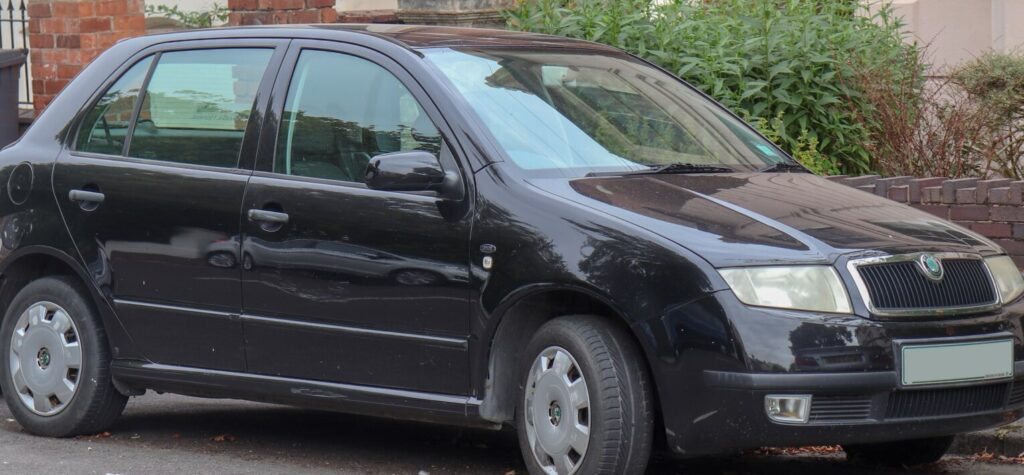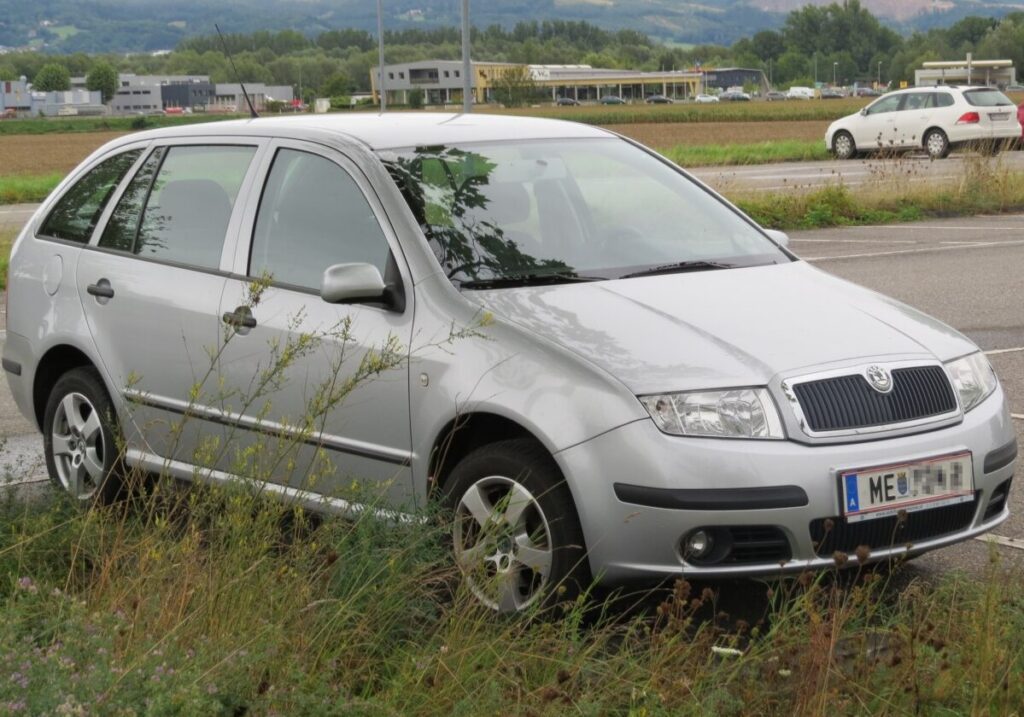
The Skoda Fabia I Combi 1.2 HTP (64 hp) is a compact station wagon produced from July 2004 to December 2007, representing a facelifted version of the original Fabia (6Y) series. Positioned as an entry-level variant within the Fabia Combi range, it aimed to provide affordable and practical transportation, particularly in European markets. This model was part of the broader Fabia I generation, which utilized the Volkswagen Group’s PQ24 platform, also known as the A3 platform. The Combi body style, or estate, offered increased cargo capacity compared to the hatchback, making it a popular choice for families and those requiring versatile load-carrying capabilities.
Technical Specifications
| Brand | Skoda |
| Model | Fabia |
| Generation | Fabia I Combi (6Y, facelift 2004) |
| Type (Engine) | 1.2 HTP (64 Hp) |
| Start of production | July, 2004 |
| End of production | December, 2007 |
| Powertrain Architecture | Internal Combustion engine |
| Body type | Station wagon (estate) |
| Seats | 5 |
| Doors | 5 |
| Fuel consumption (urban) | 7.7 l/100 km (30.5 US mpg, 36.7 UK mpg, 13 km/l) |
| Fuel consumption (extra urban) | 4.9 l/100 km (48 US mpg, 57.6 UK mpg, 20.4 km/l) |
| Fuel consumption (combined) | 5.9 l/100 km (39.9 US mpg, 47.9 UK mpg, 16.9 km/l) |
| CO2 emissions | 142 g/km |
| Fuel Type | Petrol (Gasoline) |
| Acceleration 0 – 100 km/h | 16.3 sec |
| Acceleration 0 – 62 mph | 16.3 sec |
| Acceleration 0 – 60 mph | 15.5 sec |
| Maximum speed | 162 km/h (100.66 mph) |
| Weight-to-power ratio | 17 kg/Hp, 58.7 Hp/tonne |
| Weight-to-torque ratio | 9.7 kg/Nm, 102.8 Nm/tonne |
| Power | 64 Hp @ 5400 rpm |
| Power per litre | 53.4 Hp/l |
| Torque | 112 Nm @ 3000 rpm (82.61 lb.-ft. @ 3000 rpm) |
| Engine layout | Front, Transverse |
| Engine Model/Code | AZQ |
| Engine displacement | 1198 cm3 (73.11 cu. in.) |
| Number of cylinders | 3 |
| Engine configuration | Inline |
| Cylinder Bore | 76.5 mm (3.01 in.) |
| Piston Stroke | 86.9 mm (3.42 in.) |
| Compression ratio | 10.5:1 |
| Number of valves per cylinder | 4 |
| Fuel injection system | Multi-port manifold injection |
| Engine aspiration | Naturally aspirated engine |
| Valvetrain | DOHC |
| Engine oil capacity | 2.8 l (2.96 US qt | 2.46 UK qt) |
| Coolant | 5.1 l (5.39 US qt | 4.49 UK qt) |
| Kerb Weight | 1090 kg (2403.04 lbs.) |
| Max. weight | 1605 kg (3538.42 lbs.) |
| Max load | 515 kg (1135.38 lbs.) |
| Trunk (boot) space – minimum | 426 l (15.04 cu. ft.) |
| Trunk (boot) space – maximum | 1225 l (43.26 cu. ft.) |
| Fuel tank capacity | 45 l (11.89 US gal | 9.9 UK gal) |
| Max. roof load | 75 kg (165.35 lbs.) |
| Permitted trailer load with brakes (12%) | 750 kg (1653.47 lbs.) |
| Permitted trailer load without brakes | 450 kg (992.08 lbs.) |
| Permitted towbar download | 50 kg (110.23 lbs.) |
| Length | 4232 mm (166.61 in.) |
| Width | 1646 mm (64.8 in.) |
| Width including mirrors | 1890 mm (74.41 in.) |
| Height | 1452 mm (57.17 in.) |
| Wheelbase | 2462 mm (96.93 in.) |
| Front track | 1435 mm (56.5 in.) |
| Rear (Back) track | 1424 mm (56.06 in.) |
| Front overhang | 837 mm (32.95 in.) |
| Rear overhang | 933 mm (36.73 in.) |
| Ride height (ground clearance) | 120 mm (4.72 in.) |
| Drag coefficient (Cd) | 0.3 |
| Minimum turning circle (turning diameter) | 10.4 m (34.12 ft.) |
| Approach angle | 16° |
| Departure angle | 16° |
| Drivetrain Architecture | The Internal combustion engine (ICE) drives the front wheels of the vehicle. |
| Drive wheel | Front wheel drive |
| Number of gears and type of gearbox | 5 gears, manual transmission |
| Front suspension | Independent, type McPherson with coil spring and anti-roll bar |
| Rear suspension | Trailing arm |
| Front brakes | Ventilated discs |
| Rear brakes | Drum |
| Assisting systems | ABS (Anti-lock braking system) |
| Steering type | Steering rack and pinion |
| Power steering | Hydraulic Steering |
| Tires size | 155/80 R13; 165/70 R14; 185/60 R14 |
| Wheel rims size | 5J x 13; 5J x 16; 6J x 14 |
Powertrain & Engine Architecture
The Fabia Combi 1.2 HTP was powered by the AZQ engine code, a 1.2-liter, three-cylinder, naturally aspirated petrol engine. This engine was part of the EA111 family, known for its compact size and relatively simple construction. The ‘HTP’ designation stands for ‘High Torque Pump,’ referring to the engine’s multi-point fuel injection system. This system aimed to improve fuel atomization and combustion efficiency. The engine featured a double overhead camshaft (DOHC) valvetrain with four valves per cylinder, contributing to improved breathing and power delivery. The 1.2 HTP engine produced 64 horsepower at 5400 rpm and 112 Nm (82.61 lb-ft) of torque at 3000 rpm. The engine was transversely mounted, driving the front wheels through a five-speed manual transmission. While an automatic transmission was offered on other Fabia variants, the 1.2 HTP was exclusively paired with the manual gearbox.
Driving Characteristics
The 1.2 HTP engine in the Fabia Combi provided adequate, but not exhilarating, performance. Acceleration from 0 to 100 km/h (0-62 mph) took approximately 16.3 seconds, and the top speed was around 162 km/h (100.66 mph). The engine’s torque peak at 3000 rpm meant that it felt relatively responsive in everyday driving situations, but it lacked the punch of larger-displacement engines. The five-speed manual transmission was well-matched to the engine’s characteristics, allowing drivers to keep the engine in its optimal power band. Compared to higher-output Fabia variants, such as the 1.4 or 2.0-liter engines, the 1.2 HTP offered significantly less performance. However, it prioritized fuel economy and affordability.
Equipment & Trim Levels
The 1.2 HTP Combi typically came with a basic level of equipment, reflecting its position as an entry-level model. Standard features generally included power steering, central locking, front airbags, and an adjustable steering column. Interior upholstery was typically cloth, and the dashboard featured a simple, functional design. Optional extras included air conditioning, alloy wheels, and a radio/CD player. Trim levels varied slightly depending on the market, but the focus remained on providing a practical and affordable vehicle.
Chassis & Braking
The Fabia Combi 1.2 HTP utilized a McPherson strut front suspension and a trailing arm rear suspension. This setup provided a comfortable ride quality, although it wasn’t particularly sporty. The front brakes were ventilated discs, while the rear brakes were drums. ABS (Anti-lock Braking System) was standard, enhancing safety. The suspension was tuned for comfort and practicality, prioritizing ride quality over handling precision. Stabilizer bars were included to reduce body roll during cornering.
Market Reception & Comparison
The Skoda Fabia Combi 1.2 HTP was generally well-received as an affordable and practical family car. Critics praised its spacious interior, good fuel economy (around 5.9 l/100 km combined), and competitive price. However, the engine’s lack of power was often noted as a drawback. Compared to other trims in the Fabia lineup, the 1.2 HTP offered the lowest running costs but also the least performance. It was a popular choice for buyers who prioritized fuel efficiency and practicality over driving excitement.
Legacy
The 1.2 HTP engine, while economical, gained a reputation for potential reliability issues, particularly concerning timing chain wear and oil consumption. These issues, while not universal, became a concern in the used car market. Despite this, the Fabia Combi 1.2 HTP remains a relatively affordable and practical option for those seeking a compact station wagon. Its simple construction and readily available parts contribute to its maintainability. Today, these vehicles are often found as budget-friendly transportation or as first cars for new drivers.