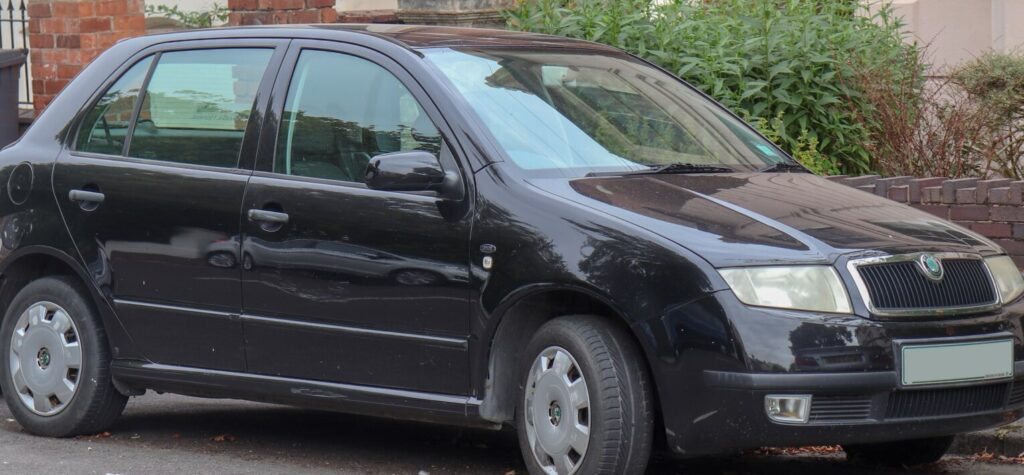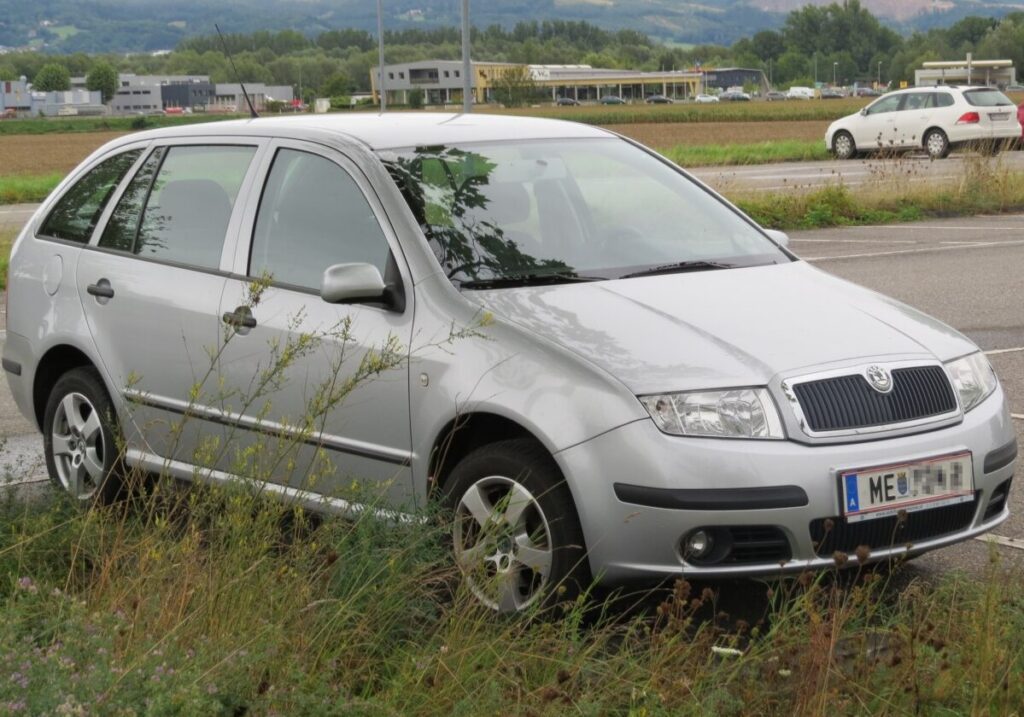
Technical Specifications
| Brand | Skoda |
| Model | Fabia |
| Generation | Fabia I Combi (6Y, facelift 2004) |
| Type (Engine) | 1.4 (101 Hp) |
| Start of production | July, 2004 |
| End of production | December, 2006 |
| Powertrain Architecture | Internal Combustion engine |
| Body type | Station wagon (estate) |
| Seats | 5 |
| Doors | 5 |
| Fuel consumption (urban) | 9 l/100 km (26.1 US mpg, 31.4 UK mpg, 11.1 km/l) |
| Fuel consumption (extra urban) | 5.4 l/100 km (43.6 US mpg, 52.3 UK mpg, 18.5 km/l) |
| Fuel consumption (combined) | 6.7 l/100 km (35.1 US mpg, 42.2 UK mpg, 14.9 km/l) |
| CO2 emissions | 161 g/km |
| Fuel Type | Petrol (Gasoline) |
| Acceleration 0 – 100 km/h | 11.6 sec |
| Acceleration 0 – 62 mph | 11.6 sec |
| Acceleration 0 – 60 mph | 11 sec |
| Maximum speed | 186 km/h (115.58 mph) |
| Emission standard | Euro 4 |
| Weight-to-power ratio | 10.9 kg/Hp, 91.8 Hp/tonne |
| Weight-to-torque ratio | 8.7 kg/Nm, 114.5 Nm/tonne |
| Power | 101 Hp @ 6000 rpm |
| Power per litre | 72.7 Hp/l |
| Torque | 126 Nm @ 4400 rpm (92.93 lb.-ft. @ 4400 rpm) |
| Engine layout | Front, Transverse |
| Engine Model/Code | AUB |
| Engine displacement | 1390 cm3 (84.82 cu. in.) |
| Number of cylinders | 4 |
| Engine configuration | Inline |
| Cylinder Bore | 76.5 mm (3.01 in.) |
| Piston Stroke | 75.6 mm (2.98 in.) |
| Compression ratio | 10.5:1 |
| Number of valves per cylinder | 4 |
| Fuel injection system | Multi-port manifold injection |
| Engine aspiration | Naturally aspirated engine |
| Valvetrain | DOHC |
| Engine oil capacity | 3.2 l (3.38 US qt | 2.82 UK qt) |
| Coolant | 5.5 l (5.81 US qt | 4.84 UK qt) |
| Kerb Weight | 1100 kg (2425.08 lbs.) |
| Max. weight | 1615 kg (3560.47 lbs.) |
| Max load | 515 kg (1135.38 lbs.) |
| Trunk (boot) space – minimum | 426 l (15.04 cu. ft.) |
| Trunk (boot) space – maximum | 1225 l (43.26 cu. ft.) |
| Fuel tank capacity | 45 l (11.89 US gal | 9.9 UK gal) |
| Max. roof load | 75 kg (165.35 lbs.) |
| Permitted trailer load with brakes (12%) | 800 kg (1763.7 lbs.) |
| Permitted trailer load without brakes | 450 kg (992.08 lbs.) |
| Permitted towbar download | 50 kg (110.23 lbs.) |
| Length | 4232 mm (166.61 in.) |
| Width | 1646 mm (64.8 in.) |
| Width including mirrors | 1890 mm (74.41 in.) |
| Height | 1452 mm (57.17 in.) |
| Wheelbase | 2462 mm (96.93 in.) |
| Front track | 1435 mm (56.5 in.) |
| Rear (Back) track | 1424 mm (56.06 in.) |
| Front overhang | 837 mm (32.95 in.) |
| Rear overhang | 933 mm (36.73 in.) |
| Ride height (ground clearance) | 120 mm (4.72 in.) |
| Drag coefficient (Cd) | 0.32 |
| Minimum turning circle (turning diameter) | 10.4 m (34.12 ft.) |
| Approach angle | 16° |
| Departure angle | 16° |
| Drivetrain Architecture | The Internal combustion engine (ICE) drives the front wheels of the vehicle. |
| Drive wheel | Front wheel drive |
| Number of gears and type of gearbox | 5 gears, manual transmission |
| Front suspension | Independent, type McPherson with coil spring and anti-roll bar |
| Rear suspension | Trailing arm |
| Front brakes | Ventilated discs |
| Rear brakes | Disc |
| Assisting systems | ABS (Anti-lock braking system) |
| Steering type | Steering rack and pinion |
| Power steering | Electric Steering |
| Tires size | 155/80 R13; 165/70 R14; 185/60 R14 |
| Wheel rims size | 5J x 13; 5J x 16; 6J x 14 |
The Skoda Fabia I Combi 1.4 (101 hp) was a key model in Skoda’s expansion into Western European markets. Introduced as part of the 6Y facelift in 2004, it built upon the success of the original Fabia, offering a more practical estate (station wagon) body style. The 1.4-liter engine, designated AUB, was a common choice for buyers seeking a balance between affordability and usability. This variant aimed to provide a comfortable and economical driving experience for families and individuals needing extra cargo space.
Powertrain & Engine Architecture
The heart of this Fabia Combi is the 1.4-liter, inline-four cylinder petrol engine, identified by the code AUB. This engine utilizes a multi-port fuel injection system, delivering fuel directly into the intake ports. The engine features a double overhead camshaft (DOHC) valvetrain, operating four valves per cylinder, which helps optimize breathing and improve efficiency. The 101 horsepower output is achieved at 6000 rpm, while peak torque of 126 Nm (92.93 lb-ft) is delivered at 4400 rpm. The five-speed manual transmission provides a relatively conventional gear ratio spread, prioritizing fuel economy over outright acceleration. The transmission is a front-wheel-drive setup, typical for vehicles in this class.
Driving Characteristics
The 1.4-liter engine in the Fabia Combi 1.4 offered adequate, but not exhilarating, performance. Acceleration from 0 to 100 km/h (0-62 mph) took around 11.6 seconds, making it suitable for everyday commuting and highway cruising. Compared to the more powerful 1.6-liter versions, the 1.4 felt noticeably less responsive, particularly when fully loaded or tackling uphill climbs. The manual transmission allowed for greater driver control, but the gear ratios were geared towards economy, meaning frequent downshifts were often required for overtaking maneuvers. The steering was light and precise, making it easy to maneuver in urban environments. Overall, the driving experience was comfortable and predictable, prioritizing practicality over sporty handling.
Equipment & Trim Levels
The Fabia Combi 1.4 typically came equipped with a reasonable level of standard features. These included central locking, power steering, electric front windows, and an adjustable steering column. Interior upholstery was typically cloth, with a functional, if somewhat basic, dashboard layout. Optional extras included air conditioning, alloy wheels, a radio/CD player, and rear electric windows. Higher trim levels, such as the ‘Classic’ or ‘Elegance’ variants, added features like fog lights, a trip computer, and upgraded interior trim. The Combi body style itself was a significant feature, offering a generous 426 liters of boot space (minimum) expanding to 1225 liters with the rear seats folded down.
Chassis & Braking
The Fabia Combi 1.4 utilized a McPherson strut front suspension setup with a coil spring and anti-roll bar, providing a comfortable ride and decent handling. The rear suspension employed a trailing arm configuration, which was cost-effective but less sophisticated than independent rear suspension. Braking duties were handled by ventilated discs at the front and solid discs at the rear, equipped with an Anti-lock Braking System (ABS) as standard. The braking system provided adequate stopping power for the vehicle’s weight and performance. The relatively lightweight construction of the Fabia Combi contributed to its nimble handling characteristics.
Market Reception & Comparison
The Skoda Fabia Combi 1.4 was generally well-received by automotive critics as a practical and affordable family car. It was praised for its spacious interior, generous boot capacity, and fuel efficiency. However, some reviewers noted that the 1.4-liter engine felt underpowered, particularly when the car was fully loaded. Compared to other estate cars in its class, such as the Ford Focus Estate or Vauxhall Astra Estate, the Fabia Combi offered a competitive price point and a good level of standard equipment. The 1.6-liter Fabia Combi offered significantly more performance, but at a higher price. The diesel variants, like the 1.9 TDI, provided superior fuel economy but came with a higher initial cost and potentially higher maintenance expenses.
Legacy
The Skoda Fabia I Combi 1.4 (101 hp) has proven to be a relatively reliable vehicle in the used car market. The AUB engine is known for its durability, although regular maintenance is essential to prevent issues such as oil leaks and timing chain wear. The simple mechanical design makes it relatively easy and affordable to repair. Today, these Fabia Combis represent a budget-friendly option for those seeking a practical and economical estate car. While not particularly exciting to drive, they offer a comfortable and dependable transportation solution, and their spacious interiors continue to appeal to families and individuals needing extra cargo space.