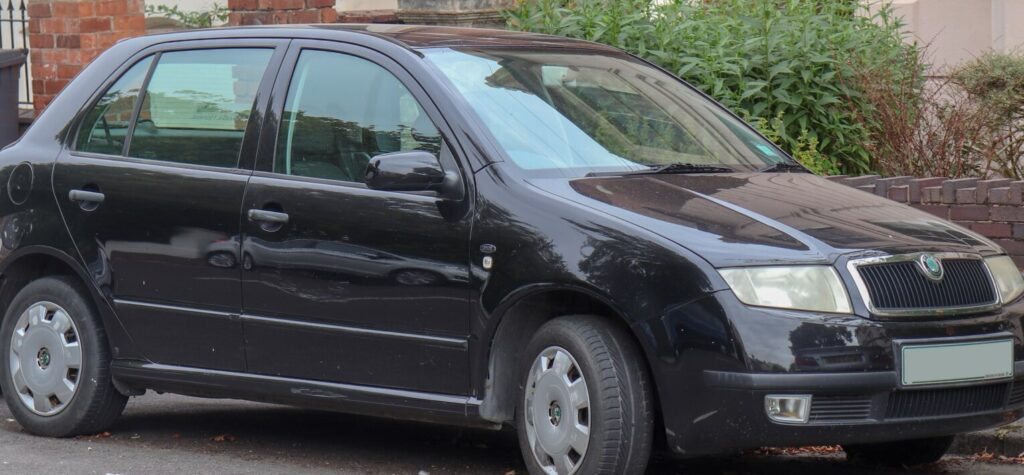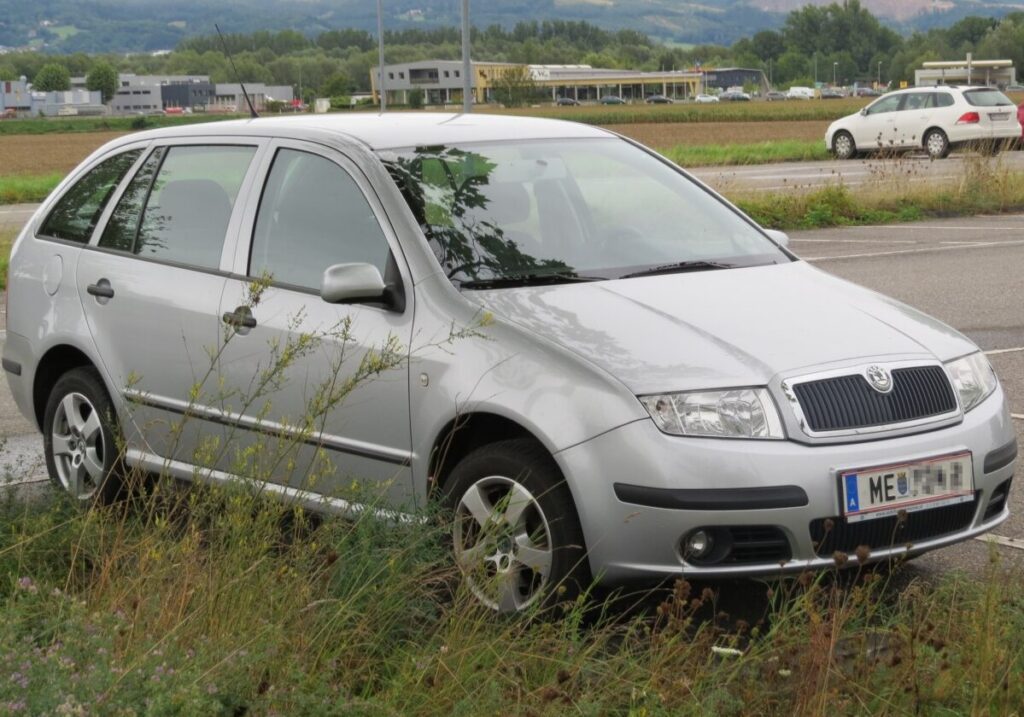
The Skoda Fabia I Combi 1.4 TDI (80 hp) represents a practical and fuel-efficient variant of the first-generation Fabia estate, produced from 2005 to 2007. Positioned as an entry-level option within the Combi range, it catered to buyers prioritizing economy and functionality over outright performance. This model, based on the 6Y facelifted platform (also shared with the Volkswagen Polo and SEAT Ibiza), aimed to provide affordable family transport with the added versatility of a station wagon body style. It was a key offering in Skoda’s expanding European lineup, solidifying the brand’s reputation for value and practicality.
Technical Specifications
| Brand | Skoda |
| Model | Fabia |
| Generation | Fabia I Combi (6Y, facelift 2004) |
| Type (Engine) | 1.4 TDI (80 Hp) |
| Start of production | November, 2005 |
| End of production | December, 2007 |
| Powertrain Architecture | Internal Combustion engine |
| Body type | Station wagon (estate) |
| Seats | 5 |
| Doors | 5 |
| Fuel consumption (urban) | 5.7 l/100 km (41.3 US mpg, 49.6 UK mpg, 17.5 km/l) |
| Fuel consumption (extra urban) | 4.1 l/100 km (57.4 US mpg, 68.9 UK mpg, 24.4 km/l) |
| Fuel consumption (combined) | 4.6 l/100 km (51.1 US mpg, 61.4 UK mpg, 21.7 km/l) |
| CO2 emissions | 120 g/km |
| Fuel Type | Diesel |
| Acceleration 0 – 100 km/h | 14 sec |
| Acceleration 0 – 62 mph | 14 sec |
| Acceleration 0 – 60 mph | 13.3 sec |
| Maximum speed | 173 km/h (107.5 mph) |
| Emission standard | Euro 4 |
| Weight-to-power ratio | 14.6 kg/Hp, 68.7 Hp/tonne |
| Weight-to-torque ratio | 6 kg/Nm, 167.4 Nm/tonne |
| Power | 80 Hp @ 4000 rpm |
| Power per litre | 56.3 Hp/l |
| Torque | 195 Nm @ 2200 rpm (143.82 lb.-ft. @ 2200 rpm) |
| Engine layout | Front, Transverse |
| Engine Model/Code | BNV |
| Engine displacement | 1422 cm3 (86.78 cu. in.) |
| Number of cylinders | 3 |
| Engine configuration | Inline |
| Number of valves per cylinder | 2 |
| Fuel injection system | Pump-nozzle (Unit Injector) |
| Engine aspiration | Turbocharger, Intercooler |
| Engine oil capacity | 3.8 l (4.02 US qt | 3.34 UK qt) |
| Coolant capacity | 6.2 l (6.55 US qt | 5.46 UK qt) |
| Kerb Weight | 1165 kg (2568.39 lbs.) |
| Max. weight | 1680 kg (3703.77 lbs.) |
| Max load | 515 kg (1135.38 lbs.) |
| Fuel tank capacity | 45 l (11.89 US gal | 9.9 UK gal) |
| Permitted trailer load with brakes (8%) | 1200 kg (2645.55 lbs.) |
| Permitted trailer load with brakes (12%) | 1000 kg (2204.62 lbs.) |
| Permitted trailer load without brakes | 450 kg (992.08 lbs.) |
| Length | 4232 mm (166.61 in.) |
| Width | 1646 mm (64.8 in.) |
| Width including mirrors | 1893 mm (74.53 in.) |
| Height | 1452 mm (57.17 in.) |
| Wheelbase | 2462 mm (96.93 in.) |
| Front track | 1435 mm (56.5 in.) |
| Rear track | 1424 mm (56.06 in.) |
| Drivetrain Architecture | Front wheel drive |
| Number of gears | 5 |
| Gearbox type | Manual transmission |
| Front suspension | Coil spring |
| Rear suspension | Coil spring |
| Steering type | Steering rack and pinion |
| Power steering | Hydraulic |
| Tires size | 185/60 R14 82 T |
| Wheel rims size | 14 |
INTRODUCTION
The Skoda Fabia I Combi 1.4 TDI (80 hp) was introduced as part of the 6Y facelift in 2004, continuing in production until 2007. This variant occupied the lower end of the Combi estate range, offering a more affordable entry point for buyers needing the increased cargo capacity of the wagon body style. It was designed to appeal to families and individuals seeking a practical, economical vehicle for everyday use. The 6Y platform, shared with other Volkswagen Group vehicles, provided a solid foundation for the Fabia Combi, known for its relatively spacious interior and decent handling characteristics.
Powertrain & Engine Architecture
At the heart of the Fabia Combi 1.4 TDI was the BNV engine code, a 1.4-liter three-cylinder diesel engine. This engine utilized a pump-nozzle (unit injector) fuel injection system, a technology known for its efficiency and ability to deliver precise fuel metering. The engine featured a turbocharger with an intercooler, which helped to boost power output and improve torque delivery. The 1422cc engine produced 80 horsepower at 4000 rpm and 195 Nm (143.82 lb-ft) of torque at 2200 rpm. The engine’s inline three-cylinder configuration contributed to its compact size and relatively low weight. The engine was paired with a five-speed manual transmission, optimized for fuel efficiency and smooth operation. The transmission’s gear ratios were geared towards maximizing fuel economy rather than providing sporty acceleration.
Driving Characteristics
The 1.4 TDI 80 hp engine, coupled with the five-speed manual transmission, delivered adequate, but not exhilarating, performance. Acceleration from 0 to 60 mph took around 13.3 seconds, and top speed was approximately 107.5 mph. The engine’s torque was readily available from low revs, making it suitable for everyday driving and overtaking maneuvers, although it required downshifting for quicker acceleration. Compared to higher-output versions of the Fabia, such as those equipped with the 1.9 TDI engine, the 1.4 TDI felt noticeably less powerful. However, it offered a smoother and more refined driving experience than some of the smaller petrol engines in the range. The gear ratios were spaced to prioritize fuel economy, resulting in a slightly less engaging driving experience than the sportier trims.
Equipment & Trim Levels
The 1.4 TDI Combi typically came with a modest level of standard equipment. Basic features included central locking, power steering, front airbags, and an adjustable steering column. Interior upholstery was typically cloth, and the dashboard featured a functional, if somewhat basic, design. Optional extras included air conditioning, alloy wheels, electric windows, and a radio/CD player. Trim levels varied depending on the market, but generally, the 1.4 TDI was positioned as the entry-level Combi, with fewer standard features than the higher-spec models. The focus was on providing a practical and affordable vehicle, rather than a luxurious one.
Chassis & Braking
The Fabia Combi 1.4 TDI utilized a relatively simple chassis setup. Front suspension consisted of coil springs and independent suspension, while the rear featured a torsion beam axle with coil springs. This setup provided a comfortable ride quality, although it wasn’t particularly sporty. Braking was typically handled by disc brakes on the front wheels and drum brakes on the rear wheels. The braking system was adequate for everyday use, but lacked the stopping power of the larger disc brake setups found on higher-spec models. Stabilizer bars were fitted to both the front and rear axles to help reduce body roll during cornering.
Market Reception & Comparison
The Skoda Fabia Combi 1.4 TDI was generally well-received by critics for its fuel efficiency, practicality, and affordability. It was often praised for offering a good amount of space for its size and for its comfortable ride quality. However, some critics noted that the engine lacked power, particularly when fully loaded. Compared to other trims in the Fabia Combi lineup, the 1.4 TDI offered the best fuel economy but the slowest acceleration. The 1.9 TDI models provided significantly more power but at the cost of increased fuel consumption and a higher purchase price. The 1.4 TDI appealed to buyers who prioritized economy and practicality over performance.
Legacy
The 1.4 TDI engine, while not known for being particularly powerful, proved to be relatively reliable. With proper maintenance, these engines can cover high mileages. In the used car market, the Fabia Combi 1.4 TDI remains a popular choice for buyers seeking an affordable and economical estate car. Its simplicity and relatively low running costs make it an attractive option for those on a budget. However, potential buyers should be aware of the potential for wear and tear on the turbocharger and fuel injection system, particularly on higher-mileage examples. Overall, the Fabia Combi 1.4 TDI represents a solid and practical choice in the used car market, offering a good balance of affordability, fuel efficiency, and practicality.