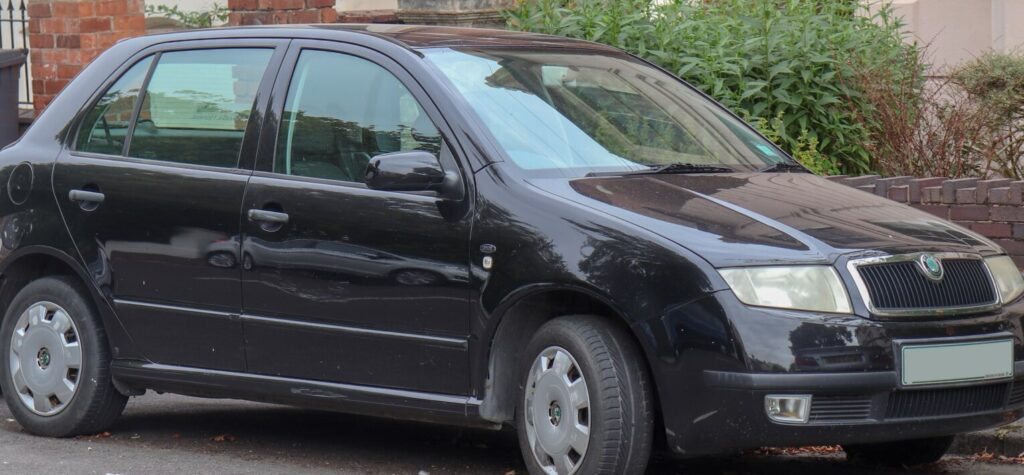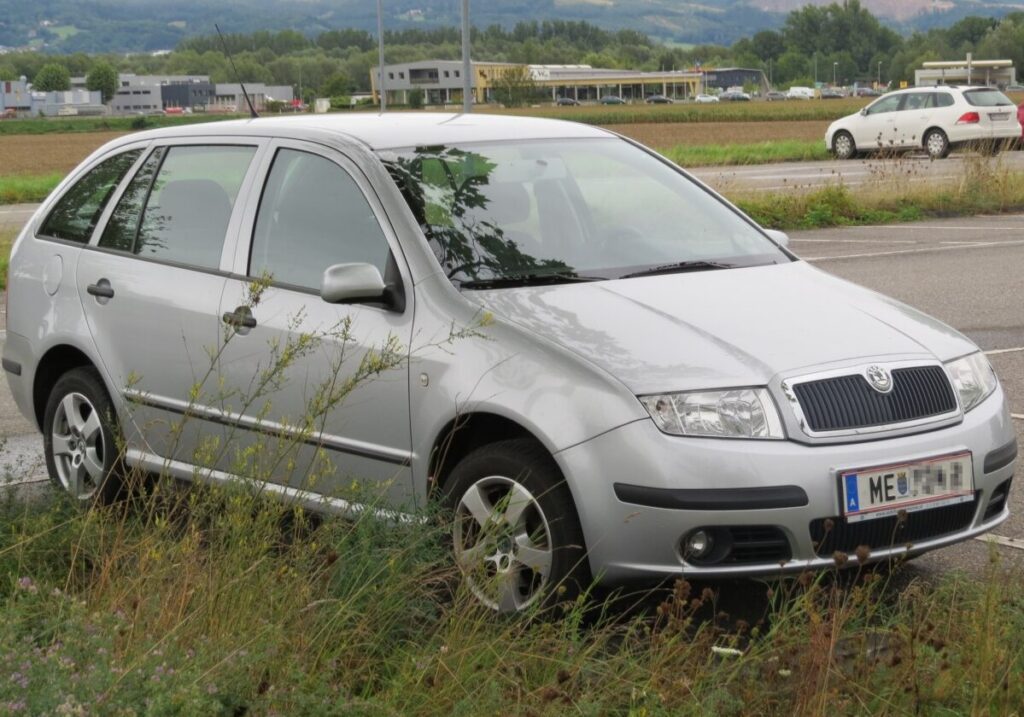
The Skoda Fabia I Combi 1.4 TDI PD (69 hp), produced from July 2004 to December 2006, represents an entry-level offering within the facelifted first generation (6Y) Fabia Combi range. Positioned as a fuel-efficient and practical estate car, it catered to buyers prioritizing economy and space over outright performance. This variant played a significant role in Skoda’s growing presence in the European market, offering a compelling alternative to rivals like the Renault Clio Estate and Peugeot 206 SW. The “PD” designation refers to the Pumpe-Düse (Pump-Nozzle) direct injection technology employed by the engine.
Technical Specifications
| Brand | Skoda |
| Model | Fabia |
| Generation | Fabia I Combi (6Y, facelift 2004) |
| Type (Engine) | 1.4 TDI PD (69 Hp) |
| Start of production | July, 2004 |
| End of production | December, 2006 |
| Powertrain Architecture | Internal Combustion engine |
| Body type | Station wagon (estate) |
| Seats | 5 |
| Doors | 5 |
| Fuel consumption (urban) | 5.9 l/100 km (39.9 US mpg, 47.9 UK mpg, 16.9 km/l) |
| Fuel consumption (extra urban) | 4.1 l/100 km (57.4 US mpg, 68.9 UK mpg, 24.4 km/l) |
| Fuel consumption (combined) | 4.7 l/100 km (50 US mpg, 60.1 UK mpg, 21.3 km/l) |
| CO2 emissions | 127 g/km |
| Fuel Type | Diesel |
| Acceleration 0 – 100 km/h | 15.8 sec |
| Acceleration 0 – 62 mph | 15.8 sec |
| Acceleration 0 – 60 mph | 15 sec |
| Maximum speed | 166 km/h (103.15 mph) |
| Emission standard | Euro 4 |
| Weight-to-power ratio | 16.7 kg/Hp, 59.7 Hp/tonne |
| Weight-to-torque ratio | 7.5 kg/Nm, 134.2 Nm/tonne |
| Power | 69 Hp @ 4000 rpm |
| Power per litre | 48.5 Hp/l |
| Torque | 155 Nm @ 1600-2800 rpm (114.32 lb.-ft. @ 1600-2800 rpm) |
| Engine layout | Front, Transverse |
| Engine Model/Code | PD |
| Engine displacement | 1422 cm3 (86.78 cu. in.) |
| Number of cylinders | 3 |
| Engine configuration | Inline |
| Cylinder Bore | 79.5 mm (3.13 in.) |
| Piston Stroke | 95.5 mm (3.76 in.) |
| Compression ratio | 19.5:1 |
| Number of valves per cylinder | 2 |
| Fuel injection system | Pump-nozzle (Unit Injector) |
| Engine aspiration | Turbocharger, Intercooler |
| Valvetrain | SOHC |
| Engine oil capacity | 3.8 l (4.02 US qt | 3.34 UK qt) |
| Coolant | 6.6 l (6.97 US qt | 5.81 UK qt) |
| Kerb Weight | 1155 kg (2546.34 lbs.) |
| Max. weight | 1670 kg (3681.72 lbs.) |
| Max load | 515 kg (1135.38 lbs.) |
| Trunk (boot) space – minimum | 426 l (15.04 cu. ft.) |
| Trunk (boot) space – maximum | 1225 l (43.26 cu. ft.) |
| Fuel tank capacity | 45 l (11.89 US gal | 9.9 UK gal) |
| Max. roof load | 75 kg (165.35 lbs.) |
| Permitted trailer load with brakes (12%) | 900 kg (1984.16 lbs.) |
| Permitted trailer load without brakes | 450 kg (992.08 lbs.) |
| Permitted towbar download | 50 kg (110.23 lbs.) |
| Length | 4232 mm (166.61 in.) |
| Width | 1646 mm (64.8 in.) |
| Width including mirrors | 1890 mm (74.41 in.) |
| Height | 1451 mm (57.13 in.) |
| Wheelbase | 2462 mm (96.93 in.) |
| Front track | 1435 mm (56.5 in.) |
| Rear (Back) track | 1424 mm (56.06 in.) |
| Front overhang | 837 mm (32.95 in.) |
| Rear overhang | 933 mm (36.73 in.) |
| Ride height (ground clearance) | 120 mm (4.72 in.) |
| Drag coefficient (Cd) | 0.3 |
| Minimum turning circle (turning diameter) | 10.4 m (34.12 ft.) |
| Approach angle | 16° |
| Departure angle | 16° |
| Drivetrain Architecture | The Internal combustion engine (ICE) drives the front wheels of the vehicle. |
| Drive wheel | Front wheel drive |
| Number of gears and type of gearbox | 5 gears, manual transmission |
| Front suspension | Independent, type McPherson with coil spring and anti-roll bar |
| Rear suspension | Trailing arm |
| Front brakes | Ventilated discs |
| Rear brakes | Drum |
| Assisting systems | ABS (Anti-lock braking system) |
| Steering type | Steering rack and pinion |
| Power steering | Electric Steering |
| Tires size | 155/80 R13; 165/70 R14; 185/60 R14 |
| Wheel rims size | 5J x 13; 5J x 16; 6J x 14 |
INTRODUCTION
The Skoda Fabia I Combi 1.4 TDI PD (69 hp) is a five-door station wagon that formed part of the facelifted first-generation Fabia range (6Y) introduced in 2004. This version, powered by a 1.4-liter three-cylinder turbo-diesel engine, was designed to offer a practical and economical option for families and individuals needing extra cargo space. The facelift brought subtle cosmetic changes, including revised headlights and bumpers, along with improvements to interior trim and equipment levels. The Combi body style, essentially a wagon, significantly increased boot capacity compared to the hatchback, making it a popular choice in markets where estate cars were favored.
Powertrain & Engine Architecture
At the heart of the 1.4 TDI PD lies the PD engine family, a hallmark of Volkswagen Group diesel technology in the early 2000s. The ‘PD’ stands for ‘Pumpe-Düse’ – German for ‘Pump-Nozzle’ – referring to the unit injector system used. This system directly injects fuel into the combustion chamber at extremely high pressure, improving combustion efficiency and reducing emissions. The engine itself is a 1422cc inline three-cylinder unit, featuring a single overhead camshaft (SOHC) and a turbocharger with an intercooler to boost power and torque. The engine code is typically identified as PD. The turbocharger helps to overcome the inherent limitations of a small-displacement engine, providing a reasonable level of performance. The engine’s fuel injection system is electronically controlled, optimizing fuel delivery based on engine load and speed. The 5-speed manual transmission was standard, chosen for its efficiency and cost-effectiveness.
Driving Characteristics
The 1.4 TDI PD 69 hp Fabia Combi was never intended to be a performance car. Acceleration from 0-100 km/h (0-62 mph) took around 15.8 seconds, and top speed was limited to 166 km/h (103 mph). However, the engine’s 155 Nm (114 lb-ft) of torque, available from a low 1600-2800 rpm, provided adequate pulling power for everyday driving and hauling loads. The gear ratios were optimized for fuel economy rather than outright acceleration. Compared to higher-output TDI variants (like the 75 hp or 100 hp versions), this engine felt noticeably less responsive, particularly when overtaking or climbing hills. The manual transmission, while precise, required frequent shifting to maintain momentum. The focus was on providing a comfortable and economical driving experience, rather than sporty handling.
Equipment & Trim Levels
The 1.4 TDI PD typically represented the entry-level trim in the Fabia Combi range. Standard equipment generally included power steering, central locking, electric front windows, and an adjustable steering column. Safety features included ABS brakes and driver and passenger airbags. Interior upholstery was typically cloth, and the dashboard featured a functional, if somewhat basic, design. Optional extras included air conditioning, alloy wheels, a radio/CD player, and rear electric windows. Higher trim levels, such as the Classic or Elegance, added features like climate control, upgraded upholstery, and more sophisticated audio systems.
Chassis & Braking
The Fabia Combi 1.4 TDI PD utilized a McPherson strut front suspension with a coil spring and anti-roll bar, providing a comfortable ride and reasonable handling. The rear suspension employed a trailing arm setup, which was cost-effective but less sophisticated than independent rear suspension. Brakes were ventilated discs at the front and drum brakes at the rear. The braking system was adequate for the car’s weight and performance, but lacked the stopping power of higher-spec models with larger brakes. The steering was a rack and pinion system with electric power assistance, offering light and easy steering feel.
Market Reception & Comparison
The Skoda Fabia Combi 1.4 TDI PD was generally well-received by critics for its practicality, fuel efficiency, and affordability. It was often praised as a sensible and economical choice for families and individuals needing a versatile estate car. However, the engine’s limited power output was a common criticism, with some reviewers finding it underpowered, especially when fully loaded. Compared to the more powerful TDI variants, the 69 hp version offered significantly lower performance but also better fuel economy. Against competitors like the Renault Clio Estate and Peugeot 206 SW, the Fabia Combi offered a compelling combination of space, economy, and value for money.
Legacy
The 1.4 TDI PD engine, while generally reliable, is known for potential issues with the pump-nozzle injectors and turbocharger. Proper maintenance, including regular oil changes and fuel filter replacements, is crucial to ensure longevity. Today, the Fabia Combi 1.4 TDI PD can be found as an affordable used car, appealing to buyers seeking a practical and economical vehicle. Its simple mechanical design and relatively low running costs make it a viable option for those on a budget. However, potential buyers should be aware of the potential for injector and turbocharger problems and factor in the cost of repairs when considering a purchase. The car remains a testament to Skoda’s ability to deliver value-for-money vehicles that offer a compelling blend of practicality and economy.