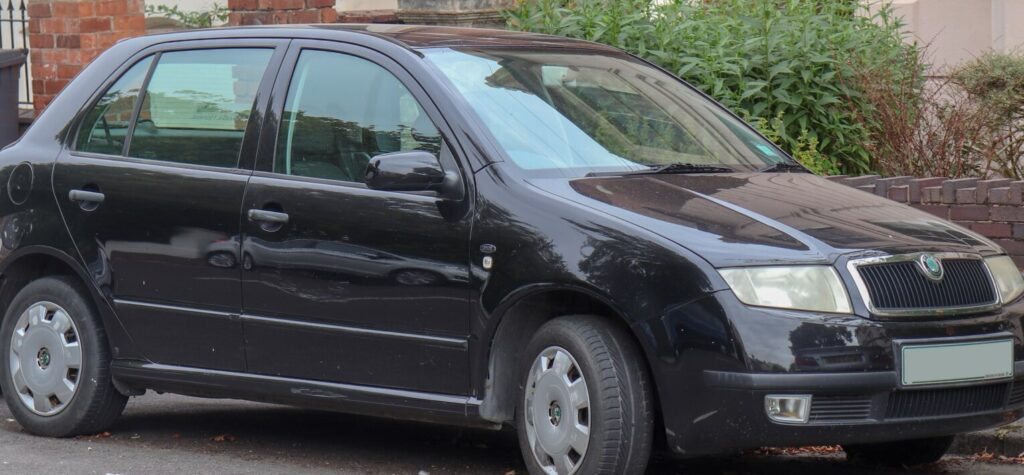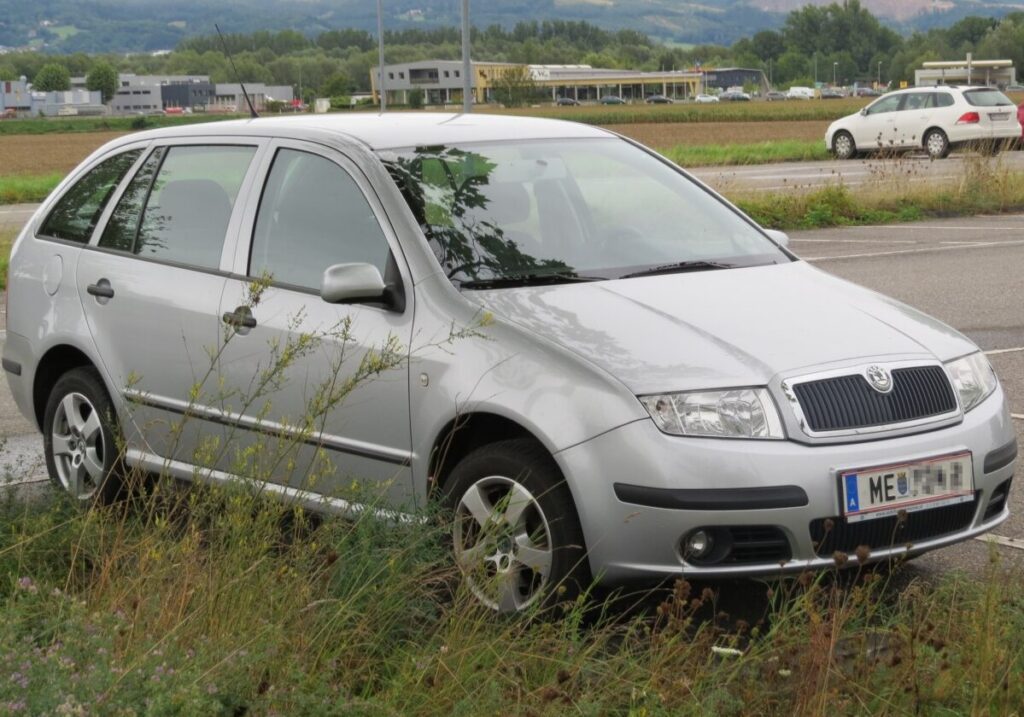
The Skoda Fabia I Combi 1.9 TDI PD (101 hp) is a station wagon variant produced between July 2004 and December 2006, representing a significant offering within the facelifted first-generation Fabia (6Y) range. Positioned as a practical and fuel-efficient option, it catered to buyers seeking a versatile family vehicle with the benefits of a diesel engine. This model played a key role in Skoda’s growing presence in the European market, offering a compelling alternative to rivals like the Renault Clio Estate and Ford Focus Estate. The “PD” designation refers to the Pumpe-Düse (Pump-Nozzle) direct injection technology employed by the engine.
Technical Specifications
| Brand | Skoda |
| Model | Fabia |
| Generation | Fabia I Combi (6Y, facelift 2004) |
| Type (Engine) | 1.9 TDI PD (101 Hp) |
| Start of production | July, 2004 |
| End of production | December, 2006 |
| Powertrain Architecture | Internal Combustion engine |
| Body type | Station wagon (estate) |
| Seats | 5 |
| Doors | 5 |
| Fuel consumption (urban) | 6.4 l/100 km (36.8 US mpg, 44.1 UK mpg, 15.6 km/l) |
| Fuel consumption (extra urban) | 4 l/100 km (58.8 US mpg, 70.6 UK mpg, 25 km/l) |
| Fuel consumption (combined) | 4.9 l/100 km (48 US mpg, 57.6 UK mpg, 20.4 km/l) |
| CO2 emissions | 132 g/km |
| Fuel Type | Diesel |
| Acceleration 0 – 100 km/h | 11.6 sec |
| Acceleration 0 – 62 mph | 11.6 sec |
| Acceleration 0 – 60 mph | 11 sec |
| Maximum speed | 187 km/h (116.2 mph) |
| Emission standard | Euro 4 |
| Weight-to-power ratio | 11.7 kg/Hp, 85.6 Hp/tonne |
| Weight-to-torque ratio | 4.9 kg/Nm, 203.4 Nm/tonne |
| Power | 101 Hp @ 4000 rpm |
| Power per litre | 53.3 Hp/l |
| Torque | 240 Nm @ 1800-2400 rpm (177.01 lb.-ft. @ 1800-2400 rpm) |
| Engine layout | Front, Transverse |
| Engine Model/Code | ATD |
| Engine displacement | 1896 cm3 (115.7 cu. in.) |
| Number of cylinders | 4 |
| Engine configuration | Inline |
| Cylinder Bore | 79.5 mm (3.13 in.) |
| Piston Stroke | 95.5 mm (3.76 in.) |
| Compression ratio | 19:1 |
| Number of valves per cylinder | 2 |
| Fuel injection system | Pump-nozzle (Unit Injector) |
| Engine aspiration | Turbocharger, Intercooler |
| Valvetrain | SOHC |
| Engine oil capacity | 4.3 l (4.54 US qt | 3.78 UK qt) |
| Coolant | 6.8 l (7.19 US qt | 5.98 UK qt) |
| Kerb Weight | 1180 kg (2601.45 lbs.) |
| Max. weight | 1695 kg (3736.84 lbs.) |
| Max load | 515 kg (1135.38 lbs.) |
| Trunk (boot) space – minimum | 426 l (15.04 cu. ft.) |
| Trunk (boot) space – maximum | 1225 l (43.26 cu. ft.) |
| Fuel tank capacity | 45 l (11.89 US gal | 9.9 UK gal) |
| Max. roof load | 75 kg (165.35 lbs.) |
| Permitted trailer load with brakes (12%) | 1000 kg (2204.62 lbs.) |
| Permitted trailer load without brakes | 450 kg (992.08 lbs.) |
| Permitted towbar download | 50 kg (110.23 lbs.) |
| Length | 4232 mm (166.61 in.) |
| Width | 1646 mm (64.8 in.) |
| Width including mirrors | 1890 mm (74.41 in.) |
| Height | 1451 mm (57.13 in.) |
| Wheelbase | 2462 mm (96.93 in.) |
| Front track | 1435 mm (56.5 in.) |
| Rear (Back) track | 1424 mm (56.06 in.) |
| Front overhang | 837 mm (32.95 in.) |
| Rear overhang | 933 mm (36.73 in.) |
| Ride height (ground clearance) | 120 mm (4.72 in.) |
| Drag coefficient (Cd) | 0.31 |
| Minimum turning circle (turning diameter) | 10.4 m (34.12 ft.) |
| Approach angle | 16° |
| Departure angle | 16° |
| Drivetrain Architecture | The Internal combustion engine (ICE) drives the front wheels of the vehicle. |
| Drive wheel | Front wheel drive |
| Number of gears and type of gearbox | 5 gears, manual transmission |
| Front suspension | Independent, type McPherson with coil spring and anti-roll bar |
| Rear suspension | Trailing arm |
| Front brakes | Ventilated discs |
| Rear brakes | Disc |
| Assisting systems | ABS (Anti-lock braking system) |
| Steering type | Steering rack and pinion |
| Power steering | Electric Steering |
| Tires size | 195/50 R15 |
| Wheel rims size | 6J x 15 |
INTRODUCTION
The Skoda Fabia I Combi 1.9 TDI PD (101 hp) was a key variant in the second phase of the first-generation Fabia Combi, introduced after the 2004 facelift. Built on the Volkswagen Group’s PQ24 platform (internally known as the 6Y series), the Combi offered increased practicality over the hatchback version. The 1.9 TDI PD engine was a popular choice in Europe, known for its fuel efficiency and respectable performance. This particular version occupied a middle ground in the Fabia Combi lineup, offering a balance between economy, performance, and equipment levels. It was aimed at families and individuals needing a versatile vehicle for everyday use.
Powertrain & Engine Architecture
The heart of this Fabia Combi is the 1.9-liter, four-cylinder diesel engine, designated ATD. This engine utilizes Volkswagen’s Pumpe-Düse (PD) direct injection technology, a system known for its high injection pressures and precise fuel delivery. The PD system, unlike common rail, uses individual mechanical pumps for each cylinder, driven by the camshaft. This resulted in a more robust and responsive engine, though potentially noisier than later common rail designs. The engine produces 101 horsepower at 4000 rpm and 240 Nm (177 lb-ft) of torque between 1800 and 2400 rpm. The engine features a single overhead camshaft (SOHC) and a turbocharger with an intercooler to boost power and efficiency. The engine is transversely mounted at the front of the vehicle. The five-speed manual transmission was the standard offering, providing a good balance between fuel economy and drivability.
Driving Characteristics
The 1.9 TDI PD engine in the Fabia Combi provided a noticeable step up in performance compared to the smaller petrol engines available. While not a sports car, the 101 hp and 240 Nm of torque delivered adequate acceleration for everyday driving and overtaking maneuvers. The five-speed manual gearbox was well-matched to the engine’s characteristics, offering smooth shifts and allowing the driver to keep the engine in its optimal torque band. Compared to the higher-output TDI variants (like the 130 hp version), this 101 hp model felt less stressed and offered better fuel economy. However, it lacked the outright punch of its more powerful siblings. The gear ratios were geared towards fuel efficiency, meaning highway cruising was comfortable, but quick acceleration from a standstill wasn’t its forte.
Equipment & Trim Levels
The Fabia Combi 1.9 TDI PD (101 hp) typically came equipped with a reasonable level of standard features. These included central locking, electric front windows, power steering, and an ABS anti-lock braking system. Interior upholstery was typically cloth, with a functional and durable design. Optional extras included alloy wheels, air conditioning, a radio/CD player, and rear electric windows. Higher trim levels, such as the Elegance, added features like climate control, upgraded upholstery, and additional safety equipment. The dashboard layout was typical of early 2000s VW Group vehicles – functional and straightforward, prioritizing usability over flashy design.
Chassis & Braking
The Fabia Combi’s chassis featured independent front suspension with McPherson struts and a torsion beam rear suspension. This setup provided a comfortable ride quality, suitable for everyday driving. The front brakes were ventilated discs, while the rear brakes were solid discs. The steering was a rack-and-pinion system with electric power assistance, offering a light and precise feel. Stabilizer bars were fitted to both the front and rear axles to reduce body roll during cornering. The suspension was tuned for comfort rather than outright handling prowess, prioritizing a smooth ride over sporty dynamics.
Market Reception & Comparison
The Skoda Fabia Combi 1.9 TDI PD (101 hp) was generally well-received by automotive critics. It was praised for its fuel efficiency, practicality, and competitive price. Compared to other diesel estate cars in its class, the Fabia Combi offered a good balance of features and value. The 1.9 TDI engine was considered reliable, although the PD injection system could be prone to issues if not properly maintained. Fuel economy was a major selling point, with combined figures averaging around 4.9 l/100 km (48 US mpg). Compared to the petrol-powered Fabia Combis, the TDI offered significantly better fuel economy and torque, making it a popular choice for drivers covering long distances.
Legacy
The Skoda Fabia I Combi 1.9 TDI PD (101 hp) remains a relatively common sight on European roads today. The 1.9 TDI engine, while aging, is known for its durability and relatively simple mechanical design. However, the PD injection system requires regular maintenance and can be expensive to repair if problems arise. In the used car market, these Fabia Combis are often sought after for their practicality, fuel efficiency, and affordability. They represent a solid and reliable choice for buyers looking for a budget-friendly estate car. The model helped solidify Skoda’s reputation for building well-engineered and value-for-money vehicles, paving the way for the brand’s continued success in the European automotive market.