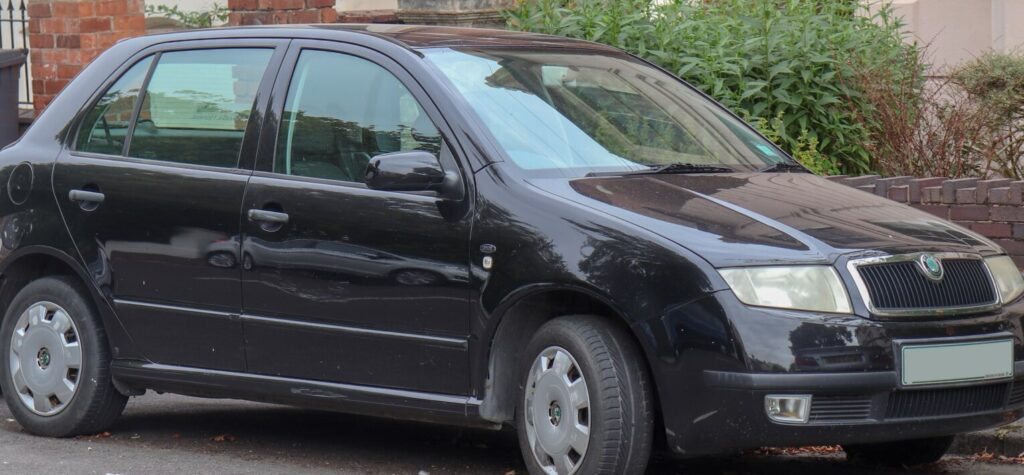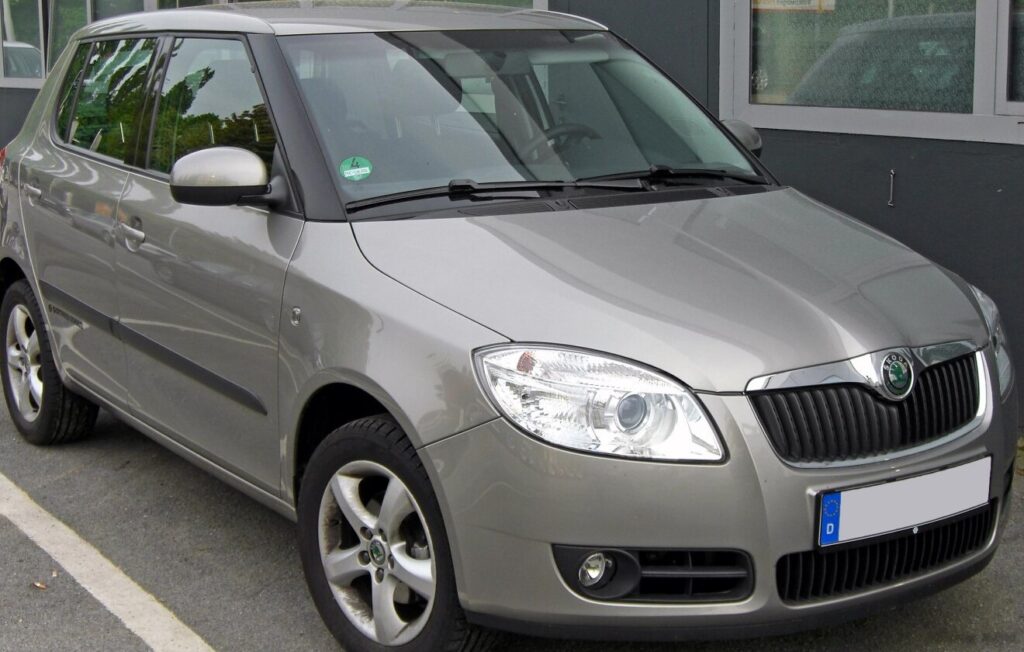
The Skoda Fabia II 1.2 i HTP 12V, producing 69 horsepower, was a key entry point into the second-generation Fabia lineup, manufactured between January 2007 and March 2010. Positioned as the most affordable option, it aimed to provide economical transportation within the competitive European small car segment. This variant was primarily sold in Europe, where fuel efficiency and affordability were paramount concerns for buyers. It represented Skoda’s continued effort to offer practical, value-oriented vehicles, building on the success of the first-generation Fabia and leveraging the Volkswagen Group’s shared platform technology – specifically the Polo Mk5’s PQ25 platform, also known as the 1HX0/A3 platform.
Technical Specifications
| Brand | Skoda |
| Model | Fabia |
| Generation | Fabia II |
| Type (Engine) | 1.2 i HTP 12V (69 Hp) |
| Start of production | January, 2007 |
| End of production | March, 2010 |
| Powertrain Architecture | Internal Combustion engine |
| Body type | Hatchback |
| Seats | 5 |
| Doors | 5 |
| Fuel consumption (urban) | 7.7 l/100 km (30.5 US mpg, 36.7 UK mpg, 13 km/l) |
| Fuel consumption (extra urban) | 4.9 l/100 km (48 US mpg, 57.6 UK mpg, 20.4 km/l) |
| Fuel consumption (combined) | 5.9 l/100 km (39.9 US mpg, 47.9 UK mpg, 16.9 km/l) |
| Fuel Type | Petrol (Gasoline) |
| Acceleration 0 – 100 km/h | 14.9 sec |
| Acceleration 0 – 62 mph | 14.9 sec |
| Acceleration 0 – 60 mph | 14.2 sec |
| Maximum speed | 163 km/h (101.28 mph) |
| Emission standard | Euro 4 |
| Weight-to-power ratio | 15.2 kg/Hp, 65.7 Hp/tonne |
| Weight-to-torque ratio | 9.4 kg/Nm, 106.7 Nm/tonne |
| Power | 69 Hp @ 5400 rpm |
| Power per litre | 57.6 Hp/l |
| Torque | 112 Nm @ 3000 rpm (82.61 lb.-ft. @ 3000 rpm) |
| Engine layout | Front, Transverse |
| Engine Model/Code | EA111 / BZG |
| Engine displacement | 1198 cm3 (73.11 cu. in.) |
| Number of cylinders | 3 |
| Engine configuration | Inline |
| Cylinder Bore | 76.5 mm (3.01 in.) |
| Piston Stroke | 86.9 mm (3.42 in.) |
| Compression ratio | 10.5:1 |
| Number of valves per cylinder | 4 |
| Fuel injection system | Multi-port manifold injection |
| Engine aspiration | Naturally aspirated engine |
| Valvetrain | OHC |
| Engine oil capacity | 2.8 l (2.96 US qt | 2.46 UK qt) |
| Coolant | 5.2 l (5.49 US qt | 4.58 UK qt) |
| Kerb Weight | 1050 kg (2314.85 lbs.) |
| Max. weight | 1565 kg (3450.23 lbs.) |
| Max load | 515 kg (1135.38 lbs.) |
| Trunk (boot) space – minimum | 300 l (10.59 cu. ft.) |
| Trunk (boot) space – maximum | 1163 l (41.07 cu. ft.) |
| Fuel tank capacity | 45 l (11.89 US gal | 9.9 UK gal) |
| Length | 3992 mm (157.17 in.) |
| Width | 1642 mm (64.65 in.) |
| Height | 1498 mm (58.98 in.) |
| Wheelbase | 2462 mm (96.93 in.) |
| Front track | 1436 mm (56.54 in.) |
| Rear (Back) track | 1426 mm (56.14 in.) |
| Drivetrain Architecture | The Internal combustion engine (ICE) drives the front wheels of the vehicle. |
| Drive wheel | Front wheel drive |
| Number of gears and type of gearbox | 5 gears, manual transmission |
| Front suspension | Spring Strut |
| Rear suspension | Coil spring |
| Front brakes | Ventilated discs |
| Rear brakes | Drum |
| Assisting systems | ABS (Anti-lock braking system) |
| Steering type | Steering rack and pinion |
| Tires size | 165/70 R14 |
Powertrain & Engine Architecture
The heart of this Fabia variant is the EA111 engine family, specifically the 1.2-liter 12V HTP (High Torque Performance) engine, designated with the code BZG. This is a three-cylinder, naturally aspirated engine utilizing multi-point fuel injection. The ‘HTP’ designation reflects Skoda’s attempt to maximize torque output from a small displacement engine. The engine features an overhead camshaft (OHC) valvetrain operating four valves per cylinder. The 1.2 HTP engine was known for its relatively simple design, contributing to lower production costs. It was paired with a five-speed manual transmission, optimized for fuel economy rather than outright performance. The engine’s relatively small displacement and three-cylinder configuration resulted in a distinctive engine note.
Driving Characteristics
The 69 hp output and 112 Nm of torque translated to modest performance. Acceleration from 0-60 mph took around 14.2 seconds, and the top speed was approximately 101 mph. The five-speed manual transmission was geared for economy, meaning the engine often felt strained during highway overtaking maneuvers. Compared to the more powerful 1.4-liter or diesel variants, the 1.2 HTP felt noticeably slower. However, around town, the engine proved adequate for daily commuting. The light weight of the Fabia II helped mitigate the lack of horsepower to some extent. The gear ratios were spaced to prioritize fuel efficiency, resulting in a somewhat ‘busy’ driving experience, requiring frequent gear changes to maintain momentum.
Equipment & Trim Levels
The 1.2 i HTP 12V typically represented the base trim level of the Fabia II. Standard equipment generally included central locking, power steering, front airbags, and an adjustable steering column. Interior upholstery was typically basic cloth. Air conditioning, alloy wheels, and a radio/CD player were often optional extras. Higher trim levels, such as the Elegance or Sport, added features like climate control, upgraded upholstery, and more sophisticated audio systems. The focus of this trim was on providing a functional and affordable vehicle, with options available for those seeking additional comfort or convenience.
Chassis & Braking
The Fabia II utilized a MacPherson strut front suspension and a twist-beam rear suspension. The front brakes were ventilated discs, providing adequate stopping power for the vehicle’s weight and performance. However, the rear brakes were drums, a cost-saving measure common in this segment. The suspension was tuned for comfort rather than sporty handling. Stabilizer bars were present, but relatively thin, contributing to a noticeable degree of body roll during cornering. The steering was light and easy to use, making it well-suited for urban driving.
Market Reception & Comparison
The 1.2 i HTP Fabia was generally well-received as an affordable and economical option. Critics praised its fuel efficiency and practicality, but often noted its lack of power. Compared to the 1.4-liter petrol or 1.9 TDI diesel variants, the 1.2 HTP offered significantly lower performance but also a lower purchase price. The diesel models, while more expensive, provided superior fuel economy and torque. The 1.4-liter offered a better balance between performance and economy. Reliability was generally good, although the 1.2 HTP engine did have a reputation for occasional timing chain issues, particularly if maintenance was neglected.
Legacy
The Skoda Fabia II 1.2 i HTP 12V remains a relatively common sight on used car markets today. Its affordability and fuel efficiency continue to appeal to budget-conscious buyers. While the engine isn’t known for its longevity or performance, it’s generally reliable if properly maintained. The 1.2 HTP engine, despite its shortcomings, played a significant role in making the Fabia II accessible to a wider range of customers. Potential buyers should be aware of the potential for timing chain wear and ensure regular oil changes to maximize the engine’s lifespan. The Fabia II, in general, is considered a practical and well-built small car, and the 1.2 i HTP variant offers a cost-effective entry point into Skoda ownership.