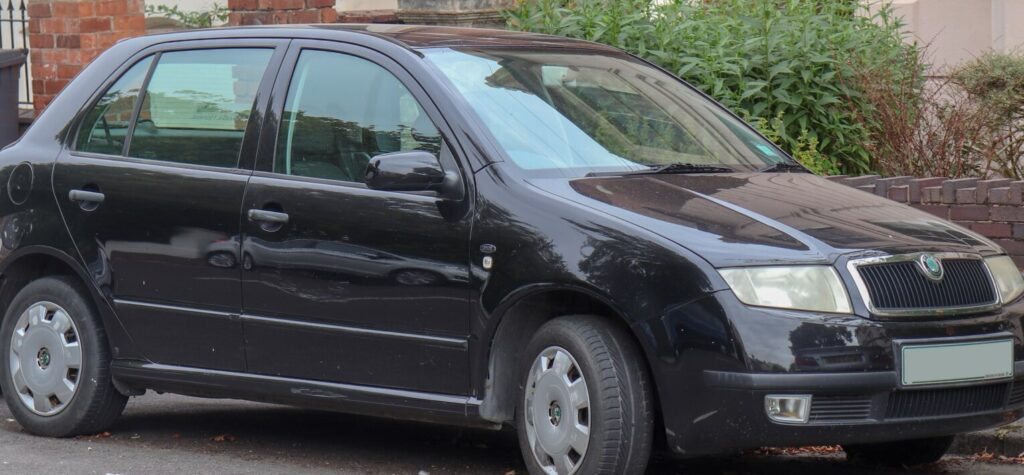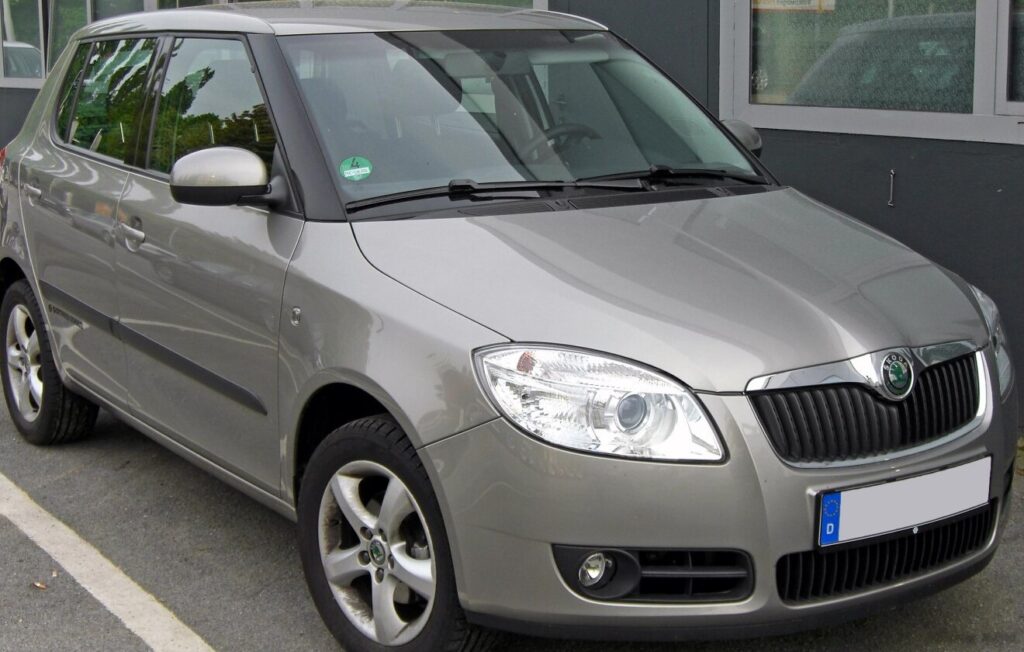
The Skoda Fabia II 1.4 i 16V, producing 86 horsepower, was a mainstay of the second-generation Fabia lineup, manufactured between January 2007 and March 2010. Positioned as an entry-level offering, it provided affordable transportation within the broader Fabia II range, which also included more powerful engine options like the 1.9 TDI diesel and the 1.6 MPI. This variant was primarily aimed at buyers seeking economy and practicality, particularly in European markets where smaller, fuel-efficient hatchbacks are highly popular. It utilized the Volkswagen Group’s PQ35 platform, also known as the A5 platform, shared with models like the Volkswagen Polo and SEAT Ibiza.
Technical Specifications
| Brand | Skoda |
| Model | Fabia |
| Generation | Fabia II |
| Type (Engine) | 1.4 i 16V (86 Hp) |
| Start of production | January, 2007 |
| End of production | March, 2010 |
| Powertrain Architecture | Internal Combustion engine |
| Body type | Hatchback |
| Seats | 5 |
| Doors | 5 |
| Fuel consumption (urban) | 8.6 l/100 km (27.4 US mpg) |
| Fuel consumption (extra urban) | 5.3 l/100 km (44.4 US mpg) |
| Fuel consumption (combined) | 6.5 l/100 km (36.2 US mpg) |
| Fuel Type | Petrol (Gasoline) |
| Acceleration 0 – 100 km/h | 12.3 sec |
| Acceleration 0 – 62 mph | 12.3 sec |
| Acceleration 0 – 60 mph | 11.7 sec |
| Maximum speed | 174 km/h (108.12 mph) |
| Emission standard | Euro 4 |
| Weight-to-power ratio | 12.3 kg/Hp |
| Weight-to-torque ratio | 8 kg/Nm |
| Power | 86 Hp @ 5000 rpm |
| Torque | 132 Nm @ 3800 rpm (97.36 lb.-ft. @ 3800 rpm) |
| Engine layout | Front, Transverse |
| Engine Model/Code | EA111 / BXW |
| Engine displacement | 1390 cm3 (84.82 cu. in.) |
| Number of cylinders | 4 |
| Engine configuration | Inline |
| Cylinder Bore | 76.5 mm (3.01 in.) |
| Piston Stroke | 75.6 mm (2.98 in.) |
| Compression ratio | 10.5:1 |
| Number of valves per cylinder | 4 |
| Fuel injection system | Multi-port manifold injection |
| Engine aspiration | Naturally aspirated engine |
| Engine oil capacity | 3.2 l (3.38 US qt | 2.82 UK qt) |
| Coolant capacity | 5.5 l (5.81 US qt | 4.84 UK qt) |
| Kerb Weight | 1060 kg (2336.9 lbs.) |
| Max. weight | 1575 kg (3472.28 lbs.) |
| Max load | 515 kg (1135.38 lbs.) |
| Trunk (boot) space – minimum | 300 l (10.59 cu. ft.) |
| Trunk (boot) space – maximum | 1163 l (41.07 cu. ft.) |
| Fuel tank capacity | 45 l (11.89 US gal | 9.9 UK gal) |
| Length | 3992 mm (157.17 in.) |
| Width | 1642 mm (64.65 in.) |
| Height | 1498 mm (58.98 in.) |
| Wheelbase | 2462 mm (96.93 in.) |
| Front track | 1436 mm (56.54 in.) |
| Rear track | 1426 mm (56.14 in.) |
| Drivetrain Architecture | Front wheel drive |
| Number of gears | 5 |
| Gearbox type | Manual transmission |
| Front suspension | Spring Strut |
| Rear suspension | Coil spring |
| Front brakes | Ventilated discs |
| Rear brakes | Drum |
| Assisting systems | ABS (Anti-lock braking system) |
| Steering type | Steering rack and pinion |
| Tires size | 165/70 R14 |
INTRODUCTION
The Skoda Fabia II 1.4 i 16V represented a significant step forward for Skoda, showcasing the brand’s increasing quality and refinement following its acquisition by Volkswagen Group. Introduced in 2007 as part of the Fabia II series (built from 2006-2014), this model aimed to provide a practical and economical option for buyers in the competitive European small car segment. The 1.4-liter engine, designated the EA111 BXW, was a common choice for those prioritizing fuel efficiency and lower running costs over outright performance. It served as the entry point to the Fabia II range, offering a more affordable alternative to the more powerful 1.6 MPI and diesel variants.
Powertrain & Engine Architecture
At the heart of the Fabia II 1.4 i 16V lies the EA111 series engine, a 1.4-liter inline-four cylinder petrol engine. The BXW engine code specifically denotes this particular iteration. This engine featured a multi-point fuel injection system, delivering fuel directly into the intake ports. The 16-valve cylinder head, with four valves per cylinder, contributed to improved breathing and a slightly broader powerband. The engine produced 86 horsepower at 5000 rpm and 132 Nm (97 lb-ft) of torque at 3800 rpm. The five-speed manual transmission was the standard offering, providing a relatively conventional gear ratio spread. The transmission was chosen for its simplicity and cost-effectiveness, aligning with the car’s overall positioning. While an automatic transmission was available on some Fabia II models, it wasn’t commonly paired with the 1.4 i 16V engine due to the performance limitations.
Driving Characteristics
The driving experience in the Fabia II 1.4 i 16V was characterized by its practicality and ease of use. Acceleration was modest, taking around 12.3 seconds to reach 62 mph (100 km/h). The engine felt somewhat strained when pushed hard, particularly when fully loaded or tackling steep inclines. The five-speed manual transmission offered a reasonable shift quality, but the gear ratios were geared towards economy rather than sporty performance. Compared to the more powerful 1.6 MPI, the 1.4 i 16V felt noticeably slower, especially in mid-range acceleration. However, the 1.4 offered a smoother and more refined driving experience than the often-noisy 1.9 TDI diesel. The steering was light and precise, making it easy to maneuver in urban environments.
Equipment & Trim Levels
The 1.4 i 16V Fabia II typically came with a fairly basic level of equipment, reflecting its entry-level status. Standard features generally included power steering, central locking, electric front windows, and an adjustable steering column. Air conditioning was often an optional extra. Interior upholstery was typically cloth, with a simple and functional dashboard layout. Higher trim levels, such as the ‘Classic’ or ‘Comfort’ variants, added features like alloy wheels, a radio/CD player, and more comprehensive interior trim. Safety features included ABS brakes and driver and passenger airbags.
Chassis & Braking
The Fabia II utilized a MacPherson strut front suspension and a twist-beam rear suspension. This setup provided a comfortable ride quality, although it wasn’t particularly sporty. The front brakes were ventilated discs, offering adequate stopping power, while the rear brakes were drums, a cost-saving measure common in this segment. The suspension was tuned for comfort and stability, prioritizing ride quality over handling precision. The car’s relatively light weight (around 1060 kg or 2337 lbs) helped to mitigate the effects of the modest engine power.
Market Reception & Comparison
The Skoda Fabia II 1.4 i 16V was generally well-received by critics as a sensible and affordable small car. It was praised for its practicality, fuel efficiency, and comfortable ride. However, it was often criticized for its lack of outright performance and somewhat basic interior. Compared to rivals like the Volkswagen Polo, SEAT Ibiza, and Ford Fiesta, the Fabia offered a compelling value proposition, often undercutting its competitors on price. In terms of fuel economy, the 1.4 i 16V performed competitively, achieving around 36.2 US mpg on the combined cycle. Reliability was generally good, although some owners reported minor issues with the engine’s ignition system.
Legacy
The Skoda Fabia II 1.4 i 16V remains a popular choice in the used car market, particularly for buyers seeking an affordable and reliable small car. The EA111 engine, while not known for its performance, is generally considered to be durable and relatively easy to maintain. Parts availability is good, and repair costs are typically reasonable. While it may not offer the excitement of more powerful variants, the 1.4 i 16V Fabia II provides a practical and economical solution for everyday transportation, and continues to be a viable option for budget-conscious buyers.