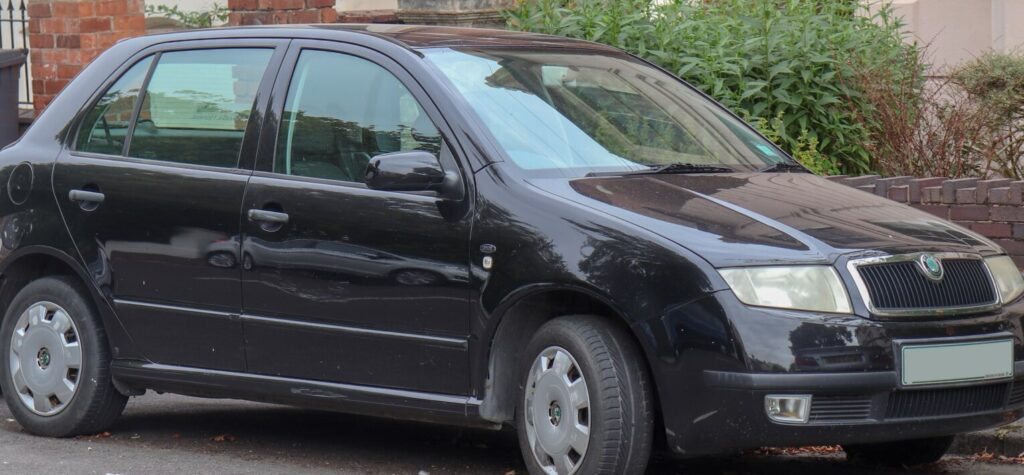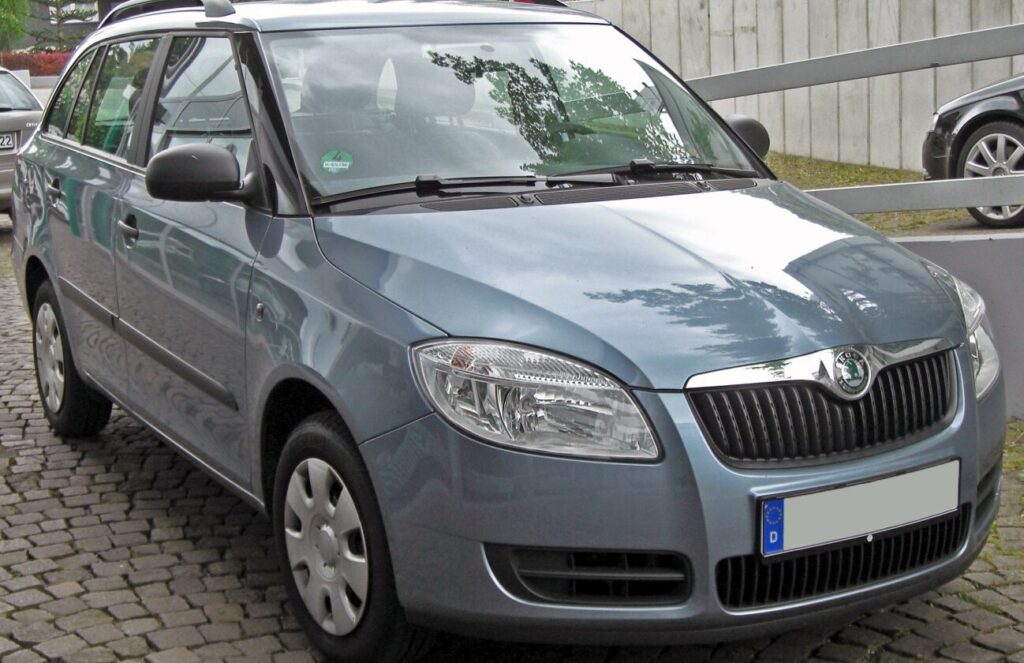
The Skoda Fabia II Combi 1.2 HTP 12V (70 hp) was a station wagon variant produced between January 2007 and March 2010. Positioned as an entry-level offering within the second-generation Fabia Combi range (based on the Volkswagen Group’s PQ35 platform, also known as the 1HX0/A3 platform), it aimed to provide affordable and practical transportation for families and individuals. This model represented Skoda’s continued expansion into the European market, offering a value-oriented alternative to more established brands. The Combi body style, a station wagon or estate, significantly increased cargo capacity compared to the hatchback version, making it a popular choice for those needing versatility.
Technical Specifications
| Brand | Skoda |
| Model | Fabia |
| Generation | Fabia II Combi |
| Type (Engine) | 1.2 HTP 12V (70 Hp) |
| Start of production | January, 2007 |
| End of production | March, 2010 |
| Powertrain Architecture | Internal Combustion engine |
| Body type | Station wagon (estate) |
| Seats | 5 |
| Doors | 5 |
| Fuel consumption (urban) | 7.7 l/100 km (30.5 US mpg) |
| Fuel consumption (extra urban) | 4.9 l/100 km (48 US mpg) |
| Fuel consumption (combined) | 5.9 l/100 km (39.9 US mpg) |
| Fuel Type | Petrol (Gasoline) |
| Acceleration 0 – 100 km/h | 14.9 sec |
| Acceleration 0 – 62 mph | 14.9 sec |
| Acceleration 0 – 60 mph | 14.2 sec |
| Maximum speed | 163 km/h (101.28 mph) |
| Emission standard | Euro 4 |
| Weight-to-power ratio | 16.1 kg/Hp |
| Weight-to-torque ratio | 10 kg/Nm |
| Power | 70 Hp @ 5400 rpm |
| Torque | 112 Nm @ 3000 rpm (82.61 lb.-ft. @ 3000 rpm) |
| Engine layout | Front, Transverse |
| Engine Model/Code | EA111 / BZG |
| Engine displacement | 1198 cm3 (73.11 cu. in.) |
| Number of cylinders | 3 |
| Engine configuration | Inline |
| Cylinder Bore | 76.5 mm (3.01 in.) |
| Piston Stroke | 86.9 mm (3.42 in.) |
| Compression ratio | 10.5:1 |
| Number of valves per cylinder | 4 |
| Fuel injection system | Multi-port manifold injection |
| Engine aspiration | Naturally aspirated engine |
| Valvetrain | OHC |
| Engine oil capacity | 2.8 l (2.96 US qt | 2.46 UK qt) |
| Coolant capacity | 5.2 l (5.49 US qt | 4.58 UK qt) |
| Kerb Weight | 1125 kg (2480.2 lbs.) |
| Max. weight | 1565 kg (3450.23 lbs.) |
| Max load | 440 kg (970.03 lbs.) |
| Trunk (boot) space – minimum | 480 l (16.95 cu. ft.) |
| Trunk (boot) space – maximum | 1226 l (43.3 cu. ft.) |
| Fuel tank capacity | 45 l (11.89 US gal | 9.9 UK gal) |
| Length | 4239 mm (166.89 in.) |
| Width | 1642 mm (64.65 in.) |
| Height | 1498 mm (58.98 in.) |
| Wheelbase | 2462 mm (96.93 in.) |
| Front track | 1435 mm (56.5 in.) |
| Rear track | 1424 mm (56.06 in.) |
| Drivetrain Architecture | Front wheel drive |
| Number of gears | 5 |
| Gearbox type | Manual transmission |
| Front suspension | Coil spring |
| Rear suspension | Coil spring |
| Front brakes | Disc |
| Rear brakes | Drum |
| Assisting systems | ABS (Anti-lock braking system) |
| Steering type | Steering rack and pinion |
| Tires size | 165/70 R14 |
Powertrain & Engine Architecture
The Fabia II Combi 1.2 HTP 12V utilized the EA111 engine code, specifically the BZG variant. This 1.2-liter, three-cylinder engine was a key component of Volkswagen Group’s efforts to improve fuel efficiency across its range. The “HTP” designation stands for “High Torque Pump,” referring to the engine’s multi-point fuel injection system. While offering relatively low power output, the engine was designed to deliver usable torque at lower engine speeds. The 12-valve configuration (four valves per cylinder) helped to optimize gas flow and improve combustion efficiency. The engine featured an overhead camshaft (OHC) valvetrain. The five-speed manual transmission was the standard offering, chosen for its simplicity and contribution to fuel economy. The transmission’s gear ratios were tuned to maximize the engine’s limited power band, prioritizing acceleration in lower gears and efficient cruising at highway speeds.
Driving Characteristics
The 70 hp output and 112 Nm of torque meant the Fabia II Combi 1.2 HTP wasn’t a performance-oriented vehicle. Acceleration was modest, taking approximately 14.9 seconds to reach 62 mph (100 km/h). In real-world driving, the engine felt strained when fully loaded or attempting to overtake at higher speeds. The five-speed manual transmission required frequent shifting to maintain momentum, particularly on inclines. Compared to higher-output versions of the Fabia II Combi, such as those equipped with the 1.4 or 1.6-liter engines, the 1.2 HTP offered a significantly less engaging driving experience. However, it excelled in urban environments, where its compact size and light steering made it easy to maneuver. The relatively long gearing helped to keep engine speeds low during highway cruising, contributing to improved fuel economy.
Equipment & Trim Levels
The 1.2 HTP Combi typically represented the base trim level. Standard equipment generally included power steering, central locking, electric front windows, and an ABS anti-lock braking system. Interior upholstery was typically cloth, with a functional but basic dashboard layout. Optional extras included air conditioning, alloy wheels, a radio/CD player, and front fog lights. Higher trim levels, such as the Elegance or Sport, added features like climate control, upgraded upholstery, and more sophisticated audio systems. The focus of this particular variant was affordability, so many features considered standard on higher trims were offered as optional extras.
Chassis & Braking
The Fabia II Combi’s chassis featured a MacPherson strut front suspension and a twist-beam rear suspension. This setup provided a reasonable balance between ride comfort and handling. The front brakes were ventilated discs, while the rear brakes were drums. This configuration was typical for vehicles in this weight class and price range. The steering was a rack-and-pinion system, offering light and precise control. Stabilizer bars were fitted to both the front and rear axles to reduce body roll during cornering.
Market Reception & Comparison
The Skoda Fabia II Combi 1.2 HTP was generally well-received as a practical and affordable family car. Critics praised its spacious interior, generous cargo capacity, and fuel efficiency. However, the engine’s lack of power was a common criticism. Compared to other engines in the Fabia II Combi lineup, such as the 1.4-liter and 1.6-liter petrol engines, the 1.2 HTP offered lower running costs but compromised on performance. The 1.9 TDI diesel engine provided superior fuel economy and torque but came at a higher purchase price. In terms of reliability, the 1.2 HTP engine had a mixed reputation, with some owners reporting issues with timing chain wear and oil consumption.
Legacy
The 1.2 HTP engine, while initially intended to be a fuel-efficient and reliable powerplant, became known for certain issues, particularly related to timing chain tensioners and carbon buildup. Despite these concerns, the Fabia II Combi 1.2 HTP remains a relatively affordable option on the used car market. Its practicality and low running costs continue to appeal to budget-conscious buyers. However, potential buyers should be aware of the engine’s potential weaknesses and ensure that any prospective purchase has been well-maintained, with documented evidence of timing chain replacement if necessary. The Fabia II Combi, in general, established Skoda as a credible competitor in the European compact car segment, paving the way for the brand’s continued success.