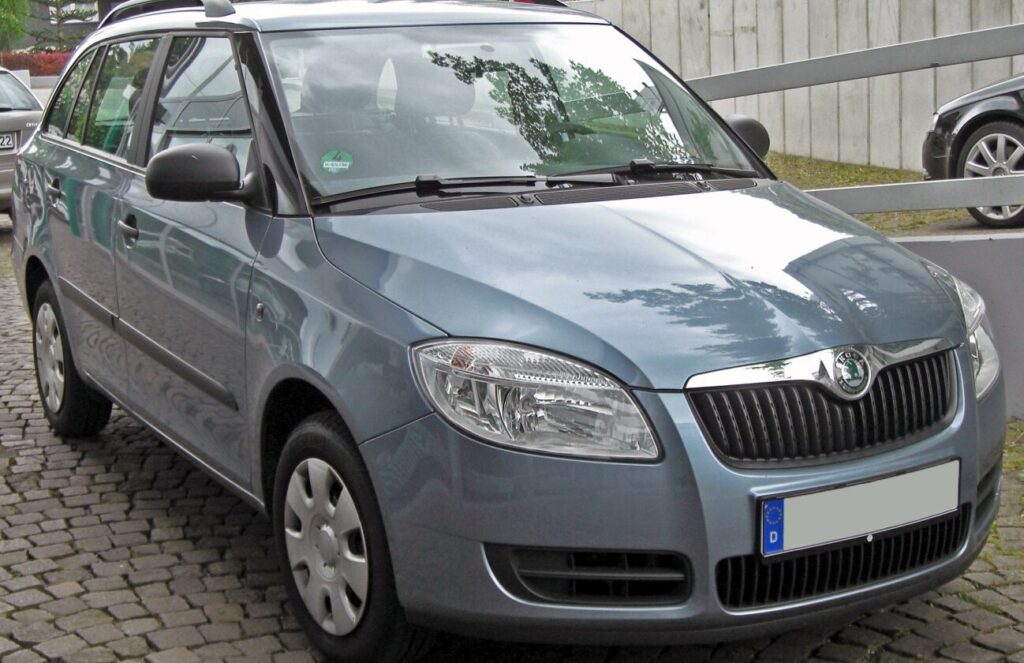
The Skoda Fabia II Combi 1.4 TDI DPF, producing 80 horsepower, was a popular variant of Skoda’s second-generation Fabia estate (wagon) model, manufactured between January 2007 and March 2010. Positioned as an entry-level diesel option within the Fabia II Combi range, it offered fuel efficiency and practicality for families and individuals seeking an economical and versatile vehicle. This model was primarily sold in Europe, where smaller, fuel-efficient cars are highly valued, and represented Skoda’s commitment to providing affordable transportation. It sat below the more powerful 1.9 TDI and petrol variants in the lineup, targeting buyers prioritizing running costs over outright performance.
Technical Specifications
| Brand | Skoda |
| Model | Fabia |
| Generation | Fabia II Combi |
| Type (Engine) | 1.4 TDI DPF (80 Hp) |
| Start of production | January, 2007 |
| End of production | March, 2010 |
| Powertrain Architecture | Internal Combustion engine |
| Body type | Station wagon (estate) |
| Seats | 5 |
| Doors | 5 |
| Fuel consumption (urban) | 5.7 l/100 km (41.3 US mpg, 49.6 UK mpg, 17.5 km/l) |
| Fuel consumption (extra urban) | 4 l/100 km (58.8 US mpg, 70.6 UK mpg, 25 km/l) |
| Fuel consumption (combined) | 4.6 l/100 km (51.1 US mpg, 61.4 UK mpg, 21.7 km/l) |
| Fuel Type | Diesel |
| Acceleration 0 – 100 km/h | 13.7 sec |
| Acceleration 0 – 62 mph | 13.7 sec |
| Acceleration 0 – 60 mph | 13 sec |
| Maximum speed | 173 km/h (107.5 mph) |
| Emission standard | Euro 4 |
| Weight-to-power ratio | 15.3 kg/Hp, 65.3 Hp/tonne |
| Weight-to-torque ratio | 6.3 kg/Nm, 159.2 Nm/tonne |
| Power | 80 Hp @ 4000 rpm |
| Power per litre | 56.3 Hp/l |
| Torque | 195 Nm @ 2200 rpm (143.82 lb.-ft. @ 2200 rpm) |
| Engine layout | Front, Transverse |
| Engine Model/Code | EA188 / BMS |
| Engine displacement | 1422 cm3 (86.78 cu. in.) |
| Number of cylinders | 3 |
| Engine configuration | Inline |
| Cylinder Bore | 79.5 mm (3.13 in.) |
| Piston Stroke | 95.5 mm (3.76 in.) |
| Compression ratio | 19.5:1 |
| Number of valves per cylinder | 2 |
| Fuel injection system | Pump-nozzle (Unit Injector) |
| Engine aspiration | Turbocharger, Intercooler |
| Engine oil capacity | 4.2 l (4.44 US qt | 3.7 UK qt) |
| Coolant | 5.5 l (5.81 US qt | 4.84 UK qt) |
| Kerb Weight | 1225 kg (2700.66 lbs.) |
| Max. weight | 1665 kg (3670.7 lbs.) |
| Max load | 440 kg (970.03 lbs.) |
| Trunk (boot) space – minimum | 480 l (16.95 cu. ft.) |
| Trunk (boot) space – maximum | 1226 l (43.3 cu. ft.) |
| Fuel tank capacity | 45 l (11.89 US gal | 9.9 UK gal) |
| Length | 4239 mm (166.89 in.) |
| Width | 1642 mm (64.65 in.) |
| Height | 1498 mm (58.98 in.) |
| Wheelbase | 2462 mm (96.93 in.) |
| Front track | 1435 mm (56.5 in.) |
| Rear (Back) track | 1424 mm (56.06 in.) |
| Drivetrain Architecture | The Internal combustion engine (ICE) drives the front wheels of the vehicle. |
| Drive wheel | Front wheel drive |
| Number of gears and type of gearbox | 5 gears, manual transmission |
| Front suspension | Coil spring |
| Rear suspension | Coil spring |
| Front brakes | Disc |
| Rear brakes | Drum |
| Assisting systems | ABS (Anti-lock braking system) |
| Steering type | Steering rack and pinion |
| Tires size | 165/70 R14; 195/55 R15; 205/45 R16 |
Powertrain & Engine Architecture
The Fabia II Combi 1.4 TDI DPF utilized the Volkswagen Group’s EA188 engine family, specifically the BMS code 1.4-liter three-cylinder diesel. This engine featured a turbocharger with an intercooler to boost power and efficiency. The engine employed pump-nozzle (unit injector) technology for direct fuel injection, contributing to improved combustion and reduced emissions. The 12-valve (2 valves per cylinder) configuration was a cost-effective solution for this entry-level diesel. The 1422cc engine produced 80 horsepower at 4000 rpm and 195 Nm (143.82 lb-ft) of torque at 2200 rpm. The engine was transversely mounted in the front of the vehicle. The DPF (Diesel Particulate Filter) was a crucial component for meeting Euro 4 emission standards. The engine was paired with a five-speed manual transmission, optimized for fuel economy rather than sporty performance.
Driving Characteristics
The 1.4 TDI DPF equipped Fabia Combi offered modest performance. Acceleration from 0-100 km/h (0-62 mph) took approximately 13.7 seconds, and top speed was around 173 km/h (107.5 mph). The engine’s torque delivery was relatively flat, providing adequate pulling power for everyday driving and load-carrying. However, it lacked the punch of the higher-output 1.9 TDI or petrol variants. The five-speed gearbox was geared for economy, meaning higher engine speeds were often required for overtaking maneuvers. Compared to the manual transmission versions, the automatic (if equipped as an option on some markets) would have further dulled acceleration, but offered increased convenience. The ride quality was generally comfortable, typical of Skoda’s focus on practicality.
Equipment & Trim Levels
The 1.4 TDI DPF typically came with a base level of equipment, reflecting its position as an entry-level model. Standard features generally included power steering, central locking, electric front windows, and an ABS anti-lock braking system. Interior upholstery was typically cloth, and the dashboard featured a functional, if somewhat basic, design. Optional extras included air conditioning, alloy wheels, a radio/CD player, and parking sensors. Higher trim levels, such as the Elegance, offered more luxurious features like climate control, upgraded upholstery, and additional safety equipment.
Chassis & Braking
The Fabia II Combi featured a typical front-wheel-drive chassis layout with coil springs on both the front and rear axles. The front brakes were disc brakes, while the rear brakes were drum brakes – a cost-saving measure common on lower-spec models. The suspension was tuned for comfort, prioritizing ride quality over sporty handling. Stabilizer bars were present, but were relatively thin compared to those found on higher-performance variants. The steering utilized a rack and pinion system, providing adequate precision for everyday driving.
Market Reception & Comparison
The Skoda Fabia II Combi 1.4 TDI DPF was well-received in the European market as an affordable and fuel-efficient estate car. Critics praised its practicality, spacious interior, and low running costs. However, some reviewers noted its lack of outright performance compared to more powerful alternatives. Compared to the 1.9 TDI, the 1.4 TDI offered significantly lower fuel consumption but also considerably less power and acceleration. The petrol variants provided a more refined driving experience but were less economical. The 1.4 TDI DPF appealed to buyers who prioritized fuel economy and practicality over performance and refinement.
Legacy
The 1.4 TDI DPF engine, while not known for being particularly exciting, proved to be relatively reliable. Common issues included DPF blockages (particularly with frequent short journeys) and potential problems with the turbocharger. However, with regular maintenance and careful driving, these engines could provide many years of service. In the used car market, the Fabia II Combi 1.4 TDI DPF remains a popular choice for budget-conscious buyers seeking a practical and economical estate car. Its reputation for reliability and low running costs continues to make it a viable option, although potential buyers should be aware of the potential for DPF-related issues and ensure the vehicle has been properly maintained.