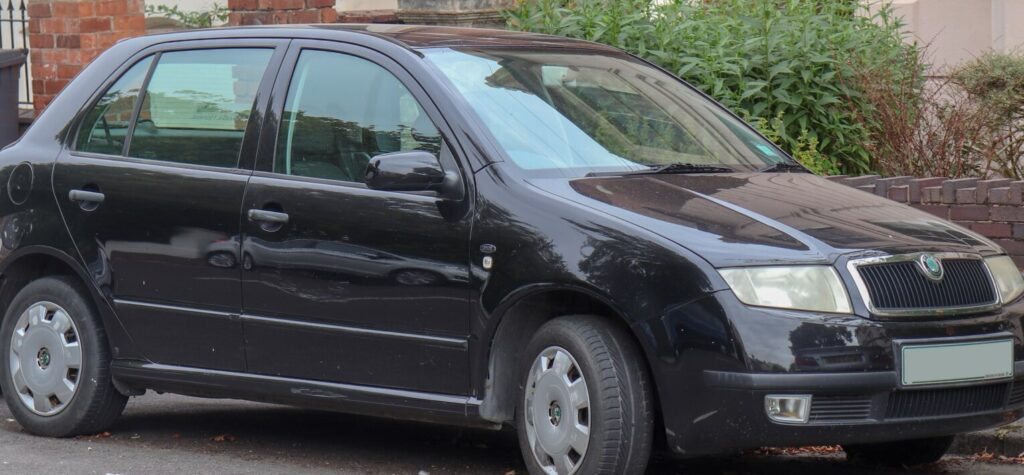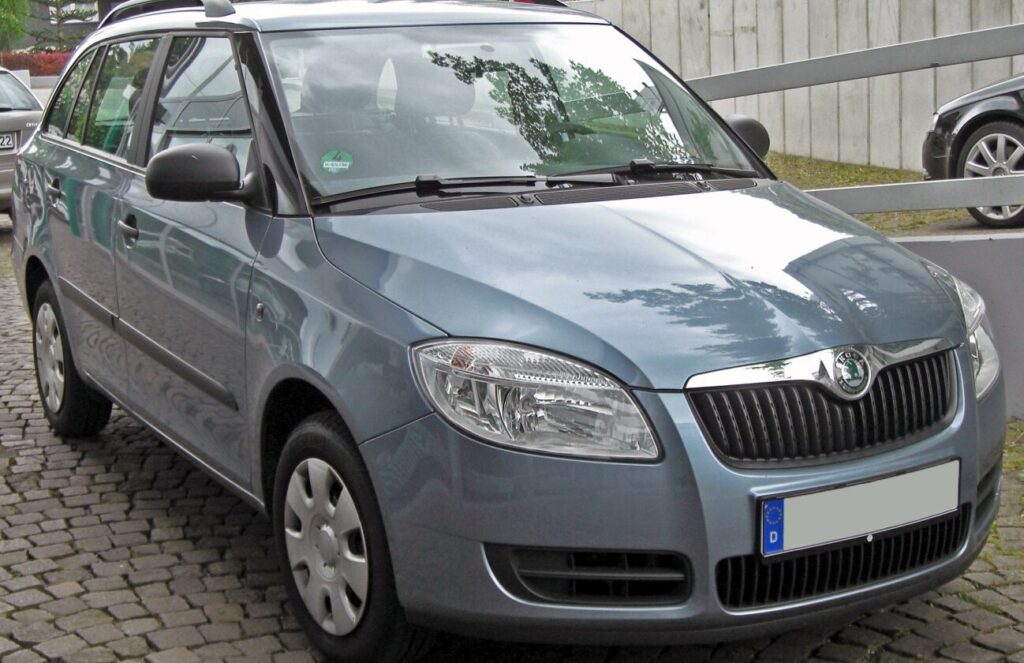
The Skoda Fabia II Combi 1.6 HTP 16V, produced from April 2007 to 2010, was a practical and affordable station wagon aimed at families and those needing versatile cargo space. Positioned as a mid-range offering within the second-generation Fabia Combi lineup (based on the Volkswagen Group’s PQ35 platform, also known as the 1HX0/A3 platform), it bridged the gap between the base 1.2 HTP engine and the more powerful 1.4 and 2.0 liter options. This variant focused on providing a balance of fuel efficiency and adequate performance for everyday driving needs, particularly in European markets where compact estates were – and remain – popular.
Technical Specifications
| Brand | Skoda |
| Model | Fabia |
| Generation | Fabia II Combi |
| Type (Engine) | 1.6 HTP 16V (105 Hp) |
| Start of production | April, 2007 |
| End of production | 2010 |
| Powertrain Architecture | Internal Combustion engine |
| Body type | Station wagon (estate) |
| Seats | 5 |
| Doors | 5 |
| Fuel consumption (urban) | 9.1 l/100 km (25.8 US mpg, 31 UK mpg, 11 km/l) |
| Fuel consumption (extra urban) | 5.6 l/100 km (42 US mpg, 50.4 UK mpg, 17.9 km/l) |
| Fuel consumption (combined) | 6.9 l/100 km (34.1 US mpg, 40.9 UK mpg, 14.5 km/l) |
| Fuel Type | Petrol (Gasoline) |
| Acceleration 0 – 100 km/h | 10.1 sec |
| Acceleration 0 – 62 mph | 10.1 sec |
| Acceleration 0 – 60 mph | 9.6 sec |
| Maximum speed | 190 km/h (118.06 mph) |
| Emission standard | Euro 4 |
| Weight-to-power ratio | 10.9 kg/Hp, 91.7 Hp/tonne |
| Weight-to-torque ratio | 7.5 kg/Nm, 133.6 Nm/tonne |
| Power | 105 Hp @ 5600 rpm |
| Power per litre | 65.7 Hp/l |
| Torque | 153 Nm @ 3800 rpm (112.85 lb.-ft. @ 3800 rpm) |
| Engine layout | Front, Transverse |
| Engine Model/Code | EA111 / BTS |
| Engine displacement | 1598 cm3 (97.52 cu. in.) |
| Number of cylinders | 4 |
| Engine configuration | Inline |
| Cylinder Bore | 76.5 mm (3.01 in.) |
| Piston Stroke | 86.9 mm (3.42 in.) |
| Compression ratio | 10.5:1 |
| Number of valves per cylinder | 4 |
| Fuel injection system | Multi-port manifold injection |
| Engine aspiration | Naturally aspirated engine |
| Engine oil capacity | 3.6 l (3.8 US qt | 3.17 UK qt) |
| Coolant | 5.9 l (6.23 US qt | 5.19 UK qt) |
| Kerb Weight | 1145 kg (2524.29 lbs.) |
| Max. weight | 1585 kg (3494.33 lbs.) |
| Max load | 440 kg (970.03 lbs.) |
| Trunk (boot) space – minimum | 480 l (16.95 cu. ft.) |
| Trunk (boot) space – maximum | 1226 l (43.3 cu. ft.) |
| Fuel tank capacity | 45 l (11.89 US gal | 9.9 UK gal) |
| Length | 4239 mm (166.89 in.) |
| Width | 1642 mm (64.65 in.) |
| Height | 1498 mm (58.98 in.) |
| Wheelbase | 2462 mm (96.93 in.) |
| Front track | 1435 mm (56.5 in.) |
| Rear (Back) track | 1424 mm (56.06 in.) |
| Drivetrain Architecture | The Internal combustion engine (ICE) drives the front wheels of the vehicle. |
| Drive wheel | Front wheel drive |
| Number of gears and type of gearbox | 5 gears, manual transmission |
| Front suspension | Coil spring |
| Rear suspension | Coil spring |
| Front brakes | Disc |
| Rear brakes | Disc |
| Assisting systems | ABS (Anti-lock braking system) |
| Steering type | Steering rack and pinion |
| Tires size | 165/70 R14; 195/55 R15; 205/45 R16 |
Powertrain & Engine Architecture
The heart of the Fabia II Combi 1.6 HTP 16V is the EA111 engine family, specifically the BTS code variant. This 1.6-liter inline-four engine utilizes a multi-point fuel injection system, delivering fuel directly into the intake ports. The 16-valve cylinder head, with four valves per cylinder, enhances breathing and contributes to the engine’s power output. While not a particularly advanced engine design, it was known for its relatively simple construction and ease of maintenance. The HTP (High Torque Pump) designation refers to a specific fuel pump design intended to improve fuel delivery and efficiency. The engine’s 105 horsepower and 113 lb-ft of torque were adequate for typical commuting and highway driving, though it wasn’t designed for spirited performance. The five-speed manual transmission was the standard offering, providing a reasonable spread of gears for both fuel economy and acceleration. An automatic transmission was available as an option, but it was less common and generally resulted in slightly reduced fuel efficiency and performance.
Driving Characteristics
The 1.6 HTP 16V-equipped Fabia Combi offered a comfortable, if not particularly exciting, driving experience. Acceleration from 0-60 mph took around 9.6 seconds, making it competitive with other small station wagons of the era. The engine felt reasonably responsive at lower RPMs, thanks to the HTP fuel pump, but power tapered off noticeably as the revs climbed. The five-speed manual transmission was well-matched to the engine’s characteristics, allowing drivers to keep the engine in its sweet spot for optimal performance. Compared to the more powerful 1.4 and 2.0-liter variants, the 1.6 HTP felt noticeably slower, especially when fully loaded with passengers and cargo. However, it offered a significant advantage in fuel economy, making it a popular choice for drivers prioritizing efficiency.
Equipment & Trim Levels
The 1.6 HTP 16V Fabia Combi typically came equipped with a reasonable level of standard features, including power windows, central locking, and an audio system. Higher trim levels added features such as air conditioning, alloy wheels, and a multi-function steering wheel. Interior upholstery was typically cloth, with a durable and practical design. Optional extras included a sunroof, parking sensors, and upgraded audio systems. The overall interior design was functional and well-built, reflecting Skoda’s growing reputation for quality.
Chassis & Braking
The Fabia II Combi featured a MacPherson strut front suspension and a torsion beam rear suspension. This setup provided a comfortable ride and predictable handling. Disc brakes were fitted to all four wheels, providing adequate stopping power for the vehicle’s weight and performance. ABS (Anti-lock Braking System) was standard, enhancing safety in emergency braking situations. The suspension was tuned for comfort rather than outright sportiness, prioritizing a smooth ride over sharp handling.
Market Reception & Comparison
The Skoda Fabia II Combi 1.6 HTP 16V was generally well-received by automotive critics as a practical and affordable family car. It was praised for its spacious interior, generous cargo capacity, and good fuel economy. However, some critics noted that the engine lacked refinement and could feel strained when pushed hard. Compared to the more powerful variants, the 1.6 HTP offered a lower price point and better fuel efficiency, making it an attractive option for budget-conscious buyers. The 1.9 TDI diesel variant offered superior fuel economy and torque, but at a higher initial cost. The 1.4-liter petrol engine provided a compromise between performance and efficiency.
Legacy
The EA111 1.6 HTP engine, while generally reliable, has been known to suffer from occasional issues with carbon buildup on the intake valves, particularly if not regularly driven on longer journeys. Proper maintenance, including regular oil changes and the use of quality fuel, is crucial for ensuring long-term reliability. Today, the Fabia II Combi 1.6 HTP 16V remains a relatively affordable and practical used car option. Its simple construction and readily available parts make it relatively easy to maintain. While it may not offer the performance or refinement of more modern vehicles, it continues to provide a dependable and economical mode of transportation for those seeking a versatile and spacious station wagon.