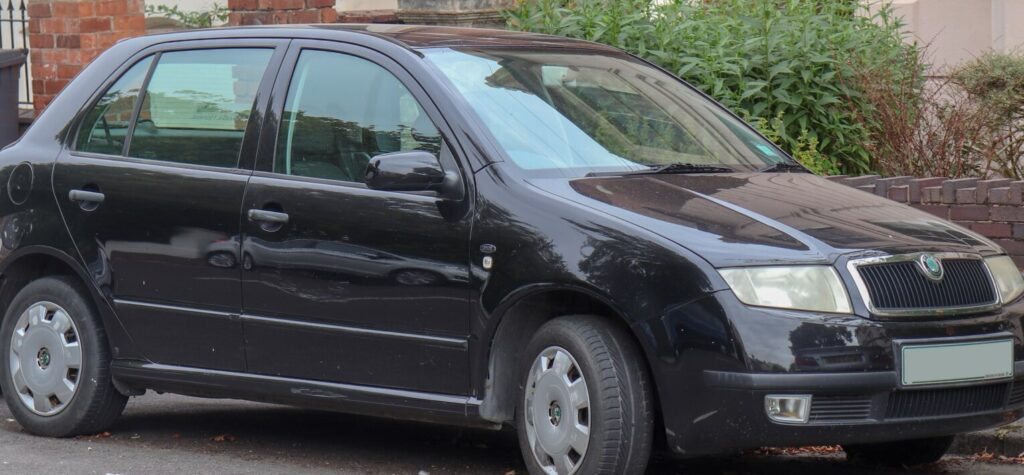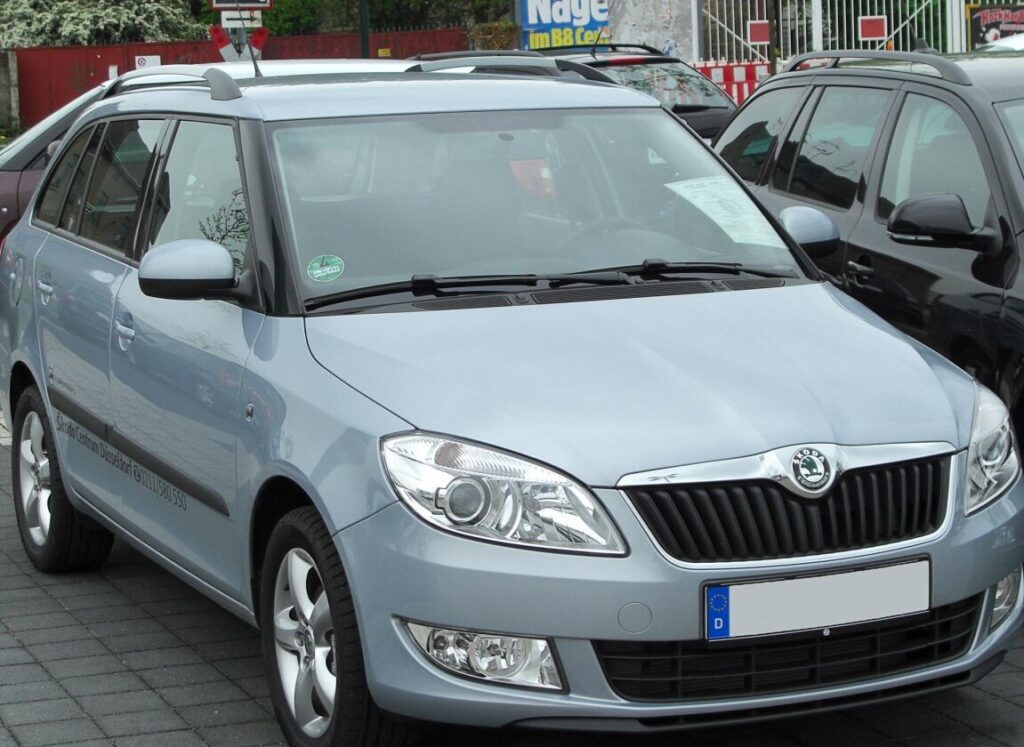
The Skoda Fabia II Combi (facelift, produced from March 2010 to 2014) 1.2 TSI 105 hp variant represented a key offering in Skoda’s compact estate lineup. Positioned as a mid-range option, it aimed to balance fuel efficiency with reasonable performance, appealing to families and individuals seeking a practical and economical vehicle. This model was part of the broader Fabia II generation (1HX0/A3 platform), which saw significant updates in 2010, including revised styling and the introduction of new, more efficient engines like the 1.2 TSI. The Combi body style, a station wagon or estate, provided increased cargo capacity compared to the hatchback version, making it a popular choice in European markets where practicality is highly valued.
Technical Specifications
| Brand | Skoda |
| Model | Fabia |
| Generation | Fabia II Combi (facelift 2010) |
| Type (Engine) | 1.2 TSI (105 Hp) |
| Start of production | March, 2010 |
| End of production | 2014 |
| Powertrain Architecture | Internal Combustion engine |
| Body type | Station wagon (estate) |
| Seats | 5 |
| Doors | 5 |
| Fuel consumption (urban) | 6.8 l/100 km (34.6 US mpg, 41.5 UK mpg, 14.7 km/l) |
| Fuel consumption (extra urban) | 4.5 l/100 km (52.3 US mpg, 62.8 UK mpg, 22.2 km/l) |
| Fuel consumption (combined) | 5.3 l/100 km (44.4 US mpg, 53.3 UK mpg, 18.9 km/l) |
| CO2 emissions | 124 g/km |
| Fuel Type | Petrol (Gasoline) |
| Acceleration 0 – 100 km/h | 10.2 sec |
| Acceleration 0 – 62 mph | 10.2 sec |
| Acceleration 0 – 60 mph | 9.7 sec |
| Maximum speed | 193 km/h (119.92 mph) |
| Emission standard | Euro 5 |
| Weight-to-power ratio | 10.2 kg/Hp, 97.7 Hp/tonne |
| Weight-to-torque ratio | 6.1 kg/Nm, 162.8 Nm/tonne |
| Power | 105 Hp @ 5000 rpm |
| Power per litre | 87.7 Hp/l |
| Torque | 175 Nm @ 1550-4100 rpm (129.07 lb.-ft. @ 1550-4100 rpm) |
| Engine layout | Front, Transverse |
| Engine Model/Code | EA111 / CBZB |
| Engine displacement | 1197 cm3 (73.05 cu. in.) |
| Number of cylinders | 4 |
| Engine configuration | Inline |
| Cylinder Bore | 71 mm (2.8 in.) |
| Piston Stroke | 75.6 mm (2.98 in.) |
| Compression ratio | 10:1 |
| Number of valves per cylinder | 4 |
| Fuel injection system | Direct injection |
| Engine aspiration | Turbocharger, Intercooler |
| Valvetrain | DOHC |
| Engine oil capacity | 3.6 l (3.8 US qt | 3.17 UK qt) |
| Coolant capacity | 7.7 l (8.14 US qt | 6.78 UK qt) |
| Kerb Weight | 1075 kg (2369.97 lbs.) |
| Max. weight | 1605 kg (3538.42 lbs.) |
| Max load | 530 kg (1168.45 lbs.) |
| Trunk (boot) space – minimum | 505 l (17.83 cu. ft.) |
| Trunk (boot) space – maximum | 1485 l (52.44 cu. ft.) |
| Fuel tank capacity | 45 l (11.89 US gal | 9.9 UK gal) |
| Max. roof load | 75 kg (165.35 lbs.) |
| Permitted trailer load (braked) | 1200 kg (2645.55 lbs.) |
| Permitted trailer load (unbraked) | 450 kg (992.08 lbs.) |
| Permitted towbar download | 50 kg (110.23 lbs.) |
| Length | 4247 mm (167.2 in.) |
| Width | 1642 mm (64.65 in.) |
| Width including mirrors | 1886 mm (74.25 in.) |
| Height | 1498 mm (58.98 in.) |
| Wheelbase | 2465 mm (97.05 in.) |
| Front track | 1433 mm (56.42 in.) |
| Rear track | 1426 mm (56.14 in.) |
| Front overhang | 860 mm (33.86 in.) |
| Rear overhang | 922 mm (36.3 in.) |
| Ride height (ground clearance) | 135 mm (5.31 in.) |
| Drag coefficient (Cd) | 0.31 |
| Minimum turning circle | 10 m (32.81 ft.) |
| Approach angle | 14.1° |
| Departure angle | 12.1° |
| Drivetrain | Front wheel drive |
| Number of gears | 5 |
| Gearbox type | Manual transmission |
| Front suspension | Independent, McPherson with coil spring and anti-roll bar |
| Rear suspension | Coil spring, Torsion |
| Front brakes | Ventilated discs |
| Rear brakes | Disc |
| Assisting systems | ABS (Anti-lock braking system) |
| Steering type | Steering rack and pinion |
| Power steering | Electric |
| Tires size | 165/70 R14; 185/60 R14; 195/55 R15 |
| Wheel rims size | 5J x 14; 6J x 14; 6J x 15 |
Powertrain & Engine Architecture
The heart of this Fabia Combi variant is the 1.2-liter TSI (Turbocharged Stratified Injection) engine, specifically the EA111 series, identified by the code CBZB. This engine is a four-cylinder, inline configuration with a displacement of 1197 cc. It features direct fuel injection, a turbocharger with an intercooler, and a double overhead camshaft (DOHC) valvetrain with four valves per cylinder. The direct injection system allows for precise fuel delivery, contributing to improved efficiency and reduced emissions. The turbocharger, coupled with the intercooler, boosts power output by forcing more air into the cylinders. The 5-speed manual transmission was standard, offering a balance between fuel economy and driver control. The engine’s relatively small displacement and turbocharging technology allowed it to produce 105 horsepower at 5000 rpm and 175 Nm (129 lb-ft) of torque between 1550 and 4100 rpm.
Driving Characteristics
The 1.2 TSI 105 hp engine in the Fabia Combi provided adequate performance for everyday driving. Acceleration from 0 to 100 km/h (0-62 mph) took around 10.2 seconds, which was competitive within its class. While not particularly sporty, the engine offered sufficient power for overtaking and highway cruising. The turbocharger provided a noticeable boost in power at lower to mid-range revs, making it feel more responsive than a naturally aspirated engine of similar displacement. Compared to the more powerful 1.4 TSI variants, this engine prioritized fuel economy over outright performance. The manual transmission’s gear ratios were tuned for efficiency, with a relatively long fifth gear for comfortable highway driving. The overall driving experience was characterized by its smoothness and refinement, typical of Skoda vehicles.
Equipment & Trim Levels
The 1.2 TSI 105 hp Combi typically came with a reasonable level of standard equipment. This included power windows, central locking, air conditioning, an audio system with MP3 compatibility, and ABS brakes. Higher trim levels offered additional features such as alloy wheels, fog lights, a multi-function steering wheel, and parking sensors. Interior upholstery was typically cloth, with options for upgraded materials. The dashboard layout was functional and well-designed, with clear instrumentation. Optional extras included a sunroof, navigation system, and climate control.
Chassis & Braking
The Fabia Combi’s chassis featured independent suspension at the front, utilizing a McPherson strut setup with a coil spring and anti-roll bar. The rear suspension employed a torsion beam axle, which provided a good balance between ride comfort and handling. The braking system consisted of ventilated discs at the front and solid discs at the rear, providing adequate stopping power for the vehicle’s weight. ABS (Anti-lock Braking System) was standard, enhancing safety during emergency braking situations.
Market Reception & Comparison
The Skoda Fabia II Combi 1.2 TSI 105 hp received generally positive reviews from automotive critics. It was praised for its fuel efficiency, practicality, and comfortable ride. However, some reviewers noted that the engine could feel strained when fully loaded or driving uphill. Compared to the more powerful TSI variants, this engine offered a more affordable entry point into the Fabia Combi range. Its fuel economy was notably better than the 1.4 TSI, making it an attractive option for budget-conscious buyers. Reliability was generally good, with the 1.2 TSI engine proving to be relatively robust.
Legacy
The 1.2 TSI engine, including the CBZB code version found in the Fabia Combi, became a popular choice in the Volkswagen Group’s range of vehicles. While later iterations of the 1.2 TSI engine experienced some issues with timing chain wear, the earlier versions, like the one used in the 2010-2014 Fabia Combi, have proven to be relatively reliable. Today, these vehicles are readily available on the used car market and represent a good value proposition for buyers seeking a practical and economical estate car. Regular maintenance, including oil changes and timing chain inspections, is crucial to ensure the long-term reliability of this powertrain.