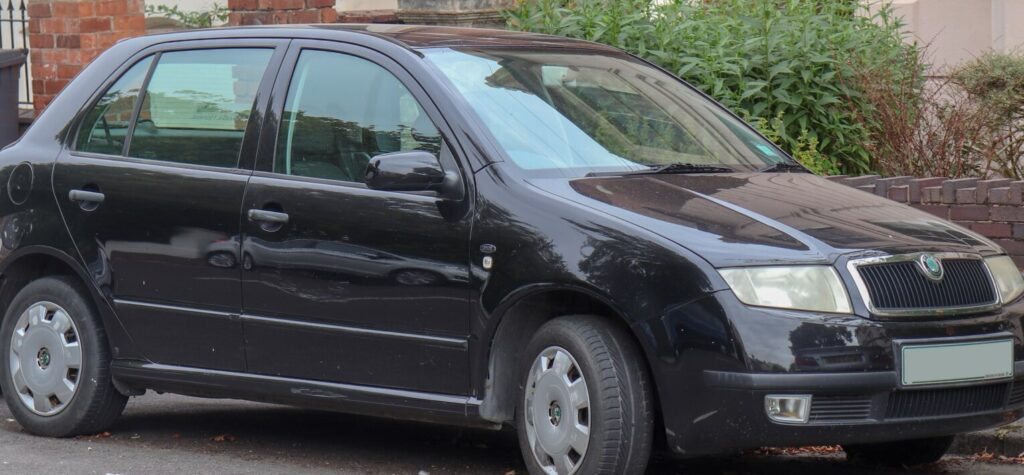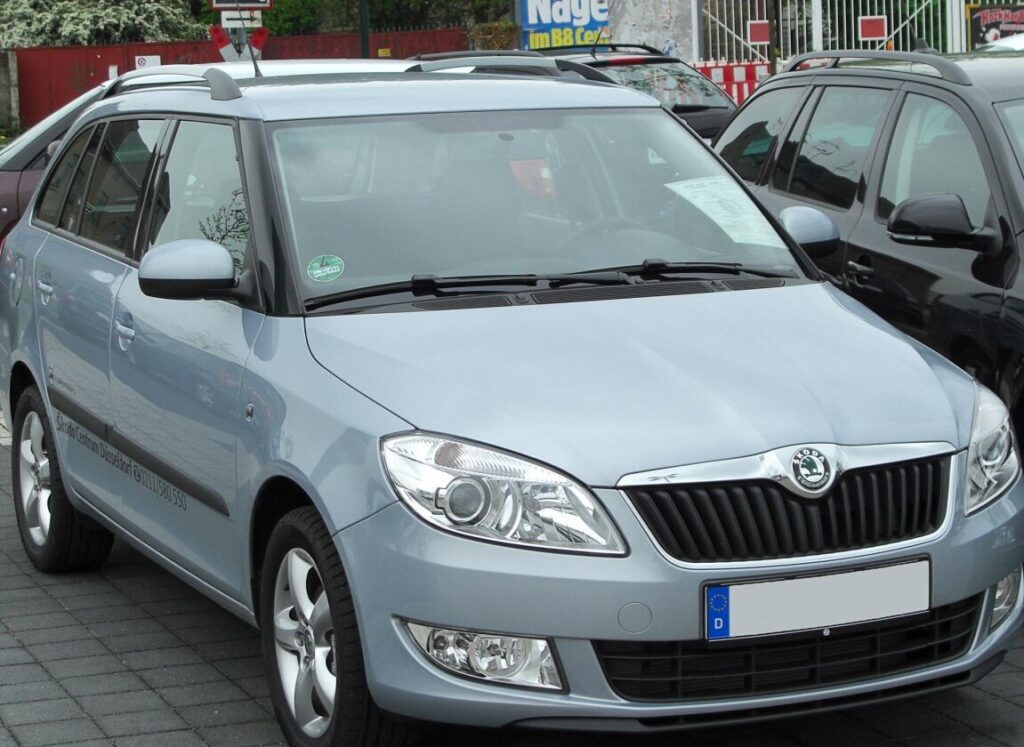
The Skoda Fabia II Combi 1.2 TSI (105 hp) DSG, produced from March 2010 to 2014, represents a significant iteration within the second generation (Typ 5J) of Skoda’s popular compact estate car. Positioned as a mid-range offering within the Fabia Combi lineup, this variant aimed to balance fuel efficiency with respectable performance, appealing to buyers seeking a practical and economical family vehicle. It was part of the facelifted Fabia II series, incorporating styling and technological updates over the original 5J models. The Fabia II Combi, in general, played a crucial role in Skoda’s expansion within the European market, offering a compelling alternative to established competitors like the Volkswagen Golf Estate and Ford Focus Estate, but at a more accessible price point.
Technical Specifications
| Brand | Skoda |
| Model | Fabia |
| Generation | Fabia II Combi (facelift 2010) |
| Type (Engine) | 1.2 TSI (105 Hp) DSG |
| Start of production | March, 2010 |
| End of production | 2014 |
| Powertrain Architecture | Internal Combustion engine |
| Body type | Station wagon (estate) |
| Seats | 5 |
| Doors | 5 |
| Fuel consumption (urban) | 7 l/100 km (33.6 US mpg, 40.4 UK mpg, 14.3 km/l) |
| Fuel consumption (extra urban) | 4.4 l/100 km (53.5 US mpg, 64.2 UK mpg, 22.7 km/l) |
| Fuel consumption (combined) | 5.3 l/100 km (44.4 US mpg, 53.3 UK mpg, 18.9 km/l) |
| CO2 emissions | 124 g/km |
| Fuel Type | Petrol (Gasoline) |
| Acceleration 0 – 100 km/h | 10.3 sec |
| Acceleration 0 – 62 mph | 10.3 sec |
| Acceleration 0 – 60 mph | 9.8 sec |
| Maximum speed | 190 km/h (118.06 mph) |
| Emission standard | Euro 5 |
| Weight-to-power ratio | 10.6 kg/Hp, 94.7 Hp/tonne |
| Weight-to-torque ratio | 6.3 kg/Nm, 157.8 Nm/tonne |
| Power | 105 Hp @ 5000 rpm |
| Power per litre | 87.7 Hp/l |
| Torque | 175 Nm @ 1550-4100 rpm (129.07 lb.-ft. @ 1550-4100 rpm) |
| Engine layout | Front, Transverse |
| Engine Model/Code | EA111 / CBZB |
| Engine displacement | 1197 cm3 (73.05 cu. in.) |
| Number of cylinders | 4 |
| Engine configuration | Inline |
| Cylinder Bore | 71 mm (2.8 in.) |
| Piston Stroke | 75.6 mm (2.98 in.) |
| Compression ratio | 10:1 |
| Number of valves per cylinder | 4 |
| Fuel injection system | Direct injection |
| Engine aspiration | Turbocharger, Intercooler |
| Valvetrain | DOHC |
| Engine oil capacity | 3.6 l (3.8 US qt | 3.17 UK qt) |
| Coolant capacity | 7.7 l (8.14 US qt | 6.78 UK qt) |
| Kerb Weight | 1109 kg (2444.93 lbs.) |
| Max. weight | 1639 kg (3613.38 lbs.) |
| Max load | 530 kg (1168.45 lbs.) |
| Trunk (boot) space – minimum | 505 l (17.83 cu. ft.) |
| Trunk (boot) space – maximum | 1485 l (52.44 cu. ft.) |
| Fuel tank capacity | 45 l (11.89 US gal | 9.9 UK gal) |
| Max. roof load | 75 kg (165.35 lbs.) |
| Permitted trailer load with brakes (12%) | 1200 kg (2645.55 lbs.) |
| Permitted trailer load without brakes | 450 kg (992.08 lbs.) |
| Permitted towbar download | 50 kg (110.23 lbs.) |
| Length | 4247 mm (167.2 in.) |
| Width | 1642 mm (64.65 in.) |
| Width including mirrors | 1886 mm (74.25 in.) |
| Height | 1498 mm (58.98 in.) |
| Wheelbase | 2465 mm (97.05 in.) |
| Front track | 1433 mm (56.42 in.) |
| Rear track | 1426 mm (56.14 in.) |
| Front overhang | 860 mm (33.86 in.) |
| Rear overhang | 922 mm (36.3 in.) |
| Ride height (ground clearance) | 135 mm (5.31 in.) |
| Drag coefficient (Cd) | 0.31 |
| Minimum turning circle | 10 m (32.81 ft.) |
| Approach angle | 14.1° |
| Departure angle | 12.1° |
| Drivetrain Architecture | Front wheel drive |
| Number of gears and type of gearbox | 7 gears, automatic transmission DSG |
| Front suspension | Independent, type McPherson with coil spring and anti-roll bar |
| Rear suspension | Coil spring, Torsion |
| Front brakes | Ventilated discs |
| Rear brakes | Disc |
| Assisting systems | ABS (Anti-lock braking system) |
| Steering type | Steering rack and pinion |
| Power steering | Electric Steering |
| Tires size | 165/70 R14; 185/60 R14; 195/55 R15 |
| Wheel rims size | 5J x 14; 6J x 14; 6J x 15 |
Powertrain & Engine Architecture
The heart of this Fabia Combi variant is the EA111 1.2-liter TSI (Turbocharged Stratified Injection) engine, specifically the CBZB engine code. This engine is a four-cylinder, inline configuration featuring direct fuel injection and a turbocharger with an intercooler. The direct injection system allows for precise fuel delivery, contributing to both power and efficiency. The engine utilizes a dual overhead camshaft (DOHC) valvetrain with four valves per cylinder, optimizing gas flow. The 1.2 TSI engine was a key component of Volkswagen Group’s downsizing strategy, aiming to deliver performance comparable to larger displacement engines while significantly reducing fuel consumption and emissions. Paired with this engine is a 7-speed dual-clutch gearbox (DSG). The DSG transmission offers quick and smooth gear changes, enhancing both acceleration and fuel economy compared to a traditional automatic transmission. The DSG’s programming is tuned for efficiency, prioritizing higher gears at cruising speeds.
Driving Characteristics
The 105 hp 1.2 TSI engine, coupled with the 7-speed DSG, provides adequate performance for everyday driving. Acceleration from 0-60 mph takes approximately 9.8 seconds, and the top speed is around 118 mph. While not a particularly sporty setup, the turbocharger provides a noticeable boost in power, especially during overtaking maneuvers. The DSG transmission contributes to a responsive driving experience, with quick shifts and minimal torque interruption. Compared to the lower-powered 1.2 TSI non-turbo variants, this engine offers a significant improvement in performance. However, it falls short of the more powerful engines available in the Fabia II Combi range, such as the 1.4 TSI or the diesel options, in terms of outright speed and responsiveness. The gear ratios in the DSG are optimized for fuel efficiency, meaning the engine can sometimes feel slightly strained when accelerating hard.
Equipment & Trim Levels
The 1.2 TSI DSG trim typically included standard features such as air conditioning, electric front windows, a CD player with MP3 compatibility, and ABS brakes. Higher trim levels, often denoted by designations like ‘Elegance’ or ‘Sport’, added features like alloy wheels, rear parking sensors, cruise control, and upgraded interior trim. Interior upholstery was typically cloth, with options for upgraded materials on higher trims. Dashboard configurations were generally consistent across the range, featuring a functional and straightforward design. Optional extras included a panoramic sunroof, navigation system, and various driver assistance systems.
Chassis & Braking
The Fabia II Combi 1.2 TSI utilized a McPherson strut front suspension and a torsion beam rear suspension. This setup provided a comfortable ride quality, suitable for everyday driving. The front brakes were ventilated discs, while the rear brakes were solid discs. ABS (Anti-lock Braking System) was standard, enhancing braking performance and safety. Stabilizer bars were fitted to both the front and rear axles to reduce body roll during cornering. The suspension tuning was geared towards comfort rather than outright handling prowess.
Market Reception & Comparison
The Skoda Fabia II Combi 1.2 TSI DSG was generally well-received by automotive critics for its blend of practicality, fuel efficiency, and affordability. It was praised for its spacious interior, comfortable ride, and the responsiveness of the DSG transmission. However, some critics noted that the engine could feel underpowered when fully loaded or driving uphill. Compared to other trims in the Fabia Combi lineup, the 1.2 TSI DSG offered a good balance between performance and economy. The diesel variants provided superior fuel economy, while the more powerful petrol engines offered more exhilarating performance. The 1.2 TSI DSG was often seen as a sensible choice for families and individuals seeking a practical and economical estate car.
Legacy
The EA111 1.2 TSI engine, while generally reliable, has been known to exhibit issues with carbon buildup on the intake valves, particularly if not regularly serviced with high-quality fuel. The DSG transmission, while advanced, requires regular fluid changes to ensure smooth operation and prevent premature wear. Today, the Fabia II Combi 1.2 TSI DSG can be found as an affordable used car option. Its fuel efficiency and practicality continue to appeal to budget-conscious buyers. However, potential buyers should be aware of the potential maintenance requirements associated with the TSI engine and DSG transmission, and ensure a thorough inspection is carried out before purchase.