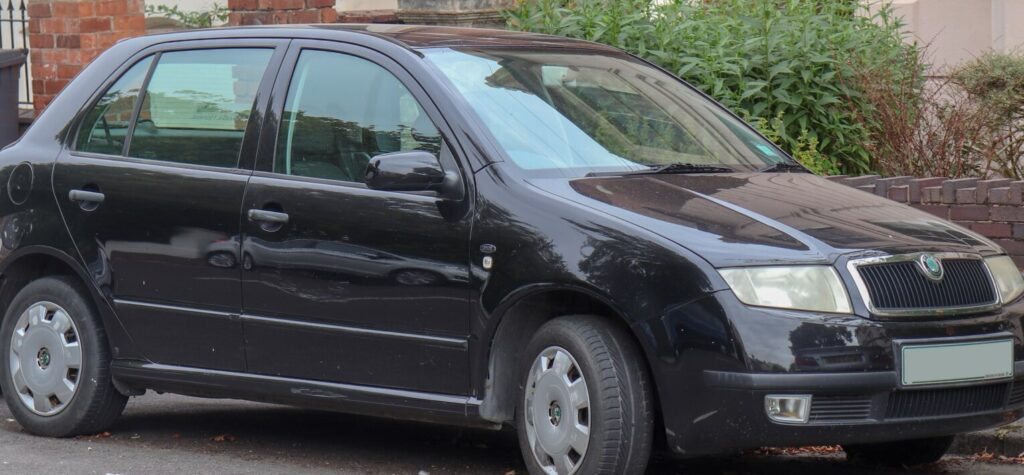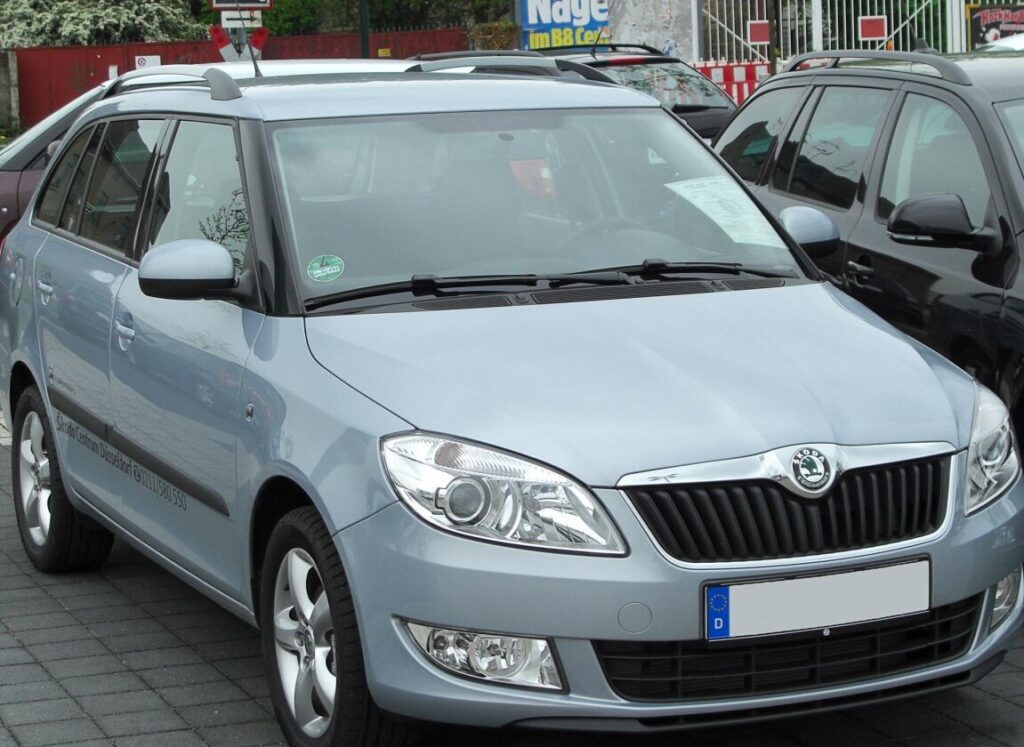
The Skoda Fabia II Combi 1.6 TDI (75 hp) is a compact station wagon produced by the Czech automaker Skoda between 2010 and 2014, following the facelift of the second-generation Fabia. This variant occupied the entry-level position in the Fabia Combi range, offering a fuel-efficient and practical option for buyers prioritizing economy over outright performance. It was a key model for Skoda in European markets, where compact estates are highly popular, and represented a value-oriented alternative to more expensive rivals. The 1.6 TDI engine, part of the Volkswagen Group’s EA189 family, was chosen for its balance of fuel efficiency and acceptable performance for everyday driving.
Technical Specifications
| Brand | Skoda |
| Model | Fabia |
| Generation | Fabia II Combi (facelift 2010) |
| Type (Engine) | 1.6 TDI (75 Hp) |
| Start of production | April, 2010 |
| End of production | 2014 |
| Powertrain Architecture | Internal Combustion engine |
| Body type | Station wagon (estate) |
| Seats | 5 |
| Doors | 5 |
| Fuel consumption (urban) | 5.1 l/100 km (46.1 US mpg, 55.4 UK mpg, 19.6 km/l) |
| Fuel consumption (extra urban) | 3.6 l/100 km (65.3 US mpg, 78.5 UK mpg, 27.8 km/l) |
| Fuel consumption (combined) | 4.2 l/100 km (56 US mpg, 67.3 UK mpg, 23.8 km/l) |
| CO2 emissions | 109 g/km |
| Fuel Type | Diesel |
| Acceleration 0 – 100 km/h | 14.2 sec |
| Acceleration 0 – 62 mph | 14.2 sec |
| Acceleration 0 – 60 mph | 13.5 sec |
| Maximum speed | 167 km/h (103.77 mph) |
| Emission standard | Euro 5 |
| Weight-to-power ratio | 15.3 kg/Hp |
| Weight-to-torque ratio | 5.9 kg/Nm |
| Power | 75 Hp @ 4000 rpm |
| Torque | 195 Nm @ 1500-2000 rpm (143.82 lb.-ft. @ 1500-2000 rpm) |
| Engine layout | Front, Transverse |
| Engine Model/Code | EA189 / CAYA |
| Engine displacement | 1598 cm3 (97.52 cu. in.) |
| Number of cylinders | 4 |
| Engine configuration | Inline |
| Cylinder Bore | 79.5 mm (3.13 in.) |
| Piston Stroke | 80.5 mm (3.17 in.) |
| Compression ratio | 16.5:1 |
| Number of valves per cylinder | 4 |
| Fuel injection system | Diesel Commonrail |
| Engine aspiration | Turbocharger, Intercooler |
| Valvetrain | DOHC |
| Engine oil capacity | 4.3 l (4.54 US qt | 3.78 UK qt) |
| Coolant capacity | 8.4 l (8.88 US qt | 7.39 UK qt) |
| Kerb Weight | 1149 kg (2533.11 lbs.) |
| Max. weight | 1679 kg (3701.56 lbs.) |
| Max load | 530 kg (1168.45 lbs.) |
| Trunk (boot) space – minimum | 505 l (17.83 cu. ft.) |
| Trunk (boot) space – maximum | 1485 l (52.44 cu. ft.) |
| Fuel tank capacity | 45 l (11.89 US gal | 9.9 UK gal) |
| Max. roof load | 75 kg (165.35 lbs.) |
| Permitted trailer load with brakes (12%) | 1000 kg (2204.62 lbs.) |
| Permitted trailer load without brakes | 450 kg (992.08 lbs.) |
| Permitted towbar download | 50 kg (110.23 lbs.) |
| Length | 4247 mm (167.2 in.) |
| Width | 1642 mm (64.65 in.) |
| Width including mirrors | 1886 mm (74.25 in.) |
| Height | 1498 mm (58.98 in.) |
| Wheelbase | 2465 mm (97.05 in.) |
| Front track | 1433 mm (56.42 in.) |
| Rear track | 1426 mm (56.14 in.) |
| Front overhang | 860 mm (33.86 in.) |
| Rear overhang | 922 mm (36.3 in.) |
| Ride height (ground clearance) | 135 mm (5.31 in.) |
| Drag coefficient (Cd) | 0.31 |
| Minimum turning circle | 10 m (32.81 ft.) |
| Front suspension | Independent, type McPherson with coil spring and anti-roll bar |
| Rear suspension | Coil spring, Torsion |
| Front brakes | Ventilated discs |
| Rear brakes | Disc |
| Assisting systems | ABS (Anti-lock braking system) |
| Steering type | Steering rack and pinion |
| Power steering | Electric |
| Tires size | 165/70 R14; 185/60 R14; 195/55 R15 |
| Wheel rims size | 5J x 14; 6J x 14; 6J x 15 |
INTRODUCTION
The Skoda Fabia II Combi 1.6 TDI (75 hp) was introduced as part of the facelifted second-generation Fabia range in April 2010, continuing through the 2014 model year. Built on the Volkswagen Group’s A05 (1HX0/A3) platform, the Combi body style offered increased practicality compared to the hatchback, appealing to families and those requiring additional cargo space. This particular variant, powered by the 1.6-liter TDI engine, was positioned as the entry point into the Fabia Combi lineup, prioritizing fuel efficiency and affordability. It aimed to provide a sensible and economical option for buyers who didn’t require the higher performance of the petrol or more powerful diesel engines available.
Powertrain & Engine Architecture
The heart of the Fabia Combi 1.6 TDI is the EA189 series 1.6-liter inline-four diesel engine, specifically the CAYA code. This engine utilizes a common rail direct injection system, delivering fuel directly into the combustion chamber at high pressure for improved efficiency and reduced emissions. The engine features a single overhead camshaft (SOHC) operating four valves per cylinder (DOHC), and is equipped with a turbocharger and intercooler to boost power output. The turbocharger provides increased air intake, enhancing combustion and torque. The engine produces 75 horsepower at 4000 rpm and 195 Nm (143.82 lb-ft) of torque between 1500 and 2000 rpm. This engine was paired with a five-speed manual transmission as standard, optimized for fuel economy rather than sporty acceleration. The transmission’s gear ratios were relatively long, prioritizing higher gears for efficient cruising.
Driving Characteristics
The 1.6 TDI 75 hp engine in the Fabia Combi delivers adequate, but not exhilarating, performance. Acceleration from 0 to 100 km/h (0-62 mph) takes around 14.2 seconds, and top speed is limited to 167 km/h (103.77 mph). The engine’s strength lies in its low-end torque, making it reasonably responsive in everyday driving situations, such as overtaking at lower speeds. However, it can feel strained when climbing hills or carrying a full load. Compared to the more powerful 1.9 TDI or petrol variants, the 1.6 TDI offers a more relaxed driving experience, focusing on fuel economy and comfort. The five-speed manual transmission is smooth and easy to operate, but the long gear ratios can sometimes require frequent downshifts when encountering steep inclines.
Equipment & Trim Levels
The Fabia Combi 1.6 TDI typically came with a reasonable level of standard equipment, though it was less lavish than higher-spec trims. Standard features generally included central locking, electric front windows, a basic audio system, and ABS brakes. Air conditioning was often an optional extra. Interior upholstery was typically cloth, with a functional and durable design. Higher trim levels, such as the Elegance, offered additional features like alloy wheels, climate control, and upgraded interior trim. Optional extras included parking sensors, a trip computer, and a more advanced audio system with Bluetooth connectivity.
Chassis & Braking
The Fabia Combi 1.6 TDI utilizes a MacPherson strut front suspension and a torsion beam rear suspension. This setup provides a comfortable ride quality, well-suited for everyday driving. The front brakes are ventilated discs, while the rear brakes are solid discs. ABS (Anti-lock Braking System) is standard, enhancing braking performance and stability. The suspension tuning is geared towards comfort rather than sporty handling, resulting in a predictable and stable driving experience. Stabilizer bars are fitted to both the front and rear axles to reduce body roll during cornering.
Market Reception & Comparison
The Skoda Fabia Combi 1.6 TDI was generally well-received by critics as a practical and economical estate car. It was praised for its fuel efficiency, spacious interior, and competitive price. However, some reviewers noted that the engine lacked outright power, particularly when fully loaded. Compared to other trims in the Fabia Combi lineup, the 1.6 TDI offered the lowest running costs but sacrificed performance. The 1.9 TDI, for example, provided significantly more power and torque, while the petrol engines offered a more refined driving experience. Against competitors like the Ford Focus Estate and Vauxhall Astra Estate, the Fabia Combi 1.6 TDI offered a compelling value proposition, particularly for budget-conscious buyers.
Legacy
The 1.6 TDI engine, while generally reliable, has been subject to some scrutiny regarding diesel particulate filter (DPF) issues, particularly on vehicles used primarily for short journeys. Regular servicing and the use of quality diesel fuel are crucial for maintaining the DPF’s functionality. In the used car market, the Fabia Combi 1.6 TDI remains a popular choice for those seeking an affordable and economical estate car. Its reputation for reliability and practicality, combined with its low running costs, makes it a sensible option for families and individuals alike. However, potential buyers should be aware of the potential DPF issues and ensure the vehicle has been properly maintained.