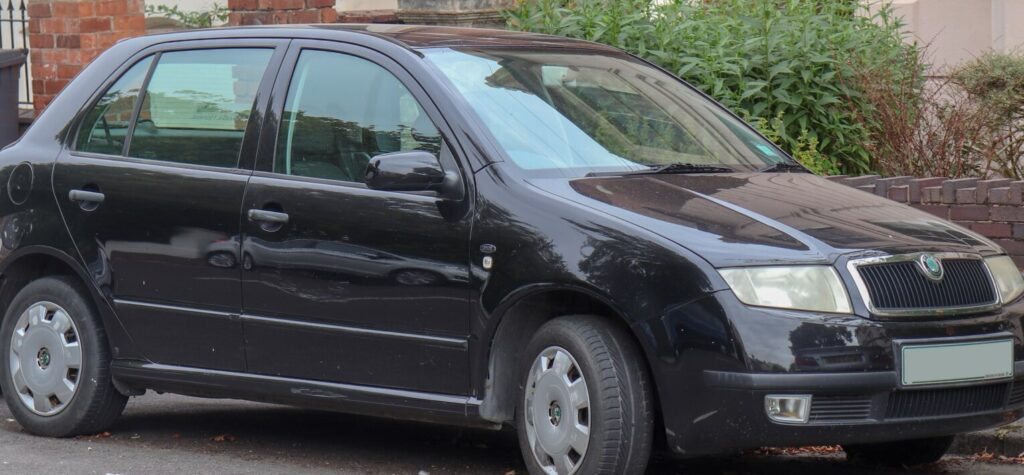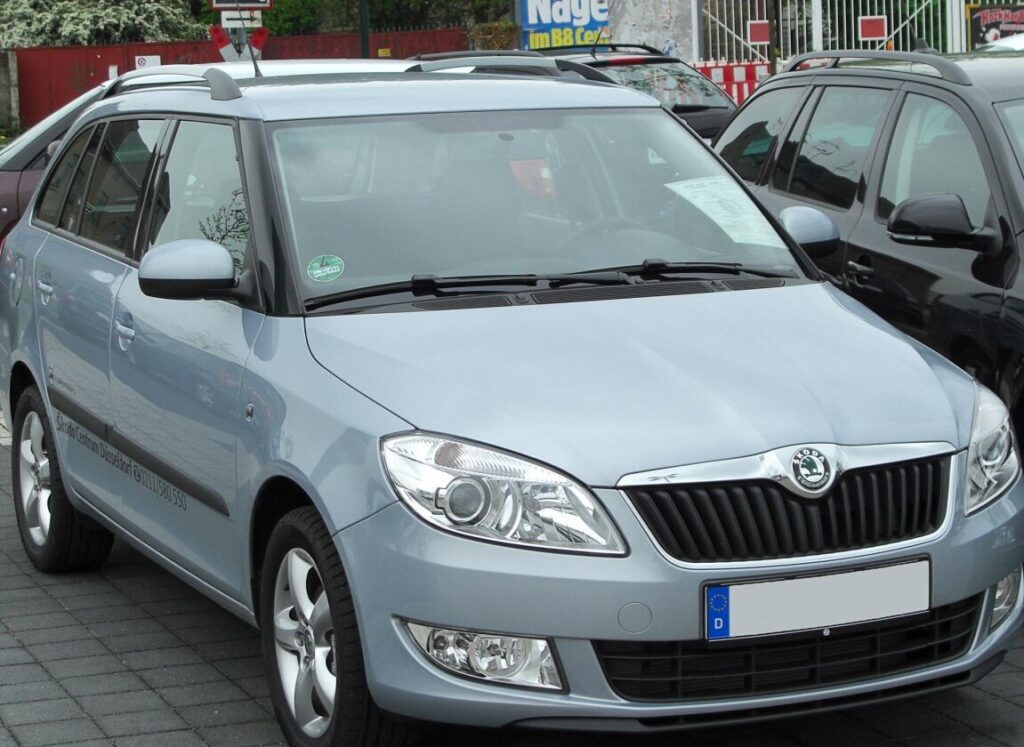
The Skoda Fabia II Combi RS 1.4 TSI (180 hp) DSG, produced from May 2010 to 2014, represented the performance-oriented variant of Skoda’s compact estate car. Positioned as the flagship of the Fabia II Combi range after the facelift, it aimed to deliver a sporty driving experience combined with the practicality of a station wagon. This model was a key part of Skoda’s strategy to broaden its appeal beyond value-focused buyers, offering a more engaging alternative within the highly competitive European small car segment. It built upon the foundation of the Fabia II platform (1HX0/A3), known for its robust engineering and spacious interior.
Technical Specifications
| Brand | Skoda |
| Model | Fabia |
| Generation | Fabia II Combi (facelift 2010) |
| Type (Engine) | RS 1.4 TSI (180 Hp) DSG |
| Start of production | May, 2010 |
| End of production | 2014 |
| Powertrain Architecture | Internal Combustion engine |
| Body type | Station wagon (estate) |
| Seats | 5 |
| Doors | 5 |
| Fuel consumption (economy) – urban (NEDC) | 7.7 l/100 km (30.5 US mpg, 36.7 UK mpg, 13 km/l) |
| Fuel consumption (economy) – extra urban (NEDC) | 5.2 l/100 km (45.2 US mpg, 54.3 UK mpg, 19.2 km/l) |
| Fuel consumption (economy) – combined (NEDC) | 6.2 l/100 km (37.9 US mpg, 45.6 UK mpg, 16.1 km/l) |
| CO2 emissions (NEDC) | 148 g/km |
| Fuel Type | Petrol (Gasoline) |
| Acceleration 0 – 100 km/h | 7.3 sec |
| Acceleration 0 – 62 mph | 7.3 sec |
| Acceleration 0 – 60 mph | 6.9 sec |
| Maximum speed | 224 km/h (139.19 mph) |
| Emission standard | Euro 5 |
| Weight-to-power ratio | 6.9 kg/Hp, 145.4 Hp/tonne |
| Weight-to-torque ratio | 5 kg/Nm, 201.9 Nm/tonne |
| Power | 180 Hp @ 6200 rpm |
| Power per litre | 129.5 Hp/l |
| Torque | 250 Nm @ 2000-4500 rpm (184.39 lb.-ft. @ 2000-4500 rpm) |
| Engine layout | Front, Transverse |
| Engine Model/Code | EA111 / CAVE |
| Engine displacement | 1390 cm3 (84.82 cu. in.) |
| Number of cylinders | 4 |
| Engine configuration | Inline |
| Cylinder Bore | 76.5 mm (3.01 in.) |
| Piston Stroke | 75.6 mm (2.98 in.) |
| Compression ratio | 10:1 |
| Number of valves per cylinder | 4 |
| Fuel injection system | Direct injection |
| Engine aspiration | Turbocharger, Intercooler |
| Valvetrain | DOHC |
| Engine oil capacity | 3.6 l (3.8 US qt | 3.17 UK qt) |
| Coolant | 5.9 l (6.23 US qt | 5.19 UK qt) |
| Kerb Weight | 1238-1243 kg (2729.32 – 2740.35 lbs.) |
| Max. weight | 1713-1718 kg (3776.52 – 3787.54 lbs.) |
| Max load | 475 kg (1047.2 lbs.) |
| Trunk (boot) space – minimum | 505 l (17.83 cu. ft.) |
| Trunk (boot) space – maximum | 1485 l (52.44 cu. ft.) |
| Fuel tank capacity | 45 l (11.89 US gal | 9.9 UK gal) |
| Max. roof load | 75 kg (165.35 lbs.) |
| Length | 4276 mm (168.35 in.) |
| Width | 1642 mm (64.65 in.) |
| Height | 1494 mm (58.82 in.) |
| Wheelbase | 2464 mm (97.01 in.) |
| Front track | 1423 mm (56.02 in.) |
| Rear (Back) track | 1415 mm (55.71 in.) |
| Ride height (ground clearance) | 129 mm (5.08 in.) |
| Minimum turning circle (turning diameter) | 10 m (32.81 ft.) |
| Drivetrain Architecture | The Internal combustion engine (ICE) drives the front wheels of the vehicle. |
| Drive wheel | Front wheel drive |
| Number of gears and type of gearbox | 7 gears, automatic transmission DSG |
| Front suspension | Independent, type McPherson with coil spring and anti-roll bar |
| Rear suspension | Coil spring, Torsion |
| Front brakes | Ventilated discs |
| Rear brakes | Disc |
| Assisting systems | ABS (Anti-lock braking system) |
| Steering type | Steering rack and pinion |
| Power steering | Electric Steering |
| Tires size | 205/40 R17 |
| Wheel rims size | 7J x 17 |
Powertrain & Engine Architecture
The heart of the Fabia II Combi RS was the EA111 1.4-liter TSI engine, specifically the CAVE code variant. This engine featured direct fuel injection and a turbocharger with an intercooler, enabling it to produce 180 horsepower at 6200 rpm and 250 Nm (184 lb-ft) of torque between 2000 and 4500 rpm. The direct injection system allowed for precise fuel delivery, improving efficiency and reducing emissions. The engine utilized a dual overhead camshaft (DOHC) valvetrain with four valves per cylinder, optimizing gas flow for enhanced performance. The engine’s compact size and lightweight construction contributed to the car’s balanced handling. Paired with the engine was a seven-speed dual-clutch gearbox (DSG), providing quick and seamless gear changes. This transmission was crucial in maximizing the engine’s potential and delivering a responsive driving experience.
Driving Characteristics
The 1.4 TSI DSG powertrain delivered a noticeably more spirited driving experience compared to the lower-powered Fabia Combi variants. Acceleration from 0 to 100 km/h (0-62 mph) took approximately 7.3 seconds, making it one of the quickest cars in its class. The DSG transmission played a significant role in this performance, offering rapid shifts and keeping the engine within its optimal power band. While not as raw or visceral as a traditional manual gearbox, the DSG provided a convenient and efficient way to exploit the engine’s torque. The gear ratios were tuned for a balance between acceleration and fuel economy. Compared to the diesel-powered Fabia models, the RS offered a more linear power delivery and a higher revving engine, appealing to drivers who enjoyed a more engaging driving experience.
Equipment & Trim Levels
The Fabia II Combi RS came generously equipped as standard. Interior features included sport seats upholstered in a unique fabric pattern, a leather-wrapped steering wheel, and aluminum pedals. The dashboard featured RS-specific trim elements and instrumentation. Standard safety equipment included ABS, traction control, and multiple airbags. Optional extras included parking sensors, a navigation system, and climate control. The RS trim was positioned as the premium offering in the Fabia Combi range, reflecting its higher performance and enhanced features.
Chassis & Braking
The Fabia II Combi RS featured a sport-tuned suspension with stiffer springs and dampers compared to the standard Fabia Combi. The front suspension utilized McPherson struts with a coil spring and anti-roll bar, while the rear suspension employed a torsion beam setup. This configuration provided a good balance between handling and ride comfort. The braking system consisted of ventilated discs at the front and solid discs at the rear, providing adequate stopping power for the car’s performance capabilities. The RS also benefited from a slightly lowered ride height, further enhancing its handling characteristics.
Market Reception & Comparison
The Fabia II Combi RS was generally well-received by automotive critics. It was praised for its strong performance, engaging handling, and practical estate car body style. Comparisons were often drawn to other hot hatchbacks and performance estates, such as the Volkswagen Golf GT and the Ford Focus ST. While the Fabia RS offered a competitive level of performance, it was often seen as a more affordable and practical alternative to its rivals. Fuel economy was respectable for a performance car, averaging around 6.2 l/100 km (37.9 US mpg). Reliability was generally good, although some owners reported minor issues with the DSG transmission.
Legacy
The Skoda Fabia II Combi RS 1.4 TSI DSG has become a sought-after model in the used car market. Its combination of performance, practicality, and affordability has made it a popular choice for enthusiasts. The EA111 engine, while known for its potential, requires regular maintenance to ensure long-term reliability. The DSG transmission also benefits from regular fluid changes. Despite its age, the Fabia RS remains a capable and enjoyable car, offering a unique blend of Skoda’s value proposition and sporty driving dynamics. It represents a significant step forward for Skoda in terms of performance and brand image.