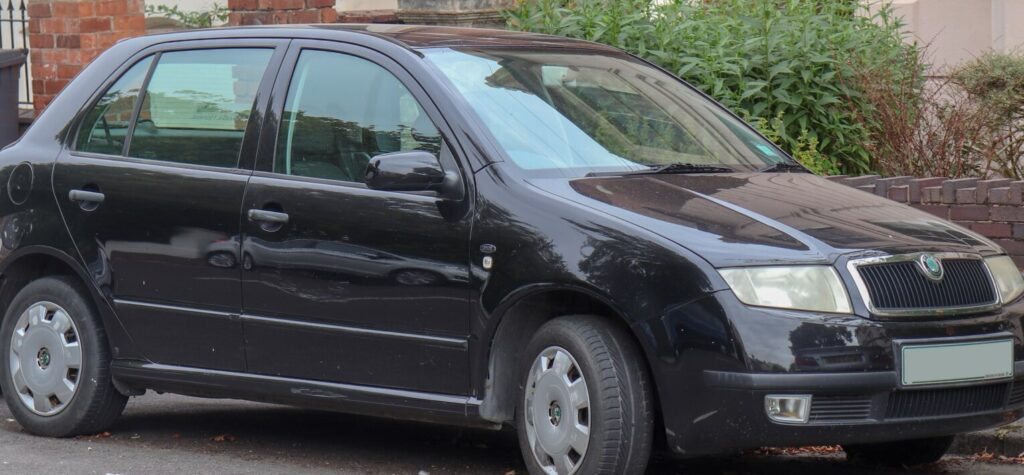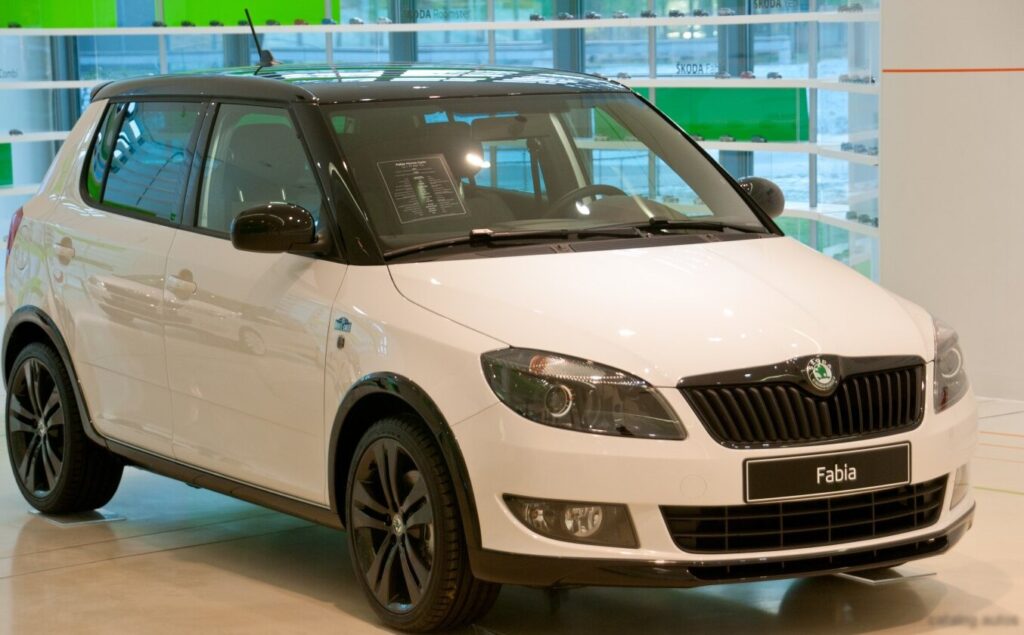
The Skoda Fabia II RS 1.4 TSI (180 hp) DSG, produced from May 2010 to 2014, represented the performance pinnacle of the second-generation Fabia hatchback. Positioned as the range-topping model, it brought a level of sporting intent previously unseen in the Fabia lineup. This variant was part of the facelifted Fabia II series (designated 1HX0/A3), which incorporated styling updates and revised equipment levels. The RS model aimed to appeal to enthusiasts seeking a compact, practical, and relatively affordable hot hatch, primarily targeting the European market where it found its greatest success.
Technical Specifications
| Brand | Skoda |
| Model | Fabia |
| Generation | Fabia II (facelift 2010) |
| Type (Engine) | RS 1.4 TSI (180 Hp) DSG |
| Start of production | May, 2010 |
| End of production | 2014 |
| Powertrain Architecture | Internal Combustion engine |
| Body type | Hatchback |
| Seats | 5 |
| Doors | 5 |
| Fuel consumption (economy) – urban (NEDC) | 7.7 l/100 km (30.5 US mpg, 36.7 UK mpg, 13 km/l) |
| Fuel consumption (economy) – extra urban (NEDC) | 5.2 l/100 km (45.2 US mpg, 54.3 UK mpg, 19.2 km/l) |
| Fuel consumption (economy) – combined (NEDC) | 6.2 l/100 km (37.9 US mpg, 45.6 UK mpg, 16.1 km/l) |
| CO2 emissions (NEDC) | 148 g/km |
| Fuel Type | Petrol (Gasoline) |
| Acceleration 0 – 100 km/h | 7.3 sec |
| Acceleration 0 – 62 mph | 7.3 sec |
| Acceleration 0 – 60 mph | 6.9 sec |
| Maximum speed | 224 km/h (139.19 mph) |
| Emission standard | Euro 5 |
| Weight-to-power ratio | 6.9 kg/Hp, 144.8 Hp/tonne |
| Weight-to-torque ratio | 5 kg/Nm, 201.1 Nm/tonne |
| Power | 180 Hp @ 6200 rpm |
| Power per litre | 129.5 Hp/l |
| Torque | 250 Nm @ 2000-4500 rpm (184.39 lb.-ft. @ 2000-4500 rpm) |
| Engine layout | Front, Transverse |
| Engine Model/Code | EA111 / CAVE |
| Engine displacement | 1390 cm3 (84.82 cu. in.) |
| Number of cylinders | 4 |
| Engine configuration | Inline |
| Cylinder Bore | 76.5 mm (3.01 in.) |
| Piston Stroke | 75.6 mm (2.98 in.) |
| Compression ratio | 10:1 |
| Number of valves per cylinder | 4 |
| Fuel injection system | Direct injection |
| Engine aspiration | Turbocharger, Intercooler |
| Valvetrain | DOHC |
| Engine oil capacity | 3.6 l (3.8 US qt, 3.17 UK qt) |
| Coolant | 5.9 l (6.23 US qt, 5.19 UK qt) |
| Kerb Weight | 1243 kg (2740.35 lbs.) |
| Max. weight | 1718 kg (3787.54 lbs.) |
| Max load | 475 kg (1047.2 lbs.) |
| Trunk (boot) space – minimum | 300 l (10.59 cu. ft.) |
| Trunk (boot) space – maximum | 1163 l (41.07 cu. ft.) |
| Fuel tank capacity | 45 l (11.89 US gal, 9.9 UK gal) |
| Max. roof load | 75 kg (165.35 lbs.) |
| Length | 4029 mm (158.62 in.) |
| Width | 1642 mm (64.65 in.) |
| Height | 1492 mm (58.74 in.) |
| Wheelbase | 2464 mm (97.01 in.) |
| Front track | 1423 mm (56.02 in.) |
| Rear (Back) track | 1415 mm (55.71 in.) |
| Ride height (ground clearance) | 129 mm (5.08 in.) |
| Minimum turning circle (turning diameter) | 10 m (32.81 ft.) |
| Drivetrain Architecture | The Internal combustion engine (ICE) drives the front wheels of the vehicle. |
| Drive wheel | Front wheel drive |
| Number of gears and type of gearbox | 7 gears, automatic transmission DSG |
| Front suspension | Independent, type McPherson with coil spring and anti-roll bar |
| Rear suspension | Coil spring, Torsion |
| Front brakes | Ventilated discs |
| Rear brakes | Disc |
| Assisting systems | ABS (Anti-lock braking system) |
| Steering type | Steering rack and pinion |
| Power steering | Electric Steering |
| Tires size | 205/40 R17 |
| Wheel rims size | 7J x 17 |
INTRODUCTION
The Skoda Fabia II RS 1.4 TSI DSG, launched in 2010, was a significant step forward for Skoda’s performance image. Building upon the already successful Fabia II platform, the RS (Rally Sport) variant introduced a turbocharged engine and a dual-clutch gearbox, offering a compelling blend of performance and practicality. It was positioned above the standard Fabia models, offering a more dynamic driving experience and a sportier aesthetic. The facelifted Fabia II, introduced in 2010, benefited from subtle styling revisions and improved interior materials, further enhancing the RS’s appeal.
Powertrain & Engine Architecture
At the heart of the Fabia RS lies the EA111 1.4-liter turbocharged four-cylinder engine, specifically the CAVE code variant. This engine utilizes direct fuel injection and an intercooled turbocharger to produce 180 horsepower at 6200 rpm and 250 Nm (184 lb-ft) of torque between 2000 and 4500 rpm. The engine features a double overhead camshaft (DOHC) valvetrain with four valves per cylinder. The direct injection system allows for precise fuel delivery, optimizing combustion efficiency and power output. The engine’s compact size and lightweight construction contribute to the car’s overall agility.
The engine is paired with a seven-speed dual-clutch gearbox (DSG). This transmission offers rapid, seamless gear changes, enhancing both acceleration and fuel economy. The DSG operates in both automatic and manual modes, allowing the driver to choose between convenience and control. The transmission’s sophisticated electronic control unit manages gear selection based on driving conditions and driver input.
Driving Characteristics
The Fabia RS 1.4 TSI DSG delivers a surprisingly brisk driving experience. The 0-62 mph (0-100 km/h) sprint takes approximately 7.3 seconds, and it achieves a top speed of 139 mph (224 km/h). While not in the same league as dedicated hot hatches like the Volkswagen Golf GTI, the Fabia RS offers a lively and engaging driving experience. The DSG transmission provides quick and precise shifts, while the turbocharger delivers a noticeable surge of power. The steering is direct and responsive, providing good feedback to the driver. Compared to the standard Fabia models, the RS benefits from a sport-tuned suspension, which reduces body roll and improves handling. Compared to a manual transmission equipped Fabia, the DSG offers smoother shifts but some purists might miss the direct engagement of a manual gearbox.
Equipment & Trim Levels
The Fabia RS came well-equipped as standard, reflecting its position as the flagship model. Key features included sport seats with unique upholstery, a leather-wrapped steering wheel, air conditioning, alloy wheels (typically 17-inch), and a comprehensive safety package including ABS and multiple airbags. Optional extras included a panoramic sunroof, parking sensors, and a more advanced infotainment system. The interior featured a sporty design with aluminum pedals and RS-specific badging. The overall interior quality was a step up from the standard Fabia models, with improved materials and a more refined finish.
Chassis & Braking
The Fabia RS features a McPherson strut front suspension and a torsion beam rear suspension. The suspension was specifically tuned for the RS model, with stiffer springs and dampers to improve handling and reduce body roll. The braking system consists of ventilated front discs and solid rear discs. ABS (Anti-lock Braking System) is standard, providing enhanced braking performance and stability. The chassis was reinforced in key areas to handle the increased power and torque of the 1.4 TSI engine.
Market Reception & Comparison
The Fabia RS was generally well-received by automotive critics. It was praised for its performance, handling, and practicality. However, some reviewers noted that the 1.4 TSI engine, while capable, lacked the character and responsiveness of larger-displacement engines found in some competitors. Compared to other trims in the Fabia lineup, the RS offered a significantly more engaging driving experience. Fuel economy was respectable, averaging around 38 mpg (combined cycle), but slightly lower than the more economical diesel variants. The RS offered a compelling alternative to rivals like the SEAT Ibiza Cupra and the Renault Clio Renaultsport, offering a blend of performance, practicality, and value.
Legacy
The Skoda Fabia II RS 1.4 TSI DSG has proven to be a relatively reliable vehicle, with the EA111 engine generally considered robust. However, like all turbocharged engines, it requires regular maintenance, including oil changes and inspection of the turbocharger and intercooler. The DSG transmission is also known to require periodic servicing. In the used car market, the Fabia RS holds its value reasonably well, particularly well-maintained examples with low mileage. It remains a popular choice for enthusiasts seeking an affordable and enjoyable hot hatch.