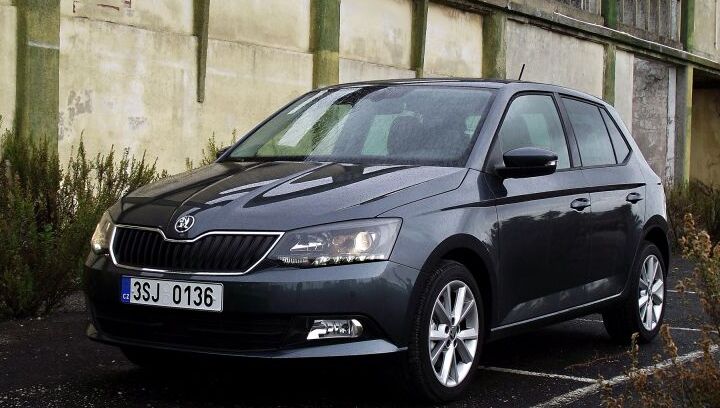
The Skoda Fabia III 1.0, producing 60 horsepower, was a key entry point into the third-generation Fabia lineup, manufactured between 2014 and July 2018. Positioned as the most economical and accessible variant, it played a significant role in attracting budget-conscious buyers, particularly in European markets where smaller, fuel-efficient hatchbacks are highly valued. This model was built on the Volkswagen Group’s PQ25 platform (A05), shared with vehicles like the Volkswagen Polo and SEAT Ibiza, and represented Skoda’s commitment to offering practical, affordable transportation. The 1.0-liter engine was intended to provide a balance between acceptable performance for urban driving and excellent fuel economy.
Technical Specifications
| Brand | Skoda |
| Model | Fabia |
| Generation | Fabia III |
| Type (Engine) | 1.0 (60 Hp) |
| Start of production | 2014 |
| End of production | July, 2018 |
| Powertrain Architecture | Internal Combustion engine |
| Body type | Hatchback |
| Seats | 5 |
| Doors | 5 |
| Fuel consumption (urban) | 5.7 l/100 km (41.3 US mpg, 49.6 UK mpg, 17.5 km/l) |
| Fuel consumption (extra urban) | 4.1 l/100 km (57.4 US mpg, 68.9 UK mpg, 24.4 km/l) |
| Fuel consumption (combined) | 4.7 l/100 km (50 US mpg, 60.1 UK mpg, 21.3 km/l) |
| CO2 emissions | 106 g/km |
| Fuel Type | Petrol (Gasoline) |
| Acceleration 0 – 100 km/h | 15.7 sec |
| Acceleration 0 – 62 mph | 15.7 sec |
| Acceleration 0 – 60 mph | 14.9 sec |
| Maximum speed | 160 km/h (99.42 mph) |
| Emission standard | Euro 6 |
| Weight-to-power ratio | 17.6 kg/Hp, 56.9 Hp/tonne |
| Weight-to-torque ratio | 11.1 kg/Nm, 90 Nm/tonne |
| Power | 60 Hp @ 5000-6000 rpm |
| Power per litre | 60.1 Hp/l |
| Torque | 95 Nm @ 3000-4300 rpm (70.07 lb.-ft. @ 3000-4300 rpm) |
| Engine layout | Front, Transverse |
| Engine Model/Code | EA211 / CHYA |
| Engine displacement | 999 cm3 (60.96 cu. in.) |
| Number of cylinders | 3 |
| Engine configuration | Inline |
| Cylinder Bore | 74.5 mm (2.93 in.) |
| Piston Stroke | 76.4 mm (3.01 in.) |
| Compression ratio | 10.5:1 |
| Fuel injection system | Multi-port manifold injection |
| Engine aspiration | Naturally aspirated engine |
| Valvetrain | DOHC |
| Engine oil capacity | 3.4 l (3.59 US qt | 2.99 UK qt) |
| Kerb Weight | 1055 kg (2325.88 lbs.) |
| Max. weight | 1510 kg (3328.98 lbs.) |
| Max load | 455 kg (1003.1 lbs.) |
| Trunk (boot) space – minimum | 330 l (11.65 cu. ft.) |
| Trunk (boot) space – maximum | 1150 l (40.61 cu. ft.) |
| Fuel tank capacity | 45 l (11.89 US gal | 9.9 UK gal) |
| Length | 3992 mm (157.17 in.) |
| Width | 1732 mm (68.19 in.) |
| Height | 1467 mm (57.76 in.) |
| Wheelbase | 2470 mm (97.24 in.) |
| Front track | 1463 mm (57.6 in.) |
| Rear (Back) track | 1457 mm (57.36 in.) |
| Minimum turning circle | 10.4 m (34.12 ft.) |
| Drivetrain Architecture | Front wheel drive |
| Number of gears | 5 gears, manual transmission |
| Front suspension | Independent, type McPherson with coil spring and anti-roll bar |
| Rear suspension | Semi-independent, coil spring |
| Front brakes | Ventilated discs |
| Rear brakes | Drum |
| Assisting systems | ABS (Anti-lock braking system) |
| Steering type | Steering rack and pinion |
| Power steering | Electric Steering |
| Tires size | 175/70 R14 |
| Wheel rims size | 5J x 14 |
Powertrain & Engine Architecture
The heart of the Fabia III 1.0 was the EA211 engine family, specifically the CHYA code. This 999cc, three-cylinder engine utilized a naturally aspirated configuration, relying on multi-point fuel injection for fuel delivery. The engine featured a double overhead camshaft (DOHC) valvetrain, optimizing gas flow for improved efficiency. The EA211 was designed to be lightweight and compact, contributing to the Fabia’s overall efficiency. The five-speed manual transmission was the only gearbox option available with this engine, chosen for its simplicity and contribution to fuel economy. The engine’s relatively low compression ratio of 10.5:1 was a compromise between efficiency and the ability to run on readily available fuel grades.
Driving Characteristics
The 60 horsepower output of the 1.0-liter engine translated to modest performance. Acceleration from 0-60 mph took approximately 14.9 seconds, and top speed was limited to 99.42 mph. In real-world driving, the engine felt adequate for urban commutes and slower country roads, but struggled when fully loaded or attempting to overtake at higher speeds. The five-speed gearbox was geared for economy, with taller ratios prioritizing fuel efficiency over rapid acceleration. Compared to the more powerful 1.2 TSI or diesel variants, the 1.0-liter felt noticeably slower, but offered a smoother, more linear power delivery. The engine’s small displacement meant it needed to be revved to extract its maximum potential, which could become tiresome on longer journeys.
Equipment & Trim Levels
The 1.0-liter Fabia III typically came in base trim levels, often referred to as ‘S’ or ‘Active’ depending on the specific market. Standard equipment generally included central locking, electric front windows, a basic audio system, and ABS brakes. Safety features like airbags were also standard. Interior upholstery was typically cloth, and the dashboard featured a functional, if somewhat basic, design. Optional extras included air conditioning, alloy wheels, and a more advanced infotainment system. The focus was on providing essential features at an affordable price point.
Chassis & Braking
The Fabia III 1.0 utilized a McPherson strut front suspension and a semi-independent torsion beam rear suspension. This setup provided a comfortable ride quality, suitable for everyday driving. Front brakes were ventilated discs, offering adequate stopping power, while rear brakes were drums, a cost-saving measure common in entry-level models. The electric power steering provided light and easy steering, making it maneuverable in urban environments. Stabilizer bars were present, helping to reduce body roll during cornering, but the overall handling was geared towards comfort rather than sporty dynamics.
Market Reception & Comparison
The Skoda Fabia III 1.0 was generally well-received by critics as an affordable and economical city car. Its fuel economy of around 50 US mpg combined was a major selling point. However, its performance was often criticized as being underpowered, particularly when compared to competitors offering more powerful engines. Compared to the 1.2 TSI variant, the 1.0-liter offered significantly lower performance but a lower purchase price. The diesel variants, while more expensive, provided superior fuel economy and torque. The 1.0-liter appealed to buyers prioritizing low running costs and simplicity over outright performance.
Legacy
The EA211 1.0-liter engine proved to be a relatively reliable unit, with few major mechanical issues reported. The Fabia III 1.0 remains a popular choice in the used car market, particularly for first-time buyers or those seeking an economical runabout. Maintenance costs are generally low, and parts availability is good. While not a performance icon, the Fabia III 1.0 represents a practical and affordable option in the small hatchback segment, demonstrating Skoda’s ability to deliver value for money.