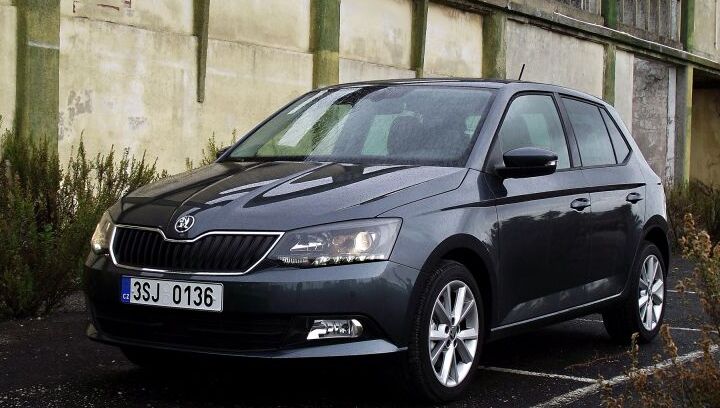
The Skoda Fabia III 1.0 (75 hp) represents an entry-level offering within the third generation of Skoda’s popular supermini, produced from 2014 to July 2018. Positioned as the most economical variant of the Fabia III range, it aimed to provide affordable and practical transportation, particularly in European markets. This model utilized Skoda’s A05 platform (shared with the Volkswagen Polo and SEAT Ibiza) and was designed to appeal to budget-conscious buyers and those prioritizing fuel efficiency. While not a performance-oriented trim, the 1.0-liter engine offered a balance of usability and running costs, making it a common sight in urban environments.
Technical Specifications
| Brand | Skoda |
| Model | Fabia |
| Generation | Fabia III |
| Type (Engine) | 1.0 (75 Hp) |
| Start of production | 2014 |
| End of production | July, 2018 |
| Powertrain Architecture | Internal Combustion engine |
| Body type | Hatchback |
| Seats | 5 |
| Doors | 5 |
| Fuel consumption (urban) | 5.8 l/100 km (40.6 US mpg, 48.7 UK mpg, 17.2 km/l) |
| Fuel consumption (extra urban) | 4.2 l/100 km (56 US mpg, 67.3 UK mpg, 23.8 km/l) |
| Fuel consumption (combined) | 4.8 l/100 km (49 US mpg, 58.9 UK mpg, 20.8 km/l) |
| CO2 emissions | 108 g/km |
| Fuel Type | Petrol (Gasoline) |
| Acceleration 0 – 100 km/h | 14.7 sec |
| Acceleration 0 – 62 mph | 14.7 sec |
| Acceleration 0 – 60 mph | 14 sec |
| Maximum speed | 172 km/h (106.88 mph) |
| Weight-to-power ratio | 14.1 kg/Hp, 71.1 Hp/tonne |
| Weight-to-torque ratio | 11.1 kg/Nm, 90 Nm/tonne |
| Power | 75 Hp @ 6200 rpm |
| Power per litre | 75.1 Hp/l |
| Torque | 95 Nm @ 3000-4300 rpm (70.07 lb.-ft. @ 3000-4300 rpm) |
| Engine layout | Front, Transverse |
| Engine Model/Code | EA211 / CHYB |
| Engine displacement | 999 cm3 (60.96 cu. in.) |
| Number of cylinders | 3 |
| Engine configuration | Inline |
| Cylinder Bore | 74.5 mm (2.93 in.) |
| Piston Stroke | 76.4 mm (3.01 in.) |
| Compression ratio | 10.5:1 |
| Fuel injection system | Multi-port manifold injection |
| Engine aspiration | Naturally aspirated engine |
| Valvetrain | DOHC |
| Engine oil capacity | 3.4 l (3.59 US qt | 2.99 UK qt) |
| Kerb Weight | 1055 kg (2325.88 lbs.) |
| Max. weight | 1510 kg (3328.98 lbs.) |
| Max load | 455 kg (1003.1 lbs.) |
| Trunk (boot) space – minimum | 330 l (11.65 cu. ft.) |
| Trunk (boot) space – maximum | 1150 l (40.61 cu. ft.) |
| Fuel tank capacity | 45 l (11.89 US gal | 9.9 UK gal) |
| Length | 3992 mm (157.17 in.) |
| Width | 1732 mm (68.19 in.) |
| Height | 1467 mm (57.76 in.) |
| Wheelbase | 2470 mm (97.24 in.) |
| Front track | 1463 mm (57.6 in.) |
| Rear (Back) track | 1457 mm (57.36 in.) |
| Minimum turning circle | 10.4 m (34.12 ft.) |
| Drivetrain Architecture | Front wheel drive |
| Number of gears | 5 |
| Gearbox type | Manual transmission |
| Front suspension | Independent, McPherson with coil spring and anti-roll bar |
| Rear suspension | Semi-independent, coil spring |
| Front brakes | Ventilated discs |
| Rear brakes | Drum |
| Assisting systems | ABS (Anti-lock braking system) |
| Steering type | Steering rack and pinion |
| Power steering | Electric |
| Tires size | 175/70 R14 |
| Wheel rims size | 5J x 14 |
Powertrain & Engine Architecture
The heart of the Fabia III 1.0 (75 hp) is the EA211 engine family, specifically the CHYB code. This is a 999cc, three-cylinder, naturally aspirated gasoline engine. The EA211 series represented a significant step forward for Volkswagen Group’s small displacement engines, focusing on reduced friction and weight. The CHYB utilizes a multi-point fuel injection system, delivering fuel directly into the intake ports. The engine features a double overhead camshaft (DOHC) valvetrain, optimizing gas flow for improved efficiency. The engine’s relatively low compression ratio of 10.5:1 contributes to its ability to run on standard gasoline. Paired with this engine was a five-speed manual transmission, chosen for its simplicity and cost-effectiveness. This transmission was a standard unit across several VW Group models, known for its durability but not particularly sporty feel.
Driving Characteristics
The 75 hp output and 95 Nm of torque translate to modest performance. Acceleration from 0-100 km/h (0-62 mph) takes approximately 14.7 seconds, and top speed is around 172 km/h (107 mph). In real-world driving, the 1.0-liter engine feels adequate for city commuting and shorter trips, but struggles when fully loaded or on inclines. The five-speed manual transmission is geared for economy, meaning higher gears are engaged at lower speeds. This contributes to good fuel economy but can require frequent downshifts when overtaking or climbing hills. Compared to the more powerful 1.2 TSI or diesel variants, the 1.0-liter feels noticeably slower and requires more driver involvement to maintain speed. The power delivery is relatively linear, but the three-cylinder engine can be somewhat coarse and vibrate more than larger, four-cylinder engines.
Equipment & Trim Levels
The 1.0 (75 hp) Fabia III typically served as the entry point to the range. Standard equipment generally included central locking, electric front windows, a basic audio system, ABS brakes, and driver and passenger airbags. Interior upholstery was typically cloth, and the dashboard featured a functional but minimalist design. Optional extras included air conditioning, alloy wheels, parking sensors, and a more advanced infotainment system. Higher trim levels, such as the SE and Elegance, added more features as standard, but the 1.0-liter engine remained available as a budget-friendly option even with some of these upgrades.
Chassis & Braking
The Fabia III’s chassis utilizes a McPherson strut front suspension and a semi-independent torsion beam rear suspension. This setup provides a comfortable ride quality, prioritizing everyday usability over sporty handling. The front brakes are ventilated discs, offering adequate stopping power, while the rear brakes are drums, a cost-saving measure common in entry-level models. The steering is electrically assisted, providing light and easy steering feel. Stabilizer bars were fitted to both the front and rear axles, helping to reduce body roll during cornering, although the overall handling characteristics are geared towards comfort and stability rather than dynamic performance.
Market Reception & Comparison
The Skoda Fabia III 1.0 (75 hp) was generally well-received as an affordable and economical city car. Critics praised its fuel efficiency and practicality, but noted its lack of outright performance. Compared to other trims in the Fabia lineup, such as the 1.2 TSI, the 1.0-liter offered significantly lower running costs but at the expense of driving enjoyment. Against competitors like the Volkswagen Polo, SEAT Ibiza, and Ford Fiesta, the Fabia 1.0 offered a compelling value proposition, often undercutting them on price while providing a similar level of practicality and reliability. Fuel economy figures of around 4.8 l/100 km (49 US mpg) were a key selling point.
Legacy
The EA211 engine family, including the CHYB code, has proven to be relatively reliable, although regular maintenance is crucial. Common issues include occasional oil leaks and potential problems with the timing chain on higher-mileage examples. In the used car market, the Fabia III 1.0 (75 hp) remains an affordable option for those seeking a practical and economical supermini. Its simplicity and relatively low running costs make it an attractive choice for first-time car buyers or those on a tight budget. While not a particularly exciting car to drive, its dependability and fuel efficiency have ensured its continued presence on roads throughout Europe.