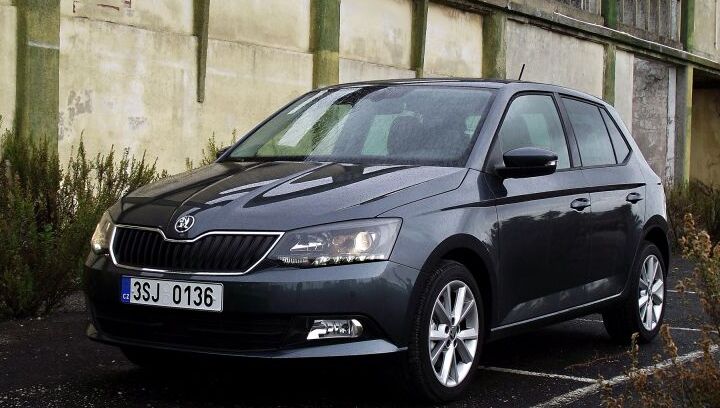
The Skoda Fabia III 1.2 TSI (110 hp) was a popular subcompact hatchback produced between 2014 and 2017, representing a key variant within the third generation Fabia (Typ 5J) lineup. Positioned as a mid-range offering, it aimed to balance fuel efficiency with respectable performance, appealing to buyers seeking a practical and economical daily driver. This model played a significant role in Skoda’s continued expansion within the European market, offering a modern and well-equipped vehicle at a competitive price point. It was built on the Volkswagen Group’s PQ25 platform, shared with models like the Volkswagen Polo and SEAT Ibiza.
Technical Specifications
| Brand | Skoda |
| Model | Fabia |
| Generation | Fabia III |
| Type (Engine) | 1.2 TSI (110 Hp) |
| Start of production | 2014 |
| End of production | 2017 |
| Powertrain Architecture | Internal Combustion engine |
| Body type | Hatchback |
| Seats | 5 |
| Doors | 5 |
| Fuel consumption (urban) | 6.1 l/100 km (38.6 US mpg, 46.3 UK mpg, 16.4 km/l) |
| Fuel consumption (extra urban) | 4 l/100 km (58.8 US mpg, 70.6 UK mpg, 25 km/l) |
| Fuel consumption (combined) | 4.8 l/100 km (49 US mpg, 58.9 UK mpg, 20.8 km/l) |
| CO2 emissions | 110 g/km |
| Fuel Type | Petrol (Gasoline) |
| Acceleration 0 – 100 km/h | 9.4 sec |
| Acceleration 0 – 62 mph | 9.4 sec |
| Acceleration 0 – 60 mph | 8.9 sec |
| Maximum speed | 196 km/h (121.79 mph) |
| Emission standard | Euro 6 |
| Weight-to-power ratio | 10.3 kg/Hp, 97.4 Hp/tonne |
| Weight-to-torque ratio | 6.5 kg/Nm, 155 Nm/tonne |
| Power | 110 Hp @ 4600-5600 rpm |
| Power per litre | 91.9 Hp/l |
| Torque | 175 Nm @ 1400-4000 rpm (129.07 lb.-ft. @ 1400-4000 rpm) |
| Engine layout | Front, Transverse |
| Engine Model/Code | EA211 / CJZD |
| Engine displacement | 1197 cm3 (73.05 cu. in.) |
| Number of cylinders | 4 |
| Engine configuration | Inline |
| Cylinder Bore | 71 mm (2.8 in.) |
| Piston Stroke | 75.6 mm (2.98 in.) |
| Compression ratio | 10.5:1 |
| Fuel injection system | Direct injection |
| Engine aspiration | Turbocharger, Intercooler |
| Valvetrain | DOHC |
| Engine oil capacity | 4 l (4.23 US qt | 3.52 UK qt) |
| Kerb Weight | 1129 kg (2489.02 lbs.) |
| Max. weight | 1584 kg (3492.12 lbs.) |
| Max load | 455 kg (1003.1 lbs.) |
| Trunk (boot) space – minimum | 330 l (11.65 cu. ft.) |
| Trunk (boot) space – maximum | 1150 l (40.61 cu. ft.) |
| Fuel tank capacity | 45 l (11.89 US gal | 9.9 UK gal) |
| Length | 3992 mm (157.17 in.) |
| Width | 1732 mm (68.19 in.) |
| Height | 1467 mm (57.76 in.) |
| Wheelbase | 2470 mm (97.24 in.) |
| Front track | 1457 mm (57.36 in.) |
| Rear (Back) track | 1451 mm (57.13 in.) |
| Minimum turning circle | 10.4 m (34.12 ft.) |
| Drivetrain Architecture | The Internal combustion engine (ICE) drives the front wheels of the vehicle. |
| Drive wheel | Front wheel drive |
| Number of gears | 6 gears, manual transmission |
| Front suspension | Independent, type McPherson with coil spring and anti-roll bar |
| Rear suspension | Semi-independent, coil spring |
| Front brakes | Ventilated discs |
| Rear brakes | Disc |
| Assisting systems | ABS (Anti-lock braking system) |
| Steering type | Steering rack and pinion |
| Power steering | Electric Steering |
| Tires size | 185/60 R15 |
| Wheel rims size | 6J x 15 |
INTRODUCTION
The Skoda Fabia III 1.2 TSI (110 hp) was introduced in 2014 as part of the third-generation Fabia lineup. This variant aimed to provide a balance between performance and economy, making it a popular choice for buyers looking for a practical and affordable hatchback. The 1.2 TSI engine, part of the Volkswagen Group’s EA211 engine family, was a key component in Skoda’s strategy to offer modern, fuel-efficient vehicles. This model sat in the middle of the Fabia III range, offering more power than the base 1.0 MPI engine but remaining more accessible than the higher-spec 1.8 TSI models.
Powertrain & Engine Architecture
At the heart of the Fabia III 1.2 TSI was the EA211 engine code CJZD, a 1.2-liter turbocharged four-cylinder gasoline engine. This engine featured direct fuel injection, a key technology for improving fuel efficiency and reducing emissions. The engine utilized a single turbocharger with an intercooler to boost power output. The valvetrain employed a dual overhead camshaft (DOHC) configuration, optimizing valve timing for improved performance across the rev range. The 1.2 TSI engine produced 110 horsepower at 4600-5600 rpm and 175 Nm (129 lb-ft) of torque between 1400-4000 rpm. The engine was typically paired with a six-speed manual transmission, although a seven-speed dual-clutch transmission (DSG) was also available as an option. The engine’s compact size and lightweight construction contributed to the Fabia’s overall agility.
Driving Characteristics
The 1.2 TSI (110 hp) equipped Fabia offered a noticeable step up in performance compared to the base 1.0 MPI engine. While not a particularly sporty vehicle, it provided sufficient power for everyday driving, including highway overtaking and navigating urban traffic. The turbocharger provided a boost in torque at lower engine speeds, resulting in responsive acceleration. The six-speed manual transmission allowed drivers to effectively manage the engine’s power band. Compared to the more powerful 1.8 TSI, the 1.2 TSI felt less eager to rev, but it offered better fuel economy. The gear ratios were tuned for a balance between acceleration and fuel efficiency, prioritizing usability over outright performance. The steering was light and precise, making the Fabia easy to maneuver in tight spaces.
Equipment & Trim Levels
The Fabia III 1.2 TSI (110 hp) was typically offered in several trim levels, including Active, Ambition, and Elegance. The Active trim served as the entry-level option, featuring standard equipment such as air conditioning, power windows, and a basic audio system. The Ambition trim added features like alloy wheels, front fog lights, and a multi-function steering wheel. The top-of-the-line Elegance trim included features such as climate control, parking sensors, and a more advanced infotainment system. Optional extras included a panoramic sunroof, leather upholstery, and a navigation system. Interior upholstery typically consisted of fabric seats, with higher trims offering upgraded materials and designs. The dashboard layout was modern and functional, with a clear instrument cluster and intuitive controls.
Chassis & Braking
The Fabia III utilized a McPherson strut front suspension and a semi-independent torsion beam rear suspension. This setup provided a comfortable ride quality while maintaining decent handling characteristics. The front brakes were ventilated discs, while the rear brakes were solid discs. Anti-lock Braking System (ABS) was standard equipment. The suspension was tuned to prioritize comfort over sporty handling, resulting in a smooth ride on most road surfaces. The steering was electrically assisted, providing light and precise steering feel. The chassis was designed to be lightweight, contributing to the Fabia’s overall agility and fuel efficiency.
Market Reception & Comparison
The Skoda Fabia III 1.2 TSI (110 hp) received generally positive reviews from automotive critics. It was praised for its fuel efficiency, comfortable ride, and spacious interior. Critics noted that the 1.2 TSI engine provided adequate performance for most drivers, but some found it to be slightly underpowered compared to competitors. Compared to the 1.0 MPI engine, the 1.2 TSI offered a significant improvement in performance. Compared to the 1.8 TSI, it offered better fuel economy but less power. The Fabia III 1.2 TSI was often compared to rivals such as the Volkswagen Polo, SEAT Ibiza, and Ford Fiesta. It generally offered a better value proposition than its competitors, providing a similar level of equipment and performance at a lower price point.
Legacy
The EA211 1.2 TSI engine, while generally reliable, has been known to exhibit some issues related to carbon buildup on the intake valves, particularly in vehicles that primarily see short trips. Regular servicing and the use of quality fuel can help mitigate this issue. The Fabia III 1.2 TSI remains a popular choice in the used car market, offering a practical and affordable option for buyers seeking a reliable hatchback. Its fuel efficiency and relatively low running costs make it an attractive option for daily commuting. The model helped solidify Skoda’s reputation for building well-engineered and value-for-money vehicles.