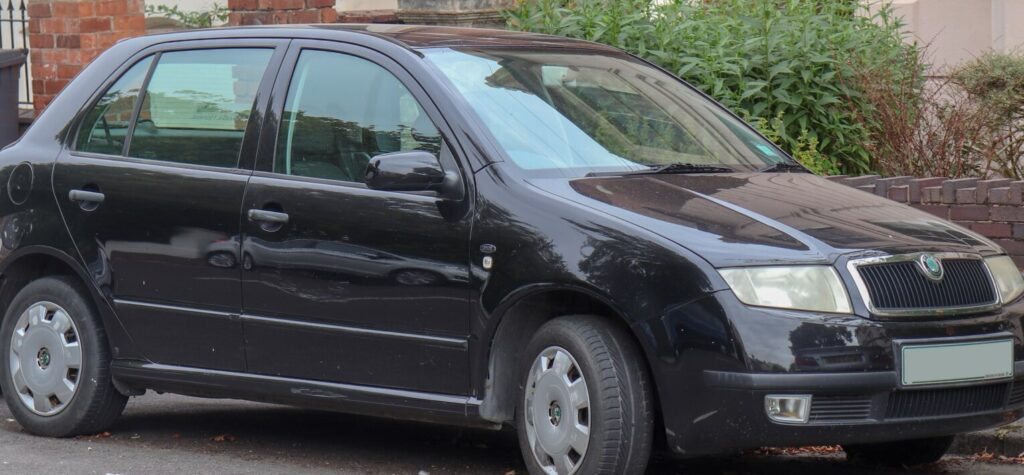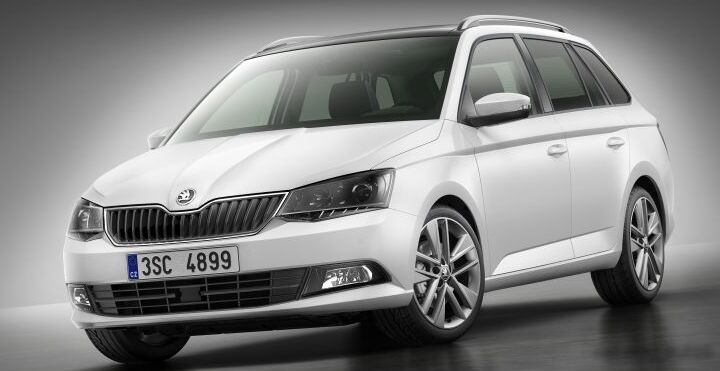
The Skoda Fabia III Combi 1.0 TSI (110 hp) was a front-wheel-drive, five-door station wagon produced from 2017 to July 2018. Positioned as a mid-range offering within the Fabia III Combi lineup, it aimed to provide a balance of fuel efficiency, practicality, and reasonable performance for family buyers. This variant was part of the broader Fabia III generation (introduced in 2014), which utilized the Volkswagen Group’s A05 (PQ25) platform, also known as the 1HX0 platform. The Combi body style, or estate as it’s known in some markets, offered significantly increased cargo capacity compared to the hatchback version, making it a popular choice for those needing extra space.
Technical Specifications
| Brand | Skoda |
| Model | Fabia |
| Generation | Fabia III Combi |
| Type (Engine) | 1.0 TSI (110 Hp) |
| Start of production | 2017 |
| End of production | July, 2018 |
| Powertrain Architecture | Internal Combustion engine |
| Body type | Station wagon (estate) |
| Seats | 5 |
| Doors | 5 |
| Fuel consumption (urban) | 5.4 l/100 km (43.6 US mpg, 52.3 UK mpg, 18.5 km/l) |
| Fuel consumption (extra urban) | 3.9 l/100 km (60.3 US mpg, 72.4 UK mpg, 25.6 km/l) |
| Fuel consumption (combined) | 4.4 l/100 km (53.5 US mpg, 64.2 UK mpg, 22.7 km/l) |
| CO2 emissions | 103 g/km |
| Fuel Type | Petrol (Gasoline) |
| Acceleration 0 – 100 km/h | 9.6 sec |
| Acceleration 0 – 62 mph | 9.6 sec |
| Acceleration 0 – 60 mph | 9.1 sec |
| Maximum speed | 199 km/h (123.65 mph) |
| Emission standard | Euro 6 |
| Weight-to-power ratio | 9.8 kg/Hp, 101.9 Hp/tonne |
| Weight-to-torque ratio | 5.4 kg/Nm, 185.4 Nm/tonne |
| Power | 110 Hp @ 5000-5500 rpm |
| Power per litre | 110.1 Hp/l |
| Torque | 200 Nm @ 2000-3500 rpm (147.51 lb.-ft. @ 2000-3500 rpm) |
| Engine layout | Front, Transverse |
| Engine Model/Code | EA211 / CHZC |
| Engine displacement | 999 cm3 (60.96 cu. in.) |
| Number of cylinders | 3 |
| Engine configuration | Inline |
| Cylinder Bore | 74.5 mm (2.93 in.) |
| Piston Stroke | 76.4 mm (3.01 in.) |
| Compression ratio | 10.3:1 |
| Number of valves per cylinder | 4 |
| Fuel injection system | Direct injection |
| Engine aspiration | Turbocharger, Intercooler |
| Valvetrain | DOHC |
| Engine oil capacity | 4 l (4.23 US qt | 3.52 UK qt) |
| Kerb Weight | 1079 kg (2378.79 lbs.) |
| Max. weight | 1609 kg (3547.24 lbs.) |
| Max load | 530 kg (1168.45 lbs.) |
| Trunk (boot) space – minimum | 530 l (18.72 cu. ft.) |
| Trunk (boot) space – maximum | 1395 l (49.26 cu. ft.) |
| Fuel tank capacity | 45 l (11.89 US gal | 9.9 UK gal) |
| Max. roof load | 75 kg (165.35 lbs.) |
| Permitted trailer load with brakes (12%) | 1100 kg (2425.08 lbs.) |
| Permitted trailer load without brakes | 570 kg (1256.63 lbs.) |
| Length | 4257 mm (167.6 in.) |
| Width | 1732 mm (68.19 in.) |
| Height | 1467 mm (57.76 in.) |
| Wheelbase | 2470 mm (97.24 in.) |
| Front track | 1457 mm (57.36 in.) |
| Rear (Back) track | 1451 mm (57.13 in.) |
| Minimum turning circle | 10.4 m (34.12 ft.) |
| Drivetrain Architecture | Front wheel drive |
| Number of gears and type of gearbox | 6 gears, manual transmission |
| Front brakes | Ventilated discs |
| Rear brakes | Disc |
| Tires size | 185/60 R15 H |
| Wheel rims size | 6J x 15 |
Powertrain & Engine Architecture
The heart of the Fabia III Combi 1.0 TSI was the EA211 engine family, specifically the CHZC code. This 999cc, three-cylinder turbocharged gasoline engine represented a shift towards smaller displacement, forced-induction engines for improved fuel economy. The engine featured direct fuel injection, delivering fuel directly into the combustion chamber for precise control and increased efficiency. A single scroll turbocharger with an intercooler boosted power output, providing 110 horsepower at 5000-5500 rpm and 200 Nm (147.51 lb-ft) of torque between 2000-3500 rpm. The engine utilized a double overhead camshaft (DOHC) valvetrain with four valves per cylinder. The 6-speed manual transmission was standard, offering a good balance between fuel efficiency and driver engagement. While a 7-speed DSG dual-clutch automatic transmission was available on other Fabia trims, it wasn’t offered with this specific 110 hp engine.
Driving Characteristics
The 1.0 TSI engine in the Fabia Combi provided adequate, though not exhilarating, performance. Acceleration from 0-60 mph took approximately 9.1 seconds, and top speed was around 123.65 mph. The turbocharger provided a noticeable boost in power during acceleration, but the engine could feel somewhat strained at higher speeds or when fully loaded. The manual transmission’s gear ratios were well-matched to the engine’s torque curve, allowing for relatively smooth and efficient cruising. Compared to the more powerful 1.2 TSI or diesel variants, the 1.0 TSI felt less responsive, particularly during overtaking maneuvers. However, it offered a more refined driving experience than the base 1.0 MPI naturally aspirated engine.
Equipment & Trim Levels
The 1.0 TSI 110 hp Combi typically came equipped with features such as air conditioning, electric front windows, a basic audio system with USB connectivity, and steel wheels with wheel covers. Higher trim levels, such as SE or Elegance, added features like alloy wheels, a touchscreen infotainment system with Apple CarPlay and Android Auto, rear parking sensors, and cruise control. Interior upholstery was typically cloth, with a functional and durable design. Optional extras included a panoramic sunroof, heated front seats, and a navigation system.
Chassis & Braking
The Fabia III Combi featured a MacPherson strut front suspension and a torsion beam rear suspension. This setup provided a comfortable ride quality, although it wasn’t particularly sporty. The front brakes were ventilated discs, while the rear brakes were solid discs. ABS (Anti-lock Braking System) was standard. The suspension was tuned for comfort and practicality, prioritizing ride quality over handling precision. Stabilizer bars were fitted to both the front and rear axles to reduce body roll during cornering.
Market Reception & Comparison
The Skoda Fabia III Combi 1.0 TSI was generally well-received by automotive critics as a practical and fuel-efficient family car. Its combined fuel economy of around 53.5 US mpg was a major selling point. Compared to the 1.2 TSI variant, the 1.0 TSI offered similar fuel economy but with slightly less power. The diesel variants (1.4 TDI and 1.6 TDI) provided superior fuel economy and torque but came with the higher running costs associated with diesel engines. The 1.0 TSI offered a good compromise for buyers who wanted a balance of efficiency and affordability.
Legacy
The EA211 1.0 TSI engine has proven to be a relatively reliable powertrain, although some owners have reported issues with the timing chain. Regular maintenance, including oil changes and timing chain inspections, is crucial for long-term reliability. On the used car market, the Fabia III Combi 1.0 TSI represents a good value proposition, offering a spacious interior, good fuel economy, and a reasonable price. Its simplicity and relatively low running costs make it an attractive option for budget-conscious buyers.