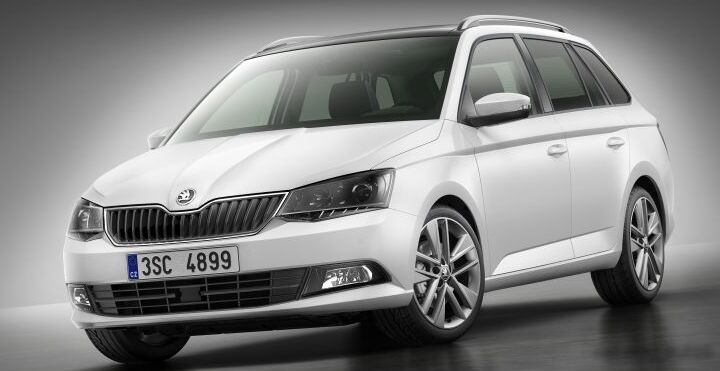
The Skoda Fabia III Combi 1.0 TSI (95 hp) was a front-wheel-drive, five-door station wagon produced between 2017 and July 2018. Positioned as an entry-level to mid-range offering within the broader Fabia III Combi lineup, it represented Skoda’s attempt to provide an affordable and fuel-efficient option in the European small-family car segment. This variant utilized a downsized turbocharged engine paired with a five-speed manual transmission, prioritizing economy over outright performance. It was built on the Volkswagen Group’s A05 (PQ25) platform, also known as the 1HX0/A3 platform, shared with models like the Volkswagen Polo and SEAT Ibiza.
Technical Specifications
| Brand | Skoda |
| Model | Fabia |
| Generation | Fabia III Combi |
| Type (Engine) | 1.0 TSI (95 Hp) |
| Start of production | 2017 |
| End of production | July, 2018 |
| Powertrain Architecture | Internal Combustion engine |
| Body type | Station wagon (estate) |
| Seats | 5 |
| Doors | 5 |
| Fuel consumption (urban) | 5.2 l/100 km (45.2 US mpg, 54.3 UK mpg, 19.2 km/l) |
| Fuel consumption (extra urban) | 3.9 l/100 km (60.3 US mpg, 72.4 UK mpg, 25.6 km/l) |
| Fuel consumption (combined) | 4.4 l/100 km (53.5 US mpg, 64.2 UK mpg, 22.7 km/l) |
| CO2 emissions | 101 g/km |
| Fuel Type | Petrol (Gasoline) |
| Acceleration 0 – 100 km/h | 10.8 sec |
| Acceleration 0 – 62 mph | 10.8 sec |
| Acceleration 0 – 60 mph | 10.3 sec |
| Maximum speed | 187 km/h (116.2 mph) |
| Emission standard | Euro 6 |
| Weight-to-power ratio | 11.1 kg/Hp, 89.7 Hp/tonne |
| Weight-to-torque ratio | 6.6 kg/Nm, 151.1 Nm/tonne |
| Power | 95 Hp @ 5000-5500 rpm |
| Power per litre | 95.1 Hp/l |
| Torque | 160 Nm @ 1500-3500 rpm (118.01 lb.-ft. @ 1500-3500 rpm) |
| Engine layout | Front, Transverse |
| Engine Model/Code | EA211 / CHZB |
| Engine displacement | 999 cm3 (60.96 cu. in.) |
| Number of cylinders | 3 |
| Engine configuration | Inline |
| Cylinder Bore | 74.5 mm (2.93 in.) |
| Piston Stroke | 76.4 mm (3.01 in.) |
| Compression ratio | 10.3:1 |
| Number of valves per cylinder | 4 |
| Fuel injection system | Direct injection |
| Engine aspiration | Turbocharger, Intercooler |
| Valvetrain | DOHC |
| Engine oil capacity | 4 l (4.23 US qt | 3.52 UK qt) |
| Kerb Weight | 1059 kg (2334.7 lbs.) |
| Max. weight | 1589 kg (3503.15 lbs.) |
| Max load | 530 kg (1168.45 lbs.) |
| Trunk (boot) space – minimum | 530 l (18.72 cu. ft.) |
| Trunk (boot) space – maximum | 1395 l (49.26 cu. ft.) |
| Fuel tank capacity | 45 l (11.89 US gal | 9.9 UK gal) |
| Max. roof load | 75 kg (165.35 lbs.) |
| Permitted trailer load with brakes (12%) | 1000 kg (2204.62 lbs.) |
| Permitted trailer load without brakes | 560 kg (1234.59 lbs.) |
| Length | 4257 mm (167.6 in.) |
| Width | 1732 mm (68.19 in.) |
| Height | 1467 mm (57.76 in.) |
| Wheelbase | 2470 mm (97.24 in.) |
| Front track | 1463 mm (57.6 in.) |
| Rear (Back) track | 1457 mm (57.36 in.) |
| Minimum turning circle | 10.4 m (34.12 ft.) |
| Drivetrain Architecture | Front wheel drive |
| Number of gears and type of gearbox | 5 gears, manual transmission |
| Front brakes | Ventilated discs |
| Rear brakes | Disc |
| Tires size | 185/60 R15 H |
| Wheel rims size | 6J x 15 |
Powertrain & Engine Architecture
The heart of the Fabia Combi 1.0 TSI was the EA211 engine family, specifically the CHZB code. This 999cc, three-cylinder engine featured direct fuel injection and a single turbocharger with an intercooler. The direct injection system allowed for precise fuel delivery, contributing to both efficiency and reduced emissions. The engine utilized a dual overhead camshaft (DOHC) valvetrain with four valves per cylinder, optimizing gas flow for improved performance. The five-speed manual transmission was chosen to complement the engine’s torque characteristics and maintain affordability. Unlike some higher-spec Fabias, this variant did not offer an automatic transmission option.
Driving Characteristics
The 95 hp 1.0 TSI engine in the Fabia Combi provided adequate, but not exhilarating, performance. Acceleration from 0-60 mph took around 10.3 seconds, and top speed was 116.2 mph. The engine’s peak torque of 160 Nm (118 lb-ft) was available from 1500-3500 rpm, providing reasonable responsiveness in everyday driving situations. However, compared to the 1.2 TSI or diesel variants, this engine felt less powerful, particularly when fully loaded or tackling steep inclines. The five-speed gearbox was well-matched to the engine, but the relatively long gearing emphasized fuel economy over spirited acceleration. The driving experience was generally comfortable, with a focus on practicality and ease of use.
Equipment & Trim Levels
The 1.0 TSI 95 hp Fabia Combi typically came with a reasonable level of standard equipment. This included air conditioning, electric front windows, a basic audio system with USB connectivity, and ABS brakes. Safety features like ESC (Electronic Stability Control) were also standard. Higher trim levels, such as SE or Elegance, added features like alloy wheels, cruise control, parking sensors, and a more advanced infotainment system. Interior upholstery was typically cloth, with a functional and durable design. Optional extras included a panoramic sunroof, heated seats, and a navigation system.
Chassis & Braking
The Fabia Combi 1.0 TSI utilized a MacPherson strut front suspension and a torsion beam rear suspension. This setup provided a good balance between ride comfort and handling. The front brakes were ventilated discs, while the rear brakes were solid discs. ABS (Anti-lock Braking System) was standard, enhancing braking performance and safety. The suspension was tuned for comfort, prioritizing a smooth ride over sporty handling. Stabilizer bars were fitted to both the front and rear axles to reduce body roll during cornering.
Market Reception & Comparison
The Skoda Fabia Combi 1.0 TSI was generally well-received by automotive critics as a practical and affordable family car. Its fuel economy of around 53.5 US mpg combined was a major selling point. However, some reviewers noted that the engine lacked the punch of its larger counterparts. Compared to the 1.2 TSI, the 1.0 TSI offered slightly better fuel economy but less power. The diesel variants (1.6 TDI) provided even better fuel economy but came with a higher purchase price and potential concerns about diesel emissions. The Fabia Combi 1.0 TSI competed with other small-family estate cars like the Dacia Logan MCV and the SEAT Ibiza ST.
Legacy
The EA211 1.0 TSI engine has proven to be a relatively reliable powertrain, although some early examples experienced issues with timing chain tensioners. Regular maintenance, including oil changes and timing chain inspections, is crucial for long-term reliability. In the used car market, the Fabia Combi 1.0 TSI represents a good value proposition for buyers seeking an affordable and economical estate car. Its simple mechanicals and readily available parts contribute to relatively low running costs. While not the most exciting car to drive, it remains a practical and dependable choice for families and individuals needing a versatile and fuel-efficient vehicle.