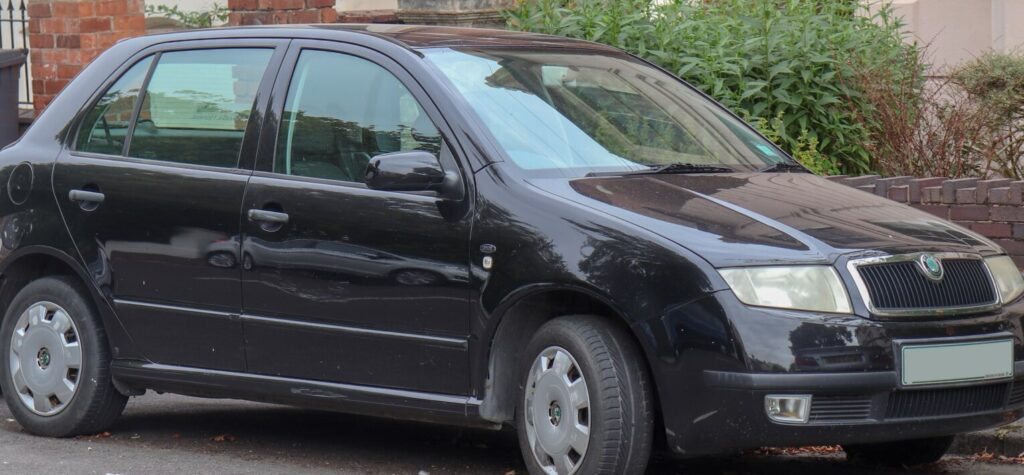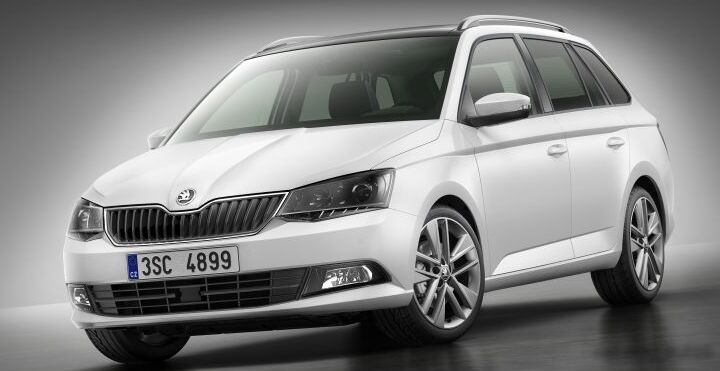
The Skoda Fabia III Combi 1.4 TDI (90 hp) was a popular variant of Skoda’s third-generation Fabia, a subcompact car produced from 2014 to 2018. Positioned as an economical and practical option within the Fabia Combi (estate/wagon) lineup, it catered to buyers prioritizing fuel efficiency and affordability. This model occupied the lower to mid-range of the available trims, offering a balance between cost and functionality. It was primarily sold in European markets, where diesel-powered small cars were highly sought after due to favorable taxation and fuel costs.
Technical Specifications
| Brand | Skoda |
| Model | Fabia |
| Generation | Fabia III Combi |
| Type (Engine) | 1.4 TDI (90 Hp) |
| Start of production | 2014 |
| End of production | July, 2018 |
| Powertrain Architecture | Internal Combustion engine |
| Body type | Station wagon (estate) |
| Seats | 5 |
| Doors | 5 |
| Fuel consumption (urban) | 4 l/100 km (58.8 US mpg, 70.6 UK mpg, 25 km/l) |
| Fuel consumption (extra urban) | 3.1 l/100 km (75.9 US mpg, 91.1 UK mpg, 32.3 km/l) |
| Fuel consumption (combined) | 3.4 l/100 km (69.2 US mpg, 83.1 UK mpg, 29.4 km/l) |
| CO2 emissions | 89 g/km |
| Fuel Type | Diesel |
| Acceleration 0 – 100 km/h | 11.3 sec |
| Acceleration 0 – 62 mph | 11.3 sec |
| Acceleration 0 – 60 mph | 10.7 sec |
| Maximum speed | 184 km/h (114.33 mph) |
| Emission standard | Euro 6 |
| Weight-to-power ratio | 13.1 kg/Hp, 76.3 Hp/tonne |
| Weight-to-torque ratio | 5.1 kg/Nm, 194.9 Nm/tonne |
| Power | 90 Hp @ 3000-3250 rpm |
| Power per litre | 63.3 Hp/l |
| Torque | 230 Nm @ 1750-2500 rpm (169.64 lb.-ft. @ 1750-2500 rpm) |
| Engine layout | Front, Transverse |
| Engine Model/Code | EA288 / CUSB |
| Engine displacement | 1422 cm3 (86.78 cu. in.) |
| Number of cylinders | 3 |
| Engine configuration | Inline |
| Cylinder Bore | 79.5 mm (3.13 in.) |
| Piston Stroke | 95.5 mm (3.76 in.) |
| Compression ratio | 16.2:1 |
| Fuel injection system | Diesel Commonrail |
| Engine aspiration | Turbocharger, Intercooler |
| Valvetrain | DOHC |
| Engine oil capacity | 4.1 l (4.33 US qt | 3.61 UK qt) |
| Kerb Weight | 1180 kg (2601.45 lbs.) |
| Max. weight | 1635 kg (3604.56 lbs.) |
| Max load | 455 kg (1003.1 lbs.) |
| Trunk (boot) space – minimum | 530 l (18.72 cu. ft.) |
| Trunk (boot) space – maximum | 1395 l (49.26 cu. ft.) |
| Fuel tank capacity | 45 l (11.89 US gal | 9.9 UK gal) |
| Length | 4257 mm (167.6 in.) |
| Width | 1732 mm (68.19 in.) |
| Height | 1467 mm (57.76 in.) |
| Wheelbase | 2470 mm (97.24 in.) |
| Front track | 1463 mm (57.6 in.) |
| Rear (Back) track | 1457 mm (57.36 in.) |
| Minimum turning circle | 10.4 m (34.12 ft.) |
| Drivetrain Architecture | Front wheel drive |
| Number of gears | 5 |
| Gearbox type | Manual transmission |
| Front suspension | Independent, type McPherson with coil spring and anti-roll bar |
| Rear suspension | Semi-independent, coil spring |
| Front brakes | Ventilated discs |
| Rear brakes | Drum |
| Assisting systems | ABS (Anti-lock braking system) |
| Steering type | Steering rack and pinion |
| Power steering | Electric Steering |
| Tires size | 175/70 R14 |
| Wheel rims size | 5J x 14 |
Powertrain & Engine Architecture
The Fabia III Combi 1.4 TDI (90 hp) utilized the Volkswagen Group’s EA288 engine family, specifically the CUSB code. This was a three-cylinder, 1.4-liter diesel engine. The EA288 represented a significant step forward in diesel engine technology, incorporating features designed to reduce emissions and improve fuel economy. It employed a common rail direct injection system, delivering fuel directly into the combustion chamber at extremely high pressure. This system, coupled with a turbocharger and intercooler, allowed for a good balance of power and efficiency. The engine featured a double overhead camshaft (DOHC) valvetrain, optimizing gas flow for improved performance. The five-speed manual transmission was the standard offering for this variant, chosen for its simplicity and contribution to fuel savings. The engine’s relatively small displacement and three-cylinder configuration resulted in inherent vibrations, which were mitigated through engine mounts and balancing shafts.
Driving Characteristics
The 1.4 TDI 90 hp engine, paired with the five-speed manual transmission, provided adequate, though not exhilarating, performance. Acceleration from 0-60 mph took around 10.7 seconds, and top speed was approximately 114 mph. The engine’s peak torque of 230 Nm (169.64 lb-ft) was available from 1750-2500 rpm, making it reasonably responsive in everyday driving situations. However, compared to higher-output versions of the Fabia, such as those with the 1.2 TSI petrol engine, the 1.4 TDI felt noticeably slower, particularly when fully loaded or climbing hills. The gear ratios were tuned for economy rather than outright performance, meaning the engine often needed to be revved to maintain speed. The manual transmission offered precise shifts, but the clutch pedal could feel slightly heavy during prolonged use. Overall, the driving experience was characterized by its practicality and fuel efficiency, rather than sporty dynamics.
Equipment & Trim Levels
The 1.4 TDI (90 hp) Combi typically came with a reasonable level of standard equipment. This included central locking, electric front windows, a basic audio system with USB connectivity, and ABS brakes. Air conditioning was often an optional extra, as were alloy wheels and parking sensors. Interior upholstery was typically cloth, with a functional, if somewhat basic, dashboard layout. Higher trim levels offered upgrades such as a touchscreen infotainment system, automatic climate control, and more premium interior materials. Safety features included driver and passenger airbags, and stability control. The Fabia Combi was designed to be a practical family car, and the equipment levels reflected this, prioritizing functionality and value for money.
Chassis & Braking
The Fabia III Combi’s chassis was designed to provide a comfortable ride and predictable handling. The front suspension utilized a McPherson strut setup with a coil spring and anti-roll bar, while the rear suspension was a semi-independent torsion beam arrangement. This configuration offered a good compromise between ride comfort and handling stability. The braking system featured ventilated discs on the front wheels and drum brakes on the rear. While adequate for everyday use, the rear drum brakes were a cost-saving measure and didn’t offer the same stopping power as disc brakes. The electric power steering provided light and easy steering, making it well-suited for urban driving.
Market Reception & Comparison
The Skoda Fabia III Combi 1.4 TDI (90 hp) was generally well-received by automotive critics as a practical and economical choice. Its fuel economy was a major selling point, consistently achieving around 69 mpg on the combined cycle. However, some reviewers criticized its lack of outright performance and the somewhat basic interior. Compared to other trims in the Fabia lineup, such as the 1.2 TSI petrol versions, the 1.4 TDI offered superior fuel economy but less power. Against competitors like the Volkswagen Polo Estate and the Renault Clio Estate, the Fabia Combi offered a compelling combination of space, economy, and value for money. Reliability was generally good, with the EA288 engine proving to be a durable unit when properly maintained.
Legacy
The Skoda Fabia III Combi 1.4 TDI (90 hp) remains a popular choice on the used car market, particularly for buyers seeking an affordable and fuel-efficient estate car. The EA288 engine has proven to be relatively reliable, although regular servicing and attention to the diesel particulate filter (DPF) are essential. The DPF, designed to reduce emissions, can become clogged if the car is primarily used for short journeys. Overall, this variant of the Fabia Combi represents a sensible and practical option for those prioritizing economy and functionality over outright performance.