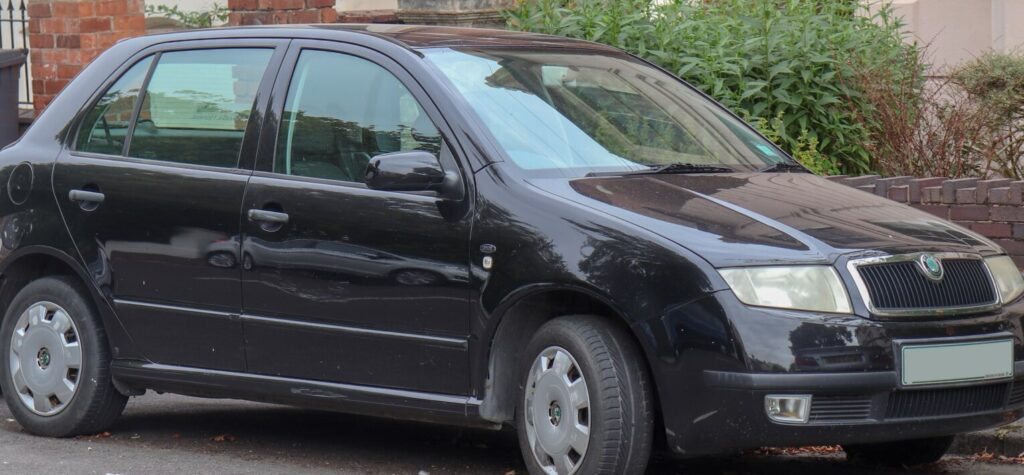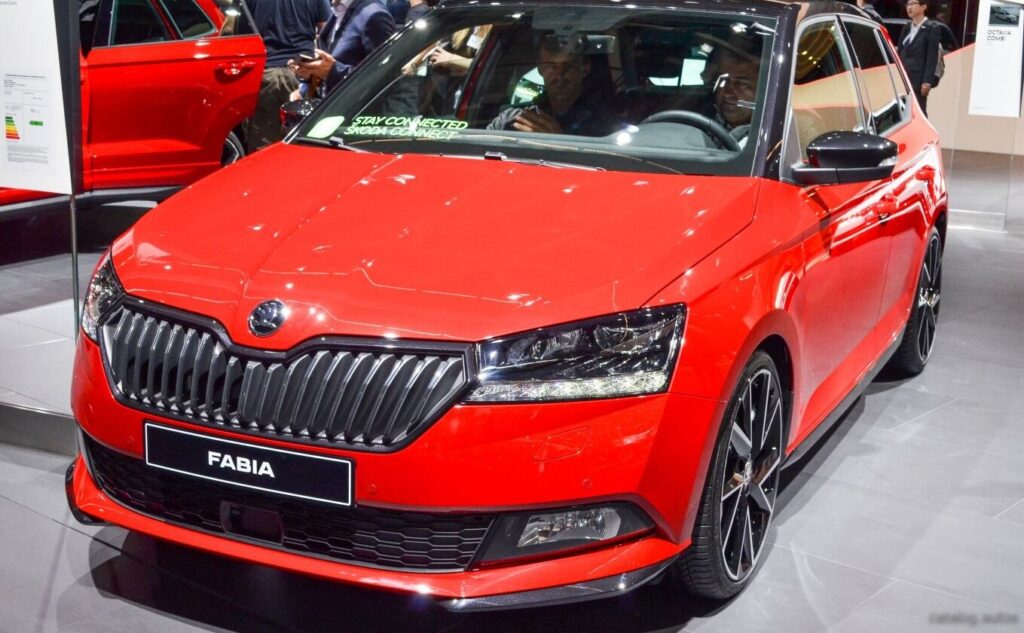
The Skoda Fabia III (facelift, introduced in July 2018) 1.0 TSI 110 horsepower with a 7-speed Dual Clutch Gearbox (DSG) represents a significant iteration within the third generation of Skoda’s popular supermini. Produced through November 2020, this variant occupied a key position in the Fabia lineup, offering a balance between fuel efficiency, performance, and modern technology. It was designed to appeal to buyers seeking a practical, well-equipped hatchback with a more refined driving experience than the base engine options. The Fabia III itself is based on the Volkswagen Group’s PQ25 platform (A05), shared with models like the Volkswagen Polo and SEAT Ibiza.
Technical Specifications
| Brand | Skoda |
| Model | Fabia |
| Generation | Fabia III (facelift 2018) |
| Type (Engine) | 1.0 TSI (110 Hp) DSG |
| Start of production | July, 2018 |
| End of production | November, 2020 |
| Powertrain Architecture | Internal Combustion engine |
| Body type | Hatchback |
| Seats | 5 |
| Doors | 5 |
| Fuel consumption (urban) | 5.3 l/100 km (44.4 US mpg, 53.3 UK mpg, 18.9 km/l) |
| Fuel consumption (extra urban) | 4.3 l/100 km (54.7 US mpg, 65.7 UK mpg, 23.3 km/l) |
| Fuel consumption (combined) | 4.7 l/100 km (50 US mpg, 60.1 UK mpg, 21.3 km/l) |
| CO2 emissions | 106 g/km |
| Fuel Type | Petrol (Gasoline) |
| Acceleration 0 – 100 km/h | 9.6 sec |
| Acceleration 0 – 62 mph | 9.6 sec |
| Acceleration 0 – 60 mph | 9.1 sec |
| Maximum speed | 194 km/h (120.55 mph) |
| Emission standard | Euro 6 |
| Weight-to-power ratio | 9.9 kg/Hp, 100.9 Hp/tonne |
| Weight-to-torque ratio | 5.5 kg/Nm, 183.5 Nm/tonne |
| Power | 110 Hp |
| Power per litre | 110.1 Hp/l |
| Torque | 200 Nm @ 2000-3500 rpm (147.51 lb.-ft. @ 2000-3500 rpm) |
| Engine layout | Front, Transverse |
| Engine Model/Code | EA211 / DKRC |
| Engine displacement | 999 cm3 (60.96 cu. in.) |
| Number of cylinders | 3 |
| Engine configuration | Inline |
| Cylinder Bore | 74.5 mm (2.93 in.) |
| Piston Stroke | 76.4 mm (3.01 in.) |
| Compression ratio | 10.3:1 |
| Number of valves per cylinder | 4 |
| Fuel injection system | Direct injection |
| Engine aspiration | Turbocharger, Intercooler |
| Engine oil capacity | 4 l (4.23 US qt | 3.52 UK qt) |
| Kerb Weight | 1090 kg (2403.04 lbs.) |
| Max. weight | 1620 kg (3571.49 lbs.) |
| Max load | 530 kg (1168.45 lbs.) |
| Trunk (boot) space – minimum | 330 l (11.65 cu. ft.) |
| Trunk (boot) space – maximum | 1150 l (40.61 cu. ft.) |
| Fuel tank capacity | 45 l (11.89 US gal | 9.9 UK gal) |
| Max. roof load | 75 kg (165.35 lbs.) |
| Permitted trailer load with brakes (12%) | 1100 kg (2425.08 lbs.) |
| Permitted trailer load without brakes | 580 kg (1278.68 lbs.) |
| Permitted towbar download | 50 kg (110.23 lbs.) |
| Length | 3997 mm (157.36 in.) |
| Width | 1732 mm (68.19 in.) |
| Height | 1467 mm (57.76 in.) |
| Wheelbase | 2470 mm (97.24 in.) |
| Front track | 1457 mm (57.36 in.) |
| Rear (Back) track | 1451 mm (57.13 in.) |
| Minimum turning circle | 10.4 m (34.12 ft.) |
| Drivetrain Architecture | Front wheel drive |
| Number of gears and type of gearbox | 7 gears, automatic transmission DSG |
| Front suspension | Independent, type McPherson with coil spring and anti-roll bar |
| Rear suspension | Semi-dependent beam with stabilizer lateral stability |
| Front brakes | Ventilated discs |
| Assisting systems | ABS (Anti-lock braking system) |
| Steering type | Steering rack and pinion |
| Power steering | Electric Steering |
INTRODUCTION
The Skoda Fabia III facelift, launched in 2018, brought with it updated styling, improved safety features, and a revised engine lineup. The 1.0 TSI 110 hp DSG variant was positioned as a mid-range offering, bridging the gap between the more economical 1.0 MPI naturally aspirated engine and the sportier, higher-output TSI variants. This model aimed to provide a comfortable and efficient driving experience for everyday use, appealing to a broad customer base. The facelift included changes to the front and rear fascias, interior trim, and infotainment systems, enhancing the overall appeal of the Fabia.
Powertrain & Engine Architecture
At the heart of this Fabia variant lies the EA211 series 1.0-liter turbocharged three-cylinder engine, specifically the DKRC code. This engine is a key component of the Volkswagen Group’s modular engine family, known for its compact size, lightweight construction, and efficiency. It utilizes direct fuel injection, delivering fuel directly into the combustion chamber for improved combustion efficiency and reduced emissions. The engine also features a turbocharger with an intercooler, boosting power output. The three-cylinder configuration inherently creates some vibration, which Skoda mitigated through the use of balance shafts. The 7-speed DSG (Direct-Shift Gearbox) is a dual-clutch transmission that provides quick and smooth gear changes, contributing to both performance and fuel economy. The DSG features two separate clutches, allowing for pre-selection of the next gear, resulting in seamless shifts.
Driving Characteristics
The 1.0 TSI 110 hp/DSG combination delivers a respectable driving experience. While not overtly sporty, the engine provides sufficient power for everyday driving situations, including highway merging and overtaking. Acceleration from 0-60 mph takes approximately 9.1 seconds. The DSG transmission is a key contributor to the driving experience, offering responsive shifts and eliminating the need for a clutch pedal. The gear ratios are tuned for a balance between fuel efficiency and performance, with taller gears for cruising and shorter gears for quicker acceleration. Compared to the lower-powered 1.0 MPI, the TSI engine offers a noticeable improvement in performance. However, it doesn’t match the punch of the higher-output TSI variants or the engagement of a manual transmission. The three-cylinder engine does exhibit a characteristic sound, which some drivers may find noticeable, particularly during acceleration.
Equipment & Trim Levels
The 1.0 TSI 110 hp DSG Fabia typically came equipped with a good level of standard features. These included air conditioning, electric front windows, a touchscreen infotainment system with Bluetooth connectivity, and alloy wheels. Higher trim levels, such as SE L, added features like automatic climate control, rear parking sensors, cruise control, and a more sophisticated infotainment system with navigation. Interior upholstery was typically cloth, with options for upgraded materials on higher trims. Optional extras included a panoramic sunroof, adaptive cruise control, and a premium sound system.
Chassis & Braking
The Fabia III utilizes a McPherson strut front suspension and a semi-independent torsion beam rear suspension. This setup provides a good balance between ride comfort and handling. The front suspension incorporates a stabilizer bar to reduce body roll during cornering. Braking duties are handled by ventilated discs on the front wheels and drum brakes on the rear wheels in many configurations, although some higher trims featured rear discs. ABS (Anti-lock Braking System) is standard, enhancing braking performance and safety. The steering is electric power-assisted, providing light and precise steering feel.
Market Reception & Comparison
The Skoda Fabia III 1.0 TSI 110 hp DSG was generally well-received by automotive critics. It was praised for its fuel efficiency, comfortable ride, and refined driving experience. The DSG transmission was a particular highlight, offering smooth and quick gear changes. Compared to the 1.0 MPI, the TSI engine provided a significant performance boost, making it a more enjoyable car to drive. However, some critics noted that the three-cylinder engine could be a bit noisy and lacked the refinement of larger engines. In terms of fuel economy, the 1.0 TSI DSG offered a good balance between performance and efficiency, achieving around 50 mpg on the combined cycle. Reliability was generally good, with the EA211 engine proving to be a robust and dependable unit.
Legacy
The 1.0 TSI engine has become a mainstay in the Volkswagen Group’s lineup, powering a wide range of models. The combination of turbocharging, direct injection, and a compact design has made it a popular choice for manufacturers seeking to improve fuel efficiency and reduce emissions. The Fabia III 1.0 TSI 110 hp DSG remains a popular choice on the used car market, offering a practical, reliable, and well-equipped hatchback at an affordable price. The DSG transmission, while generally reliable, may require more attentive maintenance than a traditional automatic transmission, with regular fluid changes being crucial to prevent issues. Overall, this variant represents a well-rounded and capable supermini that continues to offer good value for money.