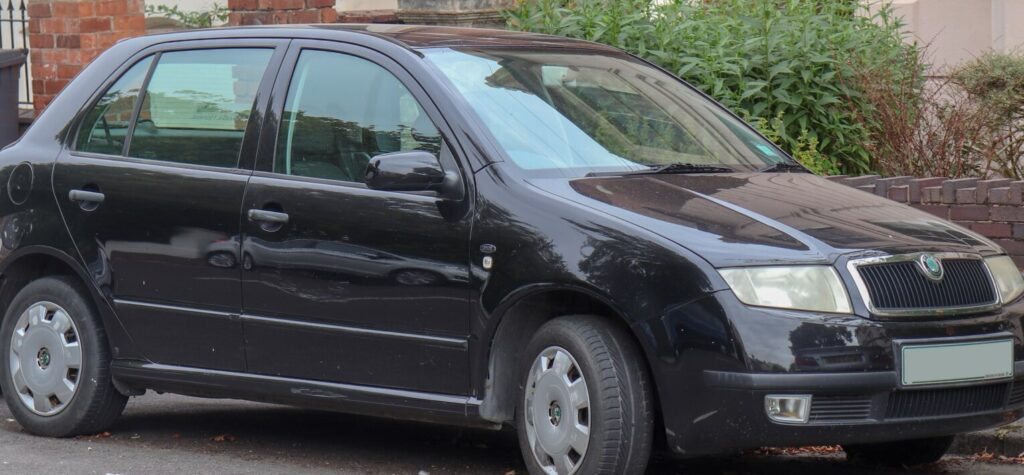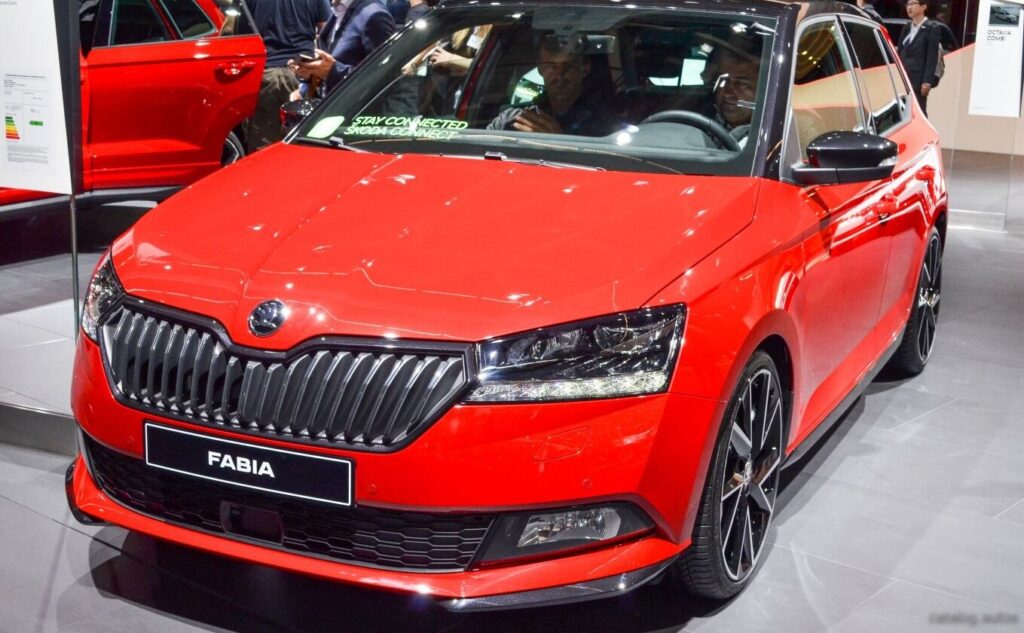
The Skoda Fabia III facelift, specifically the 1.0 TSI (95 horsepower) variant produced from July 2018 to September 2020, represented an entry point into the third generation of Skoda’s popular supermini. Positioned within the broader Fabia III range (based on the Volkswagen Group’s PQ25 platform, also known as A05), this model aimed to deliver a balance of fuel efficiency, affordability, and practicality for the European market. It served as a key offering for buyers seeking a modern, well-equipped hatchback without the higher price tag of more powerful engine options. This version was primarily sold in Europe, where smaller, fuel-efficient cars are highly valued.
Technical Specifications
| Brand | Skoda |
| Model | Fabia |
| Generation | Fabia III (facelift 2018) |
| Type (Engine) | 1.0 TSI (95 Hp) |
| Start of production | July, 2018 |
| End of production | September, 2020 |
| Powertrain Architecture | Internal Combustion engine |
| Body type | Hatchback |
| Seats | 5 |
| Doors | 5 |
| Fuel consumption (urban) | 5.5 l/100 km (42.8 US mpg, 51.4 UK mpg, 18.2 km/l) |
| Fuel consumption (extra urban) | 4.1 l/100 km (57.4 US mpg, 68.9 UK mpg, 24.4 km/l) |
| Fuel consumption (combined) | 4.6 l/100 km (51.1 US mpg, 61.4 UK mpg, 21.7 km/l) |
| CO2 emissions | 106 g/km |
| Fuel Type | Petrol (Gasoline) |
| Acceleration 0 – 100 km/h | 10.8 sec |
| Acceleration 0 – 62 mph | 10.8 sec |
| Acceleration 0 – 60 mph | 10.3 sec |
| Maximum speed | 184 km/h (114.33 mph) |
| Emission standard | Euro 6 |
| Weight-to-power ratio | 11 kg/Hp, 90.8 Hp/tonne |
| Weight-to-torque ratio | 6.5 kg/Nm, 153 Nm/tonne |
| Power | 95 Hp |
| Power per litre | 95.1 Hp/l |
| Torque | 160 Nm @ 1800-3500 rpm (118.01 lb.-ft. @ 1800-3500 rpm) |
| Engine layout | Front, Transverse |
| Engine Model/Code | EA211 / DKLD |
| Engine displacement | 999 cm3 (60.96 cu. in.) |
| Number of cylinders | 3 |
| Engine configuration | Inline |
| Cylinder Bore | 74.5 mm (2.93 in.) |
| Piston Stroke | 76.4 mm (3.01 in.) |
| Compression ratio | 10.3:1 |
| Number of valves per cylinder | 4 |
| Fuel injection system | Direct injection |
| Engine aspiration | Turbocharger, Intercooler |
| Engine oil capacity | 4 l (4.23 US qt | 3.52 UK qt) |
| Kerb Weight | 1046 kg (2306.04 lbs.) |
| Max. weight | 1576 kg (3474.49 lbs.) |
| Max load | 530 kg (1168.45 lbs.) |
| Trunk (boot) space – minimum | 330 l (11.65 cu. ft.) |
| Trunk (boot) space – maximum | 1150 l (40.61 cu. ft.) |
| Fuel tank capacity | 45 l (11.89 US gal | 9.9 UK gal) |
| Permitted trailer load with brakes (12%) | 1000 kg (2204.62 lbs.) |
| Permitted trailer load without brakes | 560 kg (1234.59 lbs.) |
| Permitted towbar download | 50 kg (110.23 lbs.) |
| Length | 3997 mm (157.36 in.) |
| Width | 1732 mm (68.19 in.) |
| Height | 1467 mm (57.76 in.) |
| Wheelbase | 2470 mm (97.24 in.) |
| Front track | 1463 mm (57.6 in.) |
| Rear (Back) track | 1457 mm (57.36 in.) |
| Minimum turning circle | 10.4 m (34.12 ft.) |
| Drivetrain Architecture | Front wheel drive |
| Number of gears and type of gearbox | 5 gears, manual transmission |
| Front suspension | Independent, type McPherson with coil spring and anti-roll bar |
| Rear suspension | Semi-dependent beam with stabilizer lateral stability |
| Front brakes | Ventilated discs |
| Assisting systems | ABS (Anti-lock braking system) |
| Steering type | Steering rack and pinion |
| Power steering | Electric Steering |
Powertrain & Engine Architecture
At the heart of this Fabia variant lies the EA211 engine family, specifically the DKLD code. This is a 1.0-liter, three-cylinder turbocharged gasoline engine. The EA211 is a modular engine, designed for flexibility and efficiency. The DKLD version features direct fuel injection, delivering fuel directly into the combustion chamber for improved combustion efficiency and reduced emissions. It utilizes a single scroll turbocharger with an intercooler to boost power output. The engine’s valvetrain employs four valves per cylinder, contributing to its breathing efficiency. The engine is transversely mounted at the front of the vehicle. The 95 horsepower output is achieved at 5,000-5,500 rpm, while peak torque of 160 Nm (118 lb-ft) is available from 1,800 to 3,500 rpm. The engine is typically paired with a five-speed manual transmission, although a six-speed automatic was also available as an option. The automatic transmission is a conventional torque converter type, prioritizing smooth shifts over outright performance.
Driving Characteristics
The 1.0 TSI 95 hp Fabia offered a comfortable and economical driving experience. Acceleration from 0-60 mph took around 10.3 seconds, making it adequate for everyday driving but not particularly sporty. The engine felt responsive enough in normal driving conditions, with the turbocharger providing a noticeable boost in power when needed. However, it lacked the outright punch of the more powerful 1.2 TSI or diesel variants. The five-speed manual transmission had well-spaced gear ratios, allowing the engine to operate efficiently. The automatic transmission, while smooth, could feel somewhat sluggish, especially during overtaking maneuvers. The relatively low weight of the Fabia helped to mitigate the engine’s modest power output, resulting in a reasonably agile feel in city driving.
Equipment & Trim Levels
The 1.0 TSI 95 hp Fabia typically came in ‘SE’ or ‘Comfort’ trim levels, depending on the market. Standard equipment generally included air conditioning, electric front windows, a touchscreen infotainment system with Bluetooth connectivity, and alloy wheels. Safety features such as ABS, ESC (Electronic Stability Control), and multiple airbags were also standard. Optional extras included parking sensors, a rear-view camera, cruise control, and upgraded infotainment systems with navigation. Interior upholstery was typically cloth, with a functional and durable design. Dashboard materials were generally of good quality for the price point, and the overall cabin layout was ergonomic and user-friendly.
Chassis & Braking
The Fabia III utilized a MacPherson strut front suspension and a semi-independent torsion beam rear suspension. This setup provided a good balance between ride comfort and handling. The front brakes were ventilated discs, while the rear brakes were typically drums on the base models, with discs available on higher trim levels. The steering was electric power-assisted, offering light and precise control. Stabilizer bars were fitted to both the front and rear axles to reduce body roll during cornering. The chassis was tuned to prioritize comfort and stability over sporty handling, making it well-suited for everyday driving.
Market Reception & Comparison
The 1.0 TSI 95 hp Fabia was generally well-received by automotive critics as a practical and economical choice. It was praised for its fuel efficiency, comfortable ride, and well-equipped interior. However, some reviewers noted that the engine lacked the performance of its rivals and that the automatic transmission could be slow to respond. Compared to the 1.2 TSI variant, the 1.0 TSI offered slightly better fuel economy but less power. The diesel variants (1.6 TDI) provided even better fuel economy but were more expensive to purchase and maintain. The 1.0 TSI positioned itself as a sweet spot for buyers prioritizing running costs and practicality over outright performance.
Legacy
The EA211 engine family, including the DKLD code used in this Fabia, has proven to be relatively reliable. Common issues are typically related to the turbocharger and fuel injectors, but these are not widespread. The 1.0 TSI Fabia remains a popular choice on the used car market due to its affordability, fuel efficiency, and practicality. Its relatively simple engine design and readily available parts contribute to its low cost of ownership. While not a performance icon, the 1.0 TSI Fabia represents a solid and dependable supermini that continues to offer good value for money.