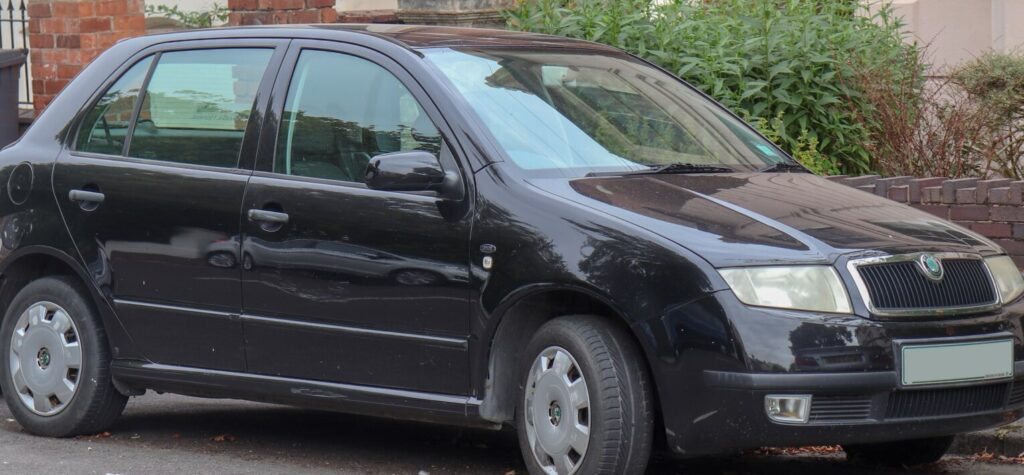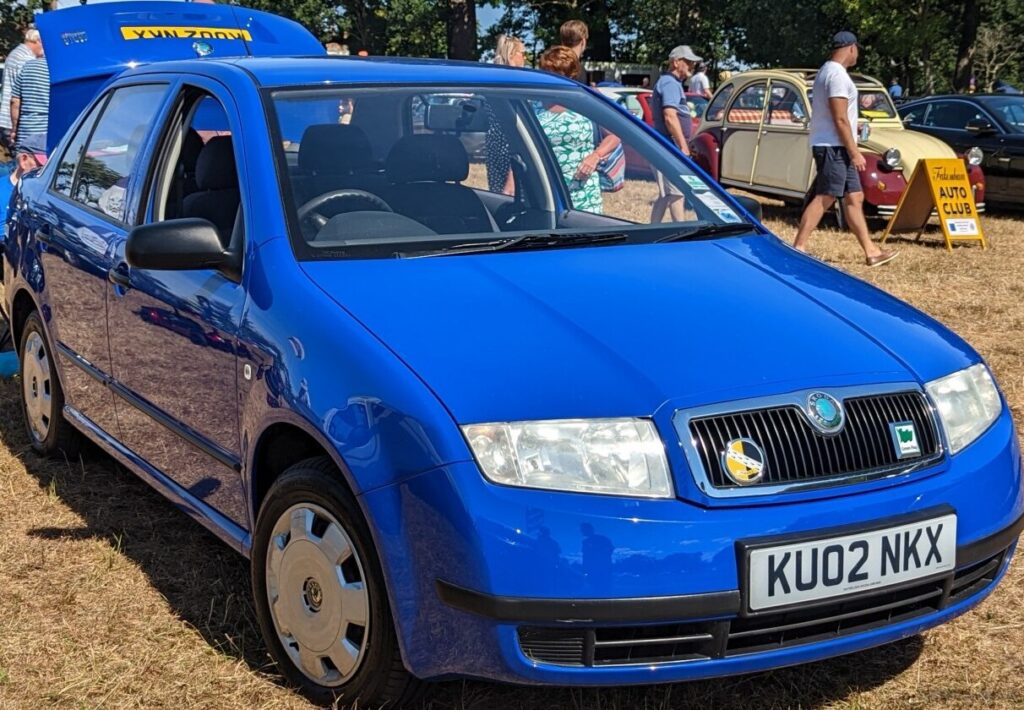
The Skoda Fabia Sedan I (6Y) 1.2 i, producing 65 horsepower, was a subcompact sedan offered by Skoda Auto from January 2003 to July 2004. Positioned as the entry-level trim within the 6Y Fabia sedan range, it represented an affordable and economical option for buyers in European markets. The 6Y Fabia was the first generation of the Fabia to offer a sedan body style, building upon the success of the hatchback version and utilizing the Volkswagen Group’s PQ24 platform – also known as the A3 platform. This variant aimed to provide practical transportation with a focus on fuel efficiency, making it a popular choice for first-time car buyers and those seeking a cost-effective vehicle.
Technical Specifications
| Brand | Skoda |
| Model | Fabia |
| Generation | Fabia Sedan I (6Y) |
| Type (Engine) | 1.2 i (65 Hp) |
| Start of production | January, 2003 |
| End of production | July, 2004 |
| Powertrain Architecture | Internal Combustion engine |
| Body type | Sedan |
| Seats | 5 |
| Doors | 4 |
| Fuel consumption (urban) | 7.6 l/100 km (30.9 US mpg) |
| Fuel consumption (extra urban) | 5.1 l/100 km (46.1 US mpg) |
| Fuel consumption (combined) | 5.9 l/100 km (39.9 US mpg) |
| Fuel Type | Petrol (Gasoline) |
| Acceleration 0 – 100 km/h | 16.3 sec |
| Acceleration 0 – 62 mph | 16.3 sec |
| Acceleration 0 – 60 mph | 15.5 sec |
| Maximum speed | 160 km/h (99.42 mph) |
| Weight-to-power ratio | 16.8 kg/Hp |
| Weight-to-torque ratio | 9.7 kg/Nm |
| Power | 65 Hp @ 5400 rpm |
| Torque | 112 Nm @ 3000 rpm (82.61 lb.-ft. @ 3000 rpm) |
| Engine layout | Front, Transverse |
| Engine Model/Code | AZQ |
| Engine displacement | 1198 cm3 (73.11 cu. in.) |
| Number of cylinders | 3 |
| Engine configuration | Inline |
| Cylinder Bore | 76.5 mm (3.01 in.) |
| Piston Stroke | 86.9 mm (3.42 in.) |
| Compression ratio | 10.5:1 |
| Number of valves per cylinder | 4 |
| Fuel injection system | Multi-port manifold injection |
| Engine aspiration | Naturally aspirated engine |
| Valvetrain | OHC |
| Engine oil capacity | 2.8 l (2.96 US qt | 2.46 UK qt) |
| Coolant capacity | 5.1 l (5.39 US qt | 4.49 UK qt) |
| Kerb Weight | 1090 kg (2403.04 lbs.) |
| Max. weight | 1605 kg (3538.42 lbs.) |
| Max load | 515 kg (1135.38 lbs.) |
| Trunk (boot) space – minimum | 438 l (15.47 cu. ft.) |
| Trunk (boot) space – maximum | 789 l (27.86 cu. ft.) |
| Fuel tank capacity | 45 l (11.89 US gal | 9.9 UK gal) |
| Length | 4222 mm (166.22 in.) |
| Width | 1646 mm (64.8 in.) |
| Height | 1449 mm (57.05 in.) |
| Wheelbase | 2462 mm (96.93 in.) |
| Front track | 1430 mm (56.3 in.) |
| Rear track | 1425 mm (56.1 in.) |
| Drivetrain Architecture | Front wheel drive |
| Number of gears | 5 |
| Gearbox type | Manual transmission |
| Front suspension | Coil spring |
| Rear suspension | Coil spring |
| Front brakes | Disc |
| Rear brakes | Drum |
| Steering type | Steering rack and pinion |
| Power steering | Hydraulic |
| Tires size | 165/70 R14 |
Powertrain & Engine Architecture
The heart of the Fabia 1.2 i was the AZQ engine code, a 1.2-liter inline three-cylinder petrol engine. This engine was a relatively simple design, utilizing a single overhead camshaft (OHC) and multi-port fuel injection. The three-cylinder configuration, while offering good fuel economy, inherently produced some vibration, which was mitigated by engine mounts and balancing shafts. The AZQ engine produced 65 horsepower at 5400 rpm and 82.6 lb-ft of torque at 3000 rpm. The engine’s modest output was paired with a five-speed manual transmission, the only transmission option available for this specific trim level in most markets. The engine’s design prioritized reliability and low running costs over outright performance.
Driving Characteristics
The 1.2 i Fabia Sedan was not designed for spirited driving. Acceleration was leisurely, taking approximately 16.3 seconds to reach 62 mph (100 km/h). The engine felt strained when pushed hard, and overtaking required careful planning. The five-speed manual transmission was well-matched to the engine’s characteristics, with relatively short gear ratios to keep the engine in its optimal power band. However, the limited power output meant that frequent downshifts were necessary, especially when climbing hills or carrying a full load. Compared to the more powerful 1.4-liter or diesel variants, the 1.2 i offered a significantly less engaging driving experience, but it excelled in urban environments where its fuel efficiency and maneuverability were highly valued.
Equipment & Trim Levels
The 1.2 i Fabia Sedan typically came with a basic level of equipment. Standard features generally included power steering, central locking, front airbags, and an adjustable steering column. Interior upholstery was typically cloth, and the dashboard featured a simple, functional design. Optional extras included air conditioning, electric front windows, and a radio/CD player. The trim level was generally considered the base model, aimed at budget-conscious buyers. It lacked many of the comfort and convenience features found in higher-spec Fabia models.
Chassis & Braking
The Fabia Sedan 1.2 i utilized a relatively simple chassis design. Front suspension consisted of coil springs and independent suspension, while the rear featured a torsion beam axle with coil springs. Brakes were disc brakes at the front and drum brakes at the rear. The braking system was adequate for the car’s weight and performance, but it lacked the stopping power of larger, more powerful vehicles. The suspension provided a comfortable ride, but it was not particularly sporty or engaging. Stabilizer bars were typically smaller in diameter compared to higher-spec models, contributing to a slightly more pronounced body roll during cornering.
Market Reception & Comparison
The Skoda Fabia 1.2 i Sedan was generally well-received as an affordable and economical option. Critics praised its fuel efficiency and practicality, but noted its lack of performance. Compared to the 1.4-liter and diesel variants, the 1.2 i offered significantly lower running costs but at the expense of driving enjoyment. The 1.4-liter engine provided a noticeable improvement in performance, while the diesel models offered even better fuel economy. However, the 1.2 i remained a popular choice for buyers who prioritized affordability and fuel efficiency over outright performance.
Legacy
The AZQ engine, while not known for its high performance, proved to be a relatively reliable unit. With proper maintenance, these engines can continue to operate reliably for many years. In the used car market, the Fabia 1.2 i Sedan is often sought after by first-time car buyers or those looking for a cheap and economical vehicle. Parts availability is generally good, and maintenance costs are relatively low. However, potential buyers should be aware of the engine’s limited power output and the potential for vibration associated with the three-cylinder configuration. The Fabia 1.2 i Sedan represents a practical and affordable option for those seeking basic transportation, and its enduring popularity is a testament to its value proposition.