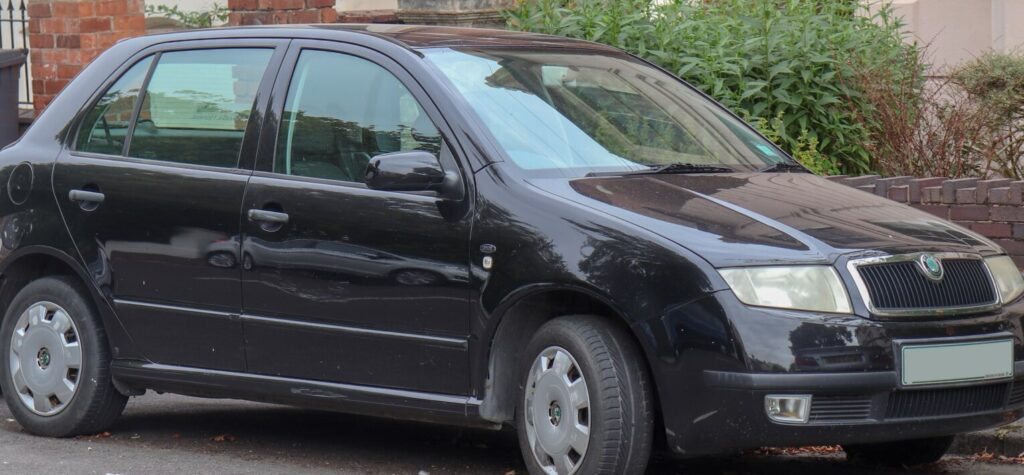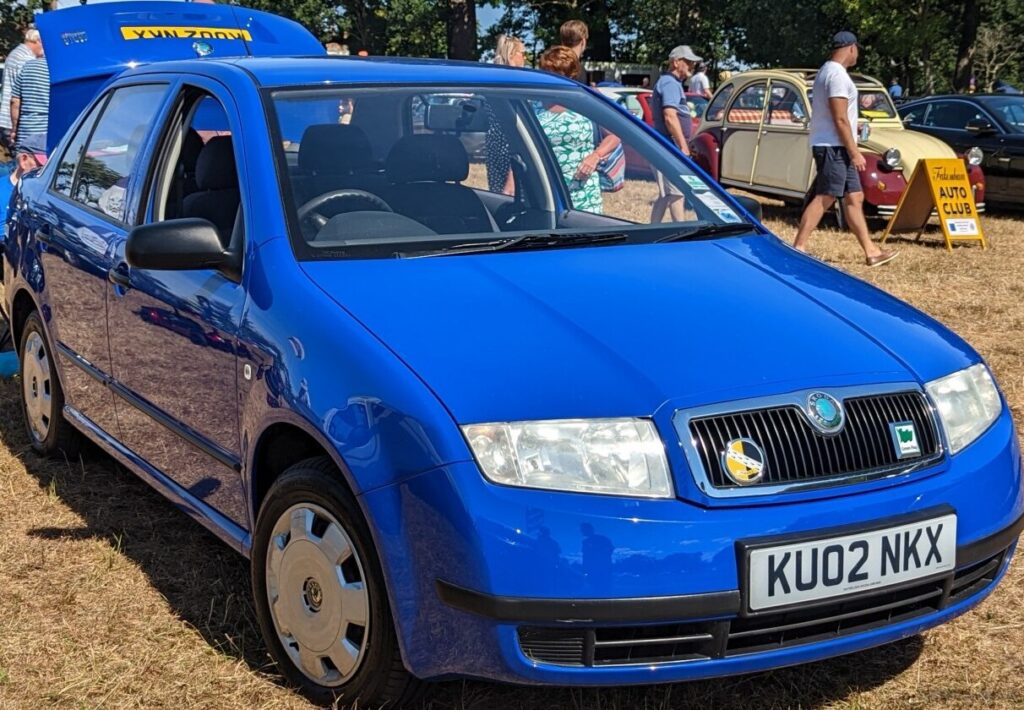
The Skoda Fabia Sedan I (6Y) 1.4, producing 60 horsepower, was a key entry point into the first generation Fabia sedan range, manufactured between April 2000 and March 2004. Positioned as the most affordable option, it aimed to provide economical transportation within the compact sedan segment, primarily targeting price-conscious buyers in European markets. The 6Y Fabia represented Skoda’s first foray into a modern, independent design language following its acquisition by the Volkswagen Group, utilizing the A04 platform – shared with the Volkswagen Polo Mk4 and SEAT Ibiza Mk2. This variant offered a practical and relatively spacious sedan body style, appealing to families and individuals needing a dependable and fuel-efficient vehicle.
Technical Specifications
| Brand | Skoda |
| Model | Fabia |
| Generation | Fabia Sedan I (6Y) |
| Type (Engine) | 1.4 (60 Hp) |
| Start of production | April, 2000 |
| End of production | March, 2004 |
| Powertrain Architecture | Internal Combustion engine |
| Body type | Sedan |
| Seats | 5 |
| Doors | 4 |
| Fuel consumption (urban) | 9.6 l/100 km (24.5 US mpg, 29.4 UK mpg, 10.4 km/l) |
| Fuel consumption (extra urban) | 5.5 l/100 km (42.8 US mpg, 51.4 UK mpg, 18.2 km/l) |
| Fuel consumption (combined) | 7 l/100 km (33.6 US mpg, 40.4 UK mpg, 14.3 km/l) |
| Fuel Type | Petrol (Gasoline) |
| Acceleration 0 – 100 km/h | 16.5 sec |
| Acceleration 0 – 62 mph | 16.5 sec |
| Acceleration 0 – 60 mph | 15.7 sec |
| Maximum speed | 157 km/h (97.56 mph) |
| Weight-to-power ratio | 17.8 kg/Hp, 56.3 Hp/tonne |
| Weight-to-torque ratio | 9 kg/Nm, 110.8 Nm/tonne |
| Power | 60 Hp @ 4500 rpm |
| Power per litre | 42.9 Hp/l |
| Torque | 118 Nm @ 2600 rpm (87.03 lb.-ft. @ 2600 rpm) |
| Engine layout | Front, Transverse |
| Engine Model/Code | AZE |
| Engine displacement | 1397 cm3 (85.25 cu. in.) |
| Number of cylinders | 4 |
| Engine configuration | Inline |
| Cylinder Bore | 75.5 mm (2.97 in.) |
| Piston Stroke | 78 mm (3.07 in.) |
| Compression ratio | 10:1 |
| Number of valves per cylinder | 2 |
| Fuel injection system | Multi-port manifold injection |
| Engine aspiration | Naturally aspirated engine |
| Engine oil capacity | 4 l (4.23 US qt | 3.52 UK qt) |
| Coolant capacity | 6 l (6.34 US qt | 5.28 UK qt) |
| Kerb Weight | 1065 kg (2347.92 lbs.) |
| Trunk (boot) space – minimum | 438 l (15.47 cu. ft.) |
| Trunk (boot) space – maximum | 789 l (27.86 cu. ft.) |
| Fuel tank capacity | 45 l (11.89 US gal | 9.9 UK gal) |
| Length | 4222 mm (166.22 in.) |
| Width | 1646 mm (64.8 in.) |
| Height | 1449 mm (57.05 in.) |
| Wheelbase | 2462 mm (96.93 in.) |
| Front track | 1435 mm (56.5 in.) |
| Rear (Back) track | 1424 mm (56.06 in.) |
| Drivetrain Architecture | The Internal combustion engine (ICE) drives the front wheels of the vehicle. |
| Drive wheel | Front wheel drive |
| Number of gears and type of gearbox | 5 gears, manual transmission |
| Front suspension | Coil spring |
| Rear suspension | Coil spring |
| Front brakes | Ventilated discs |
| Rear brakes | Drum |
| Steering type | Steering rack and pinion |
| Power steering | Hydraulic Steering |
| Tires size | 165/70 R 14 |
INTRODUCTION
The Skoda Fabia Sedan I (6Y) 1.4 60hp, produced from 2000 to 2004, served as the foundational model within the 6Y series. It was designed to offer affordable and practical transportation, particularly in European markets where compact sedans were popular. The 6Y platform marked a significant step forward for Skoda, showcasing improved build quality and a more contemporary design compared to its predecessors. This 1.4-liter engine and five-speed manual transmission combination represented the base level offering, prioritizing fuel efficiency and low running costs over outright performance.
Powertrain & Engine Architecture
At the heart of the Fabia 1.4 was the AZE engine code, a naturally aspirated, inline-four cylinder petrol engine displacing 1397cc. This engine featured a relatively simple multi-port fuel injection system, delivering fuel directly into the intake ports. The engine utilized a single overhead camshaft (SOHC) design with two valves per cylinder. Its 10:1 compression ratio was typical for the era, balancing efficiency and performance. The 60 horsepower output was achieved at 4500 rpm, while peak torque of 118 Nm (87 lb-ft) arrived at 2600 rpm. The engine was transversely mounted, driving the front wheels. The five-speed manual transmission was a standard feature, offering a relatively long gearing setup to maximize fuel economy. This transmission was known for its durability and straightforward operation.
Driving Characteristics
The Fabia 1.4 60hp was not designed for spirited driving. Acceleration was modest, taking approximately 16.5 seconds to reach 100 km/h (62 mph). The long gearing and relatively low power output meant that the engine needed to be revved to extract the most performance. In real-world conditions, overtaking required careful planning, and hill climbs often necessitated downshifting. Compared to the more powerful 1.6-liter or even the diesel variants, the 1.4 felt noticeably slower. However, the light clutch and easy-to-use gearbox made it a comfortable car for city driving and commuting. The suspension, tuned for comfort, provided a reasonably smooth ride, although it could feel somewhat wallowy when pushed hard.
Equipment & Trim Levels
The base-level Fabia 1.4 typically came with a fairly basic specification. Standard equipment included power steering, central locking, and front airbags. Interior upholstery was typically a durable cloth material. Dashboard plastics were functional but not particularly luxurious. Optional extras included air conditioning, electric front windows, and a radio/cassette player. Higher trim levels, such as the Classic or Comfort, added features like alloy wheels, upgraded interior trim, and additional safety equipment. The 1.4 model often served as a blank canvas for buyers who wanted to add specific options to suit their needs.
Chassis & Braking
The Fabia 1.4 utilized a relatively simple chassis design. Front suspension consisted of coil springs and MacPherson struts, while the rear employed a torsion beam setup. This configuration prioritized cost-effectiveness and space efficiency. Braking was handled by ventilated discs at the front and drum brakes at the rear. The braking system was adequate for the car’s performance, but lacked the stopping power of higher-spec models with all-disc brakes. Stabilizer bars were present, but relatively thin, contributing to a moderate level of body roll during cornering.
Market Reception & Comparison
The Fabia 1.4 60hp was generally well-received as an affordable and practical option. Critics praised its fuel efficiency and spacious interior for its size. However, the lack of power was a common criticism. Compared to the 1.6-liter version, the 1.4 offered significantly less performance, but at a lower purchase price. The diesel variants, while more expensive, provided better fuel economy and more torque. The 1.4 appealed to buyers who prioritized economy and reliability over driving excitement. Its low running costs made it a popular choice for first-time car owners and those on a tight budget.
Legacy
The Skoda Fabia 1.4 60hp powertrain proved to be remarkably durable and reliable. The AZE engine, while not particularly powerful, was known for its longevity and relatively low maintenance requirements. Today, these cars are relatively common on the used car market, often offering excellent value for money. While not a collector’s item, well-maintained examples are still sought after by those looking for a cheap and dependable mode of transportation. The 6Y Fabia, and particularly the 1.4 variant, played a crucial role in establishing Skoda as a credible and respected automotive brand in Europe.