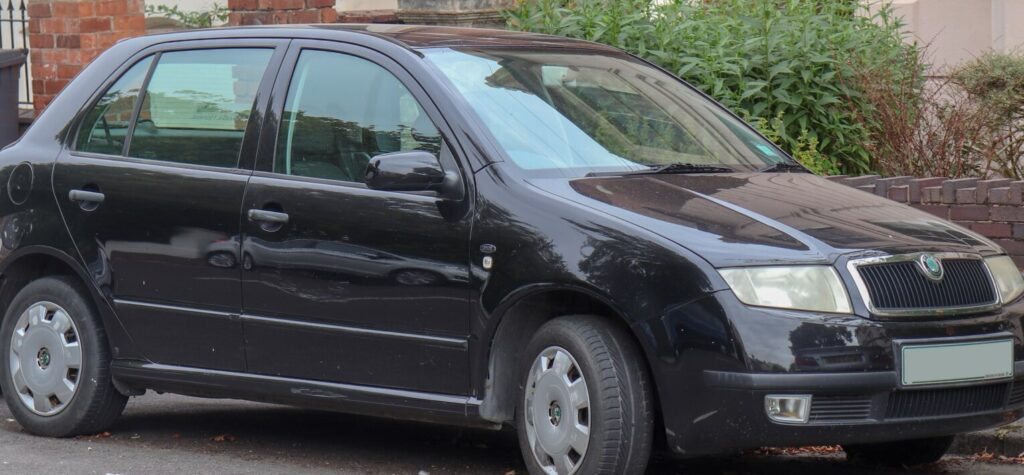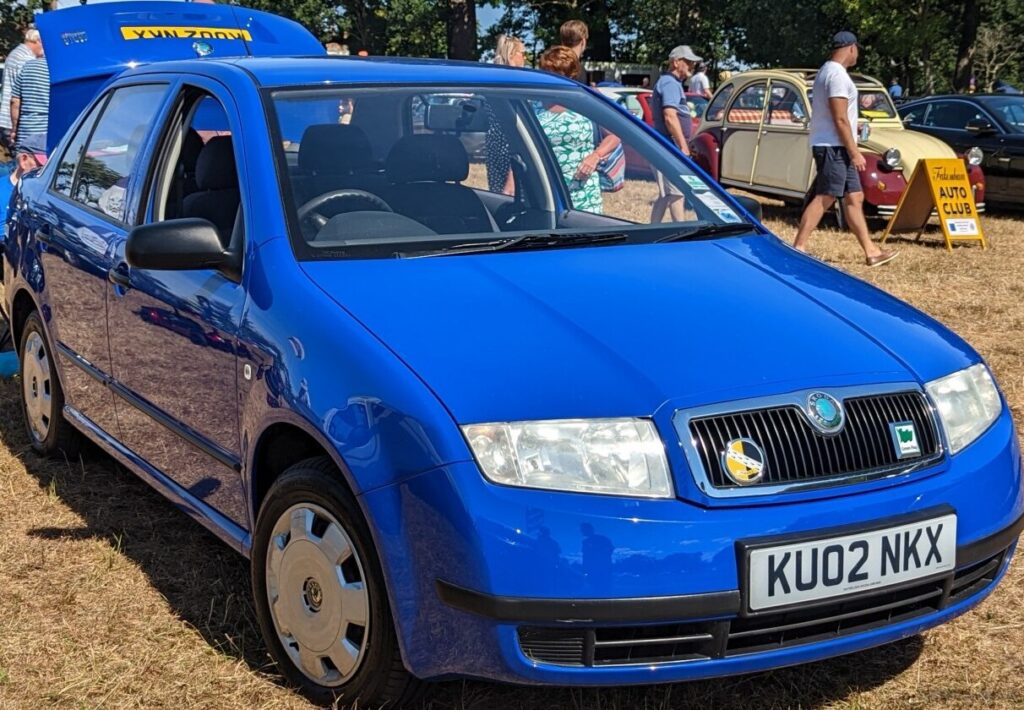
The Skoda Fabia Sedan I (6Y) 1.4 TDI, producing 75 horsepower, was a key variant in Skoda’s lineup from April 2003 to October 2004. Positioned as an entry-level diesel option within the first generation (6Y) Fabia sedan range, it aimed to provide fuel efficiency and practicality to budget-conscious buyers. This model was primarily sold in Europe, where smaller, economical diesel sedans were highly popular. It represented Skoda’s continued effort to establish itself as a mainstream automotive brand, offering value and reliability. The 6Y Fabia was built on the Volkswagen Group’s PQ24 platform, shared with the Volkswagen Polo and SEAT Ibiza.
Technical Specifications
| Brand | Skoda |
| Model | Fabia |
| Generation | Fabia Sedan I (6Y) |
| Type (Engine) | 1.4 TDI (75 Hp) |
| Start of production | April, 2003 |
| End of production | October, 2004 |
| Powertrain Architecture | Internal Combustion engine |
| Body type | Sedan |
| Seats | 5 |
| Doors | 4 |
| Fuel consumption (urban) | 5.6 l/100 km (42 US mpg, 50.4 UK mpg, 17.9 km/l) |
| Fuel consumption (extra urban) | 4 l/100 km (58.8 US mpg, 70.6 UK mpg, 25 km/l) |
| Fuel Type | Diesel |
| Acceleration 0 – 100 km/h | 14.4 sec |
| Acceleration 0 – 62 mph | 14.4 sec |
| Acceleration 0 – 60 mph | 13.7 sec |
| Maximum speed | 169 km/h (105.01 mph) |
| Weight-to-power ratio | 15.5 kg/Hp, 64.7 Hp/tonne |
| Weight-to-torque ratio | 5.9 kg/Nm, 168.1 Nm/tonne |
| Power | 75 Hp @ 4000 rpm |
| Power per litre | 52.7 Hp/l |
| Torque | 195 Nm @ 2200 rpm (143.82 lb.-ft. @ 2200 rpm) |
| Engine layout | Front, Transverse |
| Engine Model/Code | AMF |
| Engine displacement | 1422 cm3 (86.78 cu. in.) |
| Number of cylinders | 3 |
| Engine configuration | Inline |
| Cylinder Bore | 79.5 mm (3.13 in.) |
| Piston Stroke | 95.5 mm (3.76 in.) |
| Compression ratio | 19:1 |
| Number of valves per cylinder | 2 |
| Fuel injection system | Pump-nozzle (Unit Injector) |
| Engine aspiration | Turbocharger, Intercooler |
| Valvetrain | OHC |
| Engine oil capacity | 3.8 l (4.02 US qt | 3.34 UK qt) |
| Coolant | 6.2 l (6.55 US qt | 5.46 UK qt) |
| Kerb Weight | 1160 kg (2557.36 lbs.) |
| Max. weight | 1675 kg (3692.74 lbs.) |
| Max load | 515 kg (1135.38 lbs.) |
| Trunk (boot) space – minimum | 438 l (15.47 cu. ft.) |
| Trunk (boot) space – maximum | 789 l (27.86 cu. ft.) |
| Fuel tank capacity | 45 l (11.89 US gal | 9.9 UK gal) |
| Length | 4222 mm (166.22 in.) |
| Width | 1646 mm (64.8 in.) |
| Height | 1449 mm (57.05 in.) |
| Wheelbase | 2462 mm (96.93 in.) |
| Front track | 1419 mm (55.87 in.) |
| Rear (Back) track | 1408 mm (55.43 in.) |
| Drivetrain Architecture | The Internal combustion engine (ICE) drives the front wheels of the vehicle. |
| Drive wheel | Front wheel drive |
| Number of gears and type of gearbox | 5 gears, manual transmission |
| Front suspension | Transverse stabilizer |
| Rear suspension | Coil spring |
| Front brakes | Disc |
| Rear brakes | Drum |
| Steering type | Steering rack and pinion |
| Power steering | Hydraulic Steering |
| Tires size | 185/60 R14 |
Powertrain & Engine Architecture
The heart of this Fabia variant is the 1.4-liter, three-cylinder AMF diesel engine. This engine is a member of Volkswagen Group’s diesel engine family, known for its robust construction and fuel efficiency. The AMF utilizes a pump-nozzle (unit injector) fuel injection system, a technology that delivers highly precise fuel delivery for optimized combustion and reduced emissions. The engine is turbocharged and intercooled, enhancing power output and torque. The inline-three configuration, while inherently unbalanced, was chosen for its compact size and low weight, contributing to the Fabia’s overall efficiency. The engine produces 75 horsepower at 4000 rpm and 195 Nm (143.82 lb-ft) of torque at 2200 rpm. The engine’s overhead camshaft (OHC) valvetrain operates two valves per cylinder. The engine is transversely mounted, driving the front wheels. The 5-speed manual transmission was the standard offering, chosen for its simplicity and efficiency.
Driving Characteristics
The 1.4 TDI 75 hp Fabia Sedan offered modest performance. Acceleration from 0-100 km/h (0-62 mph) took approximately 14.4 seconds, and top speed was around 169 km/h (105 mph). Compared to higher-output versions of the Fabia, such as those with the 1.9 TDI engine, this variant felt noticeably slower. However, the engine’s torque delivery was relatively strong at lower RPMs, making it suitable for everyday driving and urban commutes. The gear ratios in the 5-speed manual transmission were geared towards fuel economy rather than outright performance. The driving experience was characterized by its practicality and efficiency, rather than sporty handling. The relatively light weight of the vehicle helped to mitigate the lack of horsepower.
Equipment & Trim Levels
The 1.4 TDI 75 hp Fabia Sedan typically came with a basic level of equipment. Standard features generally included power steering, central locking, electric front windows, and a basic audio system. Interior upholstery was typically cloth, and the dashboard featured a functional, if somewhat spartan, design. Optional extras included air conditioning, alloy wheels, and an upgraded audio system. Trim levels varied slightly depending on the market, but this variant generally represented the entry point into the Fabia sedan range. Safety features were relatively basic, including driver and passenger airbags and ABS brakes.
Chassis & Braking
The Fabia Sedan I (6Y) utilized a MacPherson strut front suspension and a twist-beam rear suspension. The front suspension incorporated a transverse stabilizer bar to reduce body roll. The braking system consisted of disc brakes on the front wheels and drum brakes on the rear wheels. This configuration was typical for vehicles in this weight class and price range. The steering was a rack-and-pinion system with hydraulic power assistance. The suspension setup prioritized comfort and ride quality over sporty handling. Tire size was typically 185/60 R14.
Market Reception & Comparison
The 1.4 TDI 75 hp Fabia Sedan was generally well-received as an economical and practical option. Critics praised its fuel efficiency and low running costs, but noted its modest performance. Compared to the more powerful 1.9 TDI variants, the 1.4 TDI offered lower performance but also lower fuel consumption and potentially lower insurance costs. It was often seen as a sensible choice for drivers who prioritized economy over speed. Reliability was generally good, typical of Volkswagen Group diesel engines of the era.
Legacy
The 1.4 TDI engine, particularly the AMF code, proved to be a relatively reliable powertrain. While not known for blistering performance, it offered years of dependable service with proper maintenance. In the used car market today, these Fabia Sedans are often sought after by buyers looking for an affordable and fuel-efficient vehicle. However, potential buyers should be aware of the age-related issues common to older diesel engines, such as turbocharger wear and potential issues with the fuel injection system. Despite its age, the 1.4 TDI Fabia Sedan remains a testament to Skoda’s commitment to providing value and practicality in a compact package.