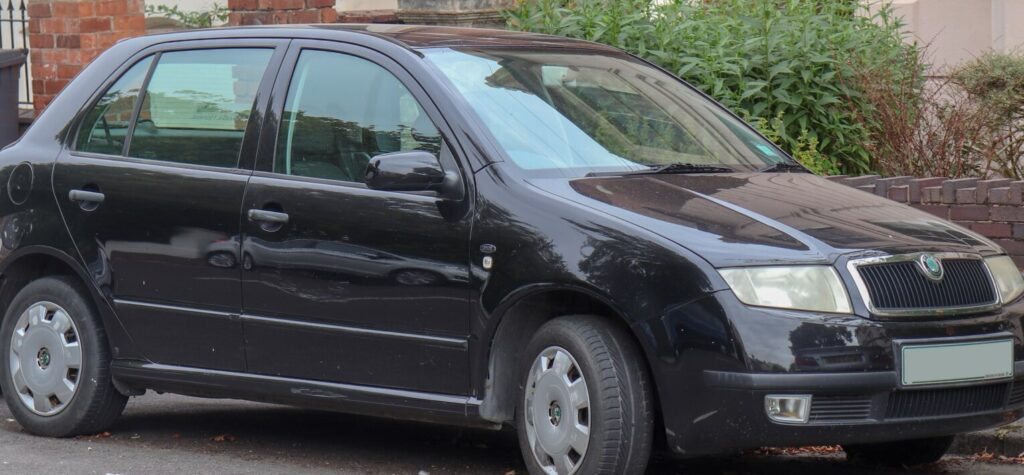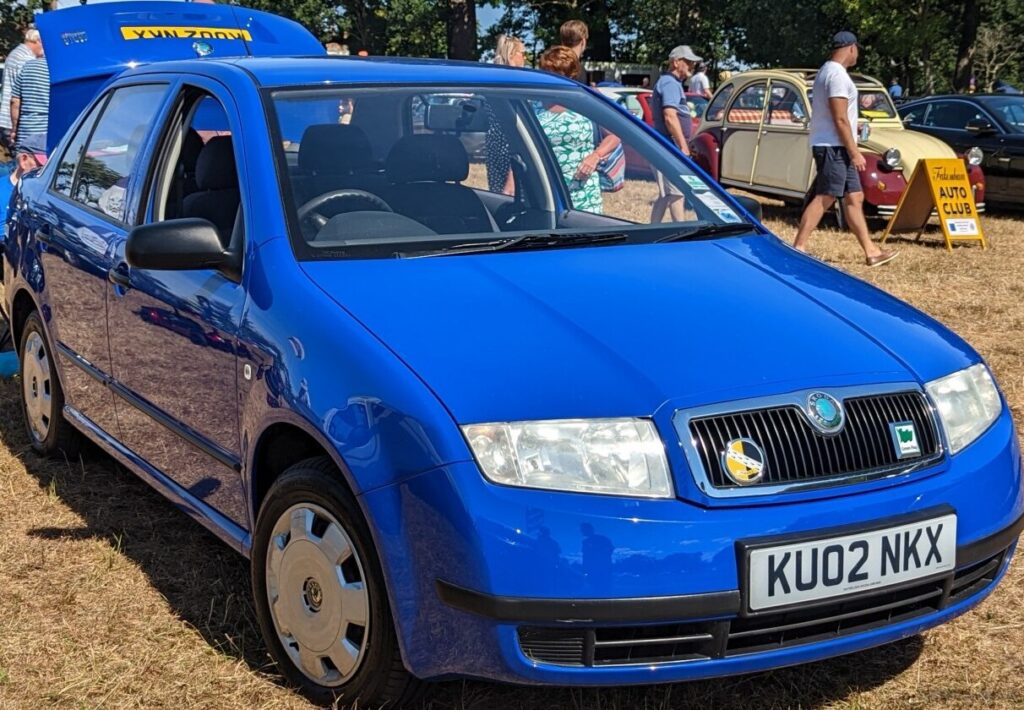
The Skoda Fabia Sedan I (6Y) 1.9 TDI, produced from 2000 to 2004, represented a significant step forward for Skoda as it integrated into the Volkswagen Group. This variant, powered by the 1.9-liter turbocharged diesel engine producing 101 horsepower, was a key offering in the Fabia Sedan lineup, particularly in European markets where diesel engines were – and continue to be – highly favored for their fuel efficiency and torque. The 6Y generation Fabia was the first fully independent Skoda model developed after Volkswagen’s acquisition of the Czech automaker, and it shared its platform (the PQ24) with the Volkswagen Polo and SEAT Ibiza. The 1.9 TDI trim aimed to provide a balance between economy, practicality, and reasonable performance for everyday driving.
Technical Specifications
| Brand | Skoda |
| Model | Fabia |
| Generation | Fabia Sedan I (6Y) |
| Type (Engine) | 1.9 TDI (101 Hp) |
| Start of production | January, 2000 |
| End of production | 2004 |
| Powertrain Architecture | Internal Combustion engine |
| Body type | Sedan |
| Seats | 5 |
| Doors | 4 |
| Fuel consumption (urban) | 6.5 l/100 km (36.2 US mpg, 43.5 UK mpg, 15.4 km/l) |
| Fuel consumption (extra urban) | 4 l/100 km (58.8 US mpg, 70.6 UK mpg, 25 km/l) |
| Fuel Type | Diesel |
| Acceleration 0 – 100 km/h | 11.6 sec |
| Acceleration 0 – 62 mph | 11.6 sec |
| Acceleration 0 – 60 mph | 11 sec |
| Maximum speed | 185 km/h (114.95 mph) |
| Weight-to-power ratio | 11.6 kg/Hp, 86 Hp/tonne |
| Weight-to-torque ratio | 4.9 kg/Nm, 204.3 Nm/tonne |
| Power | 101 Hp @ 4000 rpm |
| Power per litre | 53.3 Hp/l |
| Torque | 240 Nm @ 1800 rpm (177.01 lb.-ft. @ 1800 rpm) |
| Engine layout | Front, Transverse |
| Engine Model/Code | ATD |
| Engine displacement | 1896 cm3 (115.7 cu. in.) |
| Number of cylinders | 4 |
| Engine configuration | Inline |
| Cylinder Bore | 79.5 mm (3.13 in.) |
| Piston Stroke | 95.5 mm (3.76 in.) |
| Compression ratio | 19:1 |
| Number of valves per cylinder | 2 |
| Fuel injection system | Pump-nozzle (Unit Injector) |
| Engine aspiration | Turbocharger, Intercooler |
| Valvetrain | OHC |
| Engine oil capacity | 4.3 l (4.54 US qt | 3.78 UK qt) |
| Coolant | 6.8 l (7.19 US qt | 5.98 UK qt) |
| Kerb Weight | 1175 kg (2590.43 lbs.) |
| Max. weight | 1690 kg (3725.81 lbs.) |
| Max load | 515 kg (1135.38 lbs.) |
| Trunk (boot) space – minimum | 438 l (15.47 cu. ft.) |
| Trunk (boot) space – maximum | 789 l (27.86 cu. ft.) |
| Fuel tank capacity | 45 l (11.89 US gal | 9.9 UK gal) |
| Length | 4222 mm (166.22 in.) |
| Width | 1646 mm (64.8 in.) |
| Height | 1449 mm (57.05 in.) |
| Wheelbase | 2462 mm (96.93 in.) |
| Front track | 1419 mm (55.87 in.) |
| Rear (Back) track | 1408 mm (55.43 in.) |
| Drivetrain Architecture | The Internal combustion engine (ICE) drives the front wheels of the vehicle. |
| Drive wheel | Front wheel drive |
| Number of gears and type of gearbox | 5 gears, manual transmission |
| Front suspension | Transverse stabilizer |
| Rear suspension | Coil spring |
| Front brakes | Disc |
| Rear brakes | Drum |
| Steering type | Steering rack and pinion |
| Power steering | Hydraulic Steering |
| Tires size | 185/60 R14 |
| Wheel rims size | 6J x 14 |
Powertrain & Engine Architecture
The heart of the Fabia 1.9 TDI is the ATD engine, a 1.9-liter inline-four cylinder diesel. This engine is a member of Volkswagen Group’s well-regarded diesel family, known for its durability and efficiency. The ATD utilizes a pump-nozzle (unit injector) fuel injection system, a technology that allowed for precise fuel delivery and contributed to the engine’s relatively high torque output. A turbocharger with an intercooler further enhances performance by forcing more air into the cylinders. The engine features an overhead camshaft (OHC) valvetrain with two valves per cylinder. The 19:1 compression ratio is typical for a diesel engine, maximizing combustion efficiency. The engine’s transverse mounting and front-wheel-drive configuration were standard for this class of vehicle in Europe.
Driving Characteristics
The 101 horsepower and 240 Nm (177 lb-ft) of torque delivered by the 1.9 TDI engine provided the Fabia Sedan with adequate, though not exhilarating, performance. Acceleration from 0 to 100 km/h (0-62 mph) took around 11.6 seconds, and the top speed was 185 km/h (115 mph). Compared to the more powerful petrol (gasoline) versions of the Fabia, the TDI prioritized fuel economy and low-end torque. The five-speed manual transmission was well-matched to the engine’s characteristics, offering smooth shifts and allowing the driver to keep the engine in its optimal power band. While not a sporty car, the 1.9 TDI offered a comfortable and relaxed driving experience, particularly on long journeys.
Equipment & Trim Levels
The 1.9 TDI trim level in the Fabia Sedan I (6Y) typically fell into the mid-range of the lineup. Standard equipment generally included power steering, central locking, electric front windows, and an adjustable steering column. Interior upholstery was typically cloth, and the dashboard featured a functional, if somewhat basic, design. Optional extras could include air conditioning, alloy wheels, a radio/CD player, and upgraded interior trim. The specific level of equipment varied depending on the market and any optional packages selected by the original buyer.
Chassis & Braking
The Fabia Sedan’s chassis was a typical European compact car setup, featuring a MacPherson strut front suspension and a twist-beam rear suspension. A transverse stabilizer bar was fitted to the front axle to reduce body roll. The braking system consisted of disc brakes on the front wheels and drum brakes on the rear. This configuration was common for vehicles in this weight class and price range. The steering was a rack-and-pinion system with hydraulic power assistance, providing a reasonably direct and responsive feel.
Market Reception & Comparison
The Skoda Fabia 1.9 TDI was well-received in European markets, particularly by drivers seeking a fuel-efficient and reliable family car. Critics praised the engine’s torque and economy, but some noted that the performance was not particularly exciting. Compared to the petrol versions of the Fabia, the TDI offered significantly better fuel economy and lower running costs. It also provided more torque, making it more suitable for carrying passengers and luggage. Compared to other diesel compacts like the Volkswagen Polo TDI and SEAT Ibiza TDI (which shared the same engine), the Fabia offered a more spacious interior and a slightly lower price point.
Legacy
The 1.9 TDI engine, in its various iterations, became renowned for its durability and longevity. The ATD code engine found in the Fabia is generally considered a robust unit, capable of high mileage with proper maintenance. Today, used examples of the Fabia 1.9 TDI are still relatively common, and well-maintained cars can offer a cost-effective and reliable mode of transportation. However, potential buyers should be aware of the age-related issues common to older vehicles, such as wear and tear on suspension components and potential issues with the fuel injection system. The Fabia 1.9 TDI represents a pivotal moment in Skoda’s history, demonstrating the brand’s ability to produce a competitive and well-engineered vehicle under Volkswagen Group ownership.