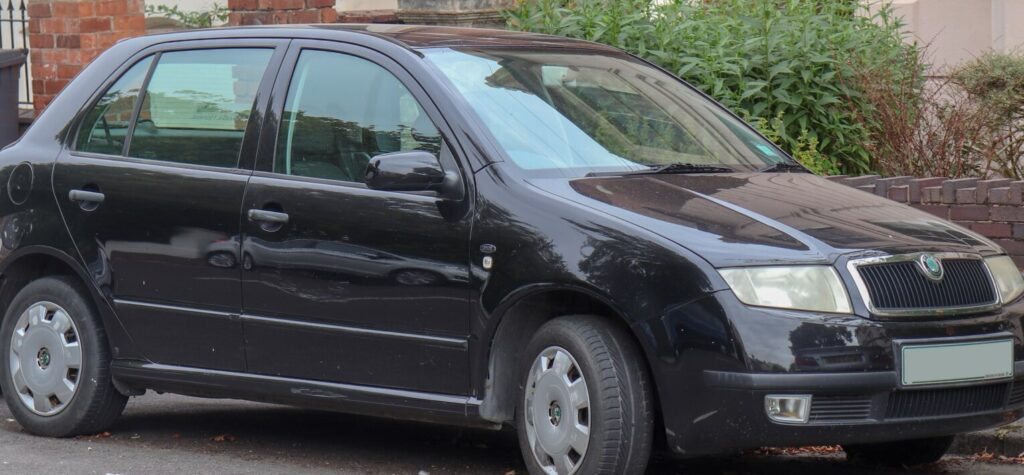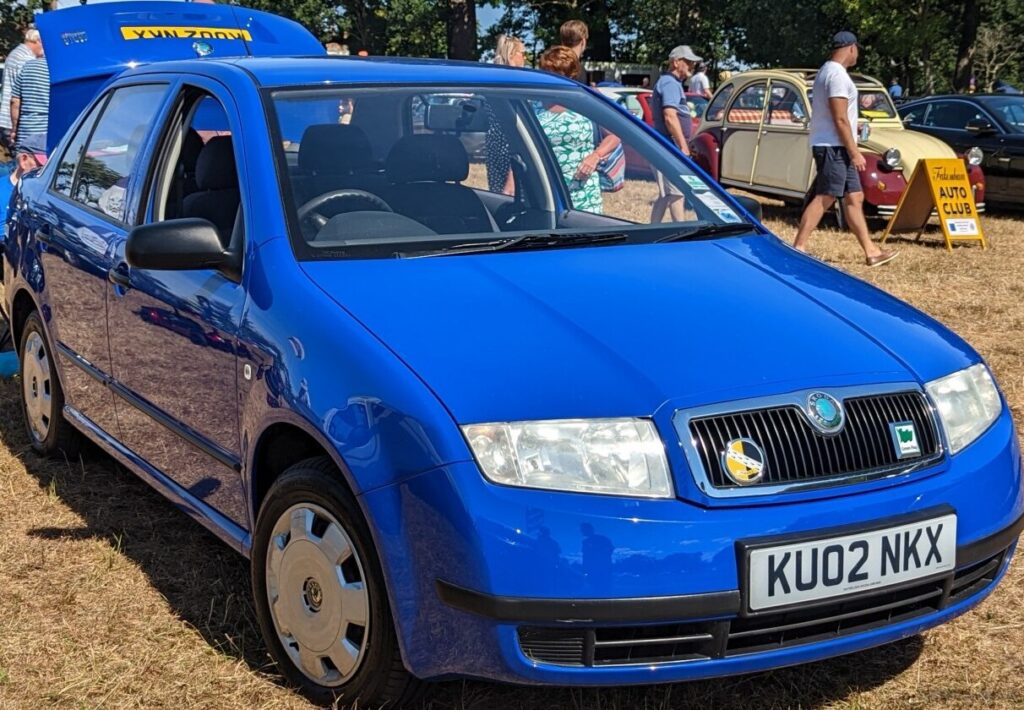
The Skoda Fabia Sedan I (6Y) 2.0, producing 115 horsepower, was a significant offering in Skoda’s lineup from December 1999 to July 2004. Positioned as a mid-range trim level within the first generation Fabia Sedan (6Y) series, it aimed to provide a balance between performance and affordability. This model represented Skoda’s growing ambition to offer modern, European-designed vehicles with a practical focus, particularly in markets where compact sedans were popular. The 6Y Fabia was built on the Volkswagen Group’s PQ24 platform, shared with the Volkswagen Polo and SEAT Ibiza, providing a solid foundation for a reliable and relatively spacious small car.
Technical Specifications
| Brand | Skoda |
| Model | Fabia |
| Generation | Fabia Sedan I (6Y) |
| Type (Engine) | 2.0 (115 Hp) |
| Start of production | December, 1999 |
| End of production | July, 2004 |
| Powertrain Architecture | Internal Combustion engine |
| Body type | Sedan |
| Seats | 5 |
| Doors | 4 |
| Fuel consumption (urban) | 11.2 l/100 km (21 US mpg, 25.2 UK mpg, 8.9 km/l) |
| Fuel consumption (extra urban) | 6 l/100 km (39.2 US mpg, 47.1 UK mpg, 16.7 km/l) |
| Fuel Type | Petrol (Gasoline) |
| Acceleration 0 – 100 km/h | 10.2 sec |
| Acceleration 0 – 62 mph | 10.2 sec |
| Acceleration 0 – 60 mph | 9.7 sec |
| Maximum speed | 196 km/h (121.79 mph) |
| Weight-to-power ratio | 9.9 kg/Hp, 100.9 Hp/tonne |
| Weight-to-torque ratio | 6.7 kg/Nm, 149.1 Nm/tonne |
| Power | 115 Hp @ 5400 rpm |
| Power per litre | 58 Hp/l |
| Torque | 170 Nm @ 2400 rpm (125.39 lb.-ft. @ 2400 rpm) |
| Engine layout | Front, Transverse |
| Engine Model/Code | AZL |
| Engine displacement | 1984 cm3 (121.07 cu. in.) |
| Number of cylinders | 4 |
| Engine configuration | Inline |
| Cylinder Bore | 82.5 mm (3.25 in.) |
| Piston Stroke | 92.8 mm (3.65 in.) |
| Compression ratio | 10.5:1 |
| Number of valves per cylinder | 2 |
| Fuel injection system | Multi-port manifold injection |
| Engine aspiration | Naturally aspirated engine |
| Valvetrain | OHC |
| Engine oil capacity | 4 l (4.23 US qt | 3.52 UK qt) |
| Coolant | 6.9 l (7.29 US qt | 6.07 UK qt) |
| Kerb Weight | 1140 kg (2513.27 lbs.) |
| Max. weight | 1655 kg (3648.65 lbs.) |
| Max load | 515 kg (1135.38 lbs.) |
| Trunk (boot) space – minimum | 438 l (15.47 cu. ft.) |
| Trunk (boot) space – maximum | 789 l (27.86 cu. ft.) |
| Fuel tank capacity | 45 l (11.89 US gal | 9.9 UK gal) |
| Length | 4222 mm (166.22 in.) |
| Width | 1646 mm (64.8 in.) |
| Height | 1449 mm (57.05 in.) |
| Wheelbase | 2462 mm (96.93 in.) |
| Front track | 1419 mm (55.87 in.) |
| Rear (Back) track | 1408 mm (55.43 in.) |
| Drivetrain Architecture | The Internal combustion engine (ICE) drives the front wheels of the vehicle. |
| Drive wheel | Front wheel drive |
| Number of gears and type of gearbox | 5 gears, manual transmission |
| Front suspension | Transverse stabilizer |
| Rear suspension | Coil spring |
| Front brakes | Disc |
| Rear brakes | Disc |
| Assisting systems | ABS (Anti-lock braking system) |
| Steering type | Steering rack and pinion |
| Power steering | Hydraulic Steering |
| Tires size | 195/50 R15 |
| Wheel rims size | 6J x 14 |
Powertrain & Engine Architecture
The heart of the Fabia 2.0 was the AZL engine, a 1.898-liter, inline four-cylinder gasoline engine. This engine was part of the EA827 family, commonly found in various Volkswagen Group vehicles. It featured a cast iron block and an aluminum cylinder head, utilizing a single overhead camshaft (OHC) design with two valves per cylinder. Fuel delivery was managed by a multi-port fuel injection system, providing adequate, though not cutting-edge, fuel atomization for the time. The AZL engine was known for its relative simplicity and durability. The five-speed manual transmission was the standard offering, providing a direct connection between the engine and the front wheels. The transmission’s gear ratios were tuned for a balance of fuel efficiency and acceptable acceleration, though it wasn’t designed for particularly sporty driving.
Driving Characteristics
The 115 hp 2.0-liter engine in the Fabia Sedan provided a noticeable step up in performance compared to the smaller 1.4-liter engines available in the range. While not a particularly fast car by modern standards, the 2.0 offered sufficient power for comfortable highway cruising and overtaking. Acceleration from 0 to 60 mph took around 9.7 seconds, and the top speed was approximately 122 mph. The five-speed manual transmission allowed drivers to keep the engine in its optimal power band, though the gear ratios were somewhat widely spaced. Compared to the more economical, but slower, 1.4-liter models, the 2.0 offered a more relaxed driving experience, particularly on longer journeys. It lacked the punch of the later, more powerful engines found in subsequent Fabia generations.
Equipment & Trim Levels
The 2.0-liter Fabia Sedan typically came with a reasonable level of standard equipment. This included power steering, central locking, electric front windows, and an adjustable steering column. Interior upholstery was typically cloth, with a relatively simple dashboard layout. Optional extras included air conditioning, alloy wheels, and a radio/CD player. The trim level sat comfortably in the middle of the Fabia range, offering more features than the base models but falling short of the more luxurious trims.
Chassis & Braking
The Fabia Sedan I utilized a MacPherson strut front suspension and a twist-beam rear suspension. This setup provided a comfortable ride quality, though it wasn’t particularly sporty. The front brakes were ventilated discs, while the rear brakes were solid discs, providing adequate stopping power for the car’s weight and performance. Anti-lock Braking System (ABS) was standard, enhancing safety. The steering was a hydraulic power-assisted rack and pinion system, offering reasonable precision and feedback.
Market Reception & Comparison
The Skoda Fabia 2.0 Sedan was generally well-received by automotive critics as a practical and affordable family car. It was praised for its spacious interior, comfortable ride, and reasonable fuel economy. However, some critics noted that the engine lacked refinement compared to some of its competitors. Compared to the 1.4-liter models, the 2.0 offered a significant performance boost, but at the cost of slightly higher fuel consumption. Compared to other cars in its class, such as the Volkswagen Polo and SEAT Ibiza (which shared the same platform), the Fabia offered a compelling value proposition.
Legacy
The Skoda Fabia Sedan I (6Y) 2.0, while not a groundbreaking vehicle, played an important role in establishing Skoda as a credible manufacturer in the European market. The AZL engine proved to be relatively reliable, and many examples are still on the road today. In the used car market, these Fabias are often sought after for their affordability and practicality. Maintenance is generally straightforward, and parts availability is good, making them a sensible choice for budget-conscious buyers. The 6Y Fabia laid the groundwork for Skoda’s continued success and its reputation for building well-engineered and value-for-money cars.