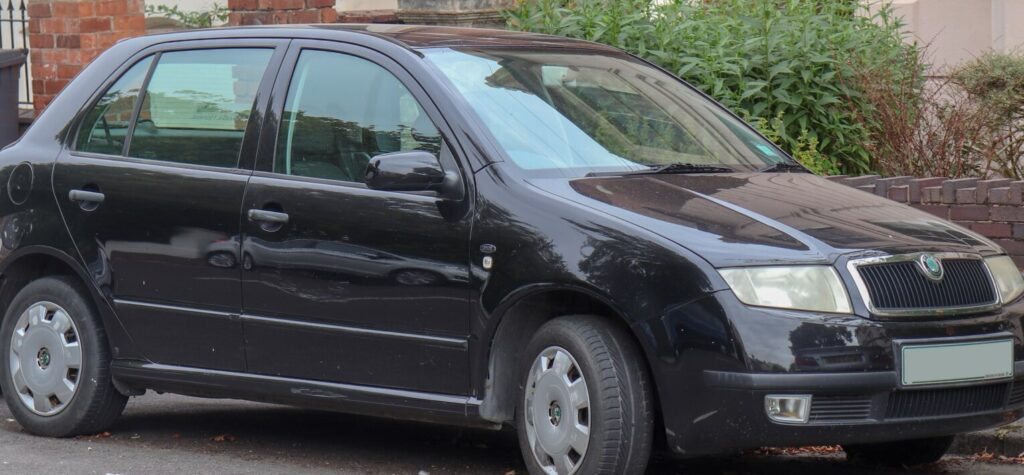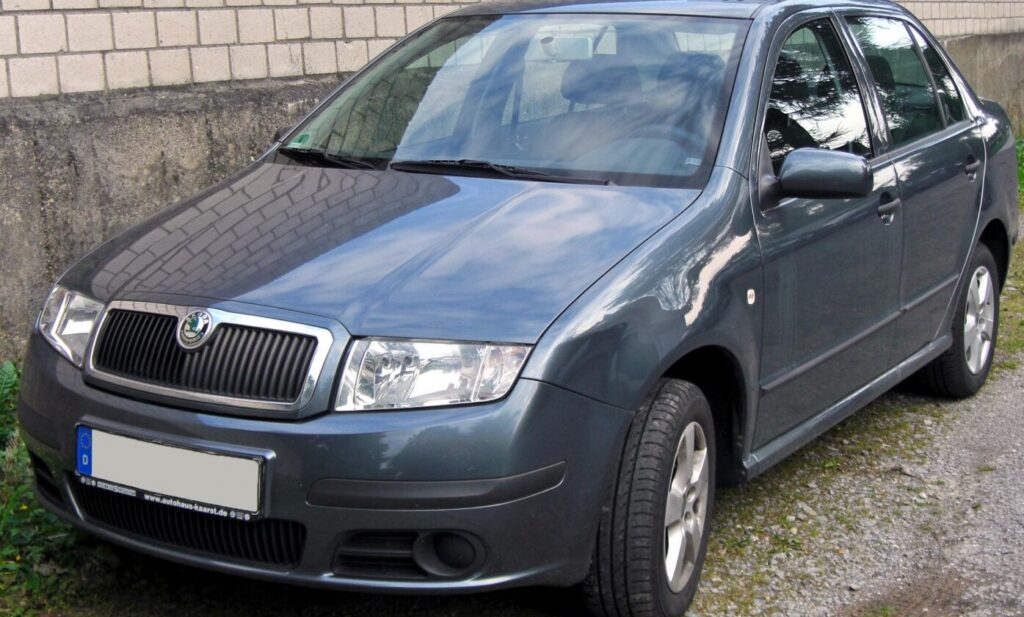
The Skoda Fabia Sedan I (6Y), particularly the facelifted version introduced in 2004, represented Skoda’s entry into the competitive small sedan market. Production of the 1.4 16V variant, producing 80 horsepower, spanned from approximately April 2006 to December 2007. This model occupied the lower-mid range of the Fabia Sedan lineup, positioned as an affordable and economical option for buyers prioritizing fuel efficiency and practicality over outright performance. It was built on the Volkswagen Group’s PQ24 platform, also known as the A3 platform, shared with models like the Volkswagen Polo and SEAT Ibiza. The Fabia Sedan aimed to provide a more spacious and practical alternative to hatchback models, appealing to families and those needing a dedicated trunk.
Technical Specifications
| Brand | Skoda |
| Model | Fabia |
| Generation | Fabia Sedan I (6Y, facelift 2004) |
| Type (Engine) | 1.4 16V (80 Hp) |
| Start of production | April, 2006 |
| End of production | December, 2007 |
| Powertrain Architecture | Internal Combustion engine |
| Body type | Sedan |
| Seats | 5 |
| Doors | 4 |
| Fuel consumption (urban) | 8.6 l/100 km (27.4 US mpg, 32.8 UK mpg, 11.6 km/l) |
| Fuel consumption (extra urban) | 5.3 l/100 km (44.4 US mpg, 53.3 UK mpg, 18.9 km/l) |
| Fuel consumption (combined) | 6.5 l/100 km (36.2 US mpg, 43.5 UK mpg, 15.4 km/l) |
| CO2 emissions | 154 g/km |
| Fuel Type | Petrol (Gasoline) |
| Acceleration 0 – 100 km/h | 13.1 sec |
| Acceleration 0 – 62 mph | 13.1 sec |
| Acceleration 0 – 60 mph | 12.4 sec |
| Maximum speed | 173 km/h (107.5 mph) |
| Weight-to-power ratio | 13.6 kg/Hp, 73.4 Hp/tonne |
| Weight-to-torque ratio | 8.3 kg/Nm, 121.1 Nm/tonne |
| Power | 80 Hp @ 5000 rpm |
| Power per litre | 57.6 Hp/l |
| Torque | 132 Nm @ 3800 rpm (97.36 lb.-ft. @ 3800 rpm) |
| Engine layout | Front, Transverse |
| Engine Model/Code | BUD |
| Engine displacement | 1390 cm3 (84.82 cu. in.) |
| Number of cylinders | 4 |
| Engine configuration | Inline |
| Number of valves per cylinder | 4 |
| Fuel injection system | Multi-port manifold injection |
| Engine aspiration | Naturally aspirated engine |
| Engine oil capacity | 3.2 l (3.38 US qt, 2.82 UK qt) |
| Coolant capacity | 6.7 l (7.08 US qt, 5.9 UK qt) |
| Kerb Weight | 1090 kg (2403.04 lbs) |
| Max. weight | 1605 kg (3538.42 lbs) |
| Max load | 515 kg (1135.38 lbs) |
| Fuel tank capacity | 45 l (11.89 US gal, 9.9 UK gal) |
| Permitted trailer load (8%) | 950 kg (2094.39 lbs) |
| Permitted trailer load (12%) | 800 kg (1763.7 lbs) |
| Permitted trailer load (unbraked) | 450 kg (992.08 lbs) |
| Length | 4232 mm (166.61 in) |
| Width | 1646 mm (64.8 in) |
| Width (including mirrors) | 1893 mm (74.53 in) |
| Height | 1449 mm (57.05 in) |
| Wheelbase | 2462 mm (96.93 in) |
| Front track | 1435 mm (56.5 in) |
| Rear track | 1424 mm (56.06 in) |
| Drivetrain Architecture | Front wheel drive |
| Number of gears | 5 |
| Gearbox type | Manual transmission |
| Front suspension | Transverse stabilizer |
| Rear suspension | Coil spring |
| Steering type | Steering rack and pinion |
| Power steering | Hydraulic |
| Tires size | 185/60 R14 82 T |
| Wheel rims size | 14 |
Powertrain & Engine Architecture
The 1.4 16V engine, identified by the BUD engine code, is a naturally aspirated, inline-four cylinder petrol engine. It features a multi-port fuel injection system, delivering fuel directly into the intake ports. The 16-valve configuration (four valves per cylinder) enhances breathing and contributes to improved power output compared to engines with fewer valves. The engine’s 1390cc displacement provides a balance between fuel economy and usable power. The 80 horsepower peak is achieved at 5000 rpm, while the 132 Nm (97.36 lb-ft) of torque is available at 3800 rpm. This engine was known for its relative simplicity and ease of maintenance. The Fabia 1.4 16V typically came equipped with a five-speed manual transmission, although an automatic transmission was also available, albeit less common. The automatic transmission, a traditional hydraulic unit, was geared towards providing smooth, comfortable shifts rather than sporty performance.
Driving Characteristics
The 1.4 16V engine in the Fabia Sedan delivered modest performance. Acceleration from 0-60 mph took around 12.4 seconds, and the top speed was approximately 107.5 mph. Compared to higher-output versions of the Fabia, such as those equipped with the 1.9 TDI diesel or the 2.0 petrol engines, the 1.4 16V felt noticeably slower. The automatic transmission further impacted performance, with slightly slower gear changes and a tendency to hold onto gears longer to maximize fuel economy. However, the 1.4 16V offered a smooth and predictable driving experience, making it well-suited for urban commuting and relaxed highway cruising. The gear ratios in the automatic transmission were optimized for fuel efficiency, prioritizing economy over rapid acceleration.
Equipment & Trim Levels
The 1.4 16V Fabia Sedan typically came with a base level of equipment, focusing on essential features. Standard amenities included power steering, central locking, electric front windows, and an adjustable steering column. Interior upholstery was typically cloth, and the dashboard featured a functional, if somewhat basic, design. Optional extras included air conditioning, alloy wheels, a radio/CD player, and upgraded interior trim. Higher trim levels, available with more powerful engines, offered additional features such as climate control, rear electric windows, and more sophisticated audio systems. The 1.4 16V trim was often seen as a stepping stone, offering a good balance of features for the price.
Chassis & Braking
The Fabia Sedan’s chassis featured a MacPherson strut front suspension and a torsion beam rear suspension. This setup provided a comfortable ride quality, although it wasn’t particularly sporty. The front brakes were typically disc brakes, while the rear brakes were drum brakes on most 1.4 16V models. This configuration was common for vehicles in this weight class and price range. A transverse stabilizer bar was included at the front to reduce body roll during cornering. The steering was a hydraulic power steering system, providing light and easy steering input.
Market Reception & Comparison
The Skoda Fabia Sedan 1.4 16V was generally well-received as an affordable and practical family car. Critics praised its spacious interior, comfortable ride, and fuel efficiency. However, the engine’s lack of power was often noted, particularly when compared to competitors offering more potent engines. Compared to the 1.9 TDI diesel version, the 1.4 16V offered less torque and slower acceleration, but it was quieter and smoother. The 1.4 16V also offered better fuel economy than the more powerful 2.0 petrol engine, but at the expense of performance. Its main appeal lay in its affordability and low running costs.
Legacy
The 1.4 16V engine proved to be relatively reliable, with few major mechanical issues reported. The BUD engine code is generally considered a durable unit, provided it receives regular maintenance. On the used car market, the Fabia Sedan 1.4 16V remains an affordable option for buyers seeking a practical and economical car. However, potential buyers should be aware of the engine’s limited power output and the potential for wear and tear on the automatic transmission, particularly if it hasn’t been serviced regularly. The Fabia Sedan, in general, helped establish Skoda as a credible and value-for-money brand in the European market, paving the way for its subsequent success.