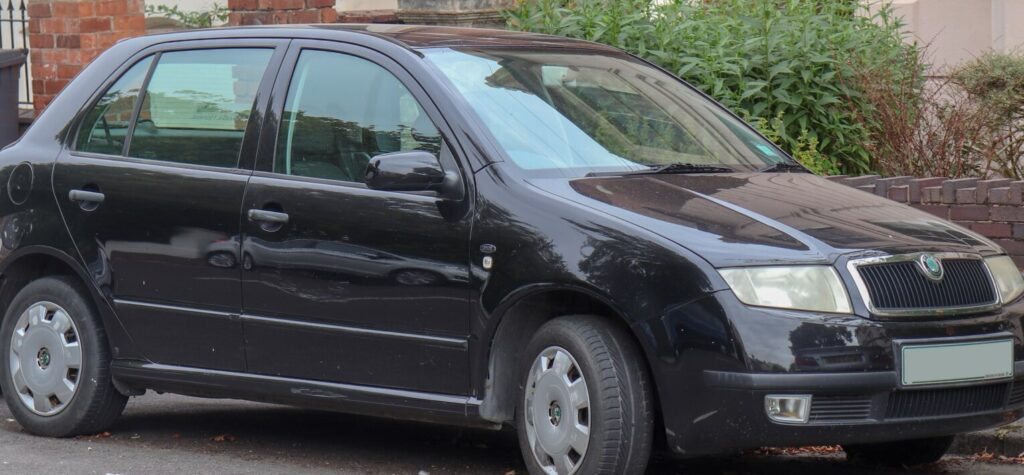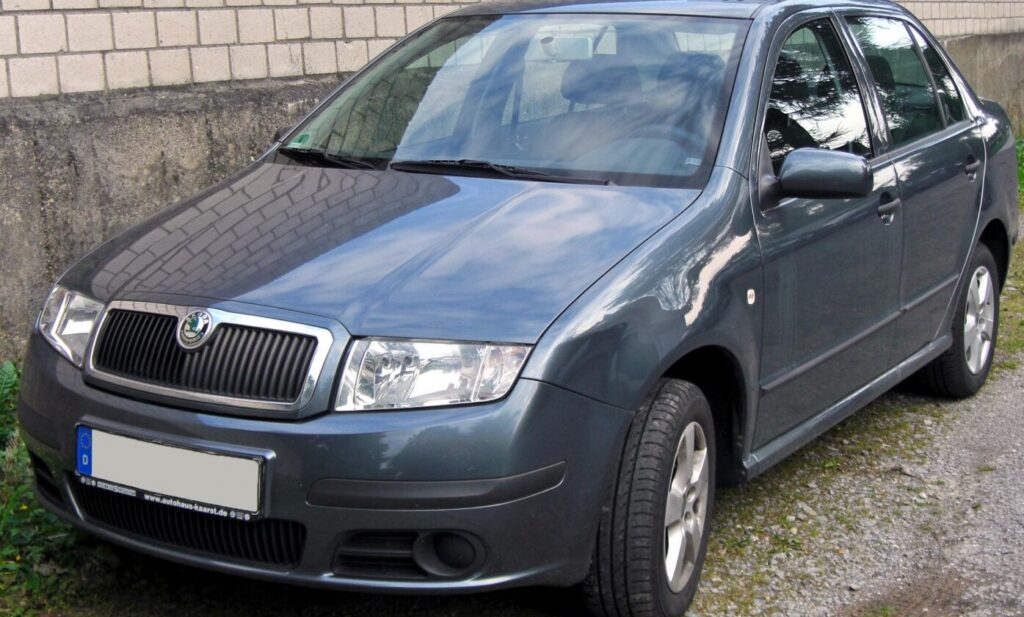
The Skoda Fabia Sedan I (6Y), particularly the facelifted version introduced in 2004, represented a significant step forward for the Czech automaker. Positioned as a budget-friendly, practical sedan, the Fabia aimed to offer European build quality and design at a competitive price point. Production of this specific 2.0-liter (115 hp) variant ran from July 2004 to December 2006. It occupied a mid-range position within the Fabia Sedan lineup, offering a balance between performance and affordability, appealing to buyers seeking more power than the base engines but without the cost of potential higher-spec trims. The 6Y generation Fabia was built on the Volkswagen Group’s PQ24 platform, shared with the Volkswagen Polo and SEAT Ibiza, allowing for economies of scale and a degree of mechanical commonality.
Technical Specifications
| Brand | Skoda |
| Model | Fabia |
| Generation | Fabia Sedan I (6Y, facelift 2004) |
| Type (Engine) | 2.0 (115 Hp) |
| Start of production | July, 2004 |
| End of production | December, 2006 |
| Powertrain Architecture | Internal Combustion engine |
| Body type | Sedan |
| Seats | 5 |
| Doors | 4 |
| Fuel consumption (urban) | 10.9 l/100 km (21.6 US mpg, 25.9 UK mpg, 9.2 km/l) |
| Fuel consumption (extra urban) | 5.9 l/100 km (39.9 US mpg, 47.9 UK mpg, 16.9 km/l) |
| Fuel consumption (combined) | 7.7 l/100 km (30.5 US mpg, 36.7 UK mpg, 13 km/l) |
| CO2 emissions | 185 g/km |
| Fuel Type | Petrol (Gasoline) |
| Acceleration 0 – 100 km/h | 10.2 sec |
| Acceleration 0 – 62 mph | 10.2 sec |
| Acceleration 0 – 60 mph | 9.7 sec |
| Maximum speed | 196 km/h (121.79 mph) |
| Emission standard | Euro 4 |
| Weight-to-power ratio | 9.9 kg/Hp, 100.9 Hp/tonne |
| Weight-to-torque ratio | 6.7 kg/Nm, 149.1 Nm/tonne |
| Power | 115 Hp @ 5400 rpm |
| Power per litre | 58 Hp/l |
| Torque | 170 Nm @ 2400 rpm (125.39 lb.-ft. @ 2400 rpm) |
| Engine layout | Front, Transverse |
| Engine Model/Code | AZL |
| Engine displacement | 1984 cm3 (121.07 cu. in.) |
| Number of cylinders | 4 |
| Engine configuration | Inline |
| Cylinder Bore | 82.5 mm (3.25 in.) |
| Piston Stroke | 92.8 mm (3.65 in.) |
| Compression ratio | 10.5:1 |
| Number of valves per cylinder | 2 |
| Fuel injection system | Multi-port manifold injection |
| Engine aspiration | Naturally aspirated engine |
| Valvetrain | SOHC |
| Engine oil capacity | 4 l (4.23 US qt | 3.52 UK qt) |
| Coolant | 6.9 l (7.29 US qt | 6.07 UK qt) |
| Kerb Weight | 1140 kg (2513.27 lbs.) |
| Max. weight | 1655 kg (3648.65 lbs.) |
| Max load | 515 kg (1135.38 lbs.) |
| Trunk (boot) space – minimum | 438 l (15.47 cu. ft.) |
| Trunk (boot) space – maximum | 789 l (27.86 cu. ft.) |
| Fuel tank capacity | 45 l (11.89 US gal | 9.9 UK gal) |
| Max. roof load | 75 kg (165.35 lbs.) |
| Permitted trailer load with brakes (12%) | 1000 kg (2204.62 lbs.) |
| Permitted trailer load without brakes | 500 kg (1102.31 lbs.) |
| Permitted towbar download | 50 kg (110.23 lbs.) |
| Length | 4232 mm (166.61 in.) |
| Width | 1646 mm (64.8 in.) |
| Width including mirrors | 1890 mm (74.41 in.) |
| Height | 1449 mm (57.05 in.) |
| Wheelbase | 2462 mm (96.93 in.) |
| Front track | 1435 mm (56.5 in.) |
| Rear (Back) track | 1424 mm (56.06 in.) |
| Front overhang | 837 mm (32.95 in.) |
| Rear overhang | 933 mm (36.73 in.) |
| Ride height (ground clearance) | 120 mm (4.72 in.) |
| Drag coefficient (Cd) | 0.33 |
| Minimum turning circle (turning diameter) | 10.4 m (34.12 ft.) |
| Approach angle | 16° |
| Departure angle | 16° |
| Drivetrain Architecture | The Internal combustion engine (ICE) drives the front wheels of the vehicle. |
| Drive wheel | Front wheel drive |
| Number of gears and type of gearbox | 5 gears, manual transmission |
| Front suspension | Independent, type McPherson with coil spring and anti-roll bar |
| Rear suspension | Trailing arm |
| Front brakes | Ventilated discs |
| Rear brakes | Disc |
| Assisting systems | ABS (Anti-lock braking system) |
| Steering type | Steering rack and pinion |
| Power steering | Electric Steering |
| Tires size | 195/50 R15 |
| Wheel rims size | 6J x 15 |
Powertrain & Engine Architecture
The heart of this Fabia variant is the AZL engine, a 1.8-liter inline-four cylinder gasoline engine. This engine is part of the EA827 family, a common powerplant used across various Volkswagen Group vehicles. The AZL features a single overhead camshaft (SOHC) valvetrain operating two valves per cylinder. Fuel delivery is managed by a multi-port fuel injection system, providing a balance between efficiency and performance. The engine produces 115 horsepower at 5400 rpm and 170 Nm (125 lb-ft) of torque at 2400 rpm. The engine’s relatively high compression ratio of 10.5:1 contributes to its efficiency. The engine is transversely mounted, driving the front wheels. The transmission is a five-speed manual gearbox, offering a fairly conventional gear ratio spread for the era.
Driving Characteristics
The 2.0-liter Fabia Sedan offered a noticeable improvement in performance over the smaller 1.4-liter engines available in the range. While not a sports car, the 115 hp engine provided adequate power for everyday driving and comfortable highway cruising. Acceleration from 0 to 60 mph took around 9.7 seconds, and the top speed was approximately 122 mph. The five-speed manual transmission allowed for reasonably precise gear changes, although the shift action wasn’t particularly sporty. Compared to the base engines, the 2.0-liter offered more relaxed acceleration in higher gears, making overtaking maneuvers easier. However, it wasn’t as fuel-efficient as the smaller displacement options.
Equipment & Trim Levels
The 2.0-liter Fabia Sedan typically came with a reasonable level of standard equipment. This included power steering, central locking, electric front windows, and an adjustable steering column. Higher trim levels, often denoted by specific package names, added features such as air conditioning, alloy wheels, a radio/CD player, and upgraded interior trim. Interior upholstery was typically cloth, with options for different patterns and colors. Safety features included ABS brakes and driver and passenger airbags.
Chassis & Braking
The Fabia Sedan’s chassis featured independent McPherson strut suspension at the front and a trailing arm setup at the rear. This configuration provided a comfortable ride quality, although it wasn’t particularly sporty in terms of handling. The front brakes were ventilated discs, providing good stopping power, while the rear brakes were solid discs. The steering was a rack-and-pinion system with electric power assistance, offering light and easy steering feel.
Market Reception & Comparison
The 2.0-liter Fabia Sedan was generally well-received by automotive critics as a practical and affordable family car. It was praised for its spacious interior, comfortable ride, and good value for money. However, some critics noted that the interior plastics felt a bit low-rent and that the handling wasn’t as engaging as some of its rivals. Compared to the smaller-engined Fabias, the 2.0-liter offered a significant performance boost, but at the cost of slightly higher fuel consumption. It competed with other small sedans such as the Renault Symbol and the Dacia Logan, offering a more refined driving experience than the latter.
Legacy
The Skoda Fabia Sedan I (6Y) 2.0-liter variant has proven to be a relatively reliable car in the used car market. The AZL engine is known for its durability, although regular maintenance is essential. Common issues include oil leaks and occasional problems with the cooling system. Parts availability is generally good, thanks to the widespread use of Volkswagen Group components. Today, these Fabias represent an affordable and practical option for buyers seeking a reliable and economical used car. They are often appreciated for their simplicity and ease of maintenance, making them a popular choice for first-time car owners or those on a budget.