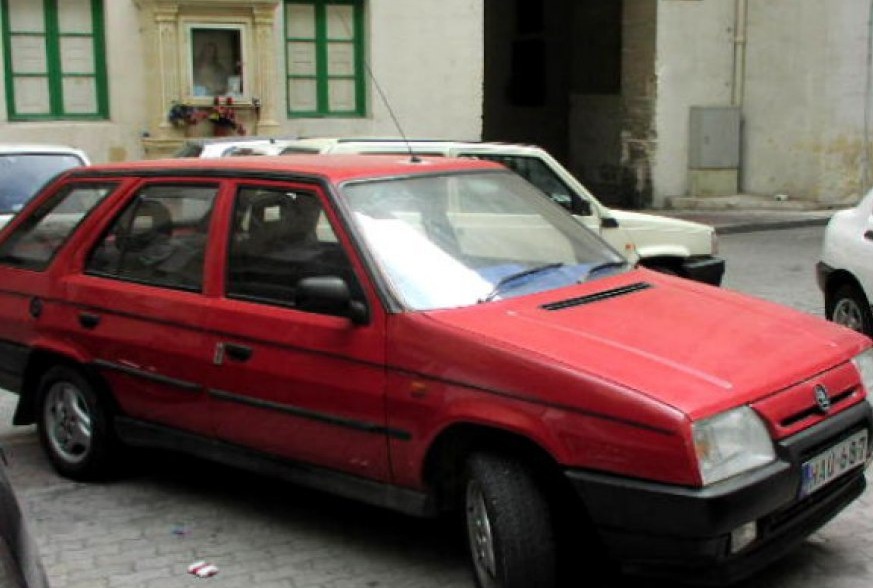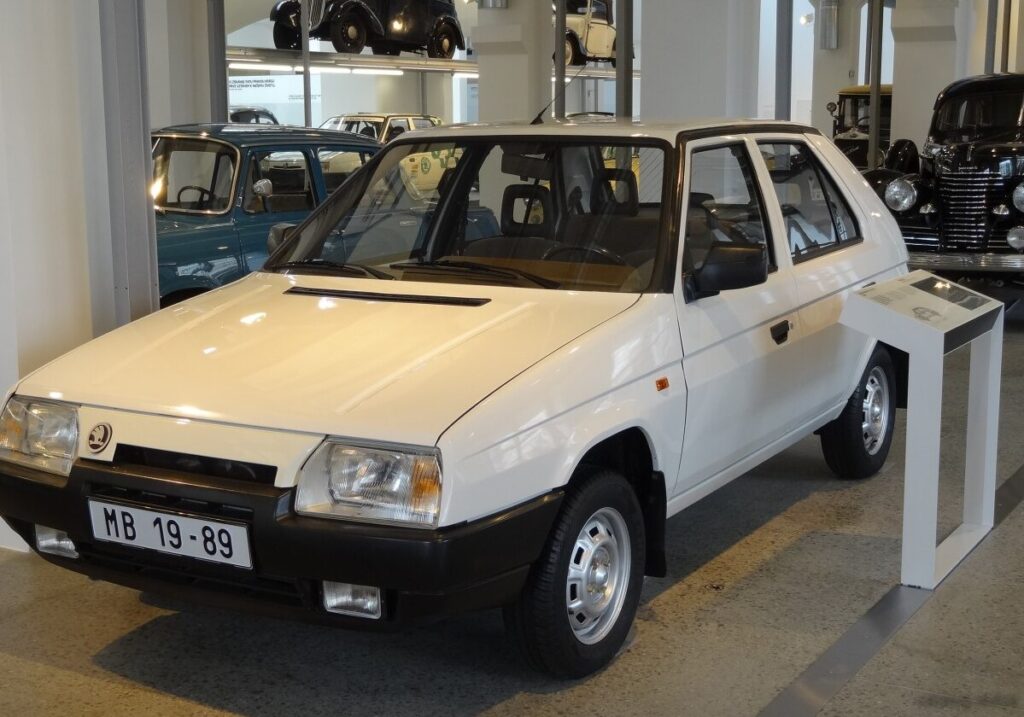
The Skoda Favorit 1.3 135, designated internally as the 781, represents an entry-level variant of the Favorit series produced between 1991 and 1994. This model played a crucial role in Skoda’s transition from a domestically-focused manufacturer in Czechoslovakia to a more internationally competitive brand under Volkswagen Group ownership. The Favorit, and specifically this 1.3-liter version, was intended to provide affordable and practical transportation for a broad segment of the market, particularly in Eastern Europe where it was initially sold. It was a significant step forward for Skoda, replacing the older, more antiquated models like the 105/120 series.
Technical Specifications
| Brand | Skoda |
| Model | Favorit |
| Generation | Favorit (781) |
| Type (Engine) | 1.3 135 (781) (58 Hp) |
| Start of production | 1991 |
| End of production | 1994 |
| Powertrain Architecture | Internal Combustion engine |
| Body type | Hatchback |
| Seats | 5 |
| Doors | 5 |
| Fuel Type | Petrol (Gasoline) |
| Power | 58 Hp |
| Engine Model/Code | 781.135 |
| Engine aspiration | Naturally aspirated engine |
| Engine oil capacity | 4.5 l (4.76 US qt | 3.96 UK qt) |
| Coolant capacity | 6 l (6.34 US qt | 5.28 UK qt) |
Powertrain & Engine Architecture
The heart of the Favorit 1.3 135 is the 781.135 engine, a 1.3-liter, inline-four cylinder petrol engine. This engine is a relatively simple design, reflecting the cost-conscious nature of the vehicle. It features a single overhead camshaft (SOHC) operating two valves per cylinder. Fuel delivery is managed by a carburetor, a technology becoming increasingly outdated in the early 1990s but chosen for its simplicity and lower production cost. The engine produces 58 horsepower at approximately 5,500 rpm and 88 lb-ft of torque at 3,200 rpm. The engine block is cast iron, contributing to its durability, while the cylinder head is aluminum. The Favorit 1.3 135 was exclusively offered with a four-speed manual transmission. There was no automatic transmission option for this specific variant.
Driving Characteristics
The driving experience in the Favorit 1.3 135 is best described as utilitarian. With only 58 horsepower propelling a vehicle weighing around 2,200 pounds, acceleration is modest. 0 to 60 mph times were in the range of 15-17 seconds. The four-speed manual transmission is not particularly refined, with relatively long throws and a somewhat notchy feel. However, it is durable and easy to operate. The gear ratios are spaced to prioritize fuel economy over outright performance. The engine feels strained at higher speeds, and highway cruising requires frequent downshifting to maintain momentum. Compared to later, more powerful Favorit variants like the 1.6, the 1.3 feels significantly underpowered, especially when fully loaded with passengers and cargo. The steering is light but lacks feedback, and the suspension is tuned for comfort rather than sporty handling.
Equipment & Trim Levels
The Favorit 1.3 135 represented the base trim level of the Favorit range. As such, it was equipped with a minimal level of standard features. Interior appointments were basic, with cloth upholstery and a simple plastic dashboard. Standard equipment typically included front bucket seats, a rear bench seat, and basic instrumentation consisting of a speedometer, fuel gauge, and temperature gauge. Power steering, central locking, and electric windows were not typically included as standard equipment, though they could be added as optional extras. The exterior featured steel wheels with hubcaps, black plastic bumpers, and relatively simple body trim. The overall interior aesthetic was functional and durable, prioritizing practicality over luxury.
Chassis & Braking
The Favorit 1.3 135 utilizes a relatively conventional chassis design. It features a front-engine, front-wheel-drive layout with an independent suspension at the front using MacPherson struts and a twist-beam rear suspension. The braking system consists of disc brakes at the front and drum brakes at the rear. The brakes are adequate for the vehicle’s performance capabilities but lack the stopping power of more modern systems. Steering is rack and pinion, providing reasonable maneuverability. The suspension is tuned for a comfortable ride, absorbing bumps and imperfections in the road surface reasonably well. Stabilizer bars were not standard on the base 1.3 model, contributing to a slightly more pronounced body roll during cornering.
Market Reception & Comparison
The Skoda Favorit 1.3 135 was generally well-received in its target market, particularly in Eastern Europe. Critics praised its affordability, practicality, and durability. However, the engine’s lack of power and the somewhat outdated technology were common criticisms. Compared to the 1.6-liter versions of the Favorit, the 1.3 offered significantly lower performance but also lower fuel consumption. The 1.6 was considered a more desirable option for those who frequently drove on highways or carried heavy loads. The 1.3’s fuel economy was estimated at around 35-40 mpg, making it an attractive option for budget-conscious buyers. Reliability was generally good, although the carburetor required periodic maintenance and adjustment. Compared to Western European rivals like the Peugeot 205 or Renault Clio, the Favorit 1.3 135 offered a lower price point but also a less refined driving experience.
Legacy
The Skoda Favorit 1.3 135, while not a particularly exciting vehicle, played a vital role in Skoda’s modernization and eventual integration into the Volkswagen Group. It provided a solid foundation for the development of subsequent Skoda models and helped to establish the brand as a provider of affordable and reliable transportation. Today, the Favorit 1.3 135 is a relatively rare sight on the roads, but it has gained a following among classic car enthusiasts and collectors, particularly in its native Czech Republic. The powertrain, while simple, proved to be reasonably durable, and many examples are still in running condition. Parts availability can be a challenge, but a dedicated community of Skoda enthusiasts continues to support the preservation of these vehicles. The 781 series, and the 1.3 135 variant specifically, represents a significant chapter in Skoda’s history, marking its transition from a state-owned enterprise to a modern, internationally recognized automotive brand.