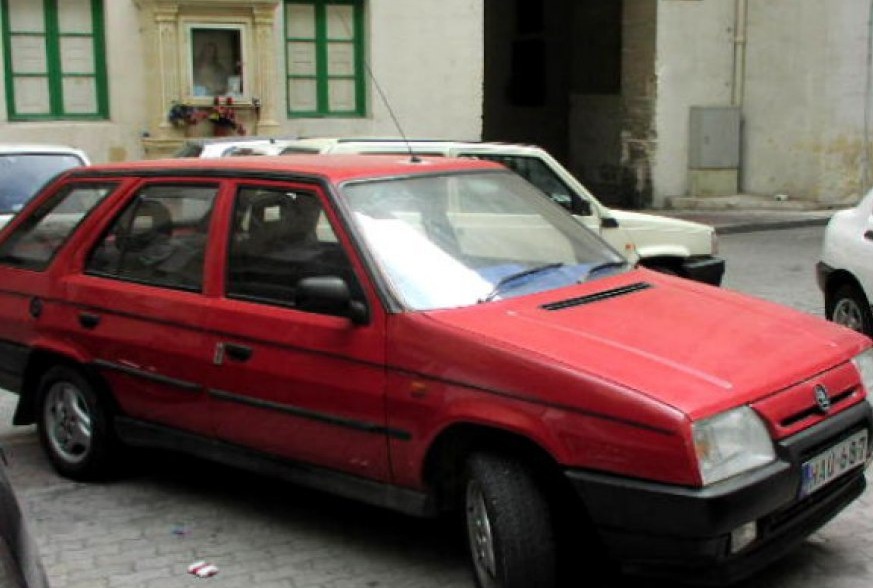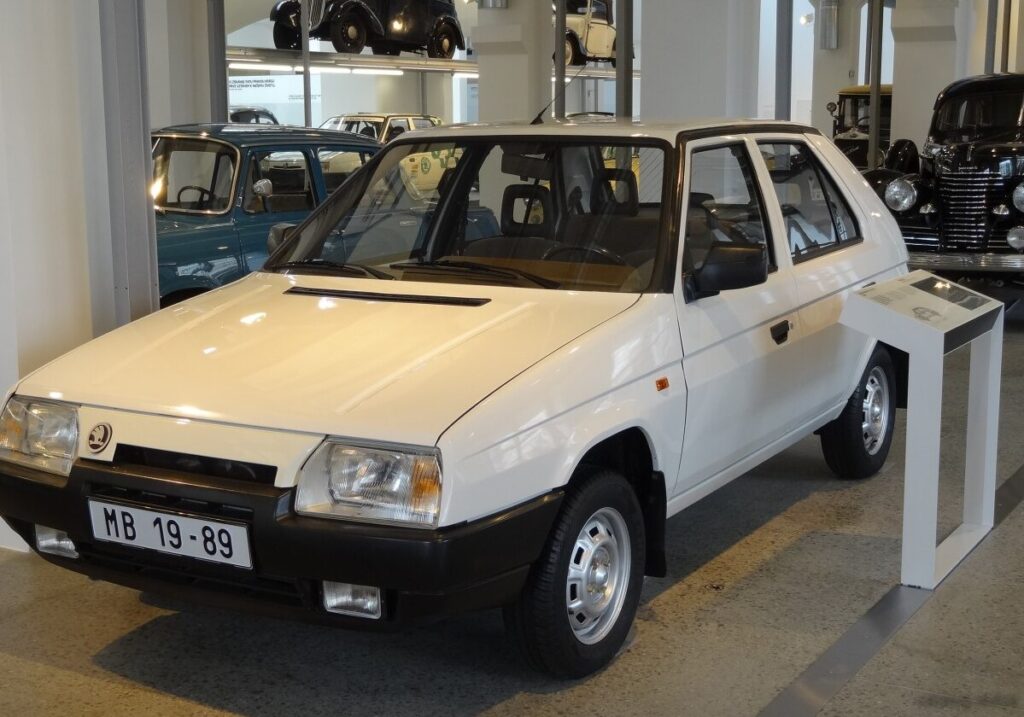
The Skoda Favorit 1.3 135, designated internally as the 781, represents a pivotal moment in the Czech automaker’s history. Produced from 1990 to 1994, this variant was a cornerstone of the Favorit range, the first Skoda model to be fully developed independently after decades under communist rule. It was a key component of Skoda’s transition towards modern automotive engineering and played a significant role in establishing the brand’s presence in Western European markets prior to its acquisition by Volkswagen. The 781 series, and specifically the 1.3 135, aimed to provide affordable, practical transportation for families, and served as the entry point into the Favorit lineup.
Technical Specifications
| Brand | Skoda |
| Model | Favorit |
| Generation | Favorit (781) |
| Type (Engine) | 1.3 135 (781) (60 Hp) |
| Start of production | 1990 |
| End of production | 1994 |
| Powertrain Architecture | Internal Combustion engine |
| Body type | Hatchback |
| Seats | 5 |
| Doors | 5 |
| Fuel Type | Petrol (Gasoline) |
| Power | 60 Hp |
| Engine Model/Code | 781.135 |
| Engine aspiration | Naturally aspirated engine |
| Engine oil capacity | 4.5 l (4.76 US qt | 3.96 UK qt) |
| Coolant capacity | 6 l (6.34 US qt | 5.28 UK qt) |
Powertrain & Engine Architecture
The heart of the Favorit 1.3 135 is the 781.135 engine, a 1.3-liter, inline-four cylinder petrol engine. This engine is a relatively simple design, reflecting the engineering capabilities and cost constraints of the early 1990s. It features a single overhead camshaft (SOHC) operating two valves per cylinder. Fuel delivery is managed by a single-point fuel injection system, a common feature for vehicles in this price bracket at the time. While not as efficient or powerful as multi-point injection, it offered a significant improvement over carbureted systems. The engine produces 60 horsepower (44 kW) at 5500 rpm and approximately 84 lb-ft (114 Nm) of torque at 3200 rpm. The engine’s block is cast iron, contributing to its durability, while the cylinder head is aluminum. The Favorit 1.3 135 was exclusively offered with a four-speed automatic transmission. This transmission, while providing ease of use, was a significant factor in the car’s relatively slow acceleration and lower fuel economy compared to the five-speed manual version.
Driving Characteristics
The driving experience in the Favorit 1.3 135 with the automatic transmission is best described as utilitarian. The 60 horsepower engine, coupled with the four-speed automatic, results in modest acceleration. The car feels noticeably slower than the manual transmission variants, particularly when attempting to overtake or climb hills. The automatic transmission’s gear ratios are spaced to prioritize fuel economy over performance. The shift points are relatively early, keeping the engine within its optimal torque band, but at the expense of responsiveness. Steering is light and relatively vague, typical of cars from this era. The suspension, while providing a reasonably comfortable ride on smooth surfaces, can feel somewhat bouncy and unsettled on uneven roads. The automatic transmission does diminish the overall driving engagement, making it less appealing to enthusiasts who preferred the more connected feel of the manual gearbox.
Equipment & Trim Levels
The Favorit 1.3 135, as the entry-level model, was equipped with a fairly basic level of standard features. Interior upholstery was typically a durable, patterned cloth. The dashboard featured a simple layout with analog gauges for speed, fuel level, coolant temperature, and a basic clock. Power steering was not standard, although it was available as an optional extra. Other optional features included a radio cassette player, upgraded interior trim, and tinted glass. The exterior trim was minimal, with black plastic bumpers and side moldings. The car’s focus was on providing functional transportation at an affordable price, so luxury features were largely absent. The trim level was largely defined by the engine and transmission combination, with the 1.3 automatic representing the base offering.
Chassis & Braking
The Favorit 781 utilizes a relatively simple chassis design. It features a front MacPherson strut suspension and a rear twist-beam axle. The suspension setup is tuned for comfort rather than sporty handling. Braking is accomplished via front disc brakes and rear drum brakes. The braking system is adequate for normal driving conditions, but lacks the stopping power and feel of more modern systems. The car’s relatively light weight helps to mitigate the limitations of the braking system. Stabilizer bars were not standard on the base 1.3 135 model, further contributing to the car’s tendency to body roll in corners. The tires were typically narrow, prioritizing fuel economy over grip.
Market Reception & Comparison
The Skoda Favorit 1.3 135 was generally well-received as an affordable and practical family car, particularly in Eastern Europe and emerging Western markets. Critics acknowledged its value for money, but often pointed to its lack of refinement and relatively slow performance, especially when equipped with the automatic transmission. Compared to the more powerful 1.6-liter versions of the Favorit, the 1.3 automatic was significantly slower and less engaging to drive. The 1.6-liter manual offered a much more enjoyable driving experience and better fuel economy. However, the 1.3 automatic appealed to buyers who prioritized ease of use and affordability over performance. Fuel economy was reasonable for the time, averaging around 35-40 mpg in mixed driving conditions, but lower than the manual transmission variants.
Legacy
The Skoda Favorit 1.3 135, while not a performance icon, holds a significant place in Skoda’s history. It represented the brand’s first independent foray into modern automotive design and helped to establish its reputation for value and practicality. The 781.135 engine, while simple, proved to be relatively reliable and durable. Today, the Favorit 1.3 135 is a relatively rare sight on the roads, but it has gained a following among classic car enthusiasts and Skoda collectors. Parts availability can be challenging, but the engine’s simplicity makes it relatively easy to repair. The automatic transmission, however, can be a source of issues as it ages. The car’s affordability and nostalgic appeal make it an increasingly desirable classic for those seeking a piece of Czech automotive history.