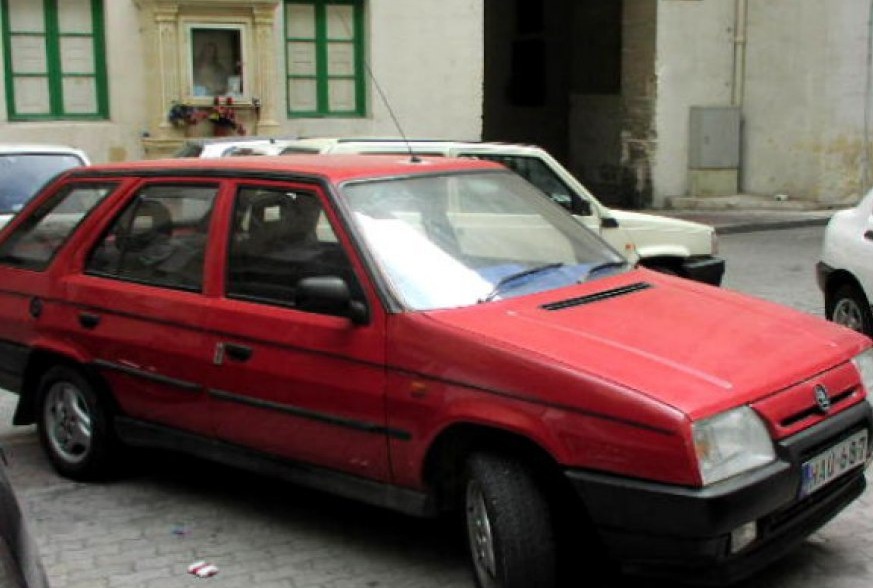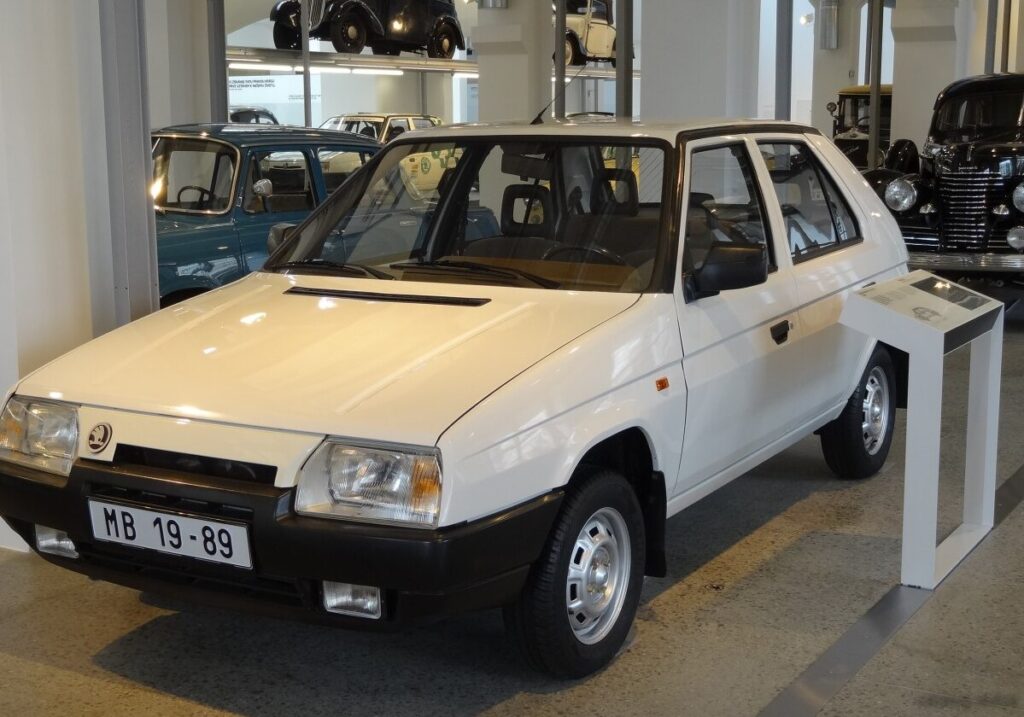
The Skoda Favorit 1.3, designated internally as type 781 and specifically the 136 variant, represents a pivotal moment in the Czech automaker’s history. Produced from 1990 to 1994, it was the first entirely new Skoda model developed after decades under state control, and a key step towards its integration into the Volkswagen Group. This 5-door hatchback, powered by a 1.3-liter gasoline engine producing 61 horsepower, served as the entry point into the Favorit range and played a crucial role in establishing Skoda’s presence in Western European markets. It was a relatively simple, affordable vehicle designed to appeal to budget-conscious buyers seeking practical transportation.
Technical Specifications
| Brand | Skoda |
| Model | Favorit |
| Generation | Favorit (781) |
| Type (Engine) | 1.3 136 (781) (61 Hp) |
| Start of production | 1990 |
| End of production | 1994 |
| Powertrain Architecture | Internal Combustion engine |
| Body type | Hatchback |
| Seats | 5 |
| Doors | 5 |
| Fuel Type | Petrol (Gasoline) |
| Power | 61 Hp |
| Engine Model/Code | 781.136 |
| Engine aspiration | Naturally aspirated engine |
| Engine oil capacity | 3.3 l (3.49 US qt | 2.9 UK qt) |
| Coolant capacity | 6 l (6.34 US qt | 5.28 UK qt) |
Powertrain & Engine Architecture
The heart of the Favorit 1.3 136 was the 781.136 engine, a 1.3-liter, inline-four cylinder, naturally aspirated gasoline engine. This engine, while relatively basic by modern standards, represented a significant upgrade over the engines used in previous Skoda models. It featured a single overhead camshaft (SOHC) operating two valves per cylinder. Fuel delivery was managed by a single-point fuel injection system – a relatively common setup for vehicles of this era, offering a balance between cost and efficiency. The engine’s modest 61 horsepower output was achieved at 5,500 rpm, with peak torque of approximately 84 lb-ft (114 Nm) arriving at 3,200 rpm. The engine was paired with a four-speed automatic transmission, a somewhat unusual offering in this segment at the time, and one that contributed to the Favorit’s appeal to drivers prioritizing ease of use over outright performance. The automatic transmission was a simple hydraulic unit, known for its durability but not particularly refined shifting characteristics.
Driving Characteristics
The Favorit 1.3 Automatic was not designed to be a performance car. Acceleration was leisurely, with a 0-60 mph time estimated to be around 14-16 seconds. The four-speed automatic transmission, while convenient, further hampered acceleration, as it lacked the closer gear ratios of a manual transmission. The power delivery was relatively smooth, but the engine felt strained when pushed hard, particularly when fully loaded. Compared to the five-speed manual version of the 1.3 Favorit, the automatic suffered a noticeable performance penalty. The manual offered quicker acceleration and slightly better fuel economy. However, the automatic provided a more relaxed driving experience, particularly in urban environments, making it a popular choice for drivers who valued comfort and convenience. The suspension, while basic, provided a reasonably comfortable ride, absorbing bumps and imperfections in the road surface adequately. Steering was light and easy, but lacked precision.
Equipment & Trim Levels
The Favorit 1.3 136 typically represented the base trim level. Standard equipment was fairly sparse, reflecting its position as an affordable family car. It generally included cloth upholstery, basic instrumentation (speedometer, fuel gauge, temperature gauge), and a simple two-speaker radio. Power steering was not standard, although it was available as an option. Interior plastics were durable but utilitarian. Optional extras included a sunroof, upgraded stereo system, and central locking. The dashboard layout was functional and straightforward, with all controls within easy reach of the driver. The seats offered adequate support for shorter journeys, but could become uncomfortable on longer trips. The rear seats could be folded down to increase cargo capacity, providing added versatility.
Chassis & Braking
The Favorit 1.3 utilized a relatively simple chassis design. It featured independent front suspension with MacPherson struts and a torsion beam rear suspension. This setup provided a reasonable balance between ride comfort and handling. Braking was initially accomplished with drum brakes on all four wheels, although later models were upgraded with front disc brakes. The braking system was adequate for normal driving conditions, but lacked the stopping power of more modern vehicles. The steering was a recirculating ball system, which was common for cars of this era. Stabilizer bars were not standard on the base 1.3 model, contributing to a slightly more pronounced body roll in corners.
Market Reception & Comparison
The Skoda Favorit 1.3 Automatic was generally well-received as an affordable and practical family car. Critics praised its spacious interior, reasonable fuel economy (around 35-40 mpg combined), and robust build quality. However, it was also criticized for its lack of refinement, sluggish performance, and basic interior. Compared to other cars in its class, such as the Fiat Uno or Renault Clio, the Favorit offered a more spacious interior and a more robust feel, but lacked the sophistication and driving dynamics of its rivals. The automatic transmission, while appreciated by some, was seen as a detriment to performance by others. The 1.6-liter versions of the Favorit offered significantly more power and were considered a better choice for drivers who prioritized performance. The 1.3 diesel version provided superior fuel economy but was considerably slower.
Legacy
The Skoda Favorit 1.3 136, while not a particularly exciting car, played a crucial role in Skoda’s transformation from a struggling state-owned manufacturer to a respected member of the Volkswagen Group. The powertrain, while simple, proved to be relatively reliable, and many examples are still on the road today. In the used car market, the Favorit 1.3 Automatic is valued for its affordability, simplicity, and ease of maintenance. Parts availability is generally good, and the car’s robust construction means that it can withstand years of use. However, potential buyers should be aware of the potential for rust, particularly in areas with harsh winters. The Favorit represents a significant piece of automotive history, marking the beginning of a new era for Skoda and its integration into the global automotive landscape.